How a Small County Lists Its Unsuitable Roads
Navigating the rules for riding your wheeled all-terrain vehicle (WATV) on public roads in Washington can feel like deciphering a secret code, especially when you live in one of our beautiful, less populated counties. Many riders assume that if a road isn't explicitly signed "off-limits," it must be fair game, only to discover a local ordinance they never knew existed. This guide is here to untangle the confusion, focusing on how Washington's smaller counties determine which roads are unsuitable for WATV use and how you can stay on the right side of the law.
The "Open by Default" Rule for Washington's Smaller Counties
Washington State law has a unique approach to WATV use on county roads, especially when it comes to areas with smaller populations. For counties with a population of less than 15,000 residents, the default stance is that all county roads are open to WATVs. This might sound like a dream come true for many riders, offering a refreshing contrast to the more restrictive "opt-in" model seen in larger, more urbanized counties. It means that unless a county specifically takes action to close a road segment to WATV use, you can generally assume it's permissible to ride there, provided your machine meets all the necessary equipment requirements for road use. [Washington Counties Under 15,000 Open by Default]
What "Open by Default" Really Means for Riders
For those of us with machines – be it a trusty quad, a capable side-by-side, or even a dirt bike with the right modifications – this "open by default" rule in smaller counties offers incredible freedom. Imagine being able to legally connect trails by riding a short stretch of county road, or taking your WATV from your cabin directly to a nearby general store for supplies. This isn't just about convenience; it fundamentally changes the way many riders interact with their local landscapes, opening up new possibilities for exploration and access that simply aren't available in more densely populated areas. It truly embraces the spirit of multi-use recreation that many of us cherish.
However, "open by default" doesn't mean "anything goes." It's still crucial to remember that your WATV must be properly registered with both an off-road and an on-road tab, and you must adhere to all state-mandated equipment requirements for street legality, such as turn signals, mirrors, and a horn. For instance, if you're outfitting a side-by-side, you might be looking at durable mirrors and a full wiring kit for lighting. Companies like SuperATV offer a range of accessories that can help you get your machine street-legal and ready for these roads.
Why the Legislature Chose This Approach
The decision by the Washington State Legislature to implement an "open by default" rule for smaller counties wasn't arbitrary. It recognized the distinct characteristics of these rural communities, where WATVs are often an integral part of daily life, used for everything from farm work to accessing remote hunting grounds, or simply as a practical mode of transportation. In these areas, the sheer volume of road traffic is typically much lower, and residents often have a higher tolerance for off-highway vehicle use.
Furthermore, the administrative burden of requiring every single road to be explicitly opened would be significant for smaller county governments, which often have limited resources. By making roads "open by default," the responsibility shifts: counties only need to act when there's a specific reason to close a road, rather than having to proactively open every single one. This pragmatic approach reduces bureaucracy while still allowing local control where safety or other concerns dictate a restriction. [The 15,000 Population Line in Washington's WATV Law] reflects this legislative balancing act.
Deciphering the "Unsuitable Roads" List in Small Counties
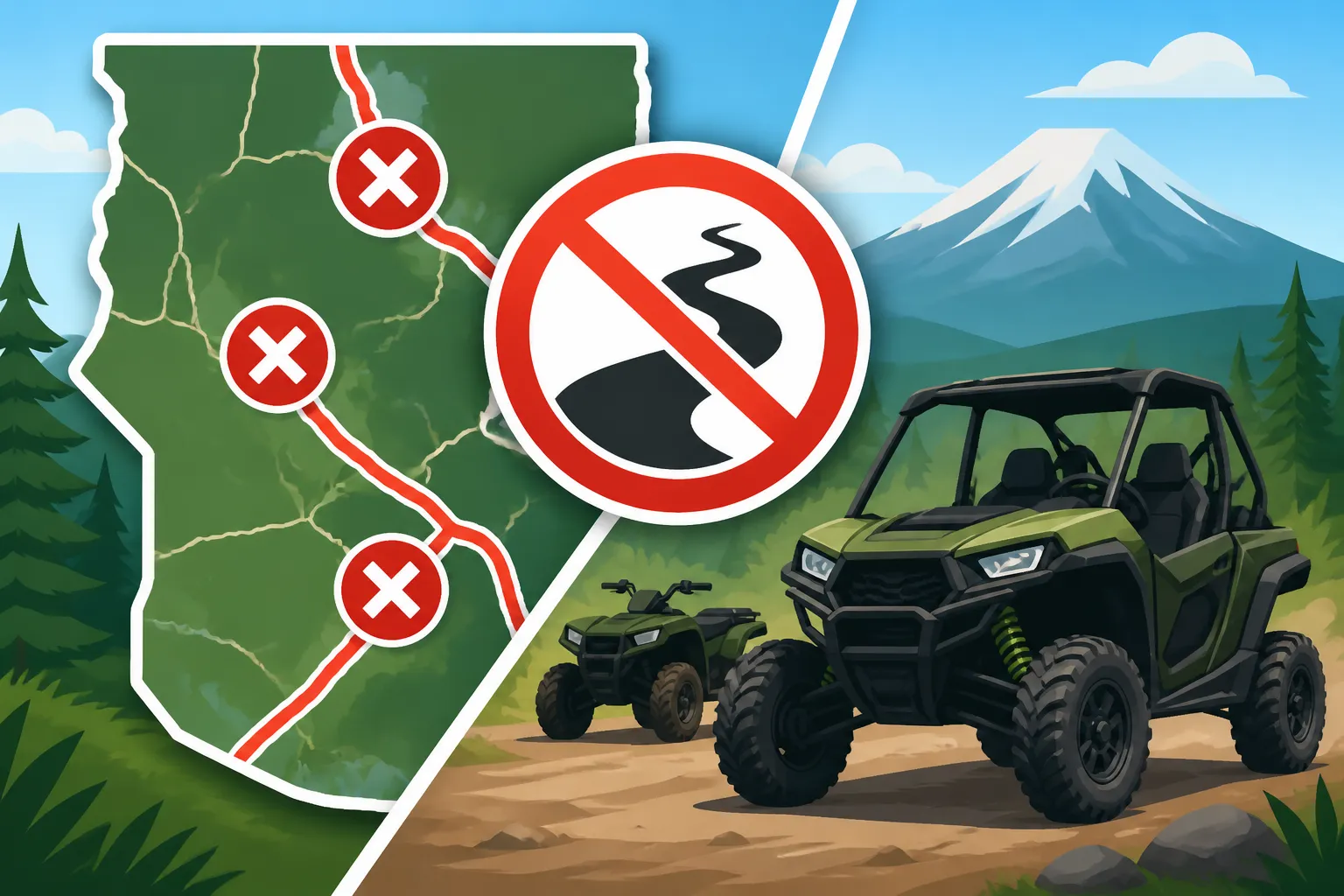
Even with the "open by default" rule, small counties still retain the authority to designate certain roads as "unsuitable" for WATV use. This is where the nuanced work of local governance comes into play, ensuring that public safety, environmental protection, and community character are preserved. When a road is deemed unsuitable, it means WATVs are prohibited on that specific segment, regardless of the county's general "open by default" status. This is the crucial list you need to be aware of when planning your rides.
Where to Find Your County's Official List
This is perhaps the most critical piece of information for any WATV rider in a small Washington county: how do I find the list of unsuitable roads? The state law mandates that counties must publish this information. Typically, you'll find these lists on the county's official website, often under departments like Public Works, the County Commissioner's office, or the County Clerk. They might be part of an official ordinance, a resolution, or a dedicated page for WATV regulations.
It's not usually a big, flashy announcement; sometimes you have to dig a bit. A quick search on your county's website for terms like "WATV ordinance," "off-road vehicle rules," or "unsuitable roads" will often point you in the right direction. Some counties might even have physical postings at common entry points to their road systems, but relying solely on those is a risky game. Always check the official online resources before heading out. [Finding a County's Approved Road List] is your first step.
Common Reasons a Road Might Be Deemed Unsuitable
Counties don't just randomly declare a road "unsuitable." There are specific, usually well-reasoned, criteria that lead to such designations. Understanding these can help you anticipate which roads might be restricted and why. Here are some common reasons:
- High Traffic Volume: Even in a small county, certain roads, especially those leading to popular attractions, commercial centers, or serving as major arterial routes, might experience higher traffic volumes that make WATV use unsafe.
- Geometric Design: Roads with blind curves, narrow shoulders, steep grades, or other challenging design features might be deemed too dangerous for WATV integration, especially if there's limited visibility for all road users.
- Proximity to Sensitive Areas: Roads running through residential neighborhoods, school zones, or near hospitals might be restricted to minimize noise, dust, and potential conflicts with pedestrians or other vulnerable road users.
- Environmental Concerns: In some cases, a road might be unsuitable due to environmental factors, such as proximity to critical habitats or areas where increased traffic could lead to erosion or other ecological damage.
- Speed Limits: While state law allows WATVs on roads posted 35 mph or less, some local ordinances might restrict them on certain 35 mph roads if specific safety concerns are identified.
- Infrastructure Limitations: Bridges, tunnels, or other infrastructure that aren't designed to safely accommodate WATV traffic might also lead to a road's inclusion on the unsuitable list.
When a county designates a road as unsuitable, they are often making a practical decision based on these types of factors, aiming to balance recreational opportunities with public welfare.
The Process for Designating an Unsuitable Road
So, how does a road go from being "open by default" to "unsuitable"? It's a formal process that involves public input and official action. Typically, it begins with concerns being raised by residents, law enforcement, or county staff regarding safety, noise, or environmental impacts on a particular road.
- Public Input: The county will usually hold public meetings or workshops, allowing citizens to voice their opinions, concerns, and suggestions regarding potential road closures or restrictions. This is your chance to participate!
- Staff Review: County public works or planning departments will then review the road segment in question, assessing traffic patterns, road design, safety records, and other relevant data.
- Recommendation: Based on public input and staff review, a recommendation is made to the County Commissioners or Council.
- Ordinance or Resolution: If the Commissioners agree, they will pass an official ordinance or resolution formally designating the road as unsuitable for WATV use. This legal document is what makes the restriction enforceable. [Why a County Must Publish Its Approved Road List] is part of this formal process, ensuring transparency.
This process ensures that decisions are not made lightly and that the community has a say in how their local roads are managed.
How Small County Rules Differ from Larger, Opt-In Counties
The contrast between the "open by default" rule in small counties and the "opt-in" system in larger counties is stark and fundamentally changes the riding experience. Understanding this difference is key to avoiding an unexpected citation when traveling between counties or simply misunderstanding local regulations.
The "Opt-In" Challenge for Populous Counties
In Washington counties with a population of 15,000 or more, the rules flip: all county roads are closed by default to WATVs. For a road to be legally open for WATV use, the county council or commissioners must explicitly pass an ordinance or resolution to "opt-in" and open specific road segments. This means riders in larger counties cannot assume a road is open unless they have verified it's on an approved list. [Washington Rules for Riding a County Road] are very different depending on county size.
This "opt-in" model places a much heavier burden on local governments to proactively identify and approve suitable roads, often leading to very few, if any, county roads being open. The process for opening a road in a larger county can be protracted, involving extensive traffic studies, public hearings, and careful consideration of liability. For a rider, this often translates to a frustrating lack of street-legal riding opportunities, making even short pavement connections between trails legally challenging or impossible.
The Responsibility Shift: Rider vs. County
The "open by default" versus "opt-in" systems also shifts the burden of proof and responsibility.
| Feature | Small Counties (<15,000 pop.) | Large Counties (≥15,000 pop.) |
|---|---|---|
| Default Status | Roads are Open to WATVs | Roads are Closed to WATVs |
| County Action | Must list roads that are unsuitable | Must list roads that are open |
| Rider's Assumption | Assume open unless on "unsuitable" list | Assume closed unless on "approved" list |
| Information Source | Look for "unsuitable roads" ordinances | Look for "approved WATV roads" ordinances |
| Focus of Ordinances | Why certain roads are closed | Why certain roads are opened |
This table highlights that in smaller counties, the onus is on the county to justify a closure, while in larger counties, the onus is on the county to justify an opening. For riders, this means your homework before a ride in a small county involves checking for prohibitions, whereas in a large county, you're looking for permissions. For example, if you're installing turn signals from SuperATV, you'll need them regardless, but knowing where you can actually use them on the road is determined by these local rules.
Practical Steps for Riders in Small Washington Counties
Even with the advantageous "open by default" rule, being a responsible WATV rider in a small Washington county means more than just knowing the law. It involves preparation, awareness, and a commitment to safety and courtesy.
Always Check Before You Ride
This cannot be stressed enough. Just because your county is "open by default" doesn't mean you can just throw caution to the wind. County ordinances can change, and new roads might be added to the "unsuitable" list due to changing circumstances or new safety concerns.
Before every significant ride, especially if you're exploring new areas within your county, take a few minutes to check the county's official website for the most current list of unsuitable roads. This simple step can save you from a costly citation, potential fines [Washington Fines for an Unregistered WATV], or even a dangerous encounter with other road users. Think of it as part of your pre-ride checklist, just like checking your tire pressure or fuel levels. This due diligence is part of being a good ambassador for our sport.
Equipping Your WATV for Road Use
Whether you're in an "open by default" or an "opt-in" county, if you plan to ride your WATV on any public road in Washington, it must be properly equipped and registered. This isn't optional; it's a legal requirement designed for everyone's safety.
Here’s a breakdown of essential items for road use:
- Registration and Tabs: You need a current off-road tab and an on-road tab. The off-road tab allows you to ride on designated trails, and the on-road tab specifically permits road travel on approved segments. You'll also need a metal tag displayed. [Washington WATV Metal Tag Cost]
- Lighting: Headlights, taillights, brake lights, and turn signals are all mandatory. If your machine didn't come with turn signals, you'll need to install an aftermarket kit. Companies like SuperATV offer universal turn signal kits that can be adapted to most machines. You'll also need a license plate light if riding after dark. [Washington Lighting Requirements for WATVs] and [Washington Rules for Riding After Dark]
- Mirrors: At least one mirror, but preferably two, giving you a clear view of traffic approaching from the rear. These are often easy aftermarket additions.
- Horn: A working horn is essential for signaling other drivers or pedestrians.
- Muffler and Spark Arrester: Your exhaust system must have a muffler to keep noise levels within legal limits and a U.S. Forest Service-approved spark arrester to prevent wildfires.
- Windshield or Eye Protection: You'll need either a windshield or appropriate eye protection (goggles or a face shield).
- Seat Belts: If your WATV has seat belts (like most side-by-sides), they must be worn.
- Brakes: Fully functional brakes on all wheels.
- Driver's License: You must possess a valid driver's license to operate a WATV on public roads. [Washington Driver License Rules for WATVs]
- Helmet: Washington law requires all WATV riders and passengers on public roads to wear a U.S. DOT-compliant helmet, regardless of age. [Washington Helmet Law for WATV Riders]
- Insurance: While not required for off-road-only use, if you plan to ride on public roads, you need liability insurance that meets state minimums. [Washington WATV Insurance Requirements]
Making sure your machine is up to snuff ensures you're not just legal, but also safe for shared road environments. Getting your machine ready with high-quality parts, perhaps from SuperATV, ensures durability and reliability when connecting trails via county roads or simply riding from your property. This attention to detail will help ensure that you can enjoy the freedom offered by Washington's "open by default" counties without incident. [Washington WATV Road Requirements] provides a comprehensive list of what you need.
Table: Key Differences in County WATV Road Regulations
Here's a quick reference to help distinguish between the two primary approaches Washington counties take regarding WATV road use:
| Feature/Aspect | Small Counties (Population < 15,000) | Large Counties (Population ≥ 15,000) |
|---|---|---|
| Default Status | All county roads are open to WATVs by default. | All county roads are closed to WATVs by default. |
| County Action | County must identify and list roads that are unsuitable for WATVs. | County must identify and list roads that are open for WATVs. |
| Rider's Burden | Check county website for "unsuitable" or "closed" road lists. | Check county website for "approved" or "open" road lists. |
| Legislative Intent | Support rural utility, minimize burden on small governments. | Prioritize public safety and traffic management in denser areas. |
| Common Outcome | More county roads generally accessible to WATVs. | Fewer, or no, county roads generally accessible to WATVs. |
| Example Link | [How a Small County Lists Its Unsuitable Roads] | [Asking a County to Open a Road] (often a challenge) |
Remember, these rules apply specifically to county roads. State highways, city streets, and federal lands (like National Forests) have their own distinct sets of rules, which may or may not allow WATV use, regardless of county regulations. Always consult the specific authority for those areas. For example, [Washington Rules for Getting Across a Road] are state-wide, but riding along a road falls under local jurisdiction.
Ultimately, whether you live in a tiny hamlet or a bustling suburb in Washington, understanding the specific regulations governing WATV use on roads is paramount. For those of us in the smaller counties, the "open by default" rule is a fantastic opportunity, but it comes with the responsibility of knowing the "unsuitable roads" list and ensuring your machine is always road-ready. Safe riding!
Disclaimer
This article is for general informational purposes only and does not constitute professional advice. Laws, prices and regulations vary by location and change over time. Consult a qualified professional for guidance on your specific situation.