Mirrors and a Horn for Washington Road Use
Navigating the rules for riding your Washington street-legal ATV or UTV can feel like trying to solve a puzzle with half the pieces missing, especially when it comes to the small but crucial details like what kind of mirrors you need or how loud your horn has to be. Many riders get their machine ready, get their tabs, and then suddenly realize there's a whole other layer of equipment required just to legally touch pavement. This guide is here to clear up the confusion, explaining exactly what Washington state expects from your mirrors and horn when you're taking your wheeled adventure off the dirt and onto the road.
The Mandate for Mirrors and a Horn on Washington Roads
It’s easy to think that once you’ve got your off-road tab and maybe even the optional [Washington's On-Road Tab Explained], you’re good to go. But Washington state law, specifically when it comes to operating a wheeled all-terrain vehicle (WATV) on approved public roads, has a clear set of safety equipment requirements that go beyond just registration. These aren’t suggestions; they’re legal necessities designed to ensure you and those around you are safe when your machine shares the road with cars, trucks, and other vehicles. Without the proper mirrors and a working horn, you’re not just risking a citation; you’re putting yourself and others in harm's way.
Why These Items Are Essential for Road Safety
Think about your daily driver. It has multiple mirrors – a rearview mirror, side mirrors – and a horn, right? These aren’t luxuries; they’re fundamental tools for situational awareness and communication. On a WATV, which might feel more exposed or have different blind spots than a car, these tools become even more critical. You need to know what’s coming up behind you, what’s in your blind spots when you’re changing lanes, or whether there’s a vehicle approaching if you need to pull over. A horn is your voice on the road, allowing you to alert other drivers or pedestrians to your presence in an emergency or when navigating a tricky situation. These are basic tenets of safe driving, whether you're in a sedan or a side-by-side.
Legal Implications of Non-Compliance
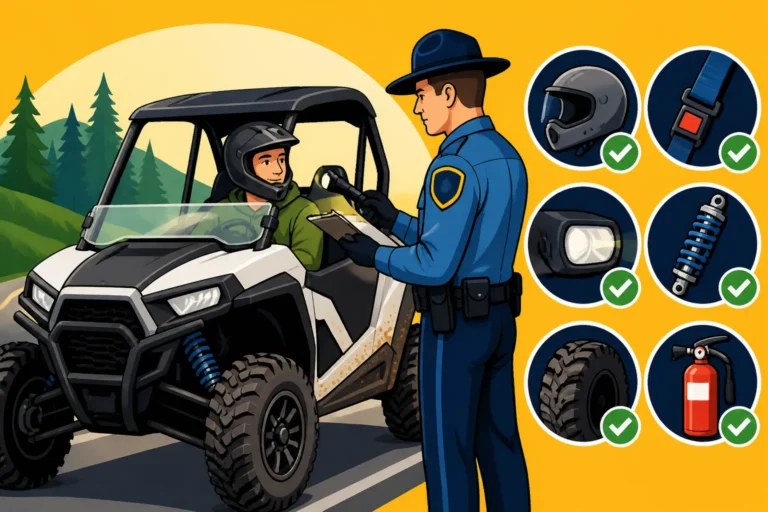
Let’s be real, nobody wants a ticket, especially for something that could have been easily fixed before you left the staging area. A Washington State Patrol trooper, or even a local sheriff’s deputy, will definitely be checking for these items during a roadside stop if you’re operating your WATV on a public road. If your machine isn't equipped with the legally required mirrors or a functional horn, you could face fines for equipment violations. More importantly, if you're involved in an accident and your machine isn't compliant, it could complicate insurance claims or even lead to greater liability, regardless of who was at fault. It’s always better to be fully compliant, not just to avoid a penalty, but for peace of mind. To fully understand what your machine needs, it's worth reviewing the full scope of [Washington WATV Road Requirements].
Washington's Specific Requirements for Mirrors
When it comes to mirrors, Washington’s law is pretty straightforward: you need them, and they need to offer a clear view. This isn't just about having a mirror; it's about having the right kind of mirror placed in the right spots to provide adequate rearward visibility. You can’t just tape a small cosmetic mirror to your roll cage and call it a day; the law is concerned with function and safety.
The Number and Placement of Required Mirrors
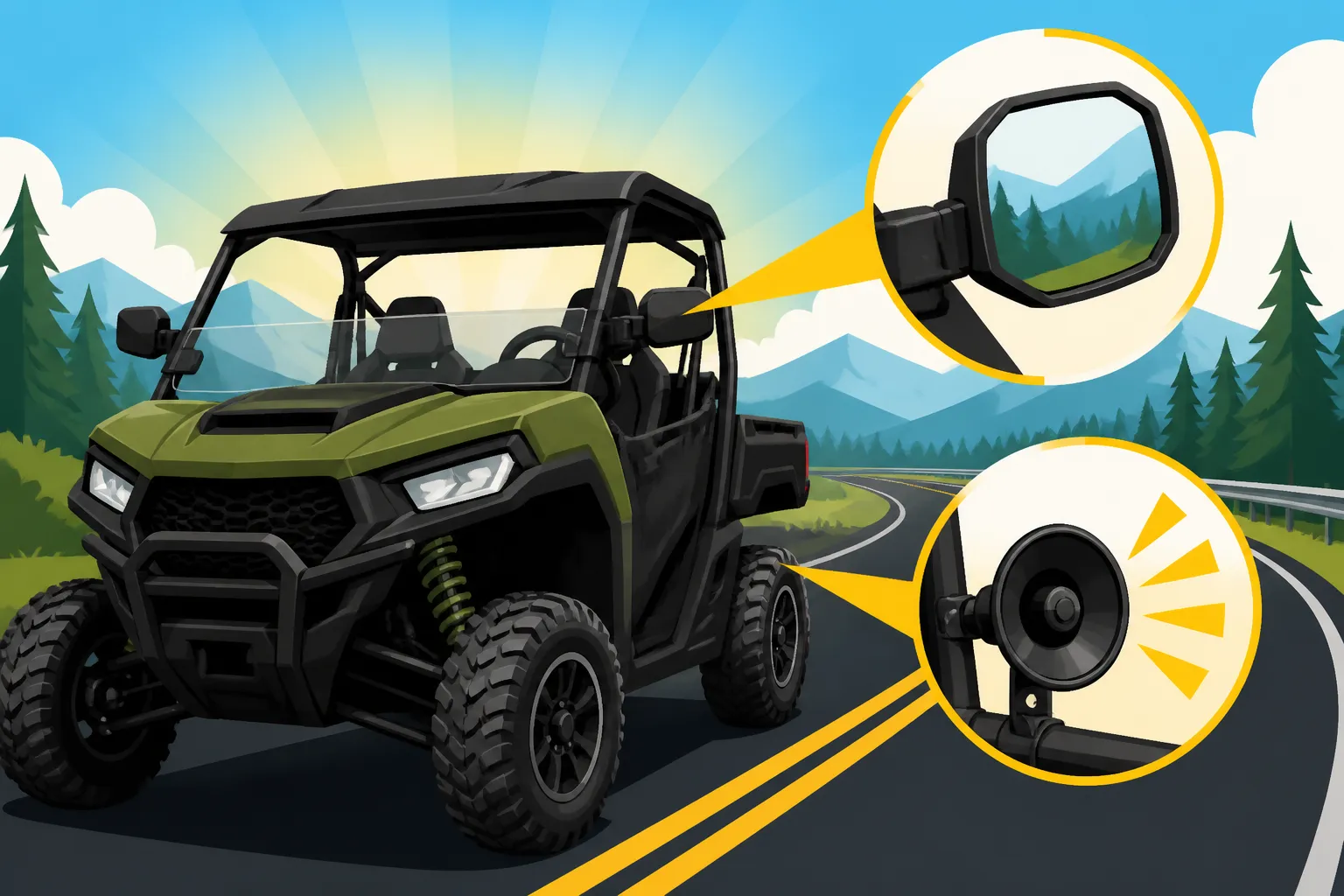
Washington law mandates at least one rearview mirror. Now, "at least one" can sometimes lead to confusion. Many riders interpret this as either a single center rearview mirror or a single side mirror. However, for maximum safety and to ensure you’re unequivocally meeting the spirit of the law, most seasoned riders and industry experts recommend having both a center rearview mirror and at least one side mirror on the driver's side. Some will even add a passenger side mirror for complete visibility. A single, well-placed side mirror is usually sufficient to meet the "at least one" requirement if it provides a clear view of the road behind and to the side. But if you're serious about safety on the road, more visibility is always better, especially when navigating turns or shared roadways.
Ensuring Adequate Rearward Vision
The critical part of the mirror requirement is "adequate rearward vision." This isn't a subjective standard. Your mirror(s) must allow you to see what’s coming up behind you, including other vehicles, without having to turn your head significantly. This means the mirror needs to be securely mounted, stable, and appropriately sized for your machine and riding position. If your mirror vibrates so much you can’t make out what’s behind you, or if it’s so small that it only shows a tiny sliver of the road, it’s not providing adequate vision. When installing, take the time to sit in your normal riding position and adjust your mirrors to cover as much of the rear and side view as possible. Many aftermarket options, including those from companies like SuperATV, offer wide-angle or convex designs specifically to help maximize this rearward field of view on WATVs.
Washington's Specific Requirements for a Horn
Just like mirrors, a horn is non-negotiable for road-legal WATVs in Washington. It's your primary auditory warning system, and its absence or malfunction can be a significant safety hazard. The law isn't just about having a horn; it's about having one that works reliably and can actually be heard.
The Audibility and Functionality Standards
The key phrase here is "audible from a distance of at least 200 feet." This means your horn can’t be a tiny bicycle bell or a novelty horn that makes a silly sound. It needs to emit a distinct, attention-grabbing sound that can cut through ambient noise and alert other drivers or pedestrians from a reasonable distance. When you’re at a busy intersection or navigating a crowded area, you need your horn to be heard clearly over traffic, engine noise, and other distractions. Test your horn regularly. Is it loud enough? Does it produce a continuous, uniform sound? If it’s weak, intermittent, or sounds like a dying duck, it’s time for an upgrade or repair. This is especially important for [Washington Rules for Crossing a State Highway] where quick communication might be crucial.
Acceptable Horn Types and Mounting
Most stock WATVs do not come with a horn that meets the road-legal audibility standards. You'll likely need to install an aftermarket horn. Electric horns are the most common and generally recommended type, as they offer consistent volume and are relatively easy to wire into your machine's electrical system. Air horns can also work, but they often require a compressor and air tank, adding complexity and bulk. The horn needs to be securely mounted to your WATV, protected from mud and water as much as possible, and easily accessible from the driver’s position. You shouldn't have to stretch or take your hand off the wheel to activate it. Consider a weather-resistant horn if you frequently ride in wet conditions, as moisture can degrade performance.
Choosing the Right Mirrors for Your WATV
Now that we understand the legal requirements, let’s talk practical choices. The market for WATV mirrors is vast, ranging from basic clamp-on styles to integrated LED turn signal mirrors. Making the right choice involves balancing legality, durability, and your personal riding preferences.
Types of Mirrors Available for WATVs
You generally have a few main categories when it comes to WATV mirrors:
- Side Mirrors: These clamp onto your roll cage or mount directly to your doors, if your UTV has them. They're essential for checking blind spots and seeing traffic to your sides. Many come with adjustable arms and breakaway features, which are fantastic for off-road riding where impacts are possible. You’ll find options with flat glass or convex glass; convex mirrors offer a wider field of view but make objects appear farther away.
- Rearview Mirrors: These mount in the center of your windshield frame or roll cage, offering a direct view behind you. Like side mirrors, they come in various sizes and can be flat or convex. Some models are specifically designed to be vibration-resistant, which is a huge plus on a WATV.
- Combination Mirrors: Some innovative designs integrate mirrors into your windshield or door panels, creating a cleaner look and often providing better protection from trail debris. You can even find mirrors with built-in [Washington Turn Signal Requirements] to meet two needs at once.
When considering options, think about the specific mounting points on your machine. Do you have a round roll cage, a square one, or a specific brand of windshield that might interfere? Companies like SuperATV offer a wide range of mounting solutions designed to fit various WATV models and configurations, ensuring a secure and stable installation.
Factors to Consider When Selecting Mirrors
Beyond just meeting the legal minimum, several factors should guide your mirror choice:
- Durability: WATVs take a beating, both on and off-road. Look for mirrors with robust housings, shatter-resistant glass (or acrylic alternatives), and strong mounting clamps. Breakaway features are excellent for preventing damage during impacts with branches or other trail obstacles.
- Visibility: As discussed, "adequate rearward vision" is key. Opt for mirrors that provide a wide, clear field of view. Convex mirrors are often preferred for side mirrors due to their expanded sight lines, while a flat rearview mirror might be better for judging distance directly behind you.
- Vibration Resistance: WATVs vibrate. A lot. Cheap mirrors might blur your view or simply shake loose. Invest in mirrors designed to minimize vibration for a clear, stable image.
- Ease of Adjustment: You’ll want to be able to quickly and easily adjust your mirrors to your riding position, and perhaps readjust them if they get bumped on the trail.
- Aesthetics: While safety and legality come first, there’s no harm in choosing mirrors that complement the look of your machine. There are plenty of stylish options out there that don’t compromise on function.
| Mirror Type | Pros | Cons | Best For |
|---|---|---|---|
| Side Mirrors | Excellent for blind spots, wide view | Can be vulnerable to trail impacts | Everyday road use, lane changes, trail awareness |
| Rearview Mirror | Direct view of traffic behind, stable | Can be partially obstructed by passengers/cargo | General rearward vision, monitoring towed items |
| Convex Glass | Wider field of view, reduced blind spots | Objects appear farther than they are, distortion | Side mirrors, maximizing overall awareness |
| Flat Glass | Accurate distance perception | Narrower field of view, larger blind spots | Rearview mirror (for precise distance judging), specific needs |
| Breakaway Feature | Prevents damage from impacts, folds away | May cost more, can be slightly less rigid | Heavy trail use, tight spaces, protecting investment |
Choosing the Right Horn for Your WATV
Selecting a horn is less about style and more about ensuring it meets the audibility requirement and can reliably get attention. You want something that's loud, clear, and durable enough to withstand the elements.
Decibel Levels and Tone Considerations
While Washington law specifies "audible from at least 200 feet," it doesn't provide a specific decibel (dB) level. However, most automotive horns typically range from 100-110 dB, which is generally sufficient. A quick test you can do is have a friend stand about 200 feet away (roughly the length of 20 cars) and see if they can clearly hear your horn when activated. If they can, you’re likely good to go.
The tone of the horn is also worth considering. A sharp, distinct tone is generally more effective at getting attention than a low, rumbling one. Avoid novelty horns that play tunes or make animal sounds; these are unlikely to meet the "audible" requirement and will certainly not be taken seriously by law enforcement or other drivers. Stick to a standard automotive-style horn sound.
Weatherproofing and Mounting Options
WATVs are often exposed to water, mud, and dust, so your horn needs to be built to withstand these conditions. Look for horns with an IP (Ingress Protection) rating, indicating their resistance to solids and liquids. An IP67 rating, for example, means it's fully protected against dust and can withstand immersion in water up to 1 meter for 30 minutes.
Mounting the horn in a location that protects it from direct impacts but still allows the sound to project effectively is crucial. Many riders choose to mount it under the hood, behind the grill, or in a similar protected but unblocked area. Ensure the mounting is secure to prevent vibration damage and keep the horn from falling off during rough rides. Kits from manufacturers like SuperATV often include all the necessary wiring, switches, and mounting hardware for a straightforward installation, making it easier to ensure your horn is both weatherproof and properly installed.
Installation Tips and Considerations
Getting the right equipment is only half the battle; proper installation is key to ensuring your mirrors and horn function correctly and safely. Many WATV enthusiasts are DIYers, and installing these accessories is often a manageable project. However, taking shortcuts can lead to frustration or, worse, safety issues.
Wiring for Your Horn
Installing an electric horn typically involves wiring it into your WATV’s electrical system. This usually means connecting it to a power source (often directly to the battery, fused appropriately), grounding it, and installing a momentary switch on your dashboard or steering wheel.
Here's a basic rundown of considerations:
- Fusing: Always use an in-line fuse appropriate for the horn's current draw. This protects your electrical system from shorts and prevents potential fires.
- Wire Gauge: Use the correct gauge wire for the length of the run and the horn's power requirements. Too thin a wire can lead to voltage drop and a weaker horn sound.
- Switch Placement: Mount the horn switch in a spot where you can easily reach it without looking away from the road or fumbling. Many riders prefer it on the steering column or a dedicated dash panel.
- Weather Protection: Ensure all connections are watertight, especially if your horn itself isn't fully sealed. Use heat-shrink tubing, dielectric grease, and waterproof connectors.
If you're not comfortable with electrical work, consider having a professional perform the installation. This isn't just about legality; it's about the safety and reliability of your machine.
Securing Your Mirrors for Stability
Mirrors that constantly vibrate, get knocked out of alignment, or fall off are more of a hazard than a help. Secure mounting is paramount.
- Roll Cage Clamps: If using clamp-on mirrors, ensure the clamps are tightly secured to the roll cage. Many aftermarket clamps have rubber inserts to prevent slipping and protect the cage's finish. Check these periodically, especially after rough rides, as vibrations can sometimes loosen them over time.
- Door/Windshield Mounts: If your mirrors attach to doors or a windshield, follow the manufacturer's instructions meticulously. Ensure all bolts are torqued to spec and use thread-locker if recommended to prevent loosening.
- Adjustability vs. Stability: Find a balance. You want mirrors that can be adjusted, but once set, they should hold their position firmly, even over bumps and vibrations. Some mirrors have tension adjustments you can tighten to prevent unwanted movement.
Remember, the goal is a clear, stable view behind you. If your mirrors are constantly moving or shaking, they aren't doing their job effectively. When getting your [Washington WATV Safety Inspection Cost], an inspector will certainly check that these components are securely fastened and provide adequate visibility.
Beyond the Law: Safety and Practicality
Meeting Washington’s legal requirements for mirrors and a horn is the baseline, but true safety on the road often means going a step further. Thinking proactively about how you use your machine on pavement can enhance your experience and keep you safer.
The Value of Additional Mirrors and Wider Views
While "at least one" mirror might be the letter of the law, consider the advantages of having more. A full set of mirrors – a center rearview and two side mirrors – offers a much more comprehensive view of your surroundings. This significantly reduces blind spots, which can be larger on a WATV than a car due to different vehicle dimensions and seating positions. Being able to quickly glance and see traffic in all directions without excessive head turning is a huge asset, especially when navigating multi-lane roads or busy intersections. It's not about being over-prepared; it's about maximizing your ability to react to unpredictable situations. This proactive approach can be particularly helpful when navigating through [Washington Cities That Allow WATVs on Streets].
Using Your Horn Responsibly and Effectively
A horn is a powerful tool, and like any powerful tool, it should be used responsibly. While it's there for emergencies or to alert others, it's not a toy.
- Alerting Others: Use your horn to signal your presence when vision is obstructed, such as coming around a blind corner on a narrow road or backing out of a tight spot. It’s also useful for alerting distracted drivers or pedestrians who might not see you.
- Avoiding Aggression: Avoid using your horn out of frustration or aggression. This can escalate situations and isn't conducive to safe road sharing. A quick, polite tap is often all that's needed to get attention.
- Regular Testing: Make it a habit to test your horn before each road ride. A quick honk ensures it’s working and ready if you need it. Just like checking your [Washington Lighting Requirements for WATVs], a functional horn is part of your pre-ride safety checklist.
Ultimately, your mirrors and horn are extensions of your senses and your voice on the road. Investing in quality equipment, installing it correctly, and using it thoughtfully will not only keep you compliant with Washington law but, more importantly, contribute significantly to your safety and the safety of everyone sharing the road with you.
Disclaimer
This article is for general informational purposes only and does not constitute professional advice. Laws, prices and regulations vary by location and change over time. Consult a qualified professional for guidance on your specific situation.