Titling a WATV in Washington
Trying to navigate the world of WATV titling in Washington can feel like you're lost in a dense forest without a map. It's confusing, the jargon can be intimidating, and the fear of missing a critical step or deadline is real. This guide is here to cut through the confusion, offering a clear, empathetic path to successfully titling your Wheeled All-Terrain Vehicle so you can focus on hitting the trails, not the paperwork.
Why Titling is So Important for Your Washington WATV
Before you even think about hitting the dirt, understanding the importance of a proper title for your WATV in Washington is absolutely crucial. It's more than just a piece of paper; it's the official recognition of your ownership, and without it, you're setting yourself up for potential headaches down the line. Washington, like many states, takes vehicle ownership seriously, and your WATV is no exception, even if its primary purpose is off-road adventure.
Establishing Clear Ownership and Preventing Disputes
Imagine spending good money on a machine, only to find out later that the person who sold it to you wasn't the legal owner, or worse, it was stolen. This isn't just a hypothetical nightmare; it happens. A title provides indisputable proof that you are the rightful owner of your WATV. It contains key identifying information like the Vehicle Identification Number (VIN), make, model, and year, linking you directly to that specific machine. Without this clear chain of ownership, resolving any disputes about who the WATV belongs to can become an expensive, drawn-out legal battle. It's your first line of defense against fraud and theft, and it empowers you to assert your rights if anyone ever questions your claim to your beloved ride.
Furthermore, clear ownership is vital for insurance purposes. If your WATV is damaged or stolen, your insurance company will almost certainly require proof of title to process your claim. No title, no claim payout – it’s as simple, and as financially devastating, as that. Think of the title as the foundation of your investment, protecting it from all angles.
Essential for Future Resale and Transfer
One day, you might decide to upgrade, or perhaps life circumstances change, and you need to sell your WATV. Without a properly titled machine in your name, selling it legally and smoothly in Washington becomes incredibly difficult, if not impossible. Potential buyers will, and should, be wary of purchasing a machine without a clear title. They're looking for the same assurance of ownership that you are. A clean title streamlines the sales process, giving buyers confidence and allowing you to command a fair market value for your machine. You'll avoid the hassle of trying to explain why there's no title, which often leads to significant discounts or a complete lack of interest from serious buyers.
The title is also essential for transferring ownership in other scenarios, such as gifting the machine to a family member, donating it, or handling it as part of an estate. Each of these situations requires a formal transfer of the title from your name to the new owner's. Neglecting to title your WATV initially can create a bureaucratic mess for your heirs or anyone else who might eventually take possession of the machine. It truly is the lynchpin for all future transactions involving your WATV. This is why [Why Washington Wants a Title First] is a question that often comes up and has a very practical answer.
The Basic Steps to Title Your WATV in Washington
Titling your WATV might seem like a daunting task, but when you break it down, it's a series of manageable steps. The process is designed to ensure accurate record-keeping and proper ownership, and understanding each phase will make your journey much smoother. Don't worry, we'll walk through it together.
Gathering Your Required Documents
This is often the first hurdle, and sometimes the biggest source of frustration for new WATV owners. Washington's Department of Licensing (DOL) needs specific paperwork to process a title application. The exact documents can vary slightly depending on whether your WATV is new or used, and where you bought it, but there's a core set you'll almost always need. For a brand-new machine purchased from a dealership, the most critical document will be the Manufacturer's Statement of Origin (MSO) or Manufacturer's Certificate of Origin (MCO). This is essentially the birth certificate for your WATV, proving it's never been titled before.
If you're buying a used machine from a private party, you'll need the previous owner's signed-off title. This is where you might encounter an issue if the seller never titled it themselves; that's a whole other can of worms we'll address later. Additionally, a bill of sale is incredibly important for any private transaction, even if it's not strictly required by the DOL for the title itself. A comprehensive bill of sale, which you can often find templates for on sites like LawDepot, protects both buyer and seller by clearly stating the purchase price, VIN, date of sale, and condition of the machine. Finally, you'll need a Washington State Driver's License or other acceptable form of identification to prove who you are. Remember, gathering everything beforehand prevents multiple trips and saves you precious riding time.
Visiting a Vehicle Licensing Office or Subagent
Once your documents are in order, the next step is to head to a Washington vehicle licensing office or one of their authorized subagents. You can't title a WATV online in Washington, as they require in-person verification of documents and often the machine itself for VIN inspection purposes, especially if it's never been titled in Washington before. These offices are located throughout the state, often managed by private businesses under contract with the DOL. They handle all sorts of vehicle transactions, so be prepared for a bit of a wait, especially during peak hours.
When you arrive, you'll present your stack of documents, fill out the necessary application forms (the staff can guide you through these), and pay the applicable fees. The licensing agent will review your paperwork meticulously, checking for any discrepancies or missing information. This is why thorough preparation is key; any missing signature or incorrect VIN can send you home to start over. They might also ask questions about the purchase, so be ready to explain the transaction clearly. It's a formal process, but the agents are generally very helpful if you come prepared.
Receiving Your Official Washington Title
After the licensing agent has processed your application and all fees are paid, they will typically issue you a temporary registration and often a temporary title document on the spot. This allows you to legally operate your WATV while the official title is being prepared and mailed to you. The actual physical title certificate will then be printed and sent to you by mail from the Washington Department of Licensing. This usually takes a few weeks, so don't expect it to arrive immediately.
Once you receive your official title in the mail, it's crucial to review it carefully to ensure all the information is correct: your name, address, the WATV's VIN, make, model, and year. If you find any errors, contact the DOL immediately to get them corrected. This title document is incredibly valuable – it's proof of your ownership, and you should keep it in a safe, secure place, separate from your WATV. Do not keep the physical title on your machine while riding; you only need to carry your registration papers. This document is a critical asset, and its loss can create further administrative hurdles, so treat it with the respect it deserves. Knowing [Washington WATV Title Requirements] will simplify this whole process.
Common Scenarios for Titling Your WATV
The path to titling your WATV isn't always a straight line. Depending on how and from whom you acquire your machine, the exact steps and required documentation can shift. Understanding these common scenarios will help you anticipate what you'll need and avoid any surprises.
Titling a New Machine from a Washington Dealer
Buying a brand-new WATV from a licensed dealership in Washington is generally the smoothest titling experience. Dealers are accustomed to handling all the paperwork and often submit it on your behalf. When you purchase a new machine, the dealer will provide you with a Manufacturer's Statement of Origin (MSO) or Manufacturer's Certificate of Origin (MCO). This document is proof that the vehicle is new and has never been titled before.
The dealer will typically collect the necessary titling fees and sales tax at the point of sale. They'll also have you sign all the required application forms. Their expertise means they know exactly what the DOL needs, reducing the chance of errors. After the transaction, they'll send the MSO, your application, and the collected fees to the DOL. You'll usually receive your permanent title and registration tabs directly in the mail a few weeks later. While this is the most convenient method, it's still wise to keep copies of all the paperwork the dealer provides you, just in case there are any delays or questions down the road. They are essentially your proxy in the titling process, making it much simpler for you.
Titling a Used Machine from a Private Seller
This is where things can get a bit trickier, but it's a very common way to acquire a WATV. When buying from a private party, the responsibility for titling falls squarely on your shoulders. The most important document you need to get from the seller is the signed-off Washington title in their name. The seller must sign in the designated "Seller" portion of the title, and it's good practice for them to print their name as well. If the title has a lienholder listed, ensure the lien has been released, usually indicated by a signature or stamp from the lienholder on the title itself, or a separate lien release document.
In addition to the signed title, a well-drafted bill of sale is paramount. While the DOL primarily uses the title for transfer, a bill of sale confirms the purchase price, which is essential for calculating use tax. It also provides a record of the transaction details and condition of the machine at the time of sale. You can find robust templates online for a Washington bill of sale, for example, on legal document platforms like LawDepot. When you visit the licensing agent, you'll present the signed title, the bill of sale, and your identification, and then pay the use tax (which is essentially sales tax on a private purchase) and titling fees. Don't forget, Washington has a [Fifteen Days From Purchase in Washington] deadline to get this done to avoid penalties!
Buying a Machine Without a Title
This scenario is perhaps the most challenging and potentially risky. You might encounter a seller offering a WATV without a title, claiming they lost it, never received one, or that it's "just an off-road machine and doesn't need one." While it's true that in some states, older off-road vehicles might have been sold without titles, in Washington, a WATV needs a title to be legally transferred and registered. Proceed with extreme caution here. If the seller doesn't have a title, they usually need to apply for a duplicate title in their name first before they can legally transfer it to you.
If you proceed with such a purchase, you'll need a very thorough bill of sale and will likely have to go through a "bond in lieu of title" process or other similar administrative routes, which can be complex, costly, and time-consuming. This often involves paying for a title bond, which protects the state and any previous unknown owners against a claim. You may also need to get a VIN inspection to ensure the machine isn't stolen. Before even considering this, it's highly recommended to perform a VIN check to confirm the machine isn't reported stolen and doesn't have any undisclosed liens. My strong advice is to generally avoid machines without a title unless you are fully prepared for the bureaucratic journey and understand the inherent risks. You can get more information on [Buying a Machine With No Title] in Washington.
Special Circumstances for Titling
Life isn't always straightforward, and neither are all WATV ownership transfers. There are several unique situations that might affect how you title your machine in Washington, each with its own set of considerations and required steps. Knowing how to navigate these can save you a lot of grief.
Inheriting a WATV
If you've had the unfortunate experience of inheriting a WATV, the titling process involves special steps to transfer ownership from the deceased's estate to your name. The exact requirements depend on the value of the estate, whether there's a will, and if the estate is going through probate. Generally, you'll need a copy of the death certificate, the original title signed by the executor or administrator of the estate (if applicable), and potentially a copy of the will or court documents proving your right to inherit the vehicle.
If the estate is small and doesn't go through formal probate, you might be able to use a Small Estate Affidavit (also known as an Affidavit of Inheritance) to transfer the title. This form, available from the DOL, attests that you are the rightful heir. If the WATV was jointly owned with rights of survivorship, the process is usually simpler, often just requiring the death certificate and the surviving owner's signature on the title. Regardless, gathering all documentation related to the estate and the original title is crucial. This can be an emotionally taxing time, so understanding the process beforehand, perhaps by reviewing resources on [Registering an Inherited Machine in Washington], can alleviate some of the administrative burden.
Registering an Out-of-State Machine
Bringing a WATV into Washington from another state, whether you just moved or purchased it from an out-of-state seller, requires a specific titling and registration process. Washington needs to establish its own record of ownership. You'll generally need the original title from the previous state, signed over to you if you bought it used. If the previous state didn't issue titles for off-road vehicles (which is rare but possible for very old machines), you'll need proof of ownership from that state, like a registration certificate or a comprehensive bill of sale.
The WATV will also need a VIN inspection, which can be performed by the Department of Licensing, Washington State Patrol, or an authorized private entity. This inspection verifies that the VIN on your machine matches the one on your documents and ensures the vehicle isn't stolen. After a successful VIN inspection, you can present your out-of-state title, bill of sale, proof of identity, and the inspection certificate to a Washington licensing agent. You'll pay Washington's use tax (if applicable, based on your purchase price), titling fees, and any registration fees. Don't forget, if you bought it out of state, Washington still expects you to pay use tax on the purchase price. More on this topic can be found under [Registering an Out-of-State Machine in Washington].
Titling with a Lien
Many WATV purchases, especially new ones, involve financing, which means there will be a lienholder on the title. A lienholder is the bank or financial institution that lent you the money to buy the machine. Until you've paid off the loan, the lienholder technically has a legal interest in your WATV. When you title your WATV with a loan, the Department of Licensing will record the lienholder's information on the title certificate. In Washington, lienholders can choose to hold the physical title until the loan is paid off, or the title might be sent to you with the lienholder's name clearly listed.
Once you fully pay off your loan, the lienholder is legally obligated to release their lien. They will typically send you a lien release document (often a signed-off title or a separate form). It is your responsibility to then take this lien release to a vehicle licensing office to have the lien removed from your title record. If the lienholder sent the title to you, you can then present that same title with the lien release to get a "clean" title issued in your name. If the lienholder held the title, they will send it directly to you (or the DOL, depending on their process) once the lien is released. It's vital to follow up and ensure that lien is officially removed from your title; otherwise, it can complicate future sales or transfers. Always keep copies of all loan payment records and the lien release for your records.
Required Paperwork for Washington WATV Titling
Getting your WATV titled in Washington means diving into a stack of paperwork. It can feel overwhelming, but each document plays a specific role in proving ownership and ensuring everything is legitimate. Let's break down the key documents you'll almost certainly need, depending on your situation.
Manufacturer's Statement of Origin (MSO)
The MSO, or Manufacturer's Certificate of Origin, is the ultimate "birth certificate" for any brand-new WATV. This document is issued by the manufacturer and certifies that the vehicle meets all federal safety standards and specifications. It includes crucial information like the WATV's Vehicle Identification Number (VIN), make, model, year, and often its engine size and weight. More importantly, it confirms that the machine has never been titled or registered in any state before.
When you purchase a new WATV from a licensed dealer, they will typically provide you with the MSO, or they will submit it directly to the Washington Department of Licensing (DOL) as part of your titling package. Without an MSO, you simply cannot title a new machine. It's the starting point for establishing the official chain of ownership. If you're buying a new WATV, ensure the dealer provides you with a copy of this crucial document, or at least confirms its submission to the DOL. Losing an MSO can be a significant headache, often requiring contact with the manufacturer, so treat it as the valuable asset it is.
Bill of Sale
While the MSO or previous title is essential for formal transfer, a comprehensive bill of sale is your best friend in virtually any WATV transaction, especially private sales. In Washington, a bill of sale isn't always strictly required by the DOL for the actual title transfer (the signed-over title handles that), but it is absolutely critical for two main reasons: proving the purchase price for use tax calculation and providing a legal record of the transaction.
A good bill of sale should include:
- The full names and addresses of both the buyer and seller.
- The date of the sale.
- A detailed description of the WATV, including its make, model, year, and most importantly, the VIN.
- The agreed-upon purchase price.
- A statement that the vehicle is being sold "as-is" (unless otherwise specified).
- Signatures of both the buyer and seller.
Having a robust bill of sale, perhaps using a template from a service like LawDepot, protects both parties. It serves as your record if there are any disputes about the sale terms or the price paid for tax purposes. For instance, if the DOL questions the declared value for use tax, your bill of sale provides official documentation. It's always wise to have a copy for your records, even if you are working with a dealer. Remember, it's not just about compliance; it's about protecting your interests. [A Washington Bill of Sale for a WATV] can prevent many future headaches.
The Washington Road Use Declaration (If Applicable)
This document is unique and specific to Washington's WATV laws, and it comes into play if you intend to make your WATV street legal for use on approved public roads. The Washington Road Use Declaration is a form you sign to attest that your WATV meets specific equipment requirements for on-road operation. This isn't just a casual promise; it's a legal declaration.
If you plan to get the "on-road" tab in addition to your "off-road" tab, you will need to fill out and submit this declaration. It certifies that your WATV is equipped with things like a headlight, taillight, turn signals, mirrors, a horn, and other safety features required by Washington law for limited on-road use. Think of it as certifying your machine's road-worthiness for the purpose of getting the on-road tab. This declaration is a prerequisite for adding the [Washington's On-Road Tab Explained]. You won't fill this out if you only intend to ride off-road, but if you dream of connecting trails via approved county roads, it's a mandatory part of the process.
Identification and Proof of Residency
Finally, you'll need to present valid identification to the vehicle licensing agent. This is standard procedure for any vehicle transaction and confirms your identity as the person applying for the title. A current Washington State Driver's License or ID card is generally preferred. If you're a new resident or don't yet have a Washington ID, other forms of government-issued photo identification may be accepted, but it's always best to check with the DOL or a licensing subagent beforehand to avoid any last-minute surprises.
In some cases, especially if your address on your ID doesn't match your current residential address, you might also need to provide proof of Washington residency. This could include utility bills, a rental agreement, or other official documents showing your current street address in Washington. This ensures that the title, once processed, is mailed to the correct location and that you are indeed a resident of the state. It might seem like a small detail, but forgetting your ID or not having proof of your current address can bring the entire titling process to a grinding halt.
Here's a quick reference table for common scenarios:
| Scenario | Primary Document for Transfer | Supporting Documents | Notes |
|---|---|---|---|
| New from WA Dealer | Manufacturer's Statement of Origin (MSO) | Bill of Sale (from dealer), ID | Dealer usually handles submission; MSO is key. |
| Used from Private Seller (WA) | Previous Owner's Signed Title | Bill of Sale, ID | Verify lien release; critical for use tax. [Buying a Used ATV in Washington] |
| Used from Out-of-State | Out-of-State Title | Bill of Sale, ID, VIN Inspection Certificate | VIN inspection is typically required. |
| Inherited WATV | Deceased's Title | Death Certificate, Will/Probate Docs or Small Estate Affidavit, ID | Executor or heir must sign title. |
| No Title (Special Case) | N/A | Bill of Sale, VIN Inspection Certificate, Title Bond, ID | Complex, seek DOL guidance. |
Costs Associated with Titling Your WATV
Beyond the initial purchase price of your WATV, there are several fees and taxes you'll encounter during the titling process in Washington. These costs can sometimes catch new owners off guard, so it's good to have a clear understanding of what to expect to avoid any surprises at the licensing office.
Titling Fees and Licensing Agent Service Fees
When you apply for a title for your WATV in Washington, there's a specific titling fee charged by the Department of Licensing. This fee covers the administrative cost of processing your application, updating ownership records, and issuing your official title certificate. This is a one-time fee per title application, not an annual expense. The exact amount can be found on the DOL website or by contacting a local licensing agent, as these figures can be subject to change over time.
In addition to the state's titling fee, you'll also pay a service fee to the vehicle licensing office or subagent where you conduct your transaction. These subagents are typically private businesses authorized by the state to provide licensing services, and they charge a small fee for their services. This is how they cover their operational costs, and it's a standard part of doing business at these locations. While these service fees are generally modest, they do add to the total cost, so it's something to factor into your budget.
Sales Tax or Use Tax on Your Purchase
This is often the most substantial cost associated with titling your WATV, especially if you've made a recent purchase. Washington State requires sales tax on most purchases, and WATVs are no exception. If you buy a new WATV from a dealer in Washington, the sales tax will be collected by the dealer at the time of purchase. The sales tax rate is a combination of the statewide rate and any applicable local rates, which can vary depending on where the dealer is located.
If you purchase a used WATV from a private party, you won't pay "sales tax" at the time of purchase, but you will pay "use tax" when you title the machine at the licensing office. Use tax is essentially the same as sales tax, but it's applied when a taxable item is purchased without sales tax being collected at the point of sale (as is common in private transactions). The use tax is calculated based on the purchase price you declare on your bill of sale or, if the declared price seems unusually low, on the fair market value of the WATV. It's crucial to declare the true purchase price, as understating it could lead to penalties. If you bought your WATV out of state, you'll also pay Washington's use tax when you title it here, even if you paid sales tax in the other state, unless a reciprocal agreement applies or you can prove taxes were equal or higher. [Washington Sales Tax on an ATV Purchase] provides more insight into this often-misunderstood tax.
Inspection Fees (If Required)
In certain situations, your WATV might require a physical inspection before it can be titled in Washington. This is most common for machines being brought in from out of state that have never been titled in Washington before, or for machines where there's no clear title and a VIN verification is needed to establish its identity. The purpose of the inspection is to verify the Vehicle Identification Number (VIN) on the machine matches the one on your ownership documents and to ensure the WATV isn't stolen.
VIN inspections can be performed by authorized personnel at the Department of Licensing, by the Washington State Patrol, or by certain authorized private inspection stations. There is typically a fee associated with these inspections. While the cost is usually capped (e.g., [Washington WATV Safety Inspection Cost]), it's another expense to factor into your titling budget. Not every WATV will need an inspection, but it's an important step to be aware of, particularly if your machine has an unusual ownership history or is new to Washington. Always confirm if an inspection is needed before heading to the licensing office.
Avoiding Common Pitfalls in the Titling Process
The titling process can be a minefield of potential errors and omissions that can lead to delays, frustration, and even financial penalties. Being aware of these common pitfalls and knowing how to avoid them can save you a significant amount of time and stress. A little foresight goes a long way here.
Incomplete or Incorrect Paperwork
One of the most frequent reasons for a title application to be rejected is incomplete or incorrect paperwork. This could be anything from a missing signature on the bill of sale or the previous title, an incorrectly filled-out form, or a VIN that doesn't match across all documents. Licensing agents are meticulous because they are responsible for ensuring accuracy for state records. A single missing initial or an unclear handwritten entry can be enough to send you back to collect the right information or fill out a new form.
To avoid this, meticulously review all your documents before you leave your house. Double-check every field, every signature line, and every VIN. If you're unsure about how to fill out a particular section, leave it blank and ask the licensing agent for clarification. It's always better to ask than to guess and get it wrong. If you're buying from a private seller, ensure they sign and print their name clearly on the title in the correct spot, and that any lien release is properly completed. Having a checklist of [Washington WATV Registration Paperwork] can be incredibly helpful.
Missing or Discrepant VIN Information
The Vehicle Identification Number (VIN) is the unique identifier for your WATV, just like a Social Security number for a person. It's stamped on the frame of your machine and appears on the MSO, previous title, and bill of sale. Any discrepancy, no matter how minor, between the VIN on your documents and the actual VIN on the WATV will raise a red flag. This could be a simple typo, or it could indicate a more serious issue like a stolen vehicle or a "re-VINned" machine.
Before you even buy a used WATV, physically locate the VIN on the machine and compare it to the VIN on the seller's title. If they don't match exactly, walk away or demand a clear explanation and resolution from the seller before completing the purchase. When you're filling out your application forms, transcribe the VIN carefully. If an inspection is required, the inspector will verify this number. Accurate VIN information is paramount for establishing legal ownership and preventing fraud, and any inconsistencies will lead to delays and potentially require a VIN inspection or a more in-depth investigation by the authorities.
Overlooking Deadlines and Penalties
Washington State has specific deadlines for titling and registering your WATV, and overlooking these can result in penalties. The most common deadline is the [Fifteen Days From Purchase in Washington] timeframe to apply for a title and registration after acquiring a vehicle. If you fail to submit your application within this window, you may be subject to late fees or penalties, adding an unnecessary cost to your titling process. This deadline applies whether you bought from a dealer or a private seller.
It's easy to get caught up in the excitement of a new WATV and put off the paperwork, but that procrastination can cost you. Make it a priority to gather all your documents and visit a licensing office as soon as possible after your purchase. Set a reminder, mark your calendar, and factor in potential wait times at the licensing office. Staying organized and proactive will help you avoid these penalties and ensure you're legally compliant from day one. Additionally, there are consequences like [Washington Fines for an Unregistered WATV] if you choose to ride without proper documentation.
What Happens After You Get Your Title
Receiving your official WATV title in the mail is a significant milestone, confirming your legal ownership. But the process doesn't end there. Understanding how to safeguard this crucial document and how it integrates with other aspects of WATV ownership, like registration, is key to being a responsible and prepared rider in Washington.
Safekeeping Your Original Title Certificate
Your WATV title certificate is a highly valuable legal document. Unlike your registration, which you should carry on your machine, the title itself should be kept in a secure location at home. Think of it like the deed to your house or your car's title; it's not something you need to carry around for daily use. If your title is lost or stolen, replacing it involves another round of paperwork, fees, and potential delays, which is a hassle you definitely want to avoid.
Choose a safe place, such as a fireproof safe, a secure filing cabinet, or a safe deposit box. Make sure it's separate from where you store your WATV keys or registration papers. It's also a good idea to make a digital copy (a photo or scan) of your title and save it to a secure cloud service or external hard drive. This digital backup can be invaluable for reference or in case you ever need to apply for a duplicate title. However, remember that a digital copy is not a substitute for the original physical document for legal transfers.
Understanding the Link to Registration and Tabs
Titling and registration are two distinct but interconnected processes for your WATV in Washington. The title proves who owns the machine, while registration (and the associated tabs) proves that the machine is authorized for use on specific public lands or roads. You cannot register a WATV in Washington without first having it properly titled in your name. The title is the foundational step.
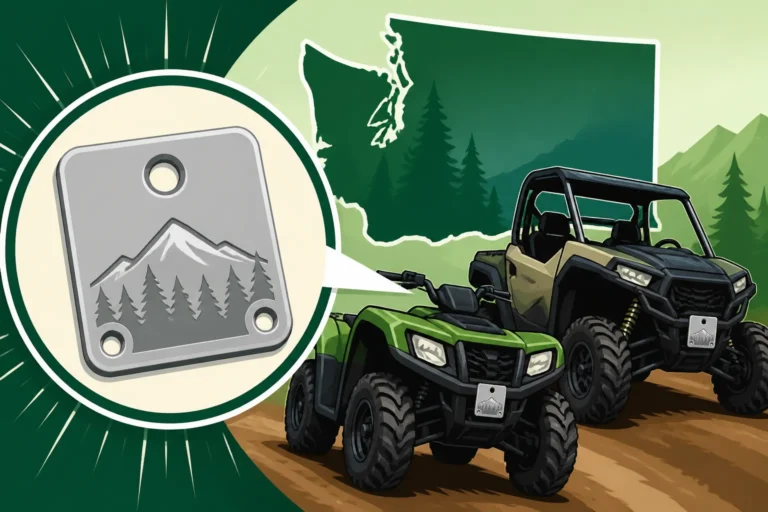
Once your WATV is titled, you can then proceed to register it. Washington uses a [Washington's Two-Tab System] for WATVs. You'll typically get an "off-road" tab, which is required for riding on designated off-road trails and DNR lands. If you plan to ride your WATV on approved public roads, you'll also need to purchase an additional "on-road" tab and ensure your machine meets specific equipment requirements. These tabs, which are small decals, must be affixed to your WATV in a visible location and need to be renewed annually. Your registration card, which comes with your tabs, is the document you do carry on your machine while riding, as it shows proof of current authorization.
Renewing Your WATV Registration Annually
While the title for your WATV is a one-time issuance (unless you transfer ownership or apply for a duplicate), your WATV registration, and the tabs that come with it, must be renewed annually in Washington. This is an important distinction and one that riders sometimes forget. Your registration typically expires on the anniversary of its original issue date. You should receive a renewal notice in the mail from the Department of Licensing before your tabs expire.
Renewing your registration is generally a much simpler process than the initial titling. You can usually do it online, by mail, or in person at a vehicle licensing office. You'll pay a fee for the renewal of your off-road tab, and if you have an on-road tab, you'll renew that as well. Timely renewal ensures you remain compliant with state laws and avoids any potential fines for riding with expired tabs. Keeping your registration current is just as important as having a valid title, as both are crucial for legal and responsible WATV operation in Washington. Regular reminders to check your [When a Washington ORV Registration Expires] will save you from an unexpected citation.
Disclaimer
This article is for general informational purposes only and does not constitute professional advice. Laws, prices and regulations vary by location and change over time. Consult a qualified professional for guidance on your specific situation.