Washington Rules for Hunting From an ATV
Washington hunters often use an ATV to reach remote public land, haul gear, or bring harvested game back to camp. The key distinction is that riding to a lawful access point is not the same as hunting from the machine. Learn where the line falls, what land and route rules apply, and how to avoid turning an access ride into an illegal hunt.
Can You Hunt From an ATV in Washington?
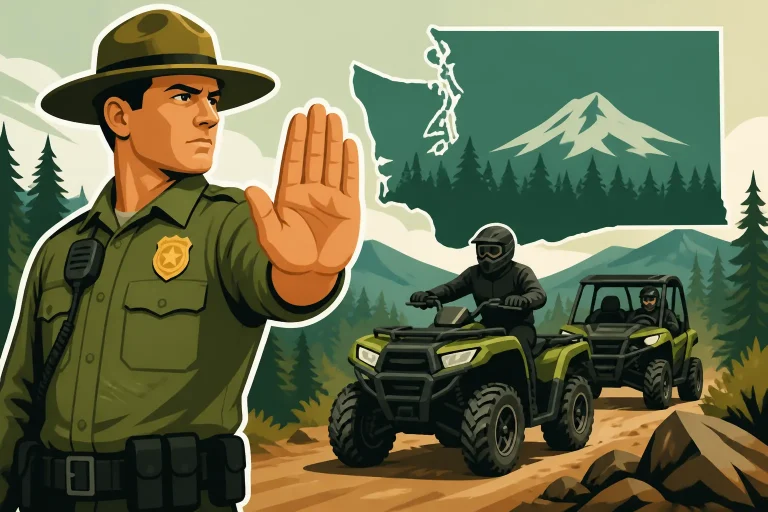
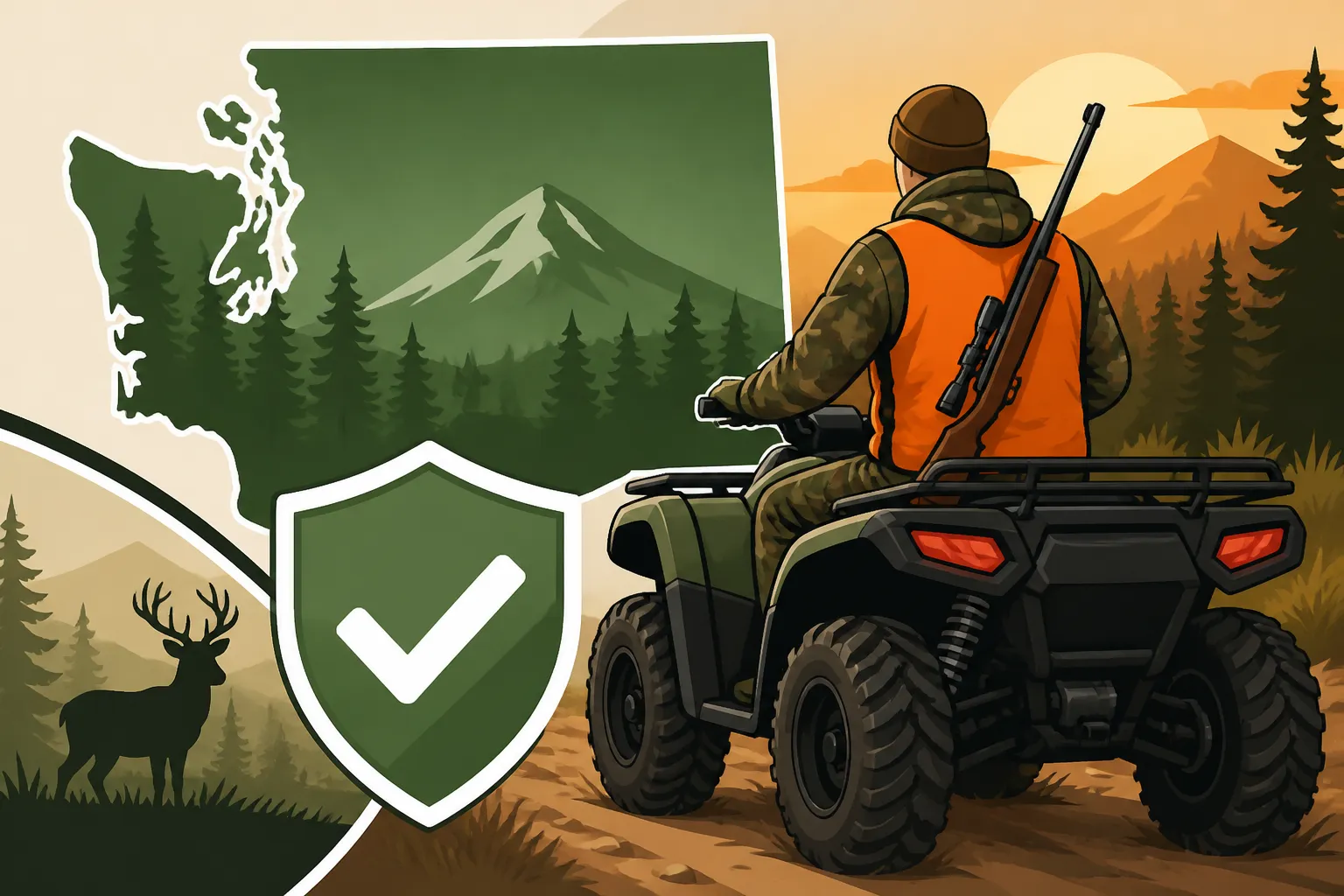
In general, Washington prohibits hunting wildlife from a motor vehicle. That includes using an ATV or UTV as a place to shoot, pursue, or otherwise hunt game. The rule is not limited to a moving machine: stopping the engine or parking does not automatically make the ATV a legal hunting platform.
For practical purposes, plan to dismount and move away from the machine before you begin hunting. Do not use the seat, rack, windshield, or another part of the ATV as a shooting rest while remaining at the vehicle. Nor should you drive around to locate, follow, or push game toward another hunter. Hunting from a machine and using a machine to pursue wildlife can raise separate legal concerns.
There can be an exception for a hunter with a disability accommodation or other authorization from the Washington Department of Fish and Wildlife (WDFW). Do not assume that a disability, a hunting license, or permission from a landowner is enough by itself. Check that your specific permit authorizes the activity and follow its conditions, including any limits on the type of hunting or where it applies. The overview Washington Rules for Hunting From a Machine can help you understand the broader issue.
| Activity | General rule of thumb |
|---|---|
| Riding an ATV to an open, lawful access point | Usually allowed if the machine, route, land access, and hunting rules all permit it |
| Shooting while seated on or positioned on an ATV | Generally prohibited unless a specific authorization allows it |
| Driving around to find or pursue game | Do not do it; motorized pursuit and route restrictions may apply |
| Walking away from a parked ATV to hunt | Generally different from hunting from the vehicle, but you still need lawful access and must follow all hunting rules |
| Carrying harvested game back on an ATV | Depends on the route, land manager, season rules, and any restrictions on vehicle use |
A useful distinction is whether the ATV is merely transportation or is being used as part of the hunt. Driving on an open route to reach an area, then parking and walking to hunt, is different from using the machine to approach animals or take a shot. If the facts are unclear, ask WDFW about the specific activity before the trip rather than relying on a general assumption.
Rules also vary by species, hunting method, season, and location. A route that is open to an ATV does not mean every nearby area is open to hunting, and hunting permission does not mean the route is open to motorized travel. Check both sets of rules.
Riding to a Hunting Area: Routes, Land Access, and Tabs
An ATV can be a practical way to travel to a hunting area, but lawful access depends on where you ride and who manages the land. A map that shows a road or trail is not, by itself, proof that it is open to motorized use. Seasonal closures, active logging, fire restrictions, habitat protections, and other limits can change where a machine may go.
Before leaving, identify the land manager and check the current route information. DNR land, federal land, state wildlife areas, private timberland, and other properties may each have different rules. Start with Washington Rules for Riding DNR Land or Washington Rules for Riding Federal Land if those are the lands you plan to visit. On private land, obtain permission and confirm where you may travel; a hunting agreement does not necessarily include permission to use an ATV. See Washington Trespass Rules for Riders for more on access and permission.
Stay on routes open to your machine. Riding around a closed gate, cutting across a meadow, or leaving a designated route to get closer to game can create both access and hunting problems. A route may be closed even when it appears passable, and a route shown on an old map may no longer be available. Use current notices from the land manager, obey signs and barriers, and turn around if access is unclear. For more detail on route limits, see [Washington Rules for Riding Off a Designated Trail].
If your trip includes public roads, check whether your ATV or UTV is properly registered and equipped for that specific road use. Washington’s off-road and on-road requirements are not interchangeable, and road access is not automatic just because a road connects two riding areas. The rules in Washington’s Off-Road Vehicle Rules Explained and Washington Rules for Riding a County Road are useful starting points.
A registration tab, road-use authorization, or recreation pass also does not grant hunting access or permission to travel on a closed route. These requirements serve different purposes. Confirm what applies at your destination with the land manager, and check whether a pass or other access document is required for the particular parking area or property.
When planning a route, ask:
- Is the land open to hunting for my intended species and season?
- Is motorized use allowed on the specific road or trail?
- Is the route currently open, including any seasonal or temporary closures?
- Do I have permission to use an ATV on private or managed land?
- Does my machine meet the requirements for any public road I plan to use?
- Are there separate rules for the area where I intend to park or stage?
A yes to one question does not answer the others. For example, a public hunting area may allow hunting but restrict motorized access to designated roads. Likewise, a private landowner may allow hunting but limit vehicle travel to a particular gate or staging area.
Transporting Firearms, Gear, and Harvested Game
Treat the ride to and from the hunting area as vehicle travel, not as part of the shooting opportunity. Keep firearms securely stowed and unloaded while transporting them on the ATV. Washington’s firearm and hunting rules can include specific restrictions on loaded firearms in or on motor vehicles, so check the current regulations for your weapon and situation. The related overview Washington Rules for Carrying a Firearm on a WATV is a useful place to review the issue.
Secure firearms and other equipment so they cannot shift, fall off, or interfere with steering and braking. A firearm should not be carried in a way that makes it easy to reach and fire while seated on the machine. If you use archery equipment, secure it too; equipment that is ready to use while riding can create safety risks even where the firearm rules do not apply.
When you stop to hunt, leave the ATV in a safe, lawful location that does not block a route or gate. Dismount before preparing to hunt, and do not use the machine to approach animals. Keep an eye on changing conditions, too: weather, daylight, wildfire restrictions, and a newly posted closure can affect both your return route and your ability to stay in the area.
Bringing game back
Using an ATV to transport harvested game is not the same question as hunting from one, but it is not automatically allowed everywhere. You still need to stay on routes open to motorized vehicles and follow the land manager’s rules. Some areas may restrict vehicle access even if foot access is permitted. Check for any species-specific or site-specific requirements that affect retrieval, and do not drive off-route to reach an animal.
Plan the recovery route before the hunt. If a game animal is beyond the open route, do not assume you can leave the trail just because you have a harvested animal to retrieve. Contact the relevant land manager or WDFW if you need to know whether a particular recovery method is permitted. If you hunt with others, agree in advance that no one will use an ATV to pursue or herd game.
A map case or GPS can help keep the lawful route clear when conditions are confusing. For example, a waterproof map case or a handlebar-mounted navigation device purchased through Amazon may be useful for protecting route information from rain. A device cannot confirm that a road is currently open, though, so check official closure notices before setting out.
Before each trip, use this short checklist:
- Confirm the current hunting rules for the species, season, weapon, and location.
- Verify that motorized access is allowed on every road or trail you plan to use.
- Check for closures and obtain any landowner permission or site access document required.
- Secure and transport firearms in accordance with current Washington rules.
- Park without blocking traffic, gates, or other users’ access.
- Hunt on foot unless you have specific authorization to hunt from a vehicle.
- Retrieve game only by a method and route permitted by the land manager.
- Recheck conditions before returning, especially if weather, fire activity, or posted restrictions have changed.
The safest simple rule is to use the ATV to reach a lawful staging point, then leave it behind while you hunt. That keeps transportation separate from the act of hunting and makes it easier to comply with route closures, land access conditions, and firearm restrictions.
Disclaimer
This article is for general informational purposes only and does not constitute professional advice. Laws, prices and regulations vary by location and change over time. Consult a qualified professional for guidance on your specific situation.