Washington Rules for Filming on Forest Land
Filming an ATV or UTV ride on Washington forest land can look like a simple matter of carrying a camera along. The complication is that access rules depend on who manages the land and what your shoot involves. A phone video on an open trail is different from a commercial production with a crew, drones, or road closures. Here’s how to sort out the differences before you arrive.
Start with who manages the forest
“Forest land” is not one permission category. A trail can run through land managed by the Washington Department of Natural Resources (DNR), a national forest, a state park, or a private timber company. Each manager can set its own conditions for filming, vehicles, equipment, and commercial activity.
Start by identifying the exact location and land manager, not just the nearest town or the name of the riding area. Check the current map, trailhead information, and any posted notices. If the route crosses more than one kind of property, ask about each section. Permission from one landowner does not automatically cover the rest.
| Where you plan to film | What to check first | Why it matters |
|---|---|---|
| DNR-managed forest | Contact the relevant DNR office about filming and any required authorization | A ride permit or general recreation access does not necessarily authorize a production |
| National forest | Contact the forest or district office about filming, access, and equipment | Federal land has its own authorization and resource-protection rules |
| Private timberland | Get permission from the landowner or company, and confirm which roads are open | Public-looking roads may cross private land or be subject to seasonal access limits |
| State park or another managed site | Ask that site’s managing agency | Rules for filming and motorized use may differ from nearby forest rules |
For a DNR location, Washington Rules for Riding DNR Land can help explain the riding context, but filming questions should go to the land manager. For a national forest, see Washington Rules for Riding a National Forest and then contact the appropriate forest office about your specific production.
Private timberland needs special care. A road may appear on an older map or be used by the public at certain times without being open for your shoot. Access may depend on current hauling, fire conditions, a gate, or a landowner’s permission. Read Washington Rules for Riding Private Timberland and A Timber Company Permit in Washington before treating a timber road as a filming location.
If your shoot spans multiple jurisdictions, make a short list of every land manager and ask each one the same basic questions: whether your planned filming is allowed, whether a permit or written authorization is needed, and what restrictions apply to vehicles, crew, equipment, and dates. That small step can prevent a shoot from being stopped after you have transported machines and gear to the site.
What makes a shoot more likely to need authorization
The word “filming” can mean anything from a rider recording a short clip on a phone to a planned production with employees, contractors, and specialized equipment. Land managers may consider the purpose and impact of the activity, not simply whether someone is holding a camera.
A low-impact personal recording on an open route is generally a different situation from a shoot that uses a crew, occupies a staging area, brings in lighting or large equipment, blocks access, or asks other visitors to stay clear. Commercial work can also raise additional questions. But don’t assume that all online video is commercial, or that a video is automatically exempt because it will be posted to a personal account. Explain the project honestly and ask the land manager how it classifies your particular plan.
Factors worth mentioning when you contact the manager include:
- Whether the filming is personal, journalistic, promotional, or part of paid production work.
- How many people and vehicles will be present.
- Whether you will use cameras mounted on machines, tripods, lights, generators, or other equipment.
- Whether you plan to use a drone.
- Whether filming will take place on a trail, road, or at a staging area.
- Whether the shoot could delay, redirect, or exclude other visitors.
- Whether you need to reserve or occupy a particular location.
- Whether any part of the shoot involves travel outside an open route.
The land manager may decide that no special authorization is needed for a small, unobtrusive activity, or may require written approval for a more organized or commercial production. Requirements can vary by agency and by the details of the project, so a general answer from a friend or a previous visit is not a substitute for checking your own location and shoot.
Do not treat a permit for one purpose as permission for another. An authorization for an organized ride, an event, or a specific area may not cover a separate filming operation. Likewise, being allowed to ride a route does not necessarily mean you may set up equipment, close a trail, stage a crew, or conduct commercial activity there. If your shoot is part of a group event, Applying for a DNR Special Use Event Permit may help with the event side, but ask DNR whether filming needs a separate approval.
Get the decision in writing when possible. Keep the contact’s name, any permit or authorization, the approved dates and locations, and any conditions with the shoot lead. If staff give you verbal guidance, follow up with a concise email confirming what you understood. That record makes it easier for everyone to know what was approved.
Plan the shoot around access and resource rules
Permission to film is only one part of planning. You still need to follow the rules for the land, your machine, and the route. A camera does not make a closed trail open, and a filming approval should not be read as permission to ride off trail or around a gate.
Before the shoot, confirm that every planned route is open to your machine and that your group meets the applicable requirements. Washington’s ORV access rules can differ from one road, trail, and land manager to another. Review Washington Rules for Riding a Closed Road and [Washington Rules for Riding Off a Designated Trail] if the production plan includes locations beyond established routes. If you expect to ride a road, check its status rather than relying on an old map or a video from another rider.
Avoid disrupting other visitors. Don’t block a trail or staging area to get a shot unless the land manager has specifically approved that arrangement. Keep equipment and parked machines out of travel paths, and leave room for emergency and land-management vehicles. If the location is busy, consider a less crowded time or a smaller setup. A shoot that is technically allowed can still create avoidable safety problems if it interferes with normal use.
Protect the forest while filming:
- Stay on routes open to your vehicle and keep tires, stands, and equipment off sensitive ground.
- Do not move barriers, signs, or gates to improve a camera angle.
- Keep clear of active work areas, including timber operations, unless the land manager has approved access.
- Pack out trash, tape, zip ties, and other production material.
- Avoid disturbing wildlife, waterways, vegetation, and cultural or archaeological resources.
- Stop if a closure, fire restriction, or unsafe condition affects the planned area.
Conditions can change between planning and shoot day. Check notices shortly before leaving and again at the site. A trail may close for fire danger, weather damage, active timber work, or another management need. Checking Alerts Before You Load Up is useful for trip planning, but when a notice conflicts with an earlier plan or approval, contact the land manager and follow the current restriction.
Drones deserve a separate check. Permission to ride or film from the ground does not automatically authorize a drone launch or flight. Airspace requirements and land-specific restrictions may apply, and a land manager may limit launching or landing from the site even when a flight elsewhere would be allowed. Tell the manager if a drone is part of the production, then check the applicable aviation rules before operating it.
If you are filming people other than your own crew, plan for their privacy and safety. Don’t pressure visitors to move, follow them for footage, or place a camera where it creates a hazard. A public trail is not a controlled set, so be prepared to change the shot if other users need to pass.
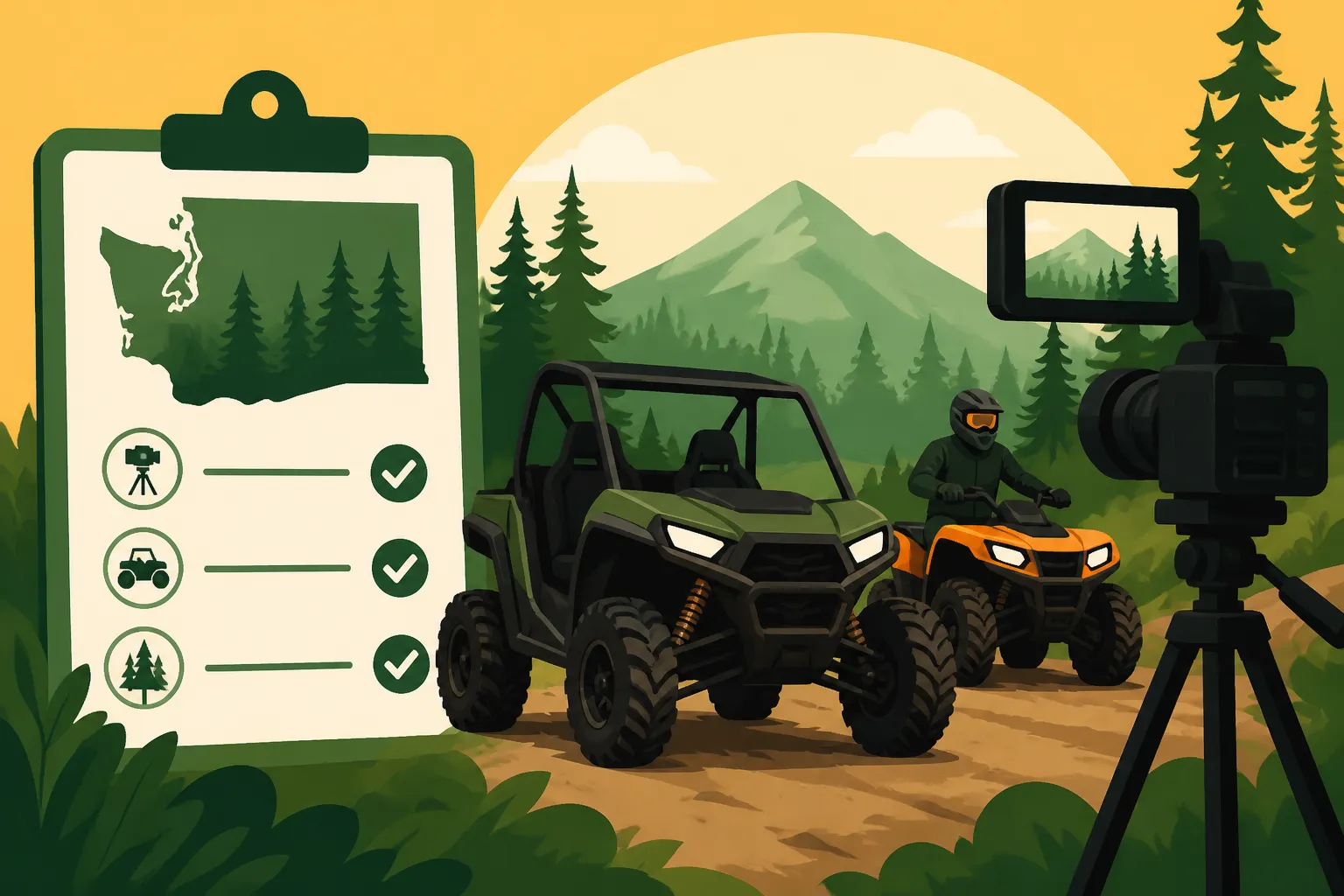
A practical permission checklist for ATV and UTV filming
Use this sequence before loading your machine. It helps separate land access, filming approval, and riding compliance instead of assuming one answer covers everything.
-
Pin down the location. Write down the trail, road, staging area, and any alternate spots. Identify who manages each portion. If the route crosses boundaries, list each manager separately.
-
Describe the production plainly. State whether the recording is personal or connected to paid, promotional, or other organized work. Include crew size, vehicle count, dates, equipment, and whether you plan to use a drone. A clear description gives the manager a fair chance to identify the right process.
-
Ask what authorization is required. Ask whether the activity needs a filming permit, special-use authorization, event approval, landowner permission, or no separate approval. Do not infer the answer from the fact that recreation access is open.
-
Confirm the scope and conditions. If permission is granted, check that it covers the exact place, dates, people, machines, and equipment you plan to use. Ask about parking, setup, public access, insurance, fees, and any required conditions. For named agencies and providers, confirm current requirements directly rather than relying on old forms or figures.
-
Check machine and route rules. Confirm your machines are eligible for the planned roads or trails and that riders have the required documents and equipment. Filming does not replace registration, tabs, permits, or other requirements that apply to your ride.
-
Recheck before departure. Look for closures, fire restrictions, road work, and weather-related changes. If conditions have changed, contact the land manager instead of assuming the original approval still applies.
If you are told a permit is not needed, ask whether that answer applies to all parts of the plan, especially commercial use, drones, equipment, or staging. A concise email confirming the details can help avoid a misunderstanding at the trailhead.
If the shoot involves a paid crew, a production company, or a request to control public access, begin contacting the land manager early. The review may take time, and staff may need to assess site impacts or direct you to another office. If you are a solo rider recording your own outing, keep the setup small, use open routes, and be ready to stop or move if staff identify a restriction.
The safest rule is simple: confirm filming permission with the manager of the land, and treat riding access as a separate question. That approach avoids the two most common planning mistakes—assuming public access covers every kind of production, and assuming filming approval allows any vehicle use.
Disclaimer
This article is for general informational purposes only and does not constitute professional advice. Laws, prices and regulations vary by location and change over time. Consult a qualified professional for guidance on your specific situation.