Why WSDOT Must Authorize a Washington Segment
It can be incredibly frustrating to see fellow off-road enthusiasts enjoying their Side-by-Sides on certain county roads, only to discover that the major state highway connecting two trail systems is completely off-limits to your own machine. This isn't just arbitrary; it comes down to a fundamental difference in authority and jurisdiction, particularly regarding state highways. This guide will meticulously break down why the Washington State Department of Transportation, or WSDOT, holds the unique power to authorize — or deny — where your wheeled all-terrain vehicle (WATV) can legally operate on state highway segments, and what that means for your riding plans.
Understanding Washington's WATV Road Access Framework
Navigating the rules for riding your WATV on public roads in Washington can feel like deciphering a complex puzzle. While local counties and cities have some latitude, state highways operate under a different set of rules, largely governed by WSDOT. This isn't about making things difficult; it's about managing safety on roads designed for high-speed, conventional vehicle traffic.
The Foundational Law: RCW 46.09
Washington's Revised Code of Washington (RCW) 46.09 is the backbone of all ORV-related regulations, including those concerning WATVs on roads. This legislation draws a clear distinction between different types of roads and the governmental bodies responsible for them. It acknowledges the growing popularity of WATVs and the desire for riders to connect trail systems or access services, but it also prioritizes public safety above all else. Understanding this foundational law helps explain why state highways are treated differently from your average gravel county road.
The law carefully defines what a WATV is and the conditions under which it can be registered for limited road use. It specifies the equipment requirements, driver licensing, and other critical safety measures that must be met before a machine even qualifies for consideration on any public road. Without this underlying framework, the entire system would lack consistency and enforcement. It's the reason you need to ensure your machine has proper turn signals, mirrors, and even a horn before you even think about putting it on pavement.
Who Controls Which Roads
The RCW establishes a hierarchy of road ownership and regulatory power. County roads and city streets generally fall under the purview of local governments – your county commissioners or city council. These local bodies have the authority to "opt-in" to allowing WATV use on specific roads within their jurisdiction, provided those roads meet certain criteria, such as a posted speed limit of 35 mph or less. This is why you might see [Washington Counties Over Fifteen Thousand Must Opt In] to create their approved road lists, while smaller counties might be open by default unless they specifically close roads.
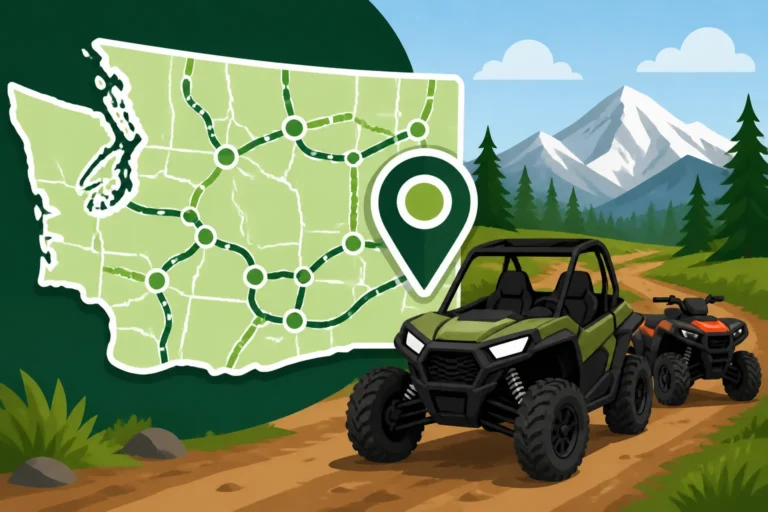
State highways, however, are a different beast entirely. These are the major arteries that crisscross our state, maintained by WSDOT, and they are typically designed for higher speeds and traffic volumes. Because of their critical role in statewide transportation and the inherent risks associated with mixing slower-moving WATVs with fast-moving conventional vehicles, the legislature gave WSDOT the sole authority to determine if and where WATVs can operate on these segments. This division of power ensures that decisions about state highways are made at a statewide level, considering broader traffic patterns and engineering standards, rather than piecemeal by individual local jurisdictions.
The Distinct Role of WSDOT in Highway Authorization
Unlike counties or cities that can broadly open their road networks (with specific exclusions), WSDOT's authority over state highways is much more granular and deliberate. Their decisions are rooted in a deep understanding of traffic engineering, safety data, and the specific characteristics of each highway segment.
State Highways vs. Local Roads
The fundamental difference lies in purpose and design. Local roads are often intended for neighborhood access, agricultural use, or connecting smaller communities. Their speed limits are generally lower, and traffic volumes can vary greatly. Many of these roads were built for a different era, and integrating WATVs, especially for short distances, can sometimes be done safely with proper signage and rider awareness.
State highways, on the other hand, are the backbone of commerce and long-distance travel. They are engineered for consistent traffic flow, often at higher speeds (up to 60 mph or more), and frequently feature complex intersections, limited visibility curves, and heavy truck traffic. Introducing slower-moving WATVs, which may have different handling characteristics, tire compositions, and occupant protection than conventional vehicles, presents a significant safety challenge. WSDOT's role is to look at these critical factors and ensure that any authorization does not compromise the safety of all road users. This is why you'll often hear about [Washington Rules for Crossing a State Highway] rather than extensive riding on them.
WSDOT's Statutory Mandate
WSDOT isn't just making decisions based on opinion; they are operating under a specific mandate from the state legislature. The law requires WSDOT to conduct thorough studies and evaluations before authorizing any state highway segment for WATV use. This isn't a rubber-stamp process. They must consider factors like traffic volume, posted speed limits, roadway geometry, sightlines, and existing safety records. If a segment is deemed too dangerous for WATV integration, WSDOT is legally obligated to deny access.
This mandate is crucial because it ensures that safety remains the primary driver of any decision. It prevents political pressure from overriding sound engineering and public safety concerns. For a state highway segment to be opened, it's not enough for local riders to want it; WSDOT must be able to demonstrate, through data and analysis, that it can be done safely. This often means very specific, limited segments, perhaps for crossing or connecting, rather than long stretches of travel.
Criteria for WSDOT Authorization
When WSDOT considers opening a state highway segment to WATVs, they aren't just looking at a map. They’re diving deep into data, engineering principles, and safety considerations. It’s a multi-faceted evaluation designed to protect everyone on the road.
Safety Considerations
Safety is, without a doubt, the paramount concern for WSDOT. They're looking at accident history, evaluating potential conflict points between WATVs and conventional vehicles, and assessing the visibility of WATVs on a given stretch of highway. Factors like the number of lanes, presence of shoulders, and even the curvature of the road play a significant role. A two-lane highway with blind curves and no shoulder, for example, would present a much higher safety risk for WATV use than a straight, multi-lane segment with wide shoulders.
WSDOT also considers the speed differential. WATVs are legally limited to [Washington's 35 mph Road Rule] on public roads. If a state highway segment has a posted speed limit significantly higher than 35 mph, the risk of rear-end collisions or other incidents due to speed disparity increases dramatically. Their analysis will weigh the potential for WATV riders to impede the flow of traffic or create unexpected hazards for faster-moving vehicles. This careful calculation ensures that any authorized segment can truly accommodate WATVs without undue risk to any road user.
Roadway Characteristics and Engineering
Beyond general safety, WSDOT scrutinizes the physical characteristics and engineering design of the highway segment. This includes examining pavement conditions, lane widths, and the presence and condition of shoulders. A segment with narrow lanes and crumbling shoulders, for instance, offers little margin for error for WATV riders or the vehicles around them. They'll also look at sightlines—how far ahead drivers can see—especially around intersections, driveways, and curves. Poor sightlines mean less reaction time, which is a major red flag for WATV authorization.
Furthermore, WSDOT evaluates the number and complexity of intersections. Highways with numerous at-grade intersections, traffic signals, or roundabouts can become particularly hazardous for WATVs, which may accelerate or maneuver differently than cars and trucks. The presence of these complex features often leads to a denial of authorization, as they inherently increase collision potential. Engineering evaluations also consider drainage, signage, and whether the segment is part of a larger, critical transportation corridor where any disruption could have widespread impacts.
Traffic Volume and Speed Limits
The volume of traffic on a state highway segment is a critical determinant. A high Average Daily Traffic (ADT) count means more potential interactions between WATVs and other vehicles, naturally increasing the risk of incidents. WSDOT is unlikely to authorize WATV use on heavily trafficked segments, especially during peak hours, because the sheer number of vehicles amplifies the potential for conflict. They might consider segments with lower ADT, particularly those that serve more rural areas or act as connectors between less-trafficked routes.
Crucially, the statutory speed limit is often the most significant hurdle. As mentioned, WATVs are generally restricted to roads with a speed limit of 35 mph or less for general travel. While some exceptions for crossing or very specific, short segments might exist, WSDOT is highly unlikely to authorize extensive travel on state highways posted at 45 mph, 55 mph, or even 60 mph. Even for crossing a highway, the law sets limits on the posted speed of the highway being crossed. The greater the speed differential between the WATV and the prevailing traffic, the higher the risk, and thus the less likely WSDOT is to grant approval.
The Process of Securing WSDOT Approval
You might be thinking, "Well, how does a segment even get considered then?" It's a structured, often lengthy process, driven by data and public input, not just a simple request.
Requests and Data Gathering
The journey for a state highway segment to be opened to WATVs typically begins with a formal request. This request can come from a local government (county or city), an ORV advocacy group, or even a concerned citizen. However, it's not enough to just ask; the request needs to be supported by a compelling argument, often including data on local riding needs, potential benefits, and preliminary thoughts on how safety could be maintained.
Once a request is made, WSDOT begins its rigorous data gathering phase. This involves reviewing accident records, conducting traffic counts, measuring speeds, and performing detailed engineering studies of the specific highway segment in question. They'll look at everything from pavement friction to sight distances at intersections. This data forms the objective basis for their evaluation and is essential for ensuring decisions are evidence-based. Without this thorough investigation, WSDOT would be operating in the dark, potentially compromising public safety.
Engineering Analysis and Safety Review
With all the data in hand, WSDOT's engineers and safety experts dive into a comprehensive analysis. They model traffic scenarios, assess the impact of WATVs on existing traffic flow, and identify any potential hazards that might arise from opening the segment. This analysis considers the specific characteristics of WATVs—their narrower profile, different acceleration and braking capabilities, and driver visibility—and how these interact with conventional highway traffic. The [2019 WSDOT Guidance on Washington WATVs] outlines many of the specific parameters and considerations that go into this detailed review.
During this review, WSDOT often consults with law enforcement agencies (like the Washington State Patrol) to get their input on enforcement challenges and safety concerns from an on-the-ground perspective. They also weigh the potential for WATVs to cause driver confusion or unexpected reactions from other motorists. If the analysis reveals an unacceptable level of risk, or if engineering solutions to mitigate those risks are not feasible, the request will likely be denied. This meticulous step is where the bulk of the decision-making happens, ensuring every angle is considered.
Public Comment and Final Decision
Even after the engineering analysis, WSDOT understands the importance of public input. Before a final decision is made, particularly if the analysis leans towards approval, there will typically be a public comment period. This allows local residents, riders, businesses, and other stakeholders to voice their opinions, raise concerns, or offer additional information that WSDOT might not have initially considered. This democratic step ensures transparency and provides an opportunity for affected communities to be heard.
After considering all the technical data, safety analyses, and public comments, WSDOT will make its final determination. If approved, the authorization will be highly specific, outlining the exact segment of highway, any time restrictions, and specific conditions for WATV use. This might involve additional signage, pavement markings, or other mitigation measures. If denied, WSDOT will provide clear reasons based on the safety and engineering factors uncovered during their process. It's a transparent system designed to instill confidence in the decision-making.
Rider Responsibilities on WSDOT-Authorized Segments
Even if a WSDOT-authorized segment is opened, the responsibility for safety largely falls on the shoulders of the WATV rider. Understanding and adhering to all regulations is not just about avoiding a ticket; it's about ensuring your own safety and that of others.
Equipment Requirements for Road Use
Before you even think about rolling onto any WSDOT-authorized highway segment (or any public road for that matter), your WATV must meet stringent [Equipment a Washington WATV Needs on a Road]. This isn't optional. Your machine needs functional headlamps, tail lamps, and brake lights, especially if you plan to ride at dusk or dawn. You’ll need [Washington Turn Signal Requirements] on both the front and rear, and they need to be clearly visible. A working horn is also mandatory, allowing you to alert other drivers or pedestrians if needed.
Perhaps one of the most critical safety additions is adequate mirrors. [Washington Mirror Requirements for Road Use] dictate that you must have at least one mirror that allows you to see 200 feet behind your machine. Many riders find that adding a second mirror, often available through aftermarket companies like SuperATV, provides better situational awareness and enhances safety, especially on roads. For utility vehicles (UTVs), a windshield or eye protection is also necessary. These aren't suggestions; they are legal requirements designed to make your WATV as visible and safe as possible for road use.
Driver Licensing and Helmet Rules
Just like driving a car, operating a WATV on a public road in Washington, including WSDOT-authorized segments, requires a valid driver's license. You cannot just hop on your machine with a learner's permit or no license at all. This ensures that riders have a basic understanding of traffic laws and possess the necessary skills to operate a motor vehicle safely in mixed traffic. Furthermore, the state has clear [Washington Rules for Riders Under 16], often requiring direct adult supervision if a young rider is on a road-legal machine.
And, of course, helmets. Washington has a comprehensive [Washington Helmet Law for WATV Riders] that applies to all riders and passengers on public roads, regardless of age or whether the machine has seatbelts. This means a DOT-compliant helmet must be securely fastened whenever you are on an authorized road segment. Even if your side-by-side has a full cab and seatbelts, the helmet rule still applies. This critical safety measure is designed to protect against head injuries, which are often the most severe in any vehicle accident.
Adhering to Posted Speed Limits and Rules of the Road
Once on a WSDOT-authorized segment, you are no longer just on a trail; you are sharing the road with conventional vehicles, and all traffic laws apply. This means adhering to the posted speed limit, which for WATVs on open public roads is typically 35 mph or less. Even if the state highway is posted for 45 mph for cars, your WATV generally cannot exceed 35 mph. Exceeding this limit not only risks a [Washington Fines for Illegal WATV Road Use] but dramatically increases the risk of a severe accident due to speed differential.
You must also follow all other rules of the road: stopping at stop signs, obeying traffic signals, using turn signals, and maintaining proper lane positioning. [Washington Rules for Riding Two Abreast] on public roads are generally prohibited; you must ride single file. Remember, you are a vehicle in traffic, and other drivers may not be expecting a WATV. Be predictable, be visible, and always prioritize safety. This includes ensuring your WATV’s registration is current and carrying the necessary paperwork.
The Broader Impact of WSDOT Authorization
WSDOT's decisions regarding WATV access on state highways ripple beyond just a single segment of road. They affect interconnectedness, safety perceptions, and the very future of ORV riding in Washington.
Connecting Trail Systems
One of the most significant benefits of WSDOT authorizing even small segments of state highway is the potential to connect disparate trail systems. Often, beautiful, extensive trail networks are separated by a short stretch of state highway, forcing riders to trailer their machines, even for a mile or two. By opening these crucial connecting segments, WSDOT can unlock new riding opportunities and create much larger, more cohesive recreational areas. This can reduce the logistical burden on riders and enhance the overall ORV experience in the state.
Imagine a scenario where a rider could transition directly from a DNR forest road, cross a state highway, and immediately enter another trail system, all without having to load their machine onto a trailer. This not only makes riding more convenient but can also contribute to economic development in rural areas by making trail systems more accessible to tourists and recreational users. The strategic authorization of even a few key segments can have a disproportionately positive impact on the state's ORV community.
Promoting Responsible Riding and Safety
The rigorous process WSDOT employs to authorize segments helps to promote a culture of responsible riding. By setting a high bar for safety and requiring specific equipment and operational standards, WSDOT reinforces the idea that road use for WATVs is a privilege that comes with significant responsibilities. This encourages riders to ensure their machines are properly equipped and maintained, and that they themselves are educated on traffic laws and safe riding practices.
When riders understand that strict adherence to rules is necessary for continued access, it fosters a more disciplined community. This, in turn, contributes to a safer environment for everyone on the road, including conventional vehicle drivers who may be sharing the pavement with WATVs. Manufacturers of aftermarket parts, like SuperATV, also play a role by providing compliant equipment that helps riders meet these critical safety standards, from better lighting to compliant mirror setups. Ultimately, a focus on safety by all parties helps preserve and expand riding opportunities.
What WSDOT Authorization Does Not Mean
It's just as important to understand what WSDOT authorization doesn't mean. There are common misconceptions that can lead to confusion and even citations if not clarified.
It's Not a Blanket Approval for All State Highways
The biggest misconception is that if WSDOT approves one segment, it somehow means all state highways are now open or will eventually be. This is absolutely not the case. Each authorization is segment-specific and comes with its own unique conditions and limitations. WSDOT's decisions are based on the granular details of that particular stretch of road. A favorable decision for a short, low-traffic connector in a rural area does not translate to permission to ride on a busy, multi-lane state route that happens to be nearby.
Riders must always verify the specific roads that have been authorized. Relying on hearsay or assuming broad access can lead to serious legal consequences, including significant [Washington Fines for Illegal WATV Road Use]. Always check official WSDOT and local county resources, such as posted road lists, before planning your route. Just because a friend said a road was open last year doesn't mean it still is, or that you're even allowed to be on that specific part of it.
No Open Season for High-Speed Travel
Even on an authorized segment, WSDOT authorization does not mean you can operate your WATV at the posted speed limit for conventional vehicles, especially if that limit is above 35 mph. As we discussed, WATVs are generally restricted to a maximum speed of 35 mph on open public roads. This speed limit is a critical safety control designed to mitigate the risks associated with the speed differential between WATVs and other vehicles.
Riding faster than 35 mph on a state highway segment, even if it's authorized for WATV use, is illegal and dangerous. It undermines the very safety considerations that WSDOT put in place during their authorization process. The intent of most authorizations is to facilitate crossings or short, low-speed connections, not to turn WATVs into highway cruising machines. Always remember the [Washington's 35 mph Road Rule] applies to your WATV on public roads.
WSDOT Authorization Status: A Quick Reference
To help clarify the differences in authority, here's a quick table:
| Authority | Roads Governed | WATV Authorization Power | Typical Authorization Criteria | Rider Speed Limit (WATV) |
|---|---|---|---|---|
| WSDOT | State Highways | Yes (Segment-Specific) | Safety, Engineering, Traffic Volume | Generally 35 mph max |
| County | County Roads | Yes (Opt-in by Ordinance) | 35 mph or less speed limit | Generally 35 mph max |
| City | City Streets | Yes (Opt-in by Ordinance) | 35 mph or less speed limit | Generally 35 mph max |
| Federal Agencies | National Forests, BLM | Yes (Specific Regulations) | Federal land use plans | Varies by agency/road |
This table makes it clear that WSDOT has a specific and limited role, primarily focused on the most critical and complex road networks in the state. Understanding this helps set realistic expectations for where and how you can ride your WATV on paved surfaces.
Conclusion: Navigating Washington's State Highways on a WATV
Riding your wheeled all-terrain vehicle in Washington is a fantastic way to explore the state's incredible landscapes, but it requires a thorough understanding of the rules, especially when it comes to shared public roads. The distinction between local roads and state highways, and WSDOT's unique authority over the latter, is a critical piece of that puzzle. WSDOT's meticulous, safety-driven authorization process for state highway segments is not designed to create hurdles but to ensure that when WATVs and conventional vehicles share pavement, it happens as safely as possible.
As riders, our responsibility is to stay informed, equip our machines properly (thinking about products from brands like SuperATV for compliance), and adhere to all traffic laws. By doing so, we not only protect ourselves but also contribute to the positive perception of WATV use, potentially opening more avenues for responsible riding in the future. Always remember to check official sources like WSDOT's website and local county ordinances to plan your routes effectively and legally.
Disclaimer
This article is for general informational purposes only and does not constitute professional advice. Laws, prices and regulations vary by location and change over time. Consult a qualified professional for guidance on your specific situation.