Why Evans Creek Takes a Forest Pass
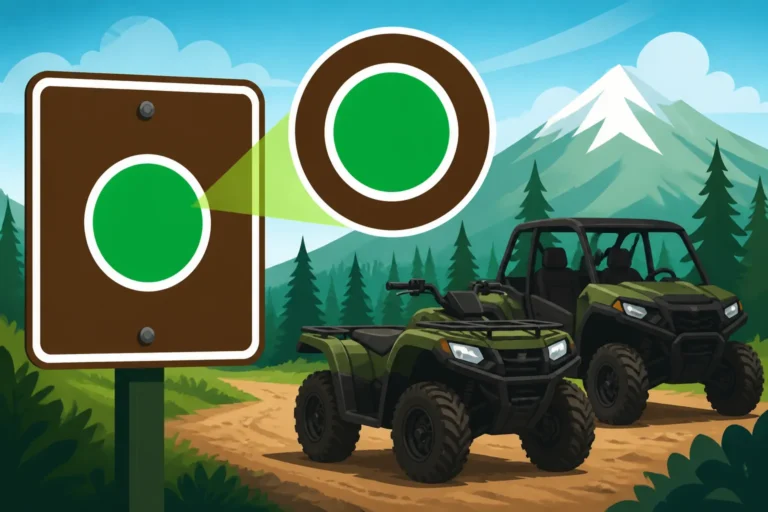
Evans Creek’s forest pass requirement can feel confusing when you have already paid for ATV tabs, trail permits, or a Discover Pass. The key is that these cover different things: at Evans Creek, the Forest Service pass is generally about parking at a recreation fee site, not permission to ride. This guide explains what the pass is for, what it does not replace, and what to check before you tow your machine there.
Why Evans Creek Requires a Forest Pass
Evans Creek is a motorized recreation area in the Mount Baker-Snoqualmie National Forest, in the forested foothills east of Buckley and Wilkeson. The pass requirement is tied to the recreation site and its parking facilities. It is separate from the paperwork and equipment requirements that apply to your ATV, UTV, or other off-road vehicle.
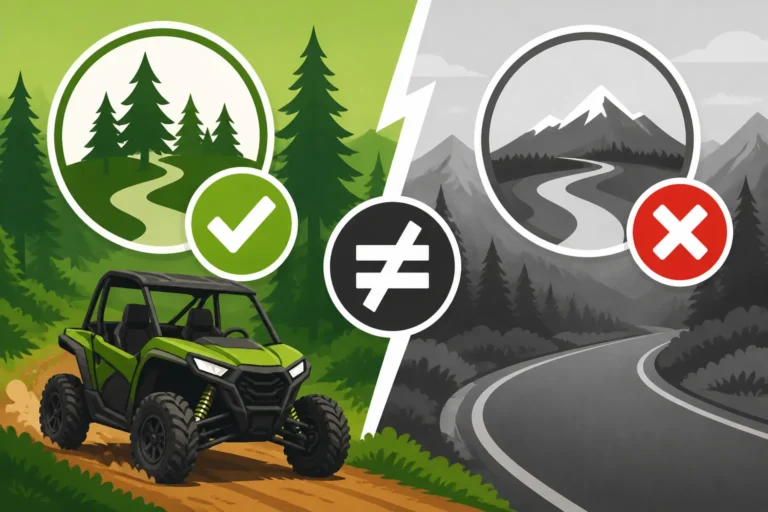
That distinction matters because riders often use “trail fee,” “ORV permit,” and “parking pass” as if they were interchangeable. They are not. If you arrive with a valid vehicle registration but no required parking pass, you may still be missing what the site requires. Likewise, carrying a forest pass does not make an unregistered machine legal to operate.
The pass pays for recreation-site access
A forest pass is generally associated with parking at designated Forest Service recreation sites. At Evans Creek, think of it as part of the cost of using the developed trailhead or parking area, rather than a fee for each trail you ride. The requirement applies to the vehicle parked at the site, so plan for the truck or tow vehicle as well as the machine you unload.
This can feel like paying twice when you already have a Washington ORV registration or tabs. But those payments have different purposes. Registration identifies the machine and supports its lawful operation under applicable rules; a recreation pass addresses use of a specific site or parking area. If you want a broader explanation of this distinction, see [Why a Forest Pass and Not a Discover Pass] and [The Northwest Forest Pass in Washington].
It also helps to separate the parking decision from the riding decision. A pass at the windshield does not confirm that a particular trail is open, that a machine fits the route, or that you have met all equipment requirements. Those are separate checks to make before you unload.
Evans Creek is on federal forest land
Evans Creek is managed as a Forest Service recreation area, which is why the relevant pass is associated with federal forest recreation rather than simply being a Washington state lands pass. The name on the pass matters: a pass intended for one agency’s sites does not automatically cover another agency’s parking areas.
This is one reason a familiar Washington pass can lead to a surprise at the trailhead. State-managed recreation areas and federal forest sites do not necessarily use the same pass system. Before you go, read the posted fee information for Evans Creek and confirm which pass types are accepted at the site. The guide Evans Creek ORV in Washington's Cascades provides related context about the area, while [The Discover Pass and Washington Riders] explains why a state pass is not a universal substitute.
If you are planning a multi-stop weekend, check each destination separately. A pass that works at one trailhead may not meet the requirements at the next one, even if both locations are in the same region. That small bit of planning can save a frustrating conversation at a fee station or a citation on the way back to your truck.
What the Forest Pass Covers and What It Does Not
The easiest way to avoid confusion is to treat every credential as answering a different question. The forest pass concerns access to a recreation fee site or parking area. Vehicle registration concerns the machine. A Discover Pass applies to certain Washington state recreation lands. A temporary permit or other ORV credential may apply to a visitor or a particular use situation.
| Item | What it generally addresses | What it does not automatically replace |
|---|---|---|
| Forest recreation pass | Parking at a designated Forest Service recreation fee site | Washington ORV registration or trail-use requirements |
| Washington ORV tabs or registration | Registration status and permitted use of the machine under Washington rules | A required pass for parking at a federal recreation site |
| Discover Pass | Access to certain Washington state-managed recreation lands | A Forest Service pass at a federal fee site |
| Temporary ORV permit | Certain limited registration situations, subject to its conditions | A parking pass or permission to ride a closed trail |
The precise requirements depend on the site, the machine, and the activity. Use this table as a way to sort the questions—not as a substitute for the fee notice or agency rules posted for your visit.
A forest pass is not an ORV registration
Washington ORV registration and trail access are not the same thing as paying to park. The registration attached to your machine may be required for legal operation, but it does not necessarily pay the fee for your tow vehicle to park at Evans Creek. That is true even if the machine is trailered in and never driven on a public road.
Before loading, check that the machine’s registration is current and that you have the required documents for the type of riding you plan to do. The overview [Washington ORV Permits Explained] is useful for understanding the separate permit and registration questions. If you are bringing a machine from outside Washington, check the applicable visitor rules rather than assuming an out-of-state sticker covers every requirement.
A common real-world mix-up is a family arriving with a current ORV decal, helmets, and the correct gear, only to realize the parking pass question was never handled. That does not mean the vehicle paperwork was unnecessary; it means the group had two separate boxes to check. Keep them separate on your pre-trip list.
A Discover Pass is not automatically interchangeable
The Discover Pass is associated with Washington state-managed recreation lands. Evans Creek is a federal Forest Service site, so do not assume a Discover Pass satisfies the forest site’s parking requirement. The two passes may both be useful during a season of riding, but they are not universal substitutes for one another.
If your trip includes both state and federal destinations, write down the agency for each stop and check the pass requirements site by site. That is more reliable than buying one pass and assuming it will work everywhere. The same caution applies to day passes, annual passes, and interagency passes: whether a particular pass is accepted depends on the posted rules for the specific recreation site.
When comparing options, make sure you are looking at the right vehicle and activity. Some passes are intended for a parked vehicle at a recreation site, while vehicle tabs relate to the machine you ride. The distinctions can be easy to overlook when you are packing helmets, tools, fuel, and camping gear at the same time.
What to Check Before You Drive to Evans Creek
A pass is only one part of a successful Evans Creek trip. Conditions can change, road access can be affected by work or weather, and trails may have restrictions that are not obvious from an older map. A few checks at home can prevent a long tow from turning into an unplanned turnaround.
Confirm the fee and pass instructions for the site
Before leaving, check the current Forest Service information and any signs or notices for Evans Creek. Confirm whether a pass is required for your planned parking location, which pass types are accepted, and how the pass needs to be displayed or carried. Do not rely solely on a friend’s memory of a previous visit; fees, accepted passes, and site instructions can change.
If you already own a pass, read its terms instead of assuming it covers every vehicle in your group. A pass may have rules about display, transfer, or which vehicle it applies to. If two trucks are traveling separately, confirm whether each truck needs its own valid parking credential rather than assuming one pass covers the whole riding group.
Also check for temporary notices. A seasonal closure, construction project, damaged facility, or access restriction can affect where you can park or whether the area is available for your intended visit. [Checking Alerts Before You Load Up] is a useful related topic to include in your trip-planning routine.
Verify trail openings and machine suitability
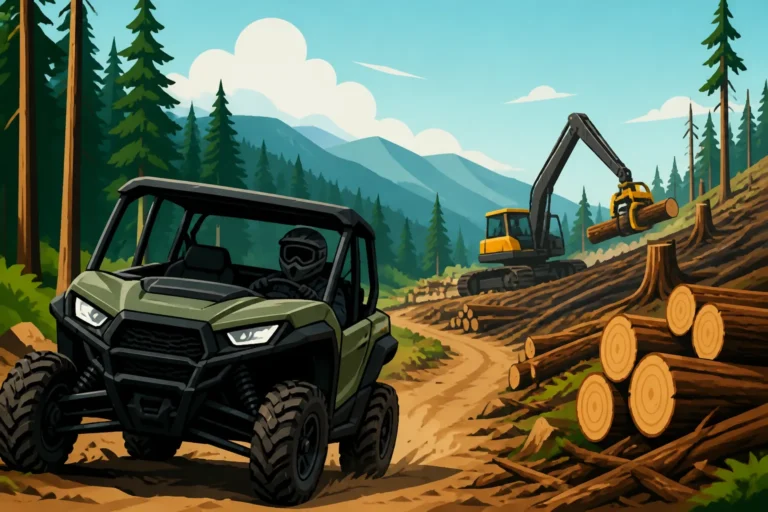
A parking pass does not tell you which trails are open. Trail conditions and closures can vary with weather, maintenance, logging activity, and other land-management needs. Check current official notices before setting out, and pay attention to signs at the entrance and along the route.
Use maps as planning tools, not as final permission to ride. An app such as onX Offroad can help you review mapped roads, trail connections, and nearby access points, but a digital line on a map does not override a closure notice or posted restriction. Compare map information with official alerts and signage, especially if you are considering a route you have not ridden before.
Machine fit matters, too. A trail that works well for a smaller quad may be a poor choice for a wider side-by-side. Consider the vehicle’s width, turning space, clearance, tires, and the skill level of everyone in the group. If the route is unfamiliar, plan conservatively and avoid assuming that every mapped trail is appropriate for every machine.
How to Prepare for a Smooth Evans Creek Visit
Once you understand why the forest pass is separate, preparation becomes much more straightforward. Think of the trip in layers: the tow vehicle and parking site, the machine and its registration, and the route and trail conditions. When each layer is checked, you are less likely to discover a missing requirement after you have arrived.
Make a simple pass and paperwork checklist
Before packing, list the pass, machine documents, and safety items separately. For example, confirm that the parking pass is valid for the site and properly displayed, then confirm the ORV registration and any documents required for the machine. Keep paperwork somewhere dry and accessible rather than buried beneath riding gear.
If your group is bringing multiple trucks or machines, do not assume the lead driver’s pass covers everyone. Confirm the terms for the vehicle that will be parked at the fee site. If someone is borrowing a machine or joining from another location, ask them to verify their own registration and equipment before the convoy leaves.
It is worth keeping a small trip folder or phone note with the site’s official information, the pass instructions, and emergency contacts. A quick check at home is easier than trying to sort out a pass question in a crowded staging area with trailers waiting behind you. For route planning from the local area, [Riding Evans Creek From Buckley] is a related topic to review.
Plan for weather, parking, and group needs
Evans Creek is a forest riding area, so conditions can feel very different from a dry, open riding area. Rain can make surfaces slick, while mud, roots, and standing water can affect both traction and visibility. Pack clothing and recovery equipment for the forecast and for the possibility that the ride takes longer than expected.
Arrive with enough time to park without rushing. At busy periods, a crowded staging area can make unloading, trailer placement, and regrouping more stressful. Agree on a meeting point and a simple plan if riders become separated. Make sure everyone knows which machine they are following and what to do if the group stops.
If you plan to camp, verify the camping rules and availability separately from the pass question. A parking pass is not necessarily a camping reservation or authorization. Read [Camping at Evans Creek] for more on the camping side of trip planning, and confirm site-specific details before you pack as though an overnight stay is guaranteed.
Common Evans Creek Pass Mistakes to Avoid
Most pass problems come from assuming that one credential answers every question. Once you separate parking, vehicle registration, land agency, and trail access, the common mistakes are easier to spot.
Assuming one pass works at every Washington riding area
Washington riders often visit a mix of Forest Service, state, and other public lands. Because the same trip might include several agencies, it is tempting to think a single pass covers all recreation parking. That can lead to paying for a pass that does not apply at the next stop.
Instead, identify the land manager for each place on your itinerary. Then check the site-specific fee notice and pass acceptance information. If you are using onX Offroad to map a route between areas, use it to help orient yourself, then confirm land boundaries, closures, and fees with the managing agency. The app can make trip planning more organized, but the official rules and signs remain the authority.
Another common mistake is relying on an old photo of a sign or a forum post describing a previous season. Those can be useful clues, but they may not reflect current site conditions. Confirm directly before you leave, especially if the trip involves a long drive or an overnight stay.
Treating the parking pass as permission to ride anywhere
A valid pass does not authorize riding outside designated routes, crossing a closed gate, or entering an area marked off-limits. It also does not guarantee that a route is open just because it appears on a paper map or in a phone app. Trail access is governed by the land manager’s rules, posted restrictions, and current conditions.
That distinction matters on forest roads and at trail junctions. A road may serve vehicles for agency or timber work but still be closed to recreational riding. A gate may indicate a temporary restriction or a permanent limit. Do not treat the presence of tire tracks as proof that a route is open; follow the signs and current notices.
The safest habit is to confirm three things independently: your parking pass, the machine’s registration and required equipment, and the status of the route you intend to ride. If any of those is unclear, pause and check before unloading. That simple separation prevents the most avoidable pass and access misunderstandings.
Disclaimer
This article is for general informational purposes only and does not constitute professional advice. Laws, prices and regulations vary by location and change over time. Consult a qualified professional for guidance on your specific situation.