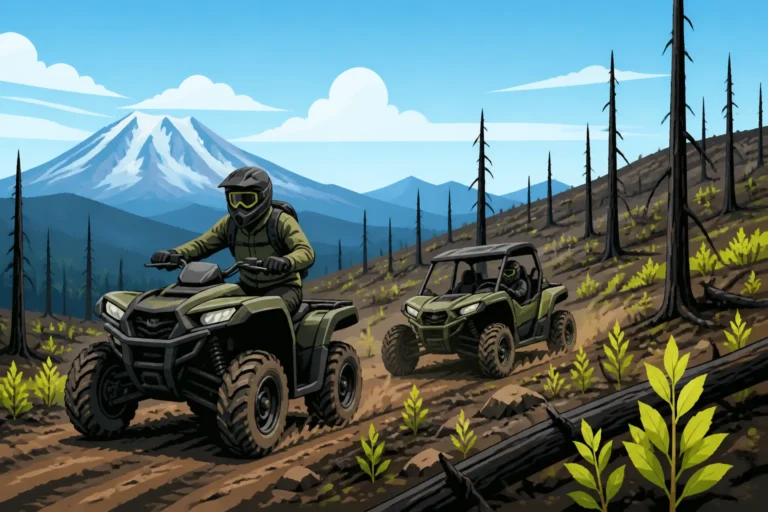
Walker Valley on a Saturday
A Saturday ride at Walker Valley can mean a full parking area, mixed machine traffic, and more time spent choosing a route than you expected. This guide helps you plan the day around access, trail conditions, machine fit, and busy-weekend etiquette so you can arrive prepared and spend more time riding in Skagit County.
Plan your Walker Valley Saturday before leaving home
Check access and trail information first
Walker Valley is a popular off-road riding area in Skagit County, near Mount Vernon. On a weekend, it’s worth checking current access and trail information before loading your machine. A road that was open on your last visit may be affected by maintenance, timber work, weather, or a temporary closure. Check official notices and maps before you set out, and look again if conditions change during your trip.
Start with [Walker Valley ORV in Washington's Skagit County] for area-specific context, and review [Washington Trail Closures to Check First] before you head out. If you’re following directions you saved months ago, don’t assume every approach road or staging area is still available. Give yourself enough time to respond to a detour rather than arriving at a gate with a trailer and no easy turnaround.
Mapping apps can help you understand the surrounding road network and keep track of your planned route. Some riders use onX Offroad to review map layers and save a route for offline reference. Treat any app as a planning aid, not a replacement for posted signs or official land-manager updates. If the map and a closure notice disagree, follow the notice.
Choose an arrival time and parking plan
Busy Saturdays tend to be less forgiving of last-minute logistics. Arriving earlier can make it easier to find space, unload without feeling rushed, and talk through a route before the staging area fills up. If you’re meeting friends, agree on a meeting point and a backup plan in case one vehicle is delayed or the first lot is busy.
Before you leave, think through the size of your whole setup: tow vehicle, trailer, and room needed to unload. A narrow gap that looks usable when you pull in may not leave enough space to open ramps or maneuver safely. Avoid blocking gates, roadways, trail access, or other rigs while you unload. If parking is full, don’t create a new spot on vegetation or an unmarked shoulder; find an authorized alternative or adjust the day’s plan.
For more on choosing a practical place to stage, see [Finding a Staging Lot With Room]. If your route depends on a particular approach, [Reaching Walker Valley From the North] and [Walker Valley and Peter Burns Road] may help you understand the access context. Confirm the route before traveling, especially if you’re relying on an older map or a familiar turnoff.
Pick a route that fits your machine and group
Match trail choice to width and experience
Walker Valley has a varied trail network, but that doesn’t mean every route is appropriate for every vehicle. A quad, dirt bike, and side-by-side have different turning, clearance, and width needs. Before riding, check which routes are designated for your machine and whether any limits apply. Don’t assume that a trail you can physically enter is suitable or permitted for your vehicle.
This matters most for side-by-side riders. A wide machine can feel comfortable in an open staging area and become awkward on a narrow, uneven trail with tight turns, roots, or limited places to pass. Check the machine’s actual width, including accessories, and compare it with official trail information. If you’re new to the area, choose routes that leave room for a calm turnaround rather than pushing into a trail that may become difficult to reverse out of.
Trail difficulty labels can be useful, but they are not a promise that a route will feel easy in every condition. A trail that seems manageable when dry may become slippery, rutted, or slow after rain. Use [Washington Trail Difficulty Ratings] to think through how ratings relate to your group, then be conservative when you’re unsure. A slower, more comfortable route is usually a better choice than a challenging one that separates the group or forces a risky recovery.
Make a simple plan for the group
Before starting, agree on the route, the pace, and what to do if someone gets separated. Keep the group small enough to stay together, and set a regroup point where riders can safely pull aside without blocking traffic. If someone needs to stop, make sure the rest of the group knows whether to wait at the next junction or return to the last meeting point.
A practical pre-ride check can be simple:
- Confirm which trails allow your type and size of machine.
- Choose a route that matches the least-experienced rider.
- Identify a regroup point and a reasonable turnaround option.
- Make sure everyone knows how to signal a stop or problem.
- Carry the essentials for the weather, terrain, and length of your ride.
If you’re using onX Offroad to mark a route, save the map area before you lose cell service and make sure each rider understands the plan. Don’t rely on a phone screen as the group’s only navigation method. Battery life, reception, and device damage can all become problems on a long day outdoors.
| Planning question | Why it matters on a Saturday | Safer approach |
|---|---|---|
| Is the access route open? | Closures or work can change where you can enter | Check official notices before departure |
| Does the trail fit my machine? | Width, turning space, and clearance vary by vehicle | Confirm route designations and machine limits |
| Can the whole group handle the route? | Different skill levels can stretch a group apart | Choose for the least-experienced rider |
| Is there room to park and unload? | Tight staging space can create conflicts and delays | Arrive prepared and use authorized parking |
| What if the group gets separated? | Busy junctions and noise make it easy to lose contact | Agree on regroup points before riding |
Ride considerately when Walker Valley is busy
Share junctions and trails patiently
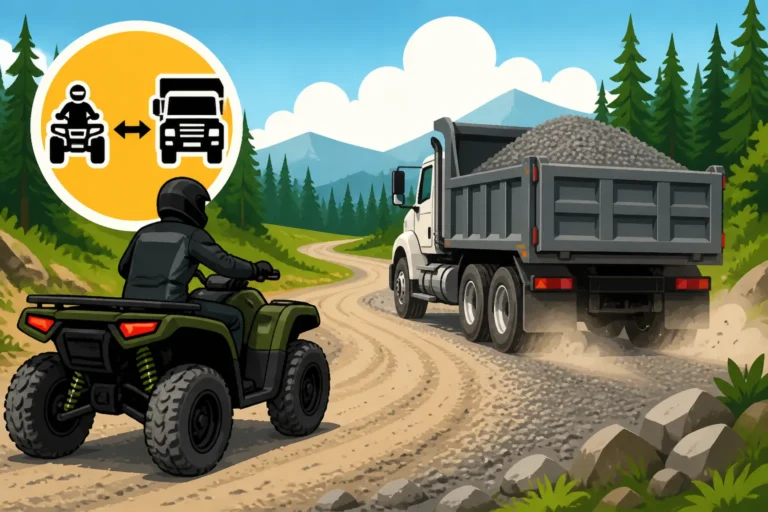
On a busy day, you may encounter riders moving at different speeds, machines with different handling, and groups that are unfamiliar with the area. Slow down near staging areas and junctions, and give other riders time to make a decision. A quick, patient pause is safer than squeezing past someone who is stopped to read a map or check with their group.
When you catch up to a slower rider, leave space and wait for a safe opportunity to pass. Don’t assume they’ve heard you, especially if they’re wearing a helmet or riding a machine with a loud engine. If you need to stop, pull completely out of the way where it’s safe to do so. Avoid gathering around a blind corner or narrowing the trail for everyone behind you.
Make a point of watching for oncoming traffic, too. A Saturday route can bring a steady flow of riders in both directions. Keep a controlled speed where sightlines are short, around bends, and anywhere the trail surface is loose or uneven. A courteous pace protects the people around you and gives you more time to react to rocks, roots, ruts, or an unexpected stop.
Prepare for changing conditions
The ride you imagined at home may not match the trail you find. Rain can make roots slick, soft ground can hold ruts, and dry spells can leave dust hanging behind other machines. Check the forecast, but also pay attention to what the trail is doing beneath your tires. If conditions are worse than expected, choose an easier route or call it early.
Keep water, food, basic first-aid supplies, and suitable clothing with you. A small delay can become uncomfortable when someone is cold, hungry, or waiting for a repair. Carry the tools and recovery items that make sense for your machine and experience, but don’t attempt a recovery you can’t do safely. If a machine is disabled in a narrow or exposed spot, protect the group and seek appropriate help rather than creating a second problem.
Navigation is another part of adapting. onX Offroad may be useful for viewing your saved route, but posted signs and current official information take priority. If a junction is confusing, stop somewhere safe and check rather than guessing. A wrong turn can cost time, especially when you’re towing and have a firm return schedule.
Make the day work for families and first-time visitors
Set realistic expectations for newer riders
A first visit to Walker Valley can feel like a lot to take in: unfamiliar junctions, noise, changing surfaces, and other groups moving around the staging area. Give new riders time to get comfortable before choosing a longer or more technical route. Start with a modest plan, make frequent check-ins, and leave room for breaks.
If children are riding, choose routes and riding arrangements that suit their age, experience, and equipment. Keep the group together and make sure young riders understand where they can stop and what to do if they lose sight of the adult they’re with. The article [Washington Riding Areas Good for Kids] can help you think through the features that make a riding day more manageable for families, while [Washington's Supervision Rule for Riders Under 16] covers an important part of planning for younger riders.
Don’t let a busy Saturday set the pace for your family. If another group moves faster, let them go. A short ride with relaxed stops is often a better introduction than trying to cover as much ground as possible. When a young or inexperienced rider is tired, frustrated, or losing focus, take a break or head back rather than pushing on.
Bring the right paperwork and follow local rules
Before you ride, make sure your machine and documents are in order for the places you plan to use. Registration, tabs, permits, and other requirements can depend on the machine and where you’re riding. Check the applicable Washington rules rather than relying on what a friend says they used on a different trip. The guide [Washington ORV Permits Explained] is a useful starting point for understanding permit considerations.
Keep required documents protected from rain and mud, and make sure the rider knows where they are stored. If you’re using public land, check whether a separate land-access pass is required at your destination. A registration tab and a recreation pass serve different purposes, so having one does not automatically mean you have the other.
Respect posted boundaries and closures throughout the day. Don’t ride around a barrier, create a bypass, or follow tracks that leave the designated route. If the area is crowded, staying on marked trails matters even more: cutting a new line can damage land, confuse other riders, and make it harder for managers to keep access open.
A well-planned Saturday at Walker Valley is less about riding every trail and more about making good choices as the day unfolds. Check access before you go, match your route to your machine and group, use the staging area thoughtfully, and leave room to change plans when conditions call for it. Those habits help turn a busy weekend into a safer, more enjoyable ride for everyone.
Disclaimer
This article is for general informational purposes only and does not constitute professional advice. Laws, prices and regulations vary by location and change over time. Consult a qualified professional for guidance on your specific situation.