Washington Riding Areas That Fill Up on Holidays
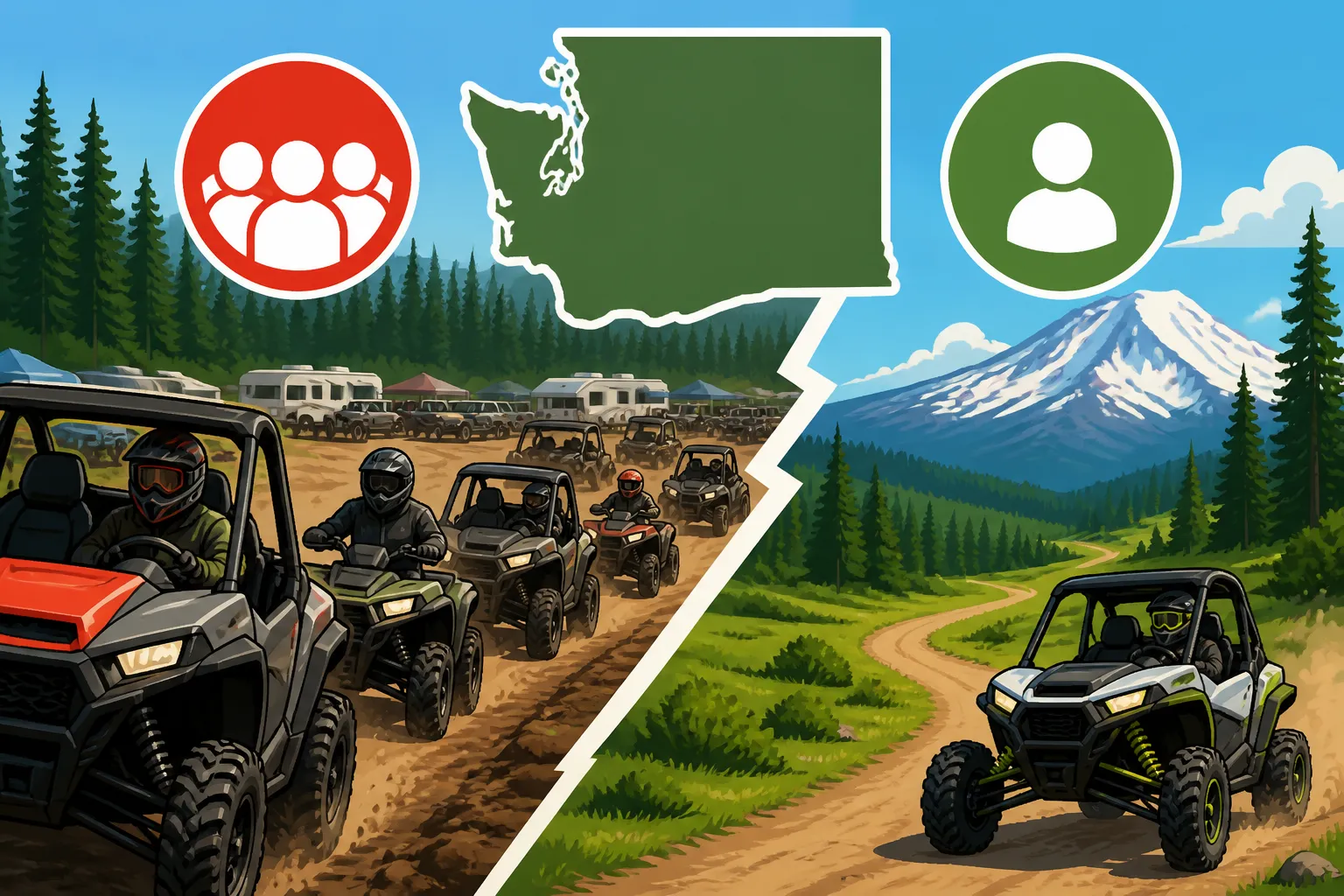
Holiday weekends can turn a planned Washington ATV or UTV ride into a slow search for parking, crowded staging areas, and trails that feel busier than expected. Popular destinations near Seattle, Tacoma, Olympia, and Yakima are especially worth planning ahead for. This guide explains where crowds tend to build, how to choose a better arrival time, and what to check before loading your machine.
Washington riding areas that tend to get busy on holidays
Crowds are hard to predict precisely: weather, trail conditions, seasonal closures, and local events can all change how busy a riding area feels. Still, a holiday weekend is a good reason to expect more people at well-known destinations with established staging areas, popular trails, or sand riding.
Walker Valley and Reiter Foothills
Walker Valley ORV Area in Skagit County is a popular destination for riders coming from northwest Washington. Its location makes it a practical day trip for people in the Mount Vernon, Bellingham, and Everett areas, so a sunny holiday can mean more vehicles arriving at the same time. The first frustration is often at the staging area: even if the trail network has room to spread out, parking a truck and trailer can take longer when many riders arrive together.
Reiter Foothills State Forest, near Gold Bar, draws riders from the Puget Sound region as well. Its mix of riding areas and terrain gives it broad appeal, which can translate into a busy trailhead on a long weekend. Before you head out, confirm that your intended area and access route are open; road work, timber activity, and other temporary restrictions can affect a trip.
If either destination is on your list, do the practical homework before leaving home. [Walker Valley ORV in Washington's Skagit County] and [Reiter Foothills State Forest] are useful starting points for learning about each riding area. For route planning, check current public land information and use an off-road mapping tool such as onX Offroad to understand access roads and possible route options. A map can help you plan, but it does not replace posted closures or local rules.
Tahuya, Capitol Forest, and Evans Creek
Green Mountain and Tahuya State Forest is a familiar destination for riders traveling from the Kitsap Peninsula, Tacoma, and nearby communities. Capitol State Forest, southwest of Olympia, is another well-known choice for a day ride or camping trip. Both can feel especially popular when the forecast is promising and people have an extra day away from work.
Evans Creek ORV Area, in the foothills near Buckley, is another destination to consider carefully on a holiday. Its location and established riding opportunities make it attractive to riders coming from the south Puget Sound area. Before visiting, check access, trail status, and any site-specific pass requirements. A destination that is open for riding may still have restrictions or conditions that affect where you can park or travel.
A holiday crowd doesn’t necessarily mean you should avoid these areas. It does mean you should arrive with a backup plan rather than assuming your favorite staging area will have room. Learn the access and trail context for [Washington's Green Mountain and Tahuya Trails], [Washington's 110,000-Acre Capitol Forest], and [Evans Creek ORV in Washington's Cascades]. If you’re new to Capitol Forest, a little advance research can also help you choose a suitable entry point and avoid spending your first hour figuring out where to start.
Sand riding areas in central and eastern Washington
Sand destinations such as Beverly Sand Dunes, Moses Lake Sand Dunes, and Juniper Dunes can draw visitors from a wide area. Sand riding is an appealing holiday activity for families and groups, but the trip may involve a longer drive, more equipment, and more coordination than a nearby forest ride. That can make a crowded staging area feel particularly inconvenient after you’ve already spent hours towing a trailer.
Conditions matter as much as popularity. Check access information and local rules before leaving, and make sure your tires and gear suit the terrain. Sand can behave differently after rain or in changing weather, so don’t treat a familiar destination as if conditions are guaranteed to match your last visit. These guides can help you think through the basics: [Washington's Sand Dune Riding Areas], [Riding Beverly Dunes on a Weekend], and [Riding Moses Lake Sand].
| Riding area | Why it may feel busy on a holiday | Planning consideration |
|---|---|---|
| Walker Valley | Convenient for riders across northwest Washington | Leave room in your schedule for staging and parking |
| Reiter Foothills | Popular with riders from the Puget Sound region | Confirm your intended area and access are open |
| Tahuya | A familiar choice for Kitsap and south Puget Sound riders | Have a second route or riding plan in mind |
| Capitol Forest | Offers a large, established riding destination near Olympia | Choose your access point before you arrive |
| Evans Creek | Attracts riders from the south Puget Sound area | Check access conditions and pass requirements |
| Beverly and Moses Lake dunes | Sand riding can draw groups from beyond the immediate area | Prepare for the drive, terrain, and staging logistics |
| Juniper Dunes | A distinctive eastern Washington destination | Verify access details and stay within permitted areas |
These are planning considerations, not a live crowd report. For a broader look at destinations and how they compare, see [Washington's DNR Forests Compared] and [Best Places to Ride an ATV in Washington].
How to plan around holiday crowds
You can’t control how many other riders show up, but you can make the parts you control easier. The best holiday ride plans have a clear arrival strategy, a backup destination, and enough flexibility to adapt when conditions change.
Start with timing, not just the destination
If you can, arrive early enough to avoid the busiest arrival window. This isn’t a guarantee of an empty parking area, but it gives you a better chance of finding room before late-morning arrivals build. It also leaves time to unload, check gear, review the day’s conditions, and get everyone organized without feeling rushed.
A later start can work too, especially if you’re comfortable with a shorter ride and have confirmed the area’s access hours and conditions. The tradeoff is that you may encounter more traffic around staging areas and have less daylight for unexpected delays. If your group includes children or newer riders, rushing to fit in a full day after a late arrival can make the experience less enjoyable.
Be realistic about the whole trip, not only riding time. A busy holiday can slow the drive, parking, unloading, and regrouping. Build in a buffer, and agree beforehand on where to meet if your group gets separated. If you’re deciding between a popular site and a quieter alternative, [Washington Riding Areas That Fill Up on Holidays] can be paired with [Washington Riding Areas Good for Kids] or [Washington Trails for Beginners] to help match the day to your group.
Choose a backup before you leave
A backup plan can be as simple as a second riding area within a reasonable driving distance, or a decision to switch to a different activity if access is limited. The important part is to make that decision before you’re tired, hungry, and stuck in a line of trucks waiting to turn around.
When comparing options, think about more than mileage. Check whether you need a different pass, whether the site has suitable parking for your trailer, whether the trails fit your machine, and whether you’re comfortable with the terrain. A location that looks close on a map may involve a slower forest road or a longer detour than you expect.
Mapping tools can help you orient yourself and plan a route, but they should not be treated as permission to ride. onX Offroad can be one tool for reviewing a route and nearby access before the trip; verify land access and closures with the relevant land manager and obey posted signs on site. When you reach a gate or notice, don’t assume a route is open just because it appears on an app or an older map. [Washington Trail Closures to Check First] and [Reading a DNR Recreation Map] offer useful reminders for checking conditions and interpreting route information.
Make the ride safer and less stressful when trails are busy
More riders on the same roads and trails means more chances for dust, blind corners, sudden stops, and mixed speeds. A little extra courtesy goes a long way, especially around staging areas and narrow routes where it can be difficult for vehicles to pass.
Adjust your riding style for other users
Give other riders room, slow down when visibility is poor, and avoid kicking up unnecessary dust near people who are stopped or preparing to ride. On narrow trails, approach blind corners cautiously and be ready to yield when appropriate. Keep your group together without blocking the route for everyone else, and stop in a place where other riders can see you and pass safely.
If your group has different experience levels, agree on a pace and regrouping points before riding. A confident rider who charges ahead can unintentionally leave a beginner feeling pressured to keep up. For families, make sure every rider understands where to stop, how to communicate, and what to do if someone loses sight of the group.
Busy conditions can also make a machine’s setup more noticeable. Make sure your equipment meets the rules for the place you’re riding and that your machine is in good working order. [Washington Sound Limits for ORVs] and [Spark Arresters on Washington Trails] are relevant reading for riders using public land. Rules vary by land manager and riding area, so check the specific requirements rather than assuming they’re identical everywhere.
Keep the group and staging area organized
Before unloading, decide who is handling tie-downs, helmets, fuel, and the first trip to the staging area. This keeps your truck and trailer from becoming a bottleneck while other visitors are trying to park. If the lot is crowded, unload only where it is safe and permitted, and move your vehicle and trailer promptly once your machine is ready.
Set a clear rendezvous point in case someone misses a turn or needs to stop. Phone service can be unreliable in forested or remote areas, so agree on a simple plan that doesn’t depend on everyone being able to call or message. Carry the essentials you need for the ride and keep paperwork protected from rain and mud. For a practical refresher, read [Keeping a Registration Card Dry on a Wet Ride].
If the staging area is full, don’t squeeze into an unsafe spot or block an access road. Follow posted directions, look for an authorized alternative, or switch to your backup plan. It’s frustrating to make the drive and then change course, but a safe, legal second choice is better than creating a hazard or riding somewhere you’re not allowed.
A simple pre-trip checklist for holiday riding
A checklist won’t make a busy destination quiet, but it can prevent avoidable problems from piling up. Work through it before the day of the ride so you’re not trying to find information while towing or unloading.
The day before you go
- Check official land-manager alerts for closures, road conditions, and temporary restrictions.
- Confirm the destination’s access rules, pass requirements, and permitted riding routes.
- Review the forecast and consider how rain, heat, or wind may affect the drive and terrain.
- Choose a primary destination and a realistic backup.
- Make sure your vehicle, trailer, tie-downs, and machines are ready for the trip.
- Share the plan, expected return time, and meeting point with everyone in your group.
If you’re using onX Offroad to review routes, use it as a planning aid alongside official access information. Check the route on the day of travel for changes, and pay attention to signs and gates when you arrive. A route line on a screen cannot tell you that a road has just closed or that a land manager has restricted access.
Before unloading at the trailhead
- Park only in a designated or clearly authorized space.
- Keep the road and access lanes clear while unloading.
- Confirm that everyone has required safety gear and understands the group plan.
- Check that each rider knows the route, turnaround point, and regrouping location.
- Be prepared to leave if the area is closed, full, or unsafe.
- Ride within your abilities and respect other users, wildlife, and land restrictions.
A holiday ride doesn’t have to be ruined by a full parking lot or a busier-than-expected trail. Pick the area with realistic expectations, check conditions before you tow, arrive with time to spare, and keep a second option ready. That little bit of planning can turn a frustrating start into a day your group actually enjoys.
Disclaimer
This article is for general informational purposes only and does not constitute professional advice. Laws, prices and regulations vary by location and change over time. Consult a qualified professional for guidance on your specific situation.