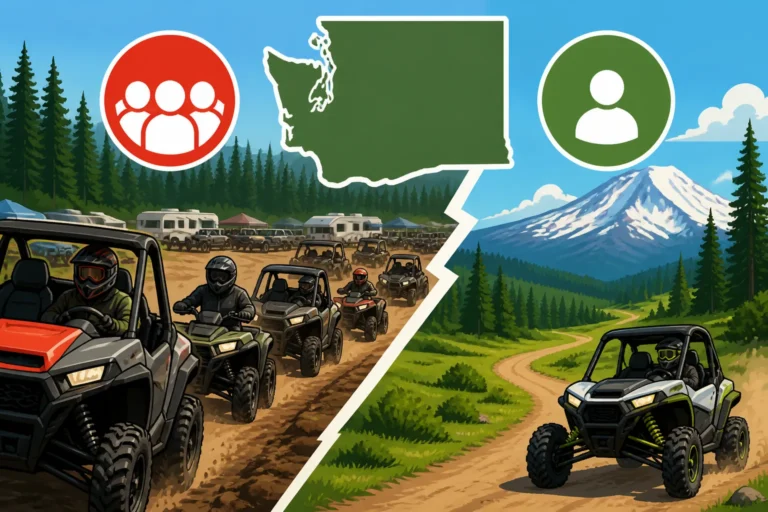
Camping at a Washington ORV Area
Camping near a Washington ORV area can turn a great ride into a frustrating trip if you arrive to find a full campground, a closed trail, or nowhere legal to park your trailer. This guide explains how to choose a riding base, check camping rules, plan for facilities and weather, and keep your ATV or UTV trip comfortable and responsible.
Choose a Campground That Fits Your Ride
Match your campsite to the riding area
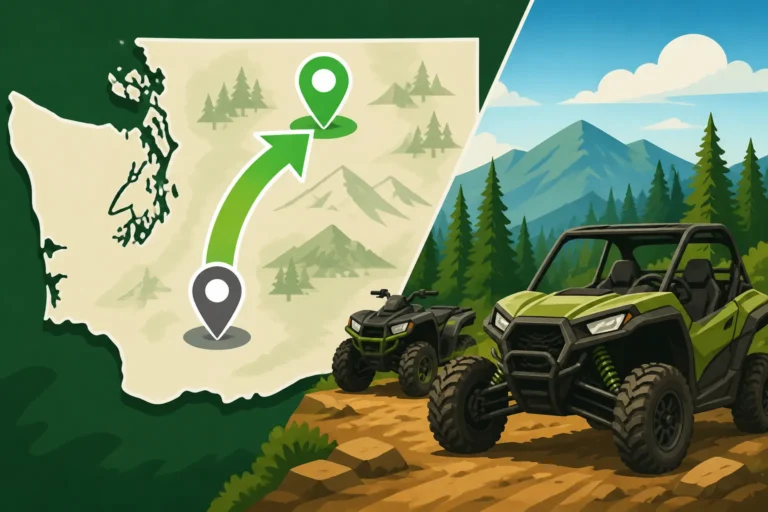
A campground that looks close on a map may not be convenient once you account for the route your trailer can take, the condition of access roads, and where the actual riding begins. Start by choosing the riding area, then look for camping options managed by the same agency or located nearby. A campsite within a short drive of a trailhead can be a better base than one that appears to sit beside the trails but has no legal riding connection.
Washington has a wide mix of riding environments. Capitol State Forest near Olympia, Walker Valley in Skagit County, Tahuya State Forest on the Kitsap Peninsula, and Evans Creek near Buckley each offer different surroundings and access patterns. Don’t assume that the camping setup, trail layout, or nearby services will be the same from one area to another. For a closer look at one major riding destination, see [Capitol State Forest Near Olympia, Washington].
Think about how you’ll spend the day, not just where you’ll sleep. If you plan to ride several trail loops, a base with a manageable drive to the staging area may be enough. If you have young riders, a large group, or a machine that needs frequent adjustments, being near parking and facilities can make the trip easier. A short drive back to camp for lunch or repairs is useful only if the access road is open and appropriate for your tow vehicle.
Decide between a developed campground and a simpler base
Developed campgrounds can offer marked sites, established access, and facilities such as toilets or picnic tables. They may also have limited capacity, quiet-hour expectations, restrictions on equipment, and rules about where trailers can be parked. Check the campground’s details before you reserve or travel. A site that fits a tent may not accommodate a truck, trailer, and machine in one space.
A more basic camping area can suit riders who are comfortable with fewer amenities and who have a self-contained setup. But “basic” doesn’t mean “camp anywhere.” The land manager determines where overnight camping is allowed, whether a designated site is required, and what restrictions apply. On public land, the location of the riding trail doesn’t automatically establish permission to camp beside it.
It’s helpful to compare campgrounds by their practical features rather than by scenery alone. The table below gives you a starting point; verify the specific rules and conditions for the site you’re considering.
| Camping setup | What may work well | What to confirm before you go |
|---|---|---|
| Developed campground | Established sites and possible basic facilities | Reservations, site size, trailer parking, quiet hours, and machine access |
| ORV staging-area camping | Convenient access to the riding area | Whether overnight camping is allowed and where vehicles may park |
| Nearby private campground | Potentially more services or hookups | Distance to legal riding access, machine transport requirements, and campground rules |
| Designated dispersed site | A quieter, simpler stay where permitted | Whether camping is authorized, fire restrictions, sanitation rules, and road conditions |
| Day-use staging lot | Easy parking for a day ride | Whether overnight parking or camping is prohibited |
If you’re comparing facility needs across different areas, [Washington ORV Areas With Vault Toilets] and [Washington ORV Areas With Showers] can help you identify useful questions to ask. Facility availability can change, so treat those topics as planning prompts rather than a substitute for checking the specific site.
Confirm Access, Reservations, and Land Rules
Check who manages the campsite and riding area
Washington riding trips often involve more than one land manager. An ORV area may be managed by the Washington Department of Natural Resources, the Forest Service, a county, a city, or a private landowner. The campsite next door may be managed by a different agency. Rules for camping, vehicle access, passes, fires, and pets can differ even when two places look connected on a map.
Before you travel, identify the manager for both the campground and the trails. Check whether the camping site has its own reservation or payment process, and whether the riding area requires a separate permit or pass. A camping reservation does not necessarily cover trail access, and a pass for one type of land may not satisfy the requirements of another. For background on camping options near riding destinations, read [Camping Near Washington ORV Areas].
Pay particular attention to the last part of the route. A map may show a road between a campground and a staging area, but that doesn’t tell you whether it is open to the public, suitable for a truck and trailer, or legal for your ATV or UTV. If machines must be trailered to the riding area, include that extra loading and unloading time in your plan.
Reserve when required and keep a backup plan
Popular weekends can put pressure on small campgrounds, especially when several groups arrive with trailers and multiple machines. Find out whether the campground accepts reservations, uses first-come sites, or has a mix of both. If it takes reservations, check the site dimensions, vehicle limits, arrival rules, and cancellation terms before choosing a spot. A reservation confirmation doesn’t guarantee that the site will fit an unusually long truck-and-trailer combination.
Make a backup plan before you leave home. Identify another legal campground or lodging option within a reasonable drive, and save its directions offline. If the primary campground is full, closed, or inaccessible, you’ll have a safer alternative than trying to improvise after dark. Don’t assume that a nearby forest road shoulder or empty staging lot is a lawful overnight campsite.
For a broader look at booking questions, see [Washington ORV Campground Reservations]. It’s also wise to confirm whether a campground has seasonal operating changes, maintenance closures, or restrictions that affect the dates you want to travel. One phone call or a careful review of the managing agency’s information can prevent a long detour with a loaded trailer.
Plan the Route From Camp to Trail
Separate road riding from trailering
A common planning mistake is assuming you can ride directly from camp to the trail system. That may be allowed in some places and prohibited in others. If your machine is registered for off-road use only, don’t treat a public road as a connector just because it appears to be the shortest route. Check the specific rules for roads and trails in the area, and transport the machine when road use isn’t authorized.
Even a road-registered machine may not have permission to use every road nearby. Access can depend on local approvals, posted restrictions, required equipment, and the status of the road itself. For guidance on the broader rules, review [Washington Rules for Riding a Forest Road] and [Washington Rules for Riding a Logging Road]. When in doubt, ask the land manager about the exact segment you intend to use.
Trailering between camp and the staging area adds time and requires a secure place to park. Check where trailers may be left, whether the lot has enough room to maneuver, and whether the access road has narrow turns, steep grades, or rough sections. If your group is using more than one truck, agree on a meeting point that won’t block traffic or emergency access.
Use maps as planning tools, not permission slips
A paper map or offline navigation app can help you understand distances, intersections, trailheads, and likely travel times. onX Offroad can be useful for reviewing a route and saving map information before a trip, especially when cell service may be unreliable. Still, a line on a screen is not proof that a road is open, that camping is allowed, or that a route is suitable for your vehicle.
Compare your navigation information with the land manager’s recreation map and current notices. Look for gates, seasonal closures, restricted areas, private property boundaries, and roads that may be used for active timber work. [Reading a DNR Recreation Map] is a helpful topic to review if your trip involves DNR-managed land. Keep a backup map or saved route available in case your phone battery dies or your device loses reception.
Before leaving camp each day, make sure everyone knows the staging location, the planned route, and a return time. Give a copy of the plan to someone who isn’t riding. If your group splits up, agree on a specific meeting point rather than relying on vague instructions like “we’ll meet back at the main road.” Small details matter when a rider has a breakdown or a group loses sight of one another in the trees.
Prepare for the Facilities You Actually Have
Plan around toilets, water, and waste
Facility names can sound more reassuring than the actual setup. A campground may have a vault toilet but no running water, or a water source that isn’t available during a seasonal closure. Confirm what is provided and bring enough drinking water for the people in your group. Riding, loading, cooking, and warm weather can all increase how much water you need.
If toilets are limited or absent, find out what sanitation rules apply before you arrive. Don’t assume that a nearby forest or trail edge is an acceptable substitute. Pack waste out when required, use approved facilities, and make sure children know where the toilets are before the evening rush. A little preparation helps avoid an uncomfortable problem after everyone has settled in.
Waste management deserves the same attention as food and water. Bring bags for household rubbish, food scraps, and any waste associated with machine maintenance. Never leave oil, fuel, coolant, or other fluids at a campsite or staging area. A basic cleanup kit in the truck can make it easier to handle spills before they spread into soil or water.
Think through power, food, and cold nights
Don’t book a site based on an assumed hookup. Confirm whether it offers electrical service, potable water, or other amenities, and whether your trailer or vehicle setup is compatible. If you rely on a refrigerator, medical device, or other powered equipment, plan for the possibility that the site has no electricity. Bring a backup that you know how to use safely.
Food planning is easier when you decide how much cooking you want to do. A simple menu can reduce the amount of equipment you need and make cleanup faster. Store food securely and follow local rules for food storage, wildlife, and garbage. Even when a campground feels busy and developed, avoid leaving food unattended outside overnight.
Washington weather can shift between warm afternoons and damp, chilly nights. Conditions vary by season and location, from the coastal forests to higher-elevation areas and the drier eastern side of the state. Pack rain layers, warm sleep gear, and dry clothing rather than counting on a sunny forecast. For family groups, keep one full change of clothing dry in a sealed bag for each rider.
Make Camp Work for a Group With Machines
Check space for trucks, trailers, and machines
A campsite may technically allow your group but still be awkward for a truck, trailer, several machines, and a tent. Ask how many vehicles can use the site, whether trailers count toward a limit, and whether there is overflow parking. If the campground doesn’t publish dimensions, describe your setup when you call. “One vehicle” can mean something different when the vehicle is towing a long trailer.
Plan how you’ll unload without blocking the road or another campsite. Choose a level, stable area for ramps and machine checks, and keep the travel path clear. Don’t leave a trailer across a shared road or use a neighboring site as extra storage without permission. A crowded campground can become tense quickly when one group spreads gear into the only turning area.
For a group ride, agree on how many machines each truck will carry and where each trailer will be parked. Bring enough tie-downs and tools to secure machines again at the end of the day. If one machine has a mechanical issue, the group should know whether it can be trailered out without moving every other vehicle first.
Keep machines secure and reduce campsite impact
Park machines where they won’t block access or create a hazard for people walking through camp. Secure keys and equipment when you leave the site, and avoid leaving fuel containers or valuable gear exposed. A simple routine—keys accounted for, machines parked, trailer locked, and tools put away—reduces the chance of a preventable problem overnight.
Keep maintenance at the campsite to basic tasks unless the campground clearly allows more. Routine checks such as looking over tires, belts, lights, or tie-down points are sensible. Major repairs can leave fluids, parts, and debris behind and may violate campground rules. Carry a small spill kit and take used parts or contaminated materials with you for proper disposal.
Respect the fact that other campers may not share your schedule. Start machines only when you’re ready to leave, avoid unnecessary revving, and follow posted quiet hours. Keep exhaust away from tents, neighboring sites, and enclosed spaces. If your machine develops a persistent noise or exhaust problem, deal with it before the trip rather than expecting other campers to tolerate it.
Ride Responsibly Around Your Campsite
Check trail closures and conditions each day
A route that was open on your last visit may be closed now. Weather, erosion, fire danger, timber operations, maintenance, or other conditions can affect trail access. Check current notices before you load the trailer and again before you head out each day. [Washington Trail Closures to Check First] is a useful reminder to make closures part of the routine, not an afterthought.
Carry a map that lets you recognize where you are and where you’re allowed to ride. If a gate or closure notice appears, don’t ride around it or assume it applies only to someone else. A marked closure may protect riders from a hazard that isn’t visible from the trailhead, such as active hauling or damaged terrain. Turn around and use a route that is clearly open.
Weather affects both the trail and the campsite. Heavy rain can make a road difficult for a trailer, while dry conditions can bring dust or fire restrictions. A route that feels manageable on an ATV may be a poor choice for a tow vehicle after a storm. If the road is deteriorating, change the plan before a minor inconvenience becomes a recovery problem.
Share roads, trails, and staging areas
ORV areas are shared places. You may encounter hikers, mountain bikers, equestrians, other riders, maintenance crews, or vehicles carrying equipment. Slow down near trailheads and campsites, follow posted direction and speed rules, and give others room. Dust and engine noise travel farther than they seem to when a campground is quiet.
Stay on designated routes and avoid widening trails to get around mud, puddles, or obstacles. Riding around a wet section can damage vegetation and create a second damaged route that other riders may follow. If a trail is blocked or seems unsafe, stop and assess it rather than pushing through blindly. Keep the group together and communicate clearly at intersections.
The approach to camp deserves particular care at the end of the day. Riders may be tired, visibility may be dropping, and people may be walking among parked vehicles. Reduce speed, use the approved route, and don’t assume the last stretch is harmless because it is near the campground. If your route requires public-road travel, confirm that the machine and route meet applicable requirements first.
Pack for Safety and Breakdowns
Build a practical campsite and ride kit
A good packing list starts with the problems your group is most likely to face. Include machine-specific tools, tire repair supplies, a first-aid kit, a flashlight or headlamp, extra water, and a way to communicate when phones have no signal. Carry the machine’s basic documents and know where they are stored. Keep essentials accessible instead of buried under camping gear.
For camping, bring weather protection, warm layers, dry bags, cooking supplies, and a backup light source. If you depend on a phone for maps, bring a power bank and save the route offline. A paper map is a useful backup, especially when conditions force you to take a different road back to camp. onX Offroad or another navigation tool may help you prepare, but make sure at least one person can interpret the route without relying on an active connection.
Pack a repair kit that matches your machine and your experience. A group riding far from the staging area may need more than a compact tool roll, while a short family ride close to the parking lot may have different needs. Check the kit before the trip, because a missing tire plug or dead battery in a jump pack is only discovered at the worst possible time when you’ve never tested it.
Set a clear plan for emergencies
Before anyone rides, confirm who has first-aid supplies, who can operate the tow vehicle, and how the group will respond if a rider is injured. Agree on a meeting point and a simple communication plan. If someone has to stay with an injured rider, the rest of the group should know who will contact help and how they’ll describe their location.
Cell reception can be inconsistent in forested and remote areas. Don’t base your emergency plan on being able to call from every trail. Tell a trusted person where you’re going and when you expect to return, then update them if your plan changes. If your group travels through a large area, note trail intersections, road names, or map locations that can help rescuers find you.
At camp, keep vehicles positioned so they can leave if needed. Don’t block access lanes with trailers, tents, or machines. Make sure everyone knows where the keys, first-aid kit, and essential documents are. These are small steps, but they reduce confusion when people are tired or something unexpected happens.
Leave the Site Ready for the Next Group
Pack out everything you bring
Do a final walk-through before leaving. Check under tables, around the fire area, beside the trailer, and near the place where machines were unloaded. Small items such as zip ties, food wrappers, oil rags, and broken plastic can be easy to miss. Take rubbish with you if the available bins are full or if the site requires pack-out.
Handle leftover fuel and maintenance materials carefully. Don’t pour fluids on the ground, into a fire, or down a drain. Secure containers for transport and dispose of them appropriately after the trip. If a machine leaks, contain the spill and clean up what you safely can rather than leaving the mess for the next camper.
Leave the campsite in the condition you’d want to find it. Put equipment back where it belongs, follow fire rules when dealing with ashes, and avoid driving over vegetation to make packing easier. Keep noise and engine use considerate during departure, especially if other campers are still sleeping.
Review the trip before planning the next one
After you get home, note what worked and what caused trouble. Was the campsite too tight for the trailer? Did the drive to the staging area take longer than expected? Did you have enough water and warm clothing? A few notes on your phone can make the next trip smoother, especially if you plan to return to the same riding area.
Record useful details without treating old notes as current permission. A road that was open during one visit may later close, a facility may change, or a campsite may have new requirements. Use your notes to remember what to check, then confirm the latest rules and access before your next departure.
Most of all, leave room in the itinerary for a slower day. Washington riding trips are more enjoyable when the group isn’t racing from campsite to trail and back. With a suitable base, a verified route, realistic facility expectations, and a little flexibility, camping can make the ride feel like a proper getaway instead of a logistical puzzle.
Disclaimer
This article is for general informational purposes only and does not constitute professional advice. Laws, prices and regulations vary by location and change over time. Consult a qualified professional for guidance on your specific situation.