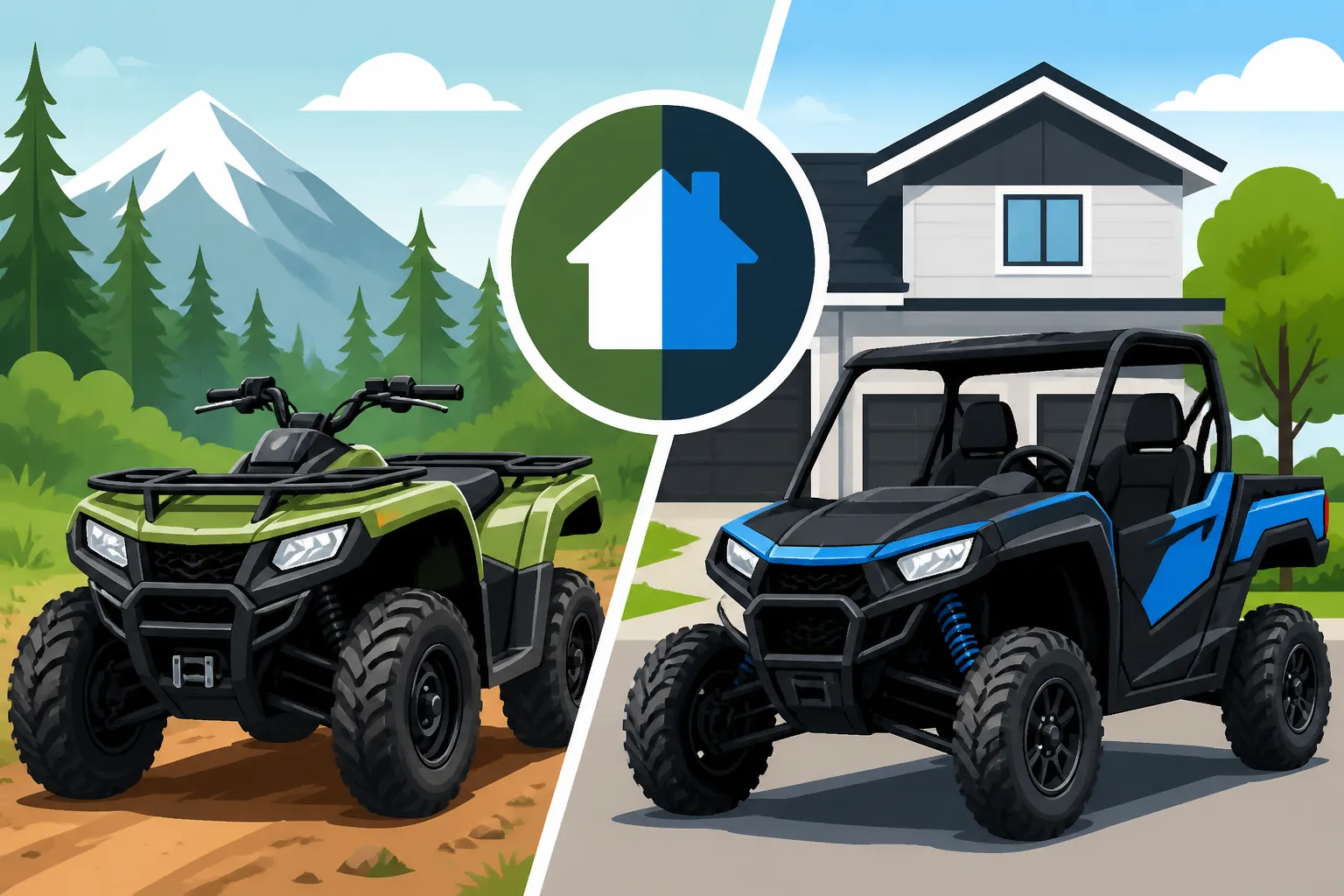
Two Machines in One Household
Owning more than one off-road machine in Washington State, whether it's a family fleet of ATVs, a couple of dirt bikes, or a mix of quads and side-by-sides, can quickly lead to questions about registration. Many riders assume they can simply register the household, or maybe get a "family discount" on tabs. But the reality is, Washington's Department of Licensing views each wheeled all-terrain vehicle (WATV) as its own separate entity, requiring individual attention when it comes to legal registration and titling. This guide will walk you through the distinct steps needed to get all your household's machines properly registered, avoiding headaches and potential fines on the trail.
Understanding Washington's Individual Machine Registration Philosophy
It's easy to think of your off-road vehicles as a collective hobby, a family pursuit that falls under one umbrella. But from a legal standpoint in Washington, each machine you own has its own unique identity and, therefore, its own individual requirements for titling and registration. This isn't just about bureaucracy; it's about tracking each vehicle for safety, ownership, and proper allocation of funds for trail maintenance.
Each Machine, Its Own Identity
Washington state's Department of Licensing (DOL) treats every WATV as a standalone vehicle, no matter how many you have tucked away in your garage. This means your spouse's quad, your side-by-side, and your teenager's dirt bike are all considered separate entities. Each one has its own unique Vehicle Identification Number (VIN), which acts like its fingerprint. This VIN is the absolute bedrock of its identity within the state's system.
Imagine you're out riding at Capitol State Forest with your family. You're on your side-by-side, your partner is on their ATV, and your child is on their youth machine. A ranger approaches and asks to see your registrations. They're not looking for one registration card that covers all three vehicles. Instead, they expect to see a separate, current registration card for your side-by-side, another for your partner's ATV, and a third for your child's dirt bike. Each machine also needs its own set of current decals affixed to it and, if applicable, its own metal tag. This individual approach is fundamental to how Washington manages its off-road vehicle population and ensures accountability for every machine on public lands.
Why Separate Registrations Matter
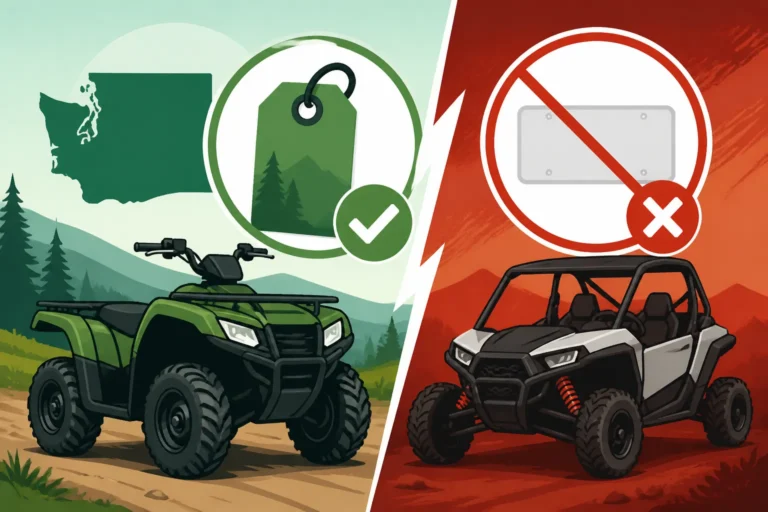
The primary reason for individual machine registrations boils down to legal compliance and enforcement. If you're caught riding a machine that isn't properly registered, even if another machine in your household is, you could be facing a citation. Each set of tabs and each metal tag is uniquely assigned to a specific VIN. This ensures that when a law enforcement officer checks a machine's status, they can verify that that specific vehicle is legally allowed to operate.
Consider a scenario where you've just bought a new-to-you quad for your son, but you haven't gotten around to titling or registering it yet. Meanwhile, your own side-by-side is fully legal with all its current tabs. If your son rides his new quad on a designated trail without its own registration, it's considered an unregistered machine, regardless of your other vehicle's status. The fines for operating an unregistered WATV can be significant, cutting into your riding budget and spoiling an otherwise great day out. Beyond the legal aspect, the fees collected from each registration directly contribute to maintaining and improving the very trails you ride. These funds support everything from signage to trailhead facilities. Understanding [Washington Fines for an Unregistered WATV] can help highlight the importance of individual registrations.
Streamlining the Process for Multiple WATVs
While the individual nature of registration means more paperwork than a "family plan" might imply, there are ways to approach it systematically when you have multiple machines. The key is to remember that for each vehicle, you'll be repeating a similar set of steps, so having your ducks in a row for one can make the subsequent ones much smoother.
Gathering Your Paperwork for Each Machine
This is perhaps the most critical step when dealing with multiple WATVs: you need a complete set of documentation for each and every machine. It's not enough to have one bill of sale from when you bought three machines from the same person. Each machine needs its own distinct proof of ownership and a corresponding application for title and registration.
For each WATV, you'll typically need:
- The original Certificate of Title: This is paramount. If you bought the machine new from a dealer, they usually handle the initial titling. If you bought it used, you'll need the seller to sign over their title to you.
- A Bill of Sale: Especially crucial for used machines purchased privately. This document legally transfers ownership. For private sales, you might find useful templates for a bill of sale on platforms like LawDepot, ensuring all necessary details for each machine's transfer are covered. A clear and comprehensive bill of sale helps establish the chain of ownership and the purchase price, which impacts sales or use tax.
- Application for Certificate of Ownership (Title) and Registration: This form (often found as a Vehicle Certificate of Ownership Application, Form TD-420-001) will be filled out separately for each machine.
It's a good practice to create a separate folder or digital file for each machine, containing all its specific documents. This way, when it's time to head to the licensing agent, you won't be sifting through a stack of mixed paperwork. For a deeper dive into what's required, review [Washington WATV Registration Paperwork].
Titling Before Registration
This is a non-negotiable step in Washington: you must have the machine titled in your name before you can register it. Think of it like this: the title proves you own the machine, and the registration allows you to legally operate it on public lands. You can't get permission to operate something you don't officially own yet.
The logical flow goes like this: acquire the machine, transfer the title into your name, and then apply for its registration (tabs and metal tag). This process needs to happen for every single WATV in your household. If you have three machines that need registration, you'll be submitting three separate title applications (if not already titled in your name) and then three separate registration applications.
Consider the common scenario where a family buys a used quad for their teenager. Often, the previous owner might not have properly titled it in their name either, or the paperwork might be lost. Before your teenager can ever ride that machine legally, you'll need to go through the process of getting the title transferred into your name first, potentially dealing with a missing title affidavit if necessary. Only once your name is officially on that machine's title can you then proceed to register it for use. This critical step is often where riders encounter delays, so understanding [Why Washington Wants a Title First] is key to a smooth process for all your machines.
The Cost and Time Investment for Multiple Registrations
While the process is similar for each machine, the financial and time commitments multiply with every additional WATV you add to your household fleet. Being prepared for this reality helps prevent sticker shock and ensures you budget appropriately.
Individual Costs Add Up
Each machine in your household will incur its own set of registration fees. There isn't a "family plan" or a discounted rate for registering multiple vehicles at the same time. This means if you have three machines, you'll pay the off-road tab fee three times, the metal tag fee three times, and any applicable on-road tab fees three times.
Let's break down the typical costs that apply per machine:
- Off-Road Tab Fee: This is the core registration for off-road use. It funds trail maintenance and access programs.
- Metal Tag Fee: Each machine registered for off-road use receives a durable metal tag that needs to be mounted on the vehicle.
- On-Road Tab Fee (Optional): If you decide to make a machine street-legal for use on approved county roads, you'll pay an additional fee for that privilege. This also requires completing a [Washington Road Use Declaration] for each specific machine you intend to ride on public roads.
- Sales/Use Tax: When you acquire a machine, whether new or used, you'll pay sales tax (or use tax if bought privately or out-of-state) based on the purchase price or fair market value. This applies to each machine individually.
- Titling Fees: Fees associated with transferring the title into your name.
It’s crucial to budget for these cumulative costs. While the individual fees might seem manageable for one machine, they certainly add up when you're registering two, three, or even more. Knowing the [Washington WATV Registration Cost], [Washington Off-Road Tab Cost], and [Washington On-Road Tab Cost] for each vehicle will give you a clearer picture of the total investment.
Batch Processing vs. Staggered Renewals
When you register multiple machines, you have a couple of options regarding their renewal dates. If you register them all at the same time, perhaps right after purchasing them or during a dedicated "paperwork day," their registration dates will typically be synchronized. This means all your machines will come up for renewal around the same time each year.
Batch Processing Advantages:
- Simplified Tracking: You only have one set of dates to remember for all your machines.
- One Trip to the DOL: You can often handle all renewals in a single visit or online session.
Batch Processing Disadvantages:
- Larger Upfront Cost: All those renewal fees hit your budget at once.
Alternatively, if you acquire machines at different times throughout the year, their registration renewal dates will naturally be staggered. One machine might expire in March, another in August, and a third in December.
Staggered Renewals Advantages:
- Spreads Out Costs: The financial burden of renewal fees is distributed throughout the year, rather than all at once.
Staggered Renewals Disadvantages:
- More to Track: You'll need a system to remember multiple different expiry dates, increasing the risk of missing a renewal and inadvertently riding on expired tabs.
Many riders find the convenience of batch processing appealing for household machines, even if it means a larger single payment. It simplifies the annual routine. For detailed information on the yearly process, check out [Renewing a Washington ORV Registration Yearly].
Managing Bills of Sale and Transfers
For every machine you buy, sell, or transfer, a proper bill of sale is essential. This document serves as legal proof of the transaction, detailing who sold it, who bought it, the date, and the purchase price. When you're dealing with multiple machines, it's easy to get lazy or assume a handshake is enough for a friend's old quad. Don't fall into that trap! Each machine needs its own clear and concise bill of sale.
If you're buying a used machine from a private seller, insist on a comprehensive [A Washington Bill of Sale for a WATV]. This protects both you and the seller. Make sure it includes the full names and addresses of both parties, the date of sale, a detailed description of the WATV (make, model, year, and especially the VIN), the purchase price, and signatures from both buyer and seller. This is where resources like LawDepot can be invaluable, providing clear, legally sound bill of sale templates that help ensure each machine's transfer is properly documented.
Imagine a situation where you buy three dirt bikes from a neighbor for your kids, but only write up one generic bill of sale. Later, you decide to sell one of the bikes. Proving individual ownership and the original purchase for that specific bike can become a nightmare without proper, individual documentation. Each machine needs its own paper trail for ownership.
Practical Considerations for Multi-Machine Households
Beyond the legal and financial aspects, there are several practical realities to consider when you have more than one WATV in your household. These tips can help you stay organized and compliant on the trail.
Keeping Paperwork Organized and Accessible
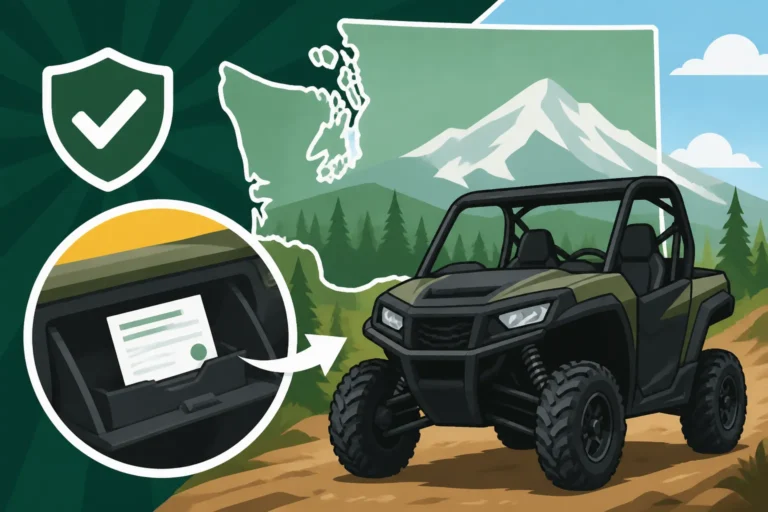
One of the most common oversights for multi-machine owners is failing to keep the correct registration paperwork with the correct machine. Each WATV must have its own physical registration card carried onboard whenever it's being operated on public lands. A ranger doesn't care if the registration for your other quad is back in your truck; they need to see the one for the machine you're currently riding.
To avoid this headache, invest in small, waterproof pouches or zip-lock bags for each machine's registration card. Many side-by-sides have glove compartments or small storage bins perfect for this. For quads and dirt bikes, a small fender bag or a compartment under the seat can work. Just make sure it's secure, easily accessible, and protected from the elements. Losing a soggy, illegible registration card is a pain you can easily avoid. This is especially true in Washington's often-wet climate; refer to [Keeping Paperwork Dry in the Rain] for more tips, and remember the importance of [Carrying the Registration in the Machine].
Decal and Metal Tag Placement
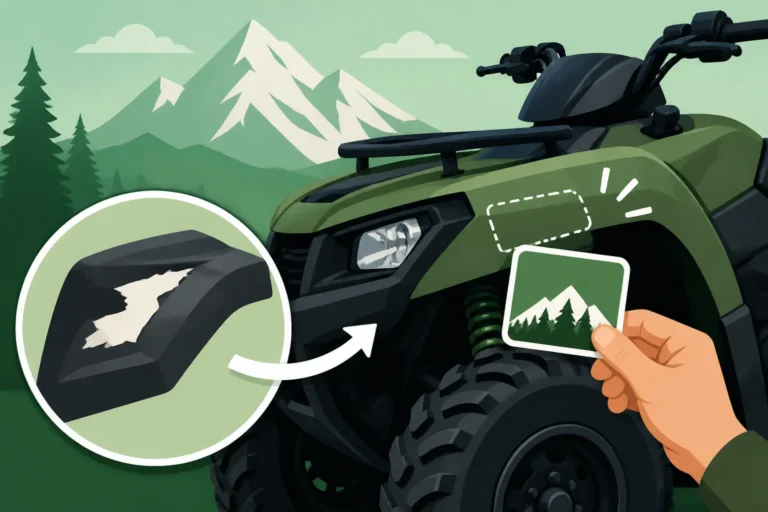
Just like the registration card, the decals (tabs) and the metal tag are specific to each machine. When you register a WATV, you'll receive a pair of self-adhesive decals (usually year and month tabs) and a metal tag if it's the first time or a replacement. These must be affixed to the machine they were issued for.
- Decals: Typically, one decal goes on the front fender, and one on the rear fender, in a clearly visible location. They indicate that your registration is current for the given year and month. It's important to remove old, expired decals before applying new ones to maintain clarity. For guidance, see [Washington ORV Decal Placement].
- Metal Tag: The metal tag, a small, durable plate, usually bolts onto a designated area on the rear of the machine, often near the taillight or on a frame member. This tag serves as a permanent identifier for your registered WATV, much like a license plate, but it's specific to off-road vehicles. Ensure it's securely fastened and visible. You can find more details on [Where the Metal Tag Mounts].
Double-checking that the correct decals and metal tag are on the correct machine before heading out is a small step that prevents big problems. It's easy to accidentally swap them when you're working on multiple vehicles in the garage.
Insuring Multiple Machines (If Applicable)
Insurance for off-road vehicles in Washington State is generally not required for off-road-only use. However, if you choose to make any of your WATVs street-legal for use on approved public roads, then liability insurance becomes a mandatory requirement for each of those road-registered machines.
When you're insuring multiple machines, it's a good idea to speak with your insurance provider about potential multi-vehicle discounts or bundling options. Many companies offer incentives for insuring more than one vehicle (including cars, trucks, and WATVs) under the same policy. Even for off-road-only machines, while not legally required, comprehensive coverage can be a wise investment, protecting your significant investment from theft, damage, or other unforeseen events. Proper documentation, such as a robust bill of sale (which you can get templates for from places like LawDepot), can be helpful when discussing coverage for each machine with your insurance agent. For more information, consult [Washington WATV Insurance Requirements].
Remember, each machine that gets the optional "on-road tab" will need its own proof of insurance. Just like registration, one policy won't cover multiple road-legal machines unless specifically written to do so for each one.
Multi-Machine Household: A Quick Overview
To help visualize the individual responsibilities for each of your WATVs, here’s a quick comparison of what applies per machine versus what might apply more broadly to your household.
| Item/Action | Applies Per Machine | Applies Per Household |
|---|---|---|
| Title | Yes, each WATV must have its own valid title. | No, titles are vehicle-specific. |
| Off-Road Tab | Yes, each WATV must display current off-road decals. | No, each machine needs its own tabs. |
| On-Road Tab | Yes, if electing road use for that specific WATV. | Optional, applies only to road-legal machines. |
| Metal Tag | Yes, a unique metal tag for each registered WATV. | No, tags are machine-specific. |
| Registration Card | Yes, a physical card must be carried with each WATV. | No, each machine gets its own unique card. |
| Road Use Declaration | Yes, for each WATV electing on-road privileges. | No, completed for each machine separately. |
| Safety Inspection | Yes, if required for initial road use setup. | No, applies to individual machines needing inspection. |
| Discover Pass | No, one pass covers two vehicles towing machines. | Yes, one [Washington Discover Pass] can be shared by the household (e.g., in two different tow vehicles). |
| Insurance (Road Use) | Yes, for each WATV registered for road use. | No, applies to individual road-legal machines. |
| Maintenance & Fuel | Yes, individual costs for each machine. | Yes, but aggregated across all machines. |
Disclaimer
This article is for general informational purposes only and does not constitute professional advice. Laws, prices and regulations vary by location and change over time. Consult a qualified professional for guidance on your specific situation.