Carrying the Registration in the Machine
It's an all too common scenario: you're out enjoying a fantastic day on the trails, the dust is flying, the engine is humming, and then, a set of flashing lights in your rearview. Suddenly, that carefree feeling evaporates as you realize you might not have all your ducks in a row. This guide is here to walk you through exactly what paperwork Washington State expects you to carry with your ATV or UTV, why it matters, and how to keep it safe and accessible so a roadside stop doesn't ruin your adventure.
The Core Requirement: Why Washington Wants Paperwork On Hand
When you're riding your wheeled all-terrain vehicle (WATV) in Washington, whether it's an ATV, UTV, or dirt bike, there's a fundamental expectation from law enforcement and land managers: you need to be able to prove that your machine is legally registered and that you, as the operator, are authorized to ride it. This isn't just about catching people doing something wrong; it's about ensuring safety, proper land use, and accountability on our shared trails and roads.
Proving Ownership and Registration Status
Imagine a situation where a machine is found abandoned or involved in an incident. Without clear documentation, it becomes incredibly difficult to trace back to an owner. Washington's registration system helps maintain order and ensures that funds collected through registration fees go back into maintaining the very trails we all love to ride. When you're asked for your registration, you're essentially being asked to confirm that you've done your part to contribute to and comply with the system designed to protect our riding opportunities. It's not just a piece of paper; it's proof that your machine is legitimate and recognized by the state. This also helps with theft recovery; a properly registered and documented machine is much easier to identify and return to its rightful owner.
What "On Hand" Really Means for ORVs
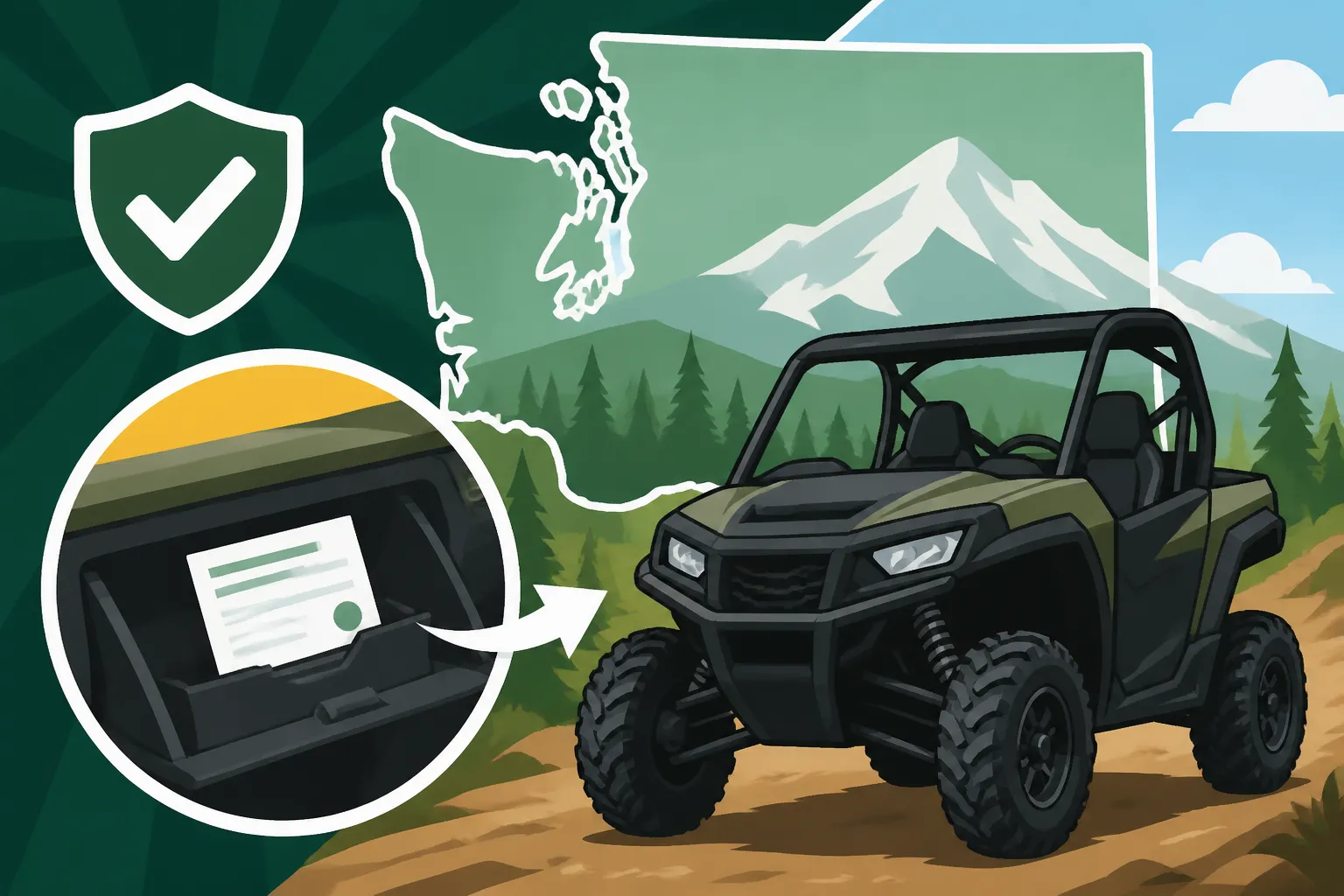
The phrase "on hand" might sound simple, but for an off-road rider, it comes with unique challenges. It doesn't mean leaving your registration tucked away in the glovebox of your truck back at the trailhead, or even worse, at home on your desk. It means the physical documents must be with the machine, easily accessible to the operator. Think about it: if you get separated from your tow vehicle, or if you're riding miles into the backcountry, you need immediate access to these papers. For some riders, this means a waterproof pouch attached to the handlebars, or a document holder stowed securely in a storage box on their side-by-side. The key is that it's physically with you and the machine at all times during operation. If a land manager or law enforcement officer stops you, they expect to see those documents without you having to hike back to your camp or staging area.
Penalties for Non-Compliance
Let's be frank: nobody wants a ticket. Riding an unregistered machine or failing to carry the proper documentation can lead to a citation. The specific fines can vary, but generally, operating an unregistered WATV is a moving violation, and not having your documents immediately available could be a secondary infraction. It's a hassle, it's expensive, and it can certainly put a damper on your day. Beyond the monetary cost, there's the lost time and the frustration of dealing with the legal system. It's far easier and less stressful to simply have everything in order before you even leave your driveway. Washington State takes its ORV laws seriously, and while officers are usually friendly, they also have a job to do. Knowing the rules, like those detailed in [Washington Fines for an Unregistered WATV], helps you stay on the right side of the law.
What Documents You Absolutely Need to Carry
Understanding the spirit of the law is one thing, but knowing the precise pieces of paper you need to keep with you is another. While the requirements are fairly straightforward, the nuances of off-road riding mean you need a practical approach to document management. Forget one piece, and you could face an unwelcome conversation with an officer.
Your WATV Registration Card
This is the cornerstone of your documentation. When you go through the process of getting your machine registered in Washington, you'll receive a physical registration card. This card contains vital information about your WATV, including its Vehicle Identification Number (VIN), year, make, model, and crucially, your name and address as the registered owner. It also shows the expiration date of your registration and confirms that you have paid the necessary fees for your [Washington's Off-Road Tab Explained] and any additional [Washington On-Road Tab Cost] if applicable. This card is your primary proof that your machine is legally allowed to operate on Washington's public lands and designated routes. It needs to be the original, not a photocopy, and it needs to be current.
Proof of Your Driver's License or Permit
If you're riding on any public road, even those designated for WATV use, you need to possess a valid driver's license. This isn't just a recommendation; it's a legal requirement for on-road operation. For off-road trails, while a driver's license isn't always explicitly mandated for adults, it's generally good practice to carry it for identification purposes. Furthermore, if you are supervising a minor rider, your license proves you are a licensed adult, fulfilling the [What Washington Requires of a Young Rider] supervision rules. For younger riders, or those operating under specific permits, they should carry whatever document legally authorizes them to operate the machine. It's your primary form of identification and proof that you're legally able to operate a motorized vehicle.
The Importance of a Bill of Sale (Especially for New Purchases)
While not strictly a "registration" document you need to carry indefinitely, a bill of sale is incredibly important, especially if you've recently purchased your WATV. Washington State gives you [Fifteen Days From Purchase in Washington] to get your new-to-you machine registered and titled. During this grace period, if you're pulled over, that bill of sale acts as your temporary proof of ownership and purchase date. It proves you're within the legal window to complete the official registration process. Without it, you could be cited for operating an unregistered machine, even if you just bought it last weekend. When buying from a private party, a well-drafted bill of sale, perhaps one you can customize from a service like LawDepot, protects both the buyer and seller by clearly outlining the terms of the sale, the purchase price (which impacts [Washington ATV Use Tax on a Private Sale]), and the transfer of ownership. It's a crucial document for initiating the full [Registering a WATV in Washington] process.
Practical Strategies for Protecting Your Paperwork on the Trail
The Washington wilderness is beautiful, but it's not always kind to paper. Rain, mud, dust, and vibration can quickly turn your crisp registration card into an unreadable mess. Smart riders know that simply tossing documents into a plastic bag isn't enough; you need robust solutions to keep your paperwork safe and intact, ready for inspection at a moment's notice.
Weatherproofing Your Important Documents
Water is the enemy of paper, and anyone who has ridden in Washington knows that rain can appear out of nowhere, or a creek crossing can turn into an unexpected submersion. Beyond just rain, dust and mud can make documents illegible. The best defense is a multi-layered approach. Start with good quality, heavy-duty waterproof pouches specifically designed for documents. These often have roll-top closures or heavy-duty zippers and are made from durable materials like TPU or reinforced vinyl. Some riders go a step further and laminate copies of their documents (while keeping the originals safely stored, as some agencies prefer originals). For temporary use, even a sturdy freezer-grade zip-top bag inside another zip-top bag can offer a basic level of protection, but don't rely on it for long-term or extreme conditions. Remember, you want your documents to be readable after they've been through a day on the trail, which means being prepared for anything the weather throws at you. You can find more tips in [Keeping Paperwork Dry in the Rain].
Secure Storage Solutions on Your Machine
Once your documents are weatherproofed, where do you put them? Accessibility is key. For ATVs, a small, waterproof tank bag or a handlebar bag designed for trail riding can be ideal. These keep the documents within easy reach without requiring you to dismount or dig through a larger cargo box. For side-by-sides, the options are a bit more varied. Many UTVs come with small glove compartments or under-seat storage that can house a document pouch. Just ensure that wherever you store it, it's secured and won't bounce out over rough terrain. Losing your documents on the trail is almost as bad as not having them. Consider a small, lockable box if you're concerned about theft, especially if you leave your machine unattended at a trailhead for a short while. The goal is a secure, dry, and easily retrievable location.
Digital Alternatives and Their Limitations
In our increasingly digital world, it's natural to wonder if a photo of your registration on your phone counts. While some states are moving towards accepting digital proof for certain documents, Washington State generally prefers and often requires physical documentation for WATV registration. It's always best to err on the side of caution and carry the original hard copies. There are several reasons for this: battery life on your phone, lack of cell service in remote areas, and the potential for a damaged screen making the document unreadable. While having a digital backup on your phone can be a helpful secondary measure – especially if you need to quickly reference details after a physical document is lost – it should not replace the actual paper. Think of digital copies as a safety net, not the primary means of compliance.
Special Considerations for Different Riding Scenarios
Not every ride is the same, and neither are the documentation requirements. Whether you're borrowing a friend's machine, just picked up a temporary permit, or exploring trails across state lines, a few unique situations demand your attention when it comes to paperwork. Being aware of these exceptions and extra steps can save you a lot of headache.
Riding with a Temporary ORV Permit
If you're a visitor to Washington or have just purchased a WATV and are waiting for your permanent tabs, you might be riding on a [Washington's Temporary ORV Use Permit]. These permits are typically paper, often printed at home or issued at a licensing subagent. They have a limited validity period, usually [Sixty Days on a Washington Temporary Permit]. It's absolutely crucial that this temporary permit is with you when you ride. Since it's often a simple piece of paper, robust weatherproofing (as discussed earlier) becomes even more critical. Treat it like gold, because without it, your temporary authorization to ride is invisible to law enforcement. Remember, these temporary permits often come with specific restrictions, such as [Why a Temporary Permit Is Trail Only], so make sure you understand those limitations too.
Borrowed Machines and Permission Slips
It's common for friends or family to lend out their WATVs for a ride. While this is a generous gesture, it adds a layer of complexity to the documentation. If you're operating a machine that isn't registered in your name, you should absolutely carry a written permission slip from the owner. This simple document should state that the owner (with their name, address, and contact info) authorizes you (with your name and contact info) to operate their specific machine (including its VIN, make, and model) for a specified period. While not legally mandated in every scenario, it demonstrates due diligence and can quickly clear up any suspicion of theft or unauthorized use. Think of it as a courtesy to the machine's owner and a protection for yourself. A basic template for such a document could easily be found and customized using a resource like LawDepot, providing peace of mind for both parties. This is also a good idea when considering [Washington Rules for Riding a Borrowed Machine].
Riding Across State Lines with Reciprocity
Washington has reciprocity agreements with some neighboring states, meaning that if your machine is legally registered in your home state, you might be able to ride it on Washington's trails without needing a Washington-specific ORV tab. However, these agreements have conditions, and you must carry proof of your home-state registration. This often means your out-of-state registration card, just like a Washington resident would carry theirs. The key here is to understand the specific rules of [Washington ORV Reciprocity With Other States]. Don't assume your home state's registration automatically grants you full access to everything in Washington. Always check the current regulations before you load up and head out, as reciprocity might apply only to off-road trails and not to road use, for example. When in doubt, it’s often safer to obtain a Washington temporary permit if you plan on extended riding here.
Common Misconceptions and Troubleshooting
Even experienced riders can get confused by the various pieces of identification and registration required for WATVs. It's easy to mix up a permanent component with a temporary document, or to wonder what your options are if the unexpected happens on the trail. Let's clear up some of those misunderstandings and offer practical advice for sticky situations.
The Metal Tag vs. the Registration Card
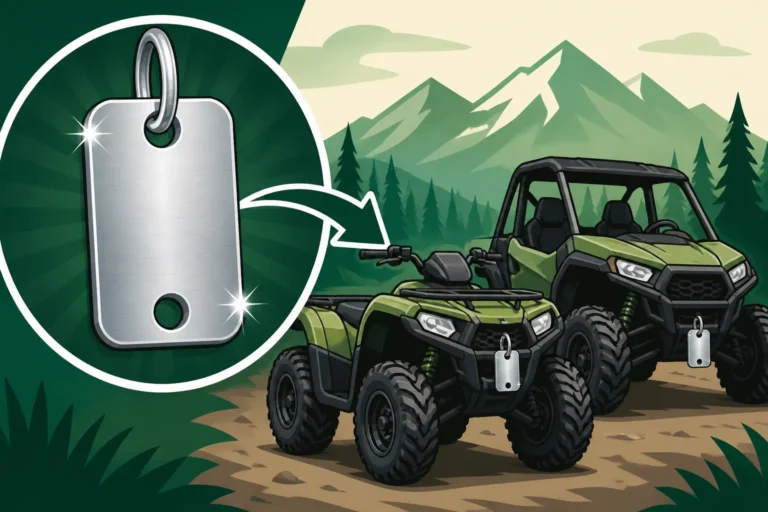
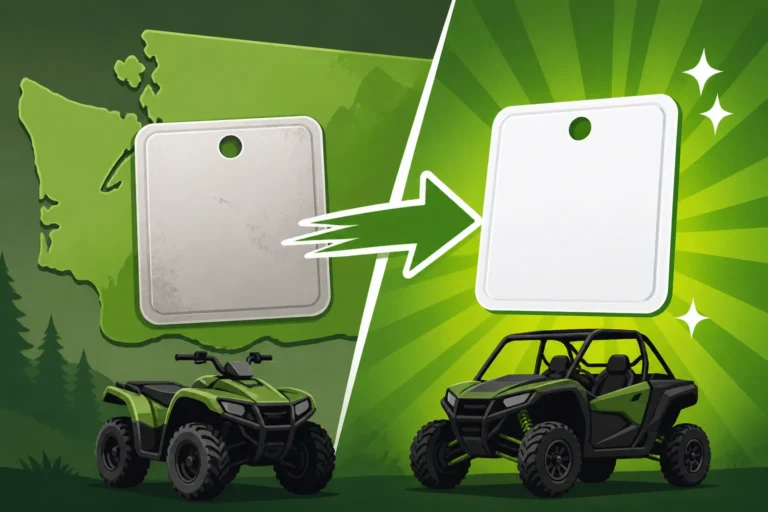
This is a frequent point of confusion for Washington riders. When you register your WATV, you receive two main things: the registration card (the paper document we've been discussing) and a small, permanent metal tag. The metal tag, often called the "license plate" for ORVs, is a physical, durable identifier that bolts directly onto your machine. It features the year of issuance and a unique identifier. This tag typically lasts for [Why a WATV Metal Tag Lasts Seven Years] and is designed to withstand the rigors of off-road use. However, the metal tag is not your registration card. The metal tag is a visible indicator that your machine is registered, but the registration card is the detailed proof of current registration status, showing the active tabs (off-road or on-road) and their expiration dates. You must carry the paper registration card, not just have the metal tag mounted, as clarified in [The Washington Metal Tag Explained]. Both are important, but they serve different purposes when it comes to roadside checks.
What to Do If Your Documents Are Lost or Damaged Mid-Ride
It happens. A waterproof pouch fails, a pocket rips, or you simply misplace your documents during a snack break. If you find yourself on the trail without your essential paperwork, the first thing to do is assess your situation. If you're close to your vehicle or home, it might be best to return and retrieve or replace the documents before continuing your ride. If you're deep in the backcountry, you're in a tough spot. You should proceed with extreme caution and be prepared to explain your situation to any law enforcement officer you encounter. While sympathy might be offered, a citation is still a possibility.
Once you're off the trail, your immediate next step should be to replace the lost or damaged documents. For your registration card and decals, you'll need to contact the Washington State Department of Licensing (DOL) or visit a local licensing subagent. There's a process for [Replacing Lost Washington Decals] and obtaining a duplicate registration. For a lost driver's license, you'll also go through the DOL. The sooner you report and replace, the better, as riding without these documents can lead to fines.
When a Trooper Pulls You Over: Your Responsibilities
If you're stopped by a Washington State Trooper, DNR officer, or local sheriff's deputy while riding your WATV, your responsibilities are much like those when driving a car. Remain calm and courteous. Pull over safely to the side of the trail or road as soon as possible. Turn off your engine and keep your hands visible. When asked for your documents, retrieve them carefully and present them.
- Be Cooperative: Answer questions truthfully and politely.
- Don't Argue: If you believe there's a misunderstanding, explain your position respectfully. Arguing will only escalate the situation.
- Ask for Clarification: If you don't understand why you've been stopped, it's okay to ask, "Officer, may I ask why I was pulled over?"
- Know Your Rights: While being cooperative, you don't have to incriminate yourself. If asked questions that might lead to self-incrimination, you can politely state, "I prefer not to answer questions without my attorney present."
Most officers are reasonable and simply want to ensure everyone is riding safely and legally. Having your paperwork in order and readily accessible will make the interaction much quicker and smoother.
Keeping Your Information Up-to-Date
The process of registering and titling your WATV isn't a one-and-done deal. Just like with a car, there are ongoing responsibilities to ensure your documents remain current and accurately reflect your situation. Neglecting these updates can lead to issues down the line, from fines to complications with selling your machine.
Renewing Your Registration Annually
Your Washington WATV registration is not permanent; it expires. Typically, registrations need to be renewed [Renewing a Washington ORV Registration Yearly]. The state usually sends out a renewal notice, but it's ultimately your responsibility to keep track of your expiration date. Riding on expired tabs is essentially the same as riding unregistered, and it carries the same potential penalties. Mark your calendar, set a reminder, or tie it to another annual event, but make sure you complete your [Washington WATV Registration Renewal] on time. The renewal process often involves paying the annual off-road tab fee and, if applicable, the on-road tab fee. Staying current ensures you can continue to enjoy Washington's vast trail system without interruption.
Updating Address or Ownership Information
Life happens. You might move, or you might sell your WATV. Each of these events requires an update to your official records. If you change your address, you're legally obligated to update it with the Department of Licensing. This ensures that any important notices, like renewal reminders, reach you. Similarly, if you sell your WATV, you must transfer the title and registration to the new owner. Failing to do so can leave you legally liable for actions taken by the new owner, or for any tickets or incidents associated with the machine while it's still in your name. The process for [Washington ORV Registration Transfer] is critical for severing your legal ties to the machine. Make sure to complete a proper [A Washington Bill of Sale for a WATV] at the time of sale to document the transaction accurately.
The Role of a Current Bill of Sale in Future Transactions
While we discussed carrying a bill of sale for recent purchases, it also plays a vital role in future transactions, even if you don't keep it on your machine indefinitely. When you decide to sell your WATV, a complete and accurate bill of sale from when you purchased it helps establish the chain of ownership. It also serves as a reference for the new buyer, assuring them that you are the rightful owner. If you ever purchase a machine that lacks a clear bill of sale or title history, it can be incredibly difficult to [Registering a WATV in Washington] or sell it later. A robust bill of sale, like those available through LawDepot, can make these future transactions much smoother, protecting you from potential disputes and ensuring a clean transfer of ownership. It's not just a purchase receipt; it's a legal record of a critical asset.
Document Summary Table
Here's a quick overview of the essential documents, why you need them, and key considerations for carrying them.
| Document Type | Purpose | Why You Must Carry It On The Machine | Important Considerations |
|---|---|---|---|
| WATV Registration Card | Proof of current state registration and ownership | Primary legal authorization to ride | Must be original, current, and clearly visible. Weatherproof it! |
| Driver's License/Permit | Proof of identity and legal authorization to operate (especially on roads) | Required for on-road use; good for ID off-road | Must be valid. Minors need appropriate permits or licensed adult supervision. |
| Bill of Sale (recent) | Proof of recent purchase, within 15-day grace period | Explains why registration might be pending | Only for new purchases. Date clearly visible. Useful for use tax calculations. |
| Temporary ORV Permit | Short-term authorization to ride | Interim legal authorization | Often paper, highly susceptible to damage. Check specific restrictions (e.g., trail-only). |
| Permission Slip | Authorization to operate a borrowed machine | Prevents theft suspicion & liability | Include owner & operator details, machine VIN, and dates. Can be drafted with tools like LawDepot. |
| Out-of-State Reg. | Proof of home-state registration for visitors | Required for reciprocity in Washington | Confirm Washington's reciprocity rules for your specific state; may not cover all types of riding (e.g., on-road). |
Disclaimer
This article is for general informational purposes only and does not constitute professional advice. Laws, prices and regulations vary by location and change over time. Consult a qualified professional for guidance on your specific situation.