Settling Use Tax When You Register
So, you've finally found that perfect used ATV or UTV and you're ready to hit the trails, but then comes the slightly less thrilling part: getting it registered. Many folks, especially when buying from a private seller, get a bit confused or even blindsided by something called "use tax." It's a common stumbling block, and honestly, it can feel like just another hurdle. This guide is all about demystifying Washington's use tax when you go to register your beloved machine, walking you through what it is, why it's necessary, and how to settle up so you can get your tabs and ride without a hitch.
What is Use Tax and Why Washington Cares About It
Let's be honest, the idea of paying another tax can feel a bit like a punch to the gut after you've already shelled out your hard-earned cash for a new-to-you off-road vehicle. But Washington's use tax isn't just a random fee; it's actually designed to level the playing field. Think of it this way: when you buy a brand-new ATV or UTV from a dealership in Washington, you pay sales tax right there and then. This tax helps fund various state services, including those that benefit our incredible trail systems.
However, when you buy a used machine from a private individual—say, your neighbor, or someone you found online—there's typically no sales tax collected at the point of sale. If the state didn't have use tax, everyone would naturally gravitate towards private sales to avoid sales tax, which would significantly impact state revenue. So, the use tax is essentially the sales tax that would have been collected if you'd bought the machine from a registered dealer. It ensures that everyone contributes fairly, whether they buy new or used, from a dealer or a neighbor. It's also why you often hear the Department of Licensing (DOL) refer to it as "sales/use tax." It's the same rate, just applied in different scenarios. You'll definitely want to understand [Washington ATV Use Tax on a Private Sale].
How Washington Calculates Use Tax on Your WATV
This is where things can get a little tricky and where some riders experience genuine frustration. Unlike a simple calculation based on a clearly itemized receipt, the state needs to ensure it's collecting tax on a fair value. So, when you bring your paperwork to register your WATV, the Department of Licensing (DOL) or its subagents will determine the use tax amount. They don't just take your word for it, and that's often where the surprise comes in.
Purchase Price Versus Fair Market Value
Washington state law dictates that use tax is calculated on either the actual purchase price or the fair market value of the vehicle, whichever is greater. This is a crucial point and one that many private buyers overlook. You might have gotten an amazing deal on a machine because it needed some work, or maybe you bought it from a family friend who gave you a discount. While that's great for your wallet upfront, the state still wants its share based on what they deem the vehicle is truly worth. This is often the biggest point of contention for buyers. You can learn more about [Purchase Price or Fair Market Value, Whichever Is Greater].
For instance, imagine you bought a five-year-old side-by-side for $5,000 from a friend, because it had a cracked fender and some worn tires. You have a bill of sale showing $5,000. However, when the licensing agent looks up the model in their system (often using industry guides like NADA or Kelley Blue Book), they might find that the average retail value for that make, model, and year, even with some minor cosmetic flaws, is closer to $7,500. In this scenario, Washington would calculate your use tax based on the $7,500 fair market value, not your $5,000 purchase price. This can feel unfair, especially if you genuinely bought a machine needing significant repairs, but the state's reasoning is to prevent under-reporting sales prices to avoid tax.
Documenting Your Purchase Price
To avoid potential headaches, it is absolutely paramount to have a clear and comprehensive bill of sale when you [Buying a Used ATV in Washington]. This document should detail the buyer and seller's information, the vehicle's VIN, the date of sale, and the agreed-upon purchase price. Even better, it should include a statement from the seller acknowledging any significant defects or reasons for a lower-than-average selling price. While it won't guarantee the DOL accepts a significantly lower price than fair market value, it provides a paper trail and can support your case. You can find templates for a solid bill of sale from resources like LawDepot, which can help ensure you've covered all the necessary details. Without a bill of sale, the DOL will almost certainly default to fair market value. For details on what to include, check out [Washington WATV Bill of Sale Requirements].
Let's look at how this might play out:
| Scenario | Stated Purchase Price | Fair Market Value (DOL Assessment) | Use Tax Calculated On |
|---|---|---|---|
| "Good Deal" from a neighbor | $4,000 | $6,000 | $6,000 |
| Fair transaction price | $5,500 | $5,200 | $5,500 |
| Machine needs major repair | $2,500 | $4,500 | $4,500 |
| Documented "as-is" sale | $3,000 | $5,000 (with documentation) | $3,000 (if accepted) |
As you can see, the "whichever is greater" rule often means you might pay tax on more than you actually handed over. It's a common sticking point, and something you should budget for. Remember, the goal is to be prepared and minimize surprises. You can always ask the licensing agent about the fair market value they're using if you believe there's a significant discrepancy, but strong documentation of the machine's condition at the time of sale is your best ally.
The Process: Paying Use Tax When You Register Your Machine
Alright, so you understand what use tax is and how it's calculated. Now, let's talk about the practical steps of actually paying it. This isn't a separate transaction you do at a different office; it's seamlessly integrated into the registration process. When you head to the Department of Licensing or a local subagent to [Registering a WATV in Washington], you'll handle the use tax right there.
What Paperwork You'll Need
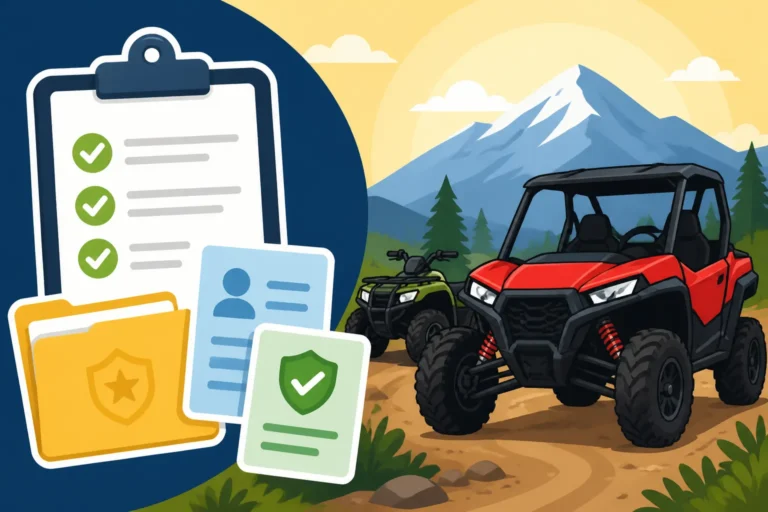
Gathering all your documents beforehand is key to a smooth process. You'll need:
- The Title: This is crucial. If you just bought the machine, the previous owner should have signed off on their title to you. Make sure the VIN on the title matches the machine perfectly. If there's no title, or the seller never titled it, you're looking at a different set of challenges, which are usually more complex than just settling use tax. [Why Washington Wants a Title First] explains this in detail.
- Bill of Sale: As discussed, this document proves your purchase price. Make sure it's signed and dated by both you and the seller. A comprehensive form, perhaps created using a service like LawDepot, can make this smoother.
- Identification: Your driver's license or state ID.
- Proof of Address: Sometimes required, especially if your ID address is not current.
- Payment: Be ready to pay the registration fees, any metal tag costs, and the use tax. You'll want to review [Washington WATV Registration Cost] and [Washington WATV Metal Tag Cost] to understand the full picture.
At the Licensing Counter
When you present your documents to the licensing agent, they will review your paperwork, especially the title and bill of sale. They will look at the purchase price you've declared on the bill of sale. Then, they will likely cross-reference this with their internal valuation guides to determine the fair market value of the machine.
If your stated purchase price is higher than the fair market value, they'll use your purchase price. If the fair market value is higher than your stated purchase price, they will typically use the fair market value for the calculation. This is why having a robust bill of sale that clearly outlines the condition and any defects can be so helpful. The agent will then apply the combined state and local sales tax rate for your residential address to the determined value. This is the use tax you'll owe. It’s all part of the process of [Paying Use Tax at the Licensing Counter].
They'll add this use tax amount, along with the other [Washington ORV Registration and Use Tax] fees (like your annual off-road tab, or the optional on-road tab, and the metal tag fee), to your total. You'll pay it all in one go. Make sure to get a receipt! This confirms you've settled all necessary taxes and fees and helps avoid any future disputes. If you're coming from out-of-state, say you're [Bringing a Machine From Oregon], you'll still owe Washington use tax if you reside here.
What Happens If You Don't Pay Use Tax
Skipping out on use tax isn't really an option if you want to legally ride your machine in Washington. The Department of Licensing simply won't issue you the necessary registration tabs and the [Washington's Metal Tag Explained] without it. That means you won't be able to ride on public lands or designated ORV areas, and certainly not on open county roads. Riding an unregistered WATV can lead to fines and other penalties, so it's really not worth trying to avoid. [Washington Fines for an Unregistered WATV] can quickly add up and overshadow any perceived savings from not paying the use tax.
Furthermore, if the state discovers at a later date that use tax was owed but not paid (perhaps if you were issued temporary tags but didn't complete permanent registration), you could face not only the original tax amount but also penalties and interest. It’s always best to be upfront and settle everything correctly when you first register. The state has mechanisms to identify these discrepancies, and it's a headache you want to avoid.
Ultimately, while the use tax might feel like an unexpected cost, it's a mandatory part of owning and registering an ATV or UTV in Washington, especially when buying used. Understanding the "fair market value versus what you paid" rule, preparing a thorough bill of sale, and budgeting for this expense will make your registration process much smoother. Get it done, get your tabs, and then enjoy those incredible Washington trails!
Disclaimer
This article is for general informational purposes only and does not constitute professional advice. Laws, prices and regulations vary by location and change over time. Consult a qualified professional for guidance on your specific situation.