Riding to a Sno-Park in Summer
Picture this: a beautiful summer day, your WATV is gassed up, and you're dreaming of escaping the valley heat for some higher-elevation breezes. Maybe you're eyeing a familiar Sno-Park, picturing it as a perfect staging ground for summer trail riding. But hold on a second – can you actually ride your off-road machine to a Washington Sno-Park in summer? This guide will cut through the confusion, helping you understand the rules, permits, and practicalities of using your WATV to reach those scenic mountain destinations when the snow has long since melted.
Understanding Washington's Sno-Park System for Summer ORV Use
It's easy to assume that a "Sno-Park" only exists in the winter, a place specifically for snowmobiles, cross-country skiers, and snowshoers. But these areas, often managed by the Washington State Parks and Recreation Commission in partnership with the Department of Natural Resources (DNR) and U.S. Forest Service, are part of a broader landscape that sees recreational use year-round. The key is understanding how their purpose and rules shift with the seasons, especially when it comes to off-road vehicles.
Sno-Parks Beyond the Snow
When the snow melts and the plows are put away, Sno-Parks don't just disappear. They often revert to their default summer identities, which can be anything from a simple gravel parking lot serving as a trailhead for hiking, mountain biking, or horse riding, to a designated staging area for off-road vehicles. What they become in summer depends entirely on their specific location and the land management agency responsible for that particular parcel. For example, a Sno-Park located deep within a national forest might primarily function as a trailhead for a non-motorized trail system once the snow is gone, while another, situated strategically near a network of designated ORV trails, could very well serve as a summer staging area for WATVs, dirt bikes, and side-by-sides. The infrastructure, like vault toilets and sometimes even picnic tables, often remains available, making them attractive spots for any kind of outdoor recreation. The trick is never to assume; always verify the summer-specific rules for that exact location.
Different Permits for Different Seasons
This is where many riders get tripped up. The Washington State Parks Sno-Park permit is a seasonal thing, exclusively for winter use, typically from December 1 to March 31. You don't need or use a Sno-Park permit for summer access. Instead, when you're looking to park and recreate at a Sno-Park site in the summer, you'll need to consider other permits that apply to the underlying land. If the Sno-Park is on Washington State Parks land or most DNR-managed recreation lands, you'll likely need a [The Discover Pass and Washington Riders]. This pass covers parking fees at most state-managed recreation sites. However, if the Sno-Park is located within a National Forest, like many are in the Cascades or Olympics, then you might need a [The Northwest Forest Pass in Washington] or an equivalent federal recreation pass. Some areas, particularly those managed by the U.S. Forest Service, might also be free to park at, especially if they are just basic trailheads with no developed facilities. The type of permit needed in summer reflects the summer management of the land, not its winter Sno-Park designation. It's a completely different system, and getting it wrong can lead to an unexpected parking citation.
Navigating the Roads to Your Summer Sno-Park
One of the biggest hurdles for reaching a high-elevation summer Sno-Park with your WATV isn't necessarily what you do once you're there, but how you get there. Many Sno-Parks are located at the end of county roads, forest roads, or sometimes even off a state highway. Riding your WATV on these public roads has very specific rules in Washington, and you absolutely need to understand them before you leave your driveway.
The Paved Approach: County and State Roads
Washington has specific laws governing where and how you can ride your WATV on public roads. Generally, counties with a population of less than 15,000 have their unincorporated roads open to WATV use by default, unless they specifically pass an ordinance to close certain roads. For larger counties (over 15,000 population), the opposite is true: their roads are closed unless they pass an ordinance to open specific roads. The maximum speed limit for a WATV on any opened county or city road is 35 mph, and you cannot ride on state highways except to cross them at designated intersections or ride specific highway segments authorized by WSDOT, usually posted at 35 mph or less. This means if your chosen Sno-Park requires you to travel on a county road that hasn't been officially opened to WATVs, or if the speed limit of the road exceeds 35 mph for any significant stretch, you'll need to trailer your machine. Many Sno-Parks are at higher elevations, which means accessing them often involves traversing miles of paved county roads. Always check the specific county ordinances for [Washington Rules for Riding a County Road] and [Washington Rules for Getting Across a Road] before planning your route. Getting caught on a closed road can result in significant penalties, including [Washington Fines for Illegal WATV Road Use].
Forest Roads and Their Nuances
Once you get past the paved county roads, you often transition onto forest roads. These are generally managed by the Department of Natural Resources (DNR) or the U.S. Forest Service. [Washington Rules for Riding a Forest Road] are typically more permissive for ORVs than paved county roads, but it's still crucial to know the rules. Many forest roads are indeed open to WATVs, especially those that are part of a designated ORV trail system or provide access to such systems. However, some forest roads might be restricted to administrative use, closed for logging operations, or designated as non-motorized only. Additionally, you might encounter private timberland roads, which require specific permission from the timber company to use. While generally more ORV-friendly than paved roads, forest roads are not a free-for-all. Always check current maps and regulations for the specific forest district you plan to enter. It's common for a Sno-Park to be accessed via a combination of paved county roads and then gravel forest roads, each with its own set of rules you need to follow.
Gearing Up for the Road Segment
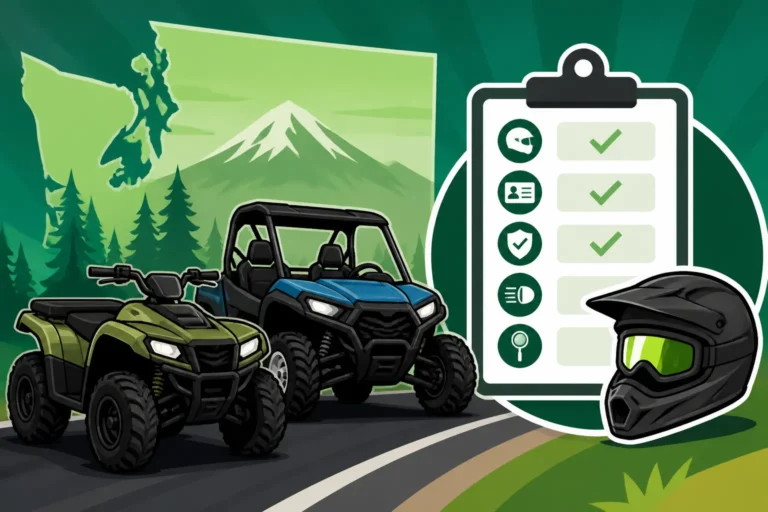
If you do plan to ride your WATV on any public roads, even for a short stretch, your machine needs to meet specific equipment requirements to be considered "street legal" in Washington. This isn't just a suggestion; it's the law. Your WATV must have working headlights and taillights, turn signals, at least one mirror (typically required on the left side, though two are better for visibility), a horn, and a spark arrester. Many riders also opt for a windshield or at least proper eye protection. If your utility vehicle has seat belts, they must be used. And, of course, a valid driver's license is mandatory for anyone operating a WATV on public roads, regardless of age, and all riders and passengers must wear a DOT-compliant helmet. For more specific details on what your machine needs to have, take a look at [Equipment a Washington WATV Needs on a Road]. Having the right gear isn't just about avoiding a ticket; it's about your safety and the safety of others sharing the road. Companies like SuperATV offer a wide range of accessories, from mirrors and turn signal kits to full cab enclosures, that can help you get your machine road-ready and enhance your riding experience, whether you're hitting the trail or just needing to cross a short paved segment.
Essential Considerations for Your Summer Sno-Park Adventure
Beyond navigating the roads and understanding permit requirements, there are several other practical aspects to consider when planning a summer WATV trip to a Sno-Park. These range from ensuring you have the right passes to being prepared for the unique challenges of mountain weather and trail conditions.
Passes, Permits, and Parking
As mentioned earlier, the winter Sno-Park permit is irrelevant in summer. Instead, you'll need to know which land manager controls the specific Sno-Park in question. For DNR or State Parks land, you'll almost certainly need a Discover Pass. This pass often allows you to park two vehicles, which can be handy if you're caravanning. Make sure your [Washington Discover Pass for Two Vehicles] is properly displayed in your tow vehicle. For U.S. Forest Service land, it's typically the Northwest Forest Pass, though some areas may accept other federal passes like the America the Beautiful pass, or even be free. Always check the official website for the specific Sno-Park or forest district for current requirements. Parking areas can get busy in summer, especially on weekends, as hikers, mountain bikers, and other recreational users flock to the mountains. Arrive early, especially if you're bringing a trailer, to secure a spot. Confirming the permit requirements beforehand will save you from potential fines and frustration, allowing you to focus on the fun parts of your ride.
Trail Connections and Riding Opportunities
The real appeal of riding to a Sno-Park in summer for many WATV enthusiasts is the potential for direct access to off-road trails. However, not all Sno-Parks are created equal in this regard. Some Sno-Parks, particularly those historically used by snowmobiles, might connect directly to extensive ORV trail systems once the snow melts. These are often designated as shared-use trails in the summer. Other Sno-Parks, however, might only serve as trailheads for non-motorized use, or the trails originating from them might be single-track restricted to dirt bikes, or even closed to all ORVs entirely. It's critical to consult up-to-date [Washington Trail Maps From DNR] or the U.S. Forest Service for the specific area. Look for maps that clearly delineate motorized versus non-motorized trails and any width restrictions for utility vehicles. Don't assume that just because it's a "Sno-Park" it automatically converts to an ORV staging area in summer. The specific trail signage and online maps are your best friends here. For example, some trails might be designated for machines 50 inches or less, which would exclude many modern side-by-sides unless they are specifically designed to be narrower.
Safety, Weather, and Fire Season
Riding in the mountains, even in summer, comes with inherent risks and requires preparation. Weather at higher elevations can change rapidly. A sunny morning can quickly turn into an afternoon thunderstorm, complete with hail and dramatic temperature drops. Always pack layers of clothing, rain gear, and extra water. Be sure your WATV's lighting system, perhaps upgraded with an LED light bar from SuperATV, is in top condition, especially if you plan to be out near dusk or if foul weather rolls in. [Washington Fire Season and Trail Access] is a significant concern during summer months. Many forest areas in Washington become extremely dry, leading to fire restrictions and even full trail closures. Before heading out, always check for current fire danger levels and any specific closures for the area you plan to ride. Carrying a fire extinguisher is a wise precaution. Also, be aware of wildlife; elk, deer, and even bears are common in mountain environments. Give them space and ride responsibly. Your tires, especially if they are designed for various terrains like those often found on SuperATV's website, should be in good condition, and consider carrying a basic repair kit, including a tire plug kit and air compressor, for unexpected flats far from civilization.
Finding Your Summer Sno-Park Access Points
With all these rules and considerations, how do you actually find a Sno-Park where you can legally and enjoyably ride your WATV in summer? It requires a bit of homework, but the reward of finding a fantastic high-elevation riding spot is well worth the effort.
Researching Your Route
The first step is always thorough research. Start by identifying Sno-Parks in areas known for ORV riding in Washington, such as parts of Capitol State Forest, the Ahtanum State Forest, or sections of the Okanogan-Wenatchee National Forest. Then, use online resources:
- Washington State Parks Website: While primarily focused on winter Sno-Parks, their site might link to summer use information for specific locations.
- DNR Recreation Maps: The Department of Natural Resources offers excellent, detailed maps for their managed lands, often clearly marking motorized trails and staging areas. Look for interactive maps online.
- U.S. Forest Service Websites: For Sno-Parks within National Forests, check the specific forest's website (e.g., Gifford Pinchot, Okanogan-Wenatchee). They will have recreation maps and alerts.
- County Websites: If your route involves county roads, visit the relevant county's public works or sheriff's office website to find ordinances related to WATV use on their roads.
- ORV Club Forums and Groups: Local riding clubs often share up-to-date information on trail conditions, open roads, and hidden gems.
Don't just look at one source. Cross-reference information to ensure you have the most accurate and current picture. A great resource to start with might be [Washington Trail Maps From DNR] to understand general motorized access.
Checking for Closures and Restrictions
Summer, especially later in the season, is notorious for unexpected closures. Logging operations, wildfire activity, maintenance work, or environmental protection can all lead to temporary or seasonal trail and road closures. Before you load up your machine, always check the "Alerts & Notices" sections of the relevant land management agency websites.
- DNR Alerts: For DNR lands, check their website for fire closures, timber sale closures, or other alerts that might impact [Washington Trail Closures to Check First].
- Forest Service Alerts: Similarly, National Forest websites will have alerts for forest fires, road washouts, or other restrictions.
- Local County Announcements: Some county roads might be temporarily closed for events or maintenance.
A Sno-Park might be accessible, but the trails from it could be closed. Being informed about these potential closures will prevent wasted trips and ensure you're riding legally and safely.
A Quick Look at Common Scenarios
To help you visualize, here's a table outlining common scenarios for Sno-Park access in summer:
| Sno-Park Location Type | Typical Summer Use | Permits/Rules | Common WATV Access Scenario |
|---|---|---|---|
| DNR-Managed Land | Trailhead for various uses (motorized/non-motorized) | Discover Pass often required for parking. Specific ORV rules for trails. | Often a good bet for WATV access if connected to designated ORV trails. Check DNR maps for trail designations and width limits. Road access to the Sno-Park may be via county roads requiring street-legal setup or trailer transport if county roads are not open. |
| U.S. Forest Service Land | Trailhead for hiking, horse riding, ORV (mixed use) | Northwest Forest Pass or other federal pass for parking. Specific ORV rules for trails. | Many popular ORV areas (e.g., some near Naches or Cle Elum) have Sno-Parks that convert to summer ORV staging. Again, check Forest Service MVUM (Motor Vehicle Use Maps) for designated ORV routes. Access roads can be federal forest roads or a mix of county/forest. |
| State Parks Land | Hiking trailheads, picnic areas, scenic viewpoints | Discover Pass required for parking. Motorized use generally very limited or prohibited. | Less likely to be a primary WATV staging area for trail riding. More often for non-motorized activities. WATV use would typically be limited to designated "roads" within the park, if any, and only if street-legal. Always verify specific park rules carefully. |
| Private Timberland Adjacent | Access point to private land (often restricted) | May require specific timber company permit for access/parking, or be prohibited. | Very unlikely to be an open Sno-Park for WATV staging without explicit permission. These often remain gated. You'd need to confirm if the Sno-Park itself is on public land and has public access through the private parcel. |
Always remember that the specific rules and designations can vary greatly from one Sno-Park to another, even within the same managing agency. Your best approach is always to check the current regulations and maps for the exact location you plan to visit, ensuring a smooth and legal riding experience. Happy trails!
Disclaimer
This article is for general informational purposes only and does not constitute professional advice. Laws, prices and regulations vary by location and change over time. Consult a qualified professional for guidance on your specific situation.