Washington Rules for Riding a Beach
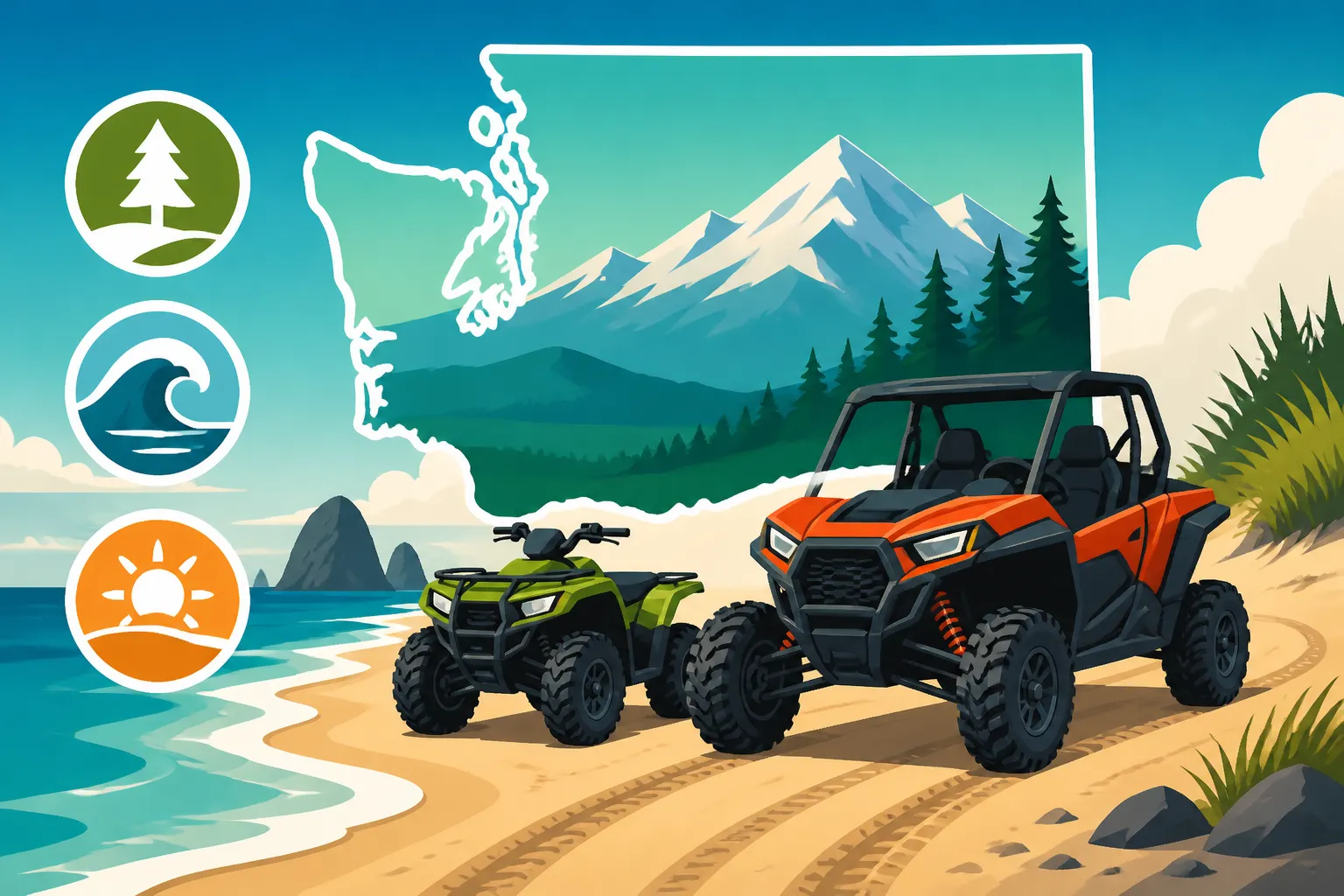
The dream of riding your ATV or UTV along the scenic coastline of Washington State is a common one, conjuring images of sandy stretches and ocean breezes. However, for most riders, this dream quickly bumps up against a wall of regulations and environmental protections. It's truly frustrating to envision such an incredible experience only to find out it's largely off-limits. This guide is here to clear up the confusion, explaining why most Washington beaches are closed to off-road vehicles and where you can legally get your sand fix.
The Harsh Reality: Washington Beaches are Generally Off-Limits to ATVs
Picture this: you've loaded up your rig, driven for hours, and the salty air is filling your lungs. You see miles of beautiful coastline, and the urge to unhitch and ride straight onto the sand is almost irresistible. But then you see the signs, or you remember that nagging doubt you had. The truth is, Washington's breathtaking ocean beaches, for the most part, are simply not open for general ATV or UTV riding. This isn't just about fun police; it's a complex weave of environmental protection, public safety, and managing diverse recreational uses.
Why the Dream of Beach Riding Collides with Law
The primary reason Washington's coastal beaches are largely off-limits to off-road vehicles stems from a deep commitment to preserving these fragile ecosystems and ensuring a peaceful experience for all beachgoers. Think about it: our beaches are vital nesting grounds for various bird species, critical habitats for marine life, and sensitive areas prone to erosion. The noise, exhaust, and physical disturbance from motorized vehicles can have a devastating impact on these delicate balances.
Beyond ecological concerns, there's the human element. Beaches are enjoyed by families building sandcastles, birdwatchers seeking solitude, surfers catching waves, and walkers simply enjoying the vast expanse. Introducing high-speed, noisy vehicles into this mix creates significant safety hazards and conflicts. It can quickly erode the very serenity and natural beauty that draws people to the coast in the first place. The laws are designed to protect both the natural world and the diverse interests of the millions who visit our shores each year. It's a tough pill to swallow when you just want to ride, but the rationale is rooted in shared public interest and environmental stewardship. [Washington's Off-Road Vehicle Rules Explained] cover the broader context of ORV use, and beaches fall under a particularly strict interpretation.
Specific Prohibitions and Designated Areas
While a tiny sliver of hope might exist for very specific, temporary, and often seasonal clamming access in certain areas (and even those are highly regulated and not for general recreation), the vast majority of Washington's coastal public lands explicitly prohibit motorized vehicle use on the sand. This includes state parks, natural areas, and long stretches of beach managed by various agencies.
Perhaps the most famous example for off-road enthusiasts in Washington is the Long Beach Peninsula. Despite its expansive shoreline, the idea of tearing up the sand there is a non-starter. [Why Long Beach Bans WATVs Outright] is a clear illustration of this widespread policy. You'll find similar restrictions up and down the coast, from Ocean Shores to Cape Disappointment. Even popular paths like [The Discovery Trail Is Closed to Machines], which runs parallel to the ocean, are strictly for non-motorized use. These prohibitions are often posted with clear signage, and local law enforcement actively patrols to ensure compliance. It's not just about avoiding a ticket; it's about respecting the land and the experience of others.
Where the Sand Riding Does Happen: Dunes vs. Beaches
So, if cruising Washington's ocean beaches on your quad isn't generally an option, does that mean all hope for sand riding is lost? Absolutely not! The key is understanding a crucial distinction: "beaches" versus "designated dunes." While the salty air and crashing waves of the Pacific coast are largely off-limits, Washington State is still home to some fantastic opportunities for legitimate, thrilling sand riding, but you'll need to head inland to specific dune systems.
The Critical Distinction: Beaches vs. Designated Dunes
It's easy to conflate "sand" with "beach," especially when you're thinking about off-road vehicles. However, in Washington, these are distinct categories with very different rules. When people talk about legitimate sand riding for ATVs and UTVs in our state, they are almost universally referring to inland dune complexes, not the marine coastline. These designated dune areas are managed specifically for motorized recreation, often with designated riding zones, staging areas, and infrastructure to support riders.
These areas are chosen because their geology and ecosystems are more resilient to the impacts of motorized vehicles, or they've been specifically developed with ORV use in mind. Unlike sensitive coastal beaches, these dune environments are where the state has decided to concentrate off-road fun while still maintaining responsible land use. You won't find the ocean here, but you will find plenty of soft sand, challenging climbs, and wide-open spaces to let your machine stretch its legs.
Regulations and Requirements for Dune Riding
Getting out to a designated dune area like [Juniper Dunes in Eastern Washington], [Beverly Sand Dunes in Central Washington], or the [Moses Lake Sand] area requires preparation and adherence to specific rules. It's not just a free-for-all; these are managed recreational sites designed for safe and responsible enjoyment. First and foremost, you'll need to ensure your machine is properly registered with the state of Washington. This typically involves getting your [Washington ORV Permits Explained], which means having valid off-road tabs and possibly a metal tag, depending on your machine.
Beyond registration, equipment is key for sand riding. A highly visible whip flag, mounted securely to your machine, is often a requirement in these areas to help prevent collisions in the undulating terrain. You'll also need a functional [Washington Spark Arrester Requirement] on your exhaust system to prevent wildfires in dry conditions – a non-negotiable for public land use. Some federal lands, like parts of Juniper Dunes, might also require a Northwest Forest Pass in addition to your state ORV tabs. Always check the specific land manager's website (DNR, BLM, Forest Service) for the latest rules, required passes, and any temporary closures due to weather or environmental conditions before you load up. It's also crucial to practice environmental responsibility: stay on marked trails, pack out everything you pack in, and be mindful of noise levels, especially if there are quiet zones or residential areas nearby.
Navigating Exceptions and Local Ordinances (If Any)
The vast majority of Washington's natural beaches are unequivocally closed to recreational ATV and UTV riding. It’s a bitter pill to swallow for many, knowing other states might have different rules. However, while rare, it's worth understanding the remote possibility of exceptions and, more importantly, the very real consequences of riding where you shouldn't.
The Rarity of Open Beach Access and How to Find It
Let’s be absolutely clear: general recreational riding on Washington’s ocean beaches is prohibited. Any talk of exceptions almost always refers to highly specific, often temporary, and usually very limited scenarios that are far removed from simply going out for a joyride. For instance, in some areas, during specific clamming or crabbing seasons, local agencies might designate very short, controlled access points for licensed harvesters to get equipment onto the beach. These are typically small, tightly managed corridors, and they are absolutely not for general off-road exploration. They usually come with strict time limits, speed restrictions, and are closed once the specific harvesting activity is over.
If you ever hear a rumor or spot something that looks like an exception, your first and only course of action should be to contact the local county sheriff's office, the managing state park office, or the Department of Fish and Wildlife directly. Do not rely on old maps, anecdotes, or what someone on a forum said. Always seek official, current information. Furthermore, it's critical to understand that the "open by default" rule that applies to some county roads in less populated areas of Washington explicitly does not extend to beaches or sensitive environmental zones. These areas are, by default, closed to motorized recreation unless explicitly opened by specific, well-publicized ordinance or state regulation, which for general riding, rarely happens.
Consequences of Illegal Beach Riding
The allure of an empty stretch of sand can be powerful, but the consequences of giving in to that temptation are significant and costly. Riding an ATV or UTV on a prohibited Washington beach can lead to hefty fines. While [Washington Fines for Illegal WATV Road Use] gives you a sense of what road violations cost, beach violations often carry additional penalties due to environmental damage or trespass. These aren't just minor tickets; they can run into the hundreds, even thousands, of dollars.
Beyond financial penalties, you could face impoundment of your machine, which means additional fees for towing and storage, plus the headache of getting it back. More severely, you could be charged with environmental damage, especially if your riding causes erosion, disturbs wildlife, or damages sensitive plant life. This isn't just a civil fine; it could involve criminal charges in severe cases, leading to a permanent record. The emotional toll of facing legal action, coupled with the potential damage to your reputation as a responsible rider, is simply not worth the fleeting thrill of an illegal beach ride. Always err on the side of caution and ride only in designated, legal areas.
Planning Your Washington Sand Adventure
So, the ocean beaches are largely a no-go, but the inland dunes are calling! Great! Now that you know where you can ride, it’s time to shift gears and prepare for a fantastic, legal, and responsible sand adventure. Getting ready for dune riding is a bit different than hitting the forest trails, and a little planning goes a long way to ensure a fun and safe trip for everyone.
Essential Gear for Dune Riding
Riding in sand presents unique challenges and requires specific equipment to keep you safe and your machine performing well. One of the most important considerations is your tires. While your standard knobby tires might get you around, they aren't optimized for sand. Many experienced dune riders opt for specialized paddle tires on the rear of their ATVs or UTVs. These tires feature large, scoop-like paddles that dig into the sand, providing incredible traction for climbing steep faces and accelerating quickly. If paddle tires aren't in your budget or you want more versatility, airing down your existing tires significantly (think 5-8 PSI) can dramatically increase your tire's footprint and flotation on soft sand. Just remember to reinflate them before hitting pavement again! [Airing Down for Washington Sand] is a critical skill for any dune rider.
Another non-negotiable piece of gear for most dune riding areas is a safety flag. This is a bright, often orange, flag mounted on a tall whip pole that extends high above your machine, making you visible over blind rises and dunes to other riders. You'll also need a functioning [Washington Spark Arrester Requirement] on your exhaust system – this is crucial for preventing wildfires in dry, sandy environments and is typically enforced by rangers. Don't forget your personal safety gear, including a DOT-approved helmet (required by [Washington Helmet Law for WATV Riders] for all riders, regardless of age), goggles, gloves, and sturdy riding boots. For aftermarket accessories like paddle tires, whip flags, or robust skid plates to protect your undercarriage from hidden obstacles, brands like SuperATV offer a wide range of products designed to enhance your dune riding experience and provide that extra layer of safety and performance. Consider packing a small shovel, a tow strap, and even a compact air compressor for airing back up your tires.
Responsible Riding and Environmental Stewardship
Riding in Washington's designated dune areas is a privilege, and it comes with the responsibility of being a good steward of the land. Our public lands are shared resources, and it's up to all of us to ensure they remain open and enjoyable for future generations. The core principle is "tread lightly." This means staying on designated trails and within marked riding areas. Venturing off-trail in dune environments can lead to habitat destruction, erosion, and confusion for other users.
Always pack out everything you pack in, including any trash, broken machine parts, or food waste. Leave the area cleaner than you found it. Be aware of and respect other users; dune areas often attract a mix of riders with different skill levels and machines. Maintain safe speeds, especially in crowded staging areas or around blind corners. Pay close attention to any posted signs regarding speed limits, closures, or specific rules for certain sections of the dunes. Finally, always check for current conditions and closures before you head out. [Washington Fire Season and Trail Access] can impact dune areas just as much as forests, and closures can happen with little notice to protect both the environment and public safety. By following these guidelines, you not only protect yourself and others but also help ensure that Washington's fantastic sand riding opportunities remain open and accessible for years to come.
Disclaimer
This article is for general informational purposes only and does not constitute professional advice. Laws, prices and regulations vary by location and change over time. Consult a qualified professional for guidance on your specific situation.