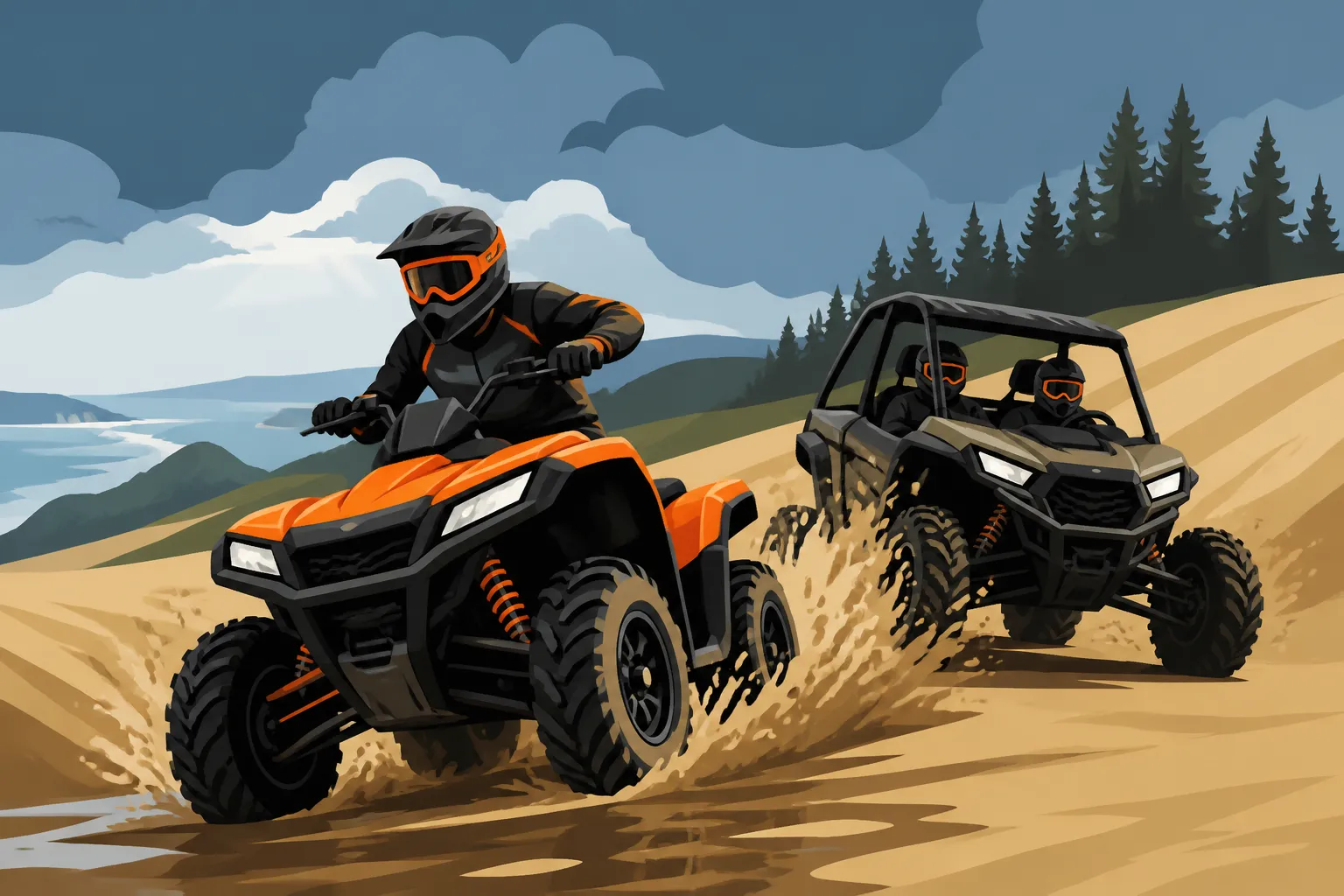
Riding Sand After a Rain
Rain can make a Washington sand ride feel easier at first, then catch you out when a firm surface gives way to soft sand, standing water, or a slick slope. The safest approach is to treat post-rain conditions as mixed and changing: check access, scout before committing, adjust your riding style, and turn around when the terrain stops feeling predictable.
How Rain Changes Washington Sand
A damp surface can be easier, but it is not uniformly firm
A light shower may settle loose sand and reduce dust, which can make a route feel more controlled. Tires may track more cleanly, and the surface can seem firmer than it did during a dry spell. That first impression is useful, but it does not tell you what is happening below the surface or around the next bend.
Rain does not soak every part of a riding area evenly. Exposed slopes, shaded low spots, compacted tracks, and sheltered hollows dry at different rates. One section may feel supportive while the next has soft sand under a damp crust. On a machine, that change can arrive quickly: the front end may begin to push, a tire may dig in, or a side-by-side may lose momentum where the route dips.
Water also changes how sand moves. A shallow puddle may cover a rut, a soft patch, or a sharp transition. If you cannot see what is under the water, do not assume it is a harmless splash. Stop and inspect it on foot if it is safe to do so, or choose a route you can see clearly.
Location and terrain make a difference
Washington’s sand riding areas do not all respond to rain in the same way. Conditions can vary between sites and even within one site, depending on recent weather, drainage, traffic, and the shape of the ground. Before planning a trip, review [Washington's Sand Dune Riding Areas] and check the access rules and current closures for the specific location you intend to visit.
At [Juniper Dunes in Eastern Washington], for example, the landscape and route conditions may differ from those at [Beverly Sand Dunes in Central Washington] or [Moses Lake Sand in Central Washington]. Treat each area as its own ride rather than assuming that a report from somewhere else tells you what the sand will be like. A recent rain at one site does not guarantee the same surface, access, or water conditions at another.
Pay particular attention to low areas, the edges of wet ground, and places where water appears to be draining across the route. If a patch looks unusually dark, glossy, or churned, slow down and take a closer look. Avoid making a new path around a wet spot: the apparent detour may lead into fragile ground or an area that is not open to riding.
Prepare Before You Leave
Check access, weather, and route information
A good post-rain ride starts before the machine is unloaded. Look for current notices about closures, access restrictions, and conditions for your destination. Rain can affect more than the ride itself: a road to the staging area may be muddy, a parking lot may be soft, or a route may be closed to protect the land. Use [Washington Trail Closures to Check First] as a reminder to verify conditions rather than relying on an old social media post or a map saved months ago.
Study the route and agree on a simple plan with everyone in your group. Identify where you will regroup, what you will do if someone gets stuck, and which visible landmarks you can use to find your way back. Mapping tools such as onX Offroad can help you review your planned route and keep track of where you are, but they are not a substitute for posted signs, land-manager directions, or good judgment on the ground. If you plan to rely on digital maps, save the information you need before leaving service.
Do not assume that a route shown on a map is open or suitable for riding. A map can help with orientation, but local access rules and signs control where you may ride. Review [Washington Rules for Riding a Dune] and follow marked boundaries. If a route is blocked, signed closed, or visibly unsafe, do not go around the barrier or create another path.
Prepare the machine and the group
Check your machine before the trip, especially after it has been sitting or after a previous ride in wet conditions. Look at the tires, brakes, steering, lights, and protective equipment. Sand can hide obstacles, while water and wet grit can affect traction and visibility. A clean visor or goggles also matters when the damp surface starts drying and other riders kick up grit.
Bring recovery equipment that matches your machine and the conditions, and make sure someone in the group knows how to use it. A tow strap or winch is not a reason to enter terrain you cannot safely recover from. Keep phones protected from moisture, carry drinking water, and have a way to communicate if the group becomes separated. onX Offroad may be useful for keeping your planned route visible, but do not make a phone your only navigation or emergency plan.
Talk through the day’s limits before riding. Agree that anyone can ask the group to stop, inspect a feature, or turn around without pressure. That conversation helps prevent a common problem: one rider continues into a questionable patch because everyone else seems committed.
| Before the ride | What to check | Why it matters after rain |
|---|---|---|
| Access | Current closures, signs, and designated riding areas | A route or staging area may be restricted or affected by wet conditions |
| Weather | Recent and expected rain, wind, and visibility | Conditions can keep changing while you ride |
| Route | Landmarks, turnaround points, and alternate paths | Navigation is harder when tracks or landmarks are obscured |
| Machine | Tires, brakes, steering, lights, and recovery gear | Wet sand can reduce traction and conceal hazards |
| Group | Riding order, regroup points, and a no-pressure turnaround plan | Riders may experience the same patch of sand differently |
Ride With the Conditions
Use a cautious pace and smooth controls
Start slowly on a section you can see. Use it to assess how the tires respond and whether the sand is firm, loose, or mixed. Avoid sharp steering inputs, abrupt acceleration, and sudden braking, which can make a machine slide or dig in. Smooth, measured control gives you more time to react if the surface changes.
Keep enough space between machines to see the terrain and avoid another rider’s roost. Following too closely is especially risky when the lead machine crosses a puddle, soft patch, or hidden rut. If the rider in front stops, you want room to slow down without making a sudden move into unknown ground.
On a slope, assess your line before committing. A damp surface can offer traction in one spot and become slick or loose a few feet away. Avoid stopping where a machine could slide, and do not attempt a climb or descent simply because another rider made it look easy. If the route is steep, obscured, or beyond your comfort level, choose a safer line or turn around.
A route that feels manageable for one machine may be difficult for another. A heavier side-by-side can behave differently from a lighter ATV, and tire type, load, skill, and machine setup all matter. Ride to the least experienced person in the group, not the most confident one.
Be deliberate about tire pressure and recovery
Some riders adjust tire pressure for sand, but there is no single setting that is right for every machine, tire, load, or route. Follow the manufacturer’s guidance and understand the limits of your tires and wheels before changing pressure. The general idea behind [Airing Down for Washington Sand] is to increase the tire’s footprint, but lowering pressure too far can increase the chance of damaging a tire or separating it from the rim.
If you are unsure, keep the machine within its recommended operating range and focus on line choice, smooth inputs, and momentum you can control. Do not carry speed into a section simply to avoid getting stuck. A cautious approach is easier to recover from than a fast approach that ends in a hidden rut or a sharp turn.
If a machine bogs down, stop spinning the tires. Spinning can dig the machine deeper and make recovery harder. Have the group pause, check for hazards, and decide on a recovery method that does not put anyone in the path of a strap or moving machine. Clear bystanders from the recovery area and follow the equipment maker’s instructions. If the machine is deeply stuck or the ground is unstable, it may be safer to get help than to keep pulling.
Protect the Area and Know When to Turn Back
Stay on designated routes and avoid wet ground
Wet ground can be more vulnerable to damage, particularly where water is collecting or draining. Keep to designated riding areas and established routes, and do not widen a track to get around a puddle. A detour can damage vegetation, disturb sensitive ground, or take you into an area where riding is not allowed.
Pay attention to signs, boundary markers, and closures even if the route looks tempting. A marked boundary may protect an area that is not obvious from the seat of a machine. Use [Washington Trail Maps From DNR] and onX Offroad as planning aids where appropriate, while remembering that signs and land-manager instructions take precedence over a digital route line.
Leave the area as you found it. Pack out trash, avoid unnecessary tire spinning, and do not wash mud or sand into a drain or watercourse at the staging area. If your group has crossed between different riding areas, clean the machine before moving on to help limit the spread of invasive weeds and seeds.
Recognize the signs that it is time to stop
Turn around or call the ride early if you encounter standing water that hides the ground, a route that is becoming deeply rutted, a slick slope you cannot assess, or repeated loss of traction. The same is true if visibility is poor, weather is worsening, or the group is becoming tired. Fatigue makes it harder to spot subtle changes in the surface and easier to make an impulsive choice.
A post-rain ride is not a test of how far you can push through. If the surface has changed since your last pass, pause and reassess. If a route no longer feels safe, take the known way back rather than exploring an uncertain shortcut. onX Offroad can support navigation when you have prepared your route, but it cannot tell you whether a patch of sand is firm enough to cross.
The most satisfying ride is often the one where everyone returns with their machines intact and the riding area undamaged. Be willing to shorten the loop, wait for conditions to improve, or choose a different destination. Rain can make sand riding enjoyable, but patience and careful decisions matter more than squeezing in every planned mile.
Disclaimer
This article is for general informational purposes only and does not constitute professional advice. Laws, prices and regulations vary by location and change over time. Consult a qualified professional for guidance on your specific situation.