Airing Down for Washington Sand
Washington sand can feel effortless one moment and bog a machine the next, especially when the tires are spinning instead of floating. Lowering tire pressure can widen the contact patch and improve traction, but too little pressure risks a rolled tire or damaged rim. This guide explains how to air down carefully, adjust to changing conditions, and reinflate before leaving the dunes.
Why airing down helps on Washington sand
A larger footprint helps a machine float
On loose sand, a tire can dig down rather than roll forward. Reducing pressure modestly lets the tire spread out, increasing the area that touches the ground. That larger footprint can help a quad or side-by-side stay closer to the surface instead of trenching.
You may notice the difference when pulling away from a stop, climbing a soft rise, or riding through churned sand. With more tire on the ground, the machine can move forward with less wheelspin. That often means less digging, less strain on the drivetrain, and fewer situations where a riding partner has to help push or winch you out.
Airing down is not a cure-all. A heavy machine, a steep dune, deep ruts, or an abrupt throttle input can still cause trouble. The goal is to make a sensible adjustment for the terrain—not to find the lowest pressure the tire can tolerate.
The right pressure depends on your machine and setup
There is no single tire-pressure number that works for every ATV and UTV. Tire construction, tire size, rim design, vehicle weight, passengers, cargo, and riding style all affect what is safe. Use the owner’s manual and tire manufacturer’s guidance as your starting point, and check whether your wheels or tires have a specified minimum pressure.
A lightly loaded quad with standard tires may respond differently from a wide side-by-side carrying passengers and gear. A beadlock wheel may help retain a tire bead in some situations, but it does not make every pressure safe or prevent sidewall damage. Don’t assume a setup is protected simply because it has aftermarket wheels.
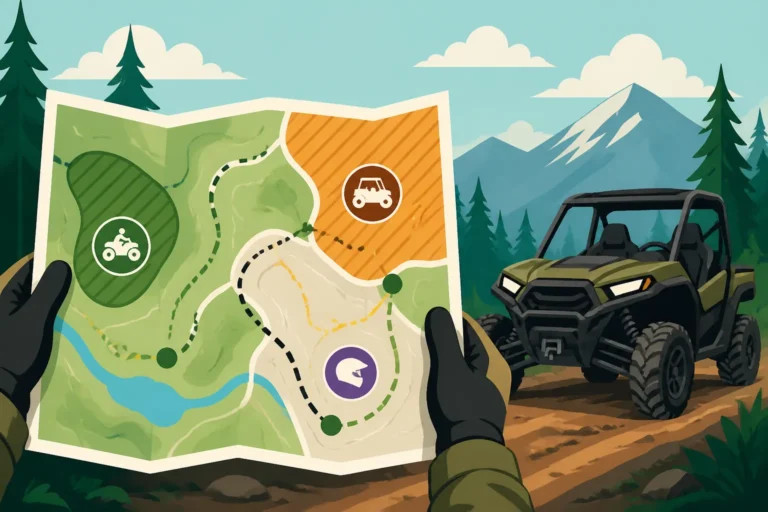
If you use onX Offroad to plan a route, treat the map as a planning aid rather than a substitute for checking tire limits, conditions, or posted restrictions. A route line can show where you intend to ride; it cannot tell you whether the machine is loaded safely or whether the sand has become soft since your last visit.
Sand conditions change across a ride
Sand is not uniform. A firm, damp stretch may support a machine well, while a loose patch a short distance away can swallow the tires. Traffic can also churn up popular areas, turning a smooth track into a collection of ridges and soft pockets.
Washington riding areas have their own patterns and access considerations. Before heading east, review information for Washington's Sand Dune Riding Areas and the specific place you plan to visit, such as Juniper Dunes in Eastern Washington, Beverly Sand Dunes in Central Washington, or Moses Lake Sand in Central Washington. Check current closures and access details before loading the trailer; conditions and permitted riding areas can change.
How to air down carefully
Start with a safe baseline
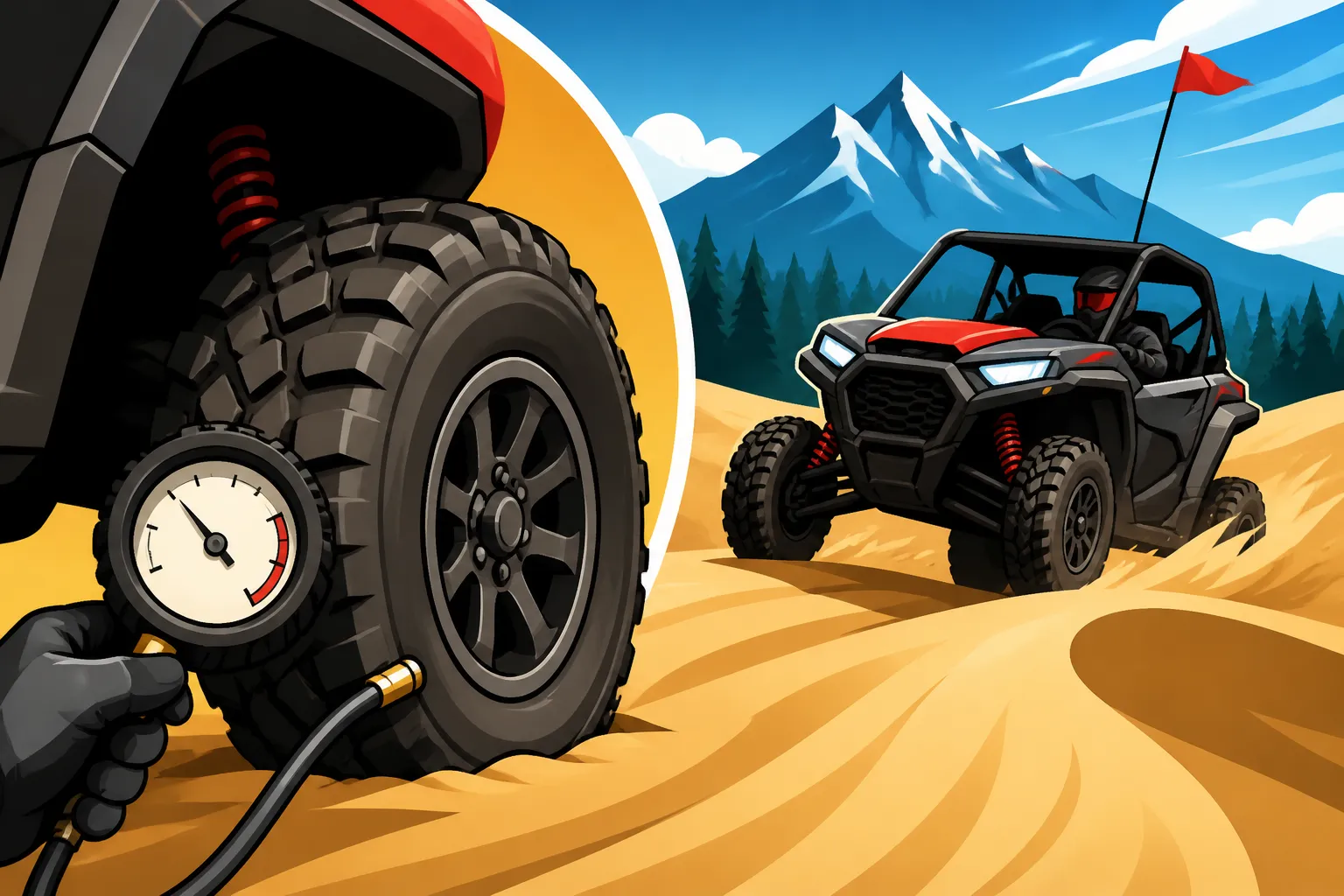
Check tire pressure when the tires are cold, before the day’s ride heats them up. Use a dependable low-pressure gauge that can read the range appropriate for your tires. A compact gauge is easier to use accurately than trying to judge pressure by how a tire looks or feels.
Before making any change, note the starting pressure for each tire. Check the manual and tire markings for the recommended range and minimum. If the machine is carrying passengers, tools, recovery gear, or a full cargo rack, account for that extra load rather than copying the setup of an unloaded vehicle.
Make small adjustments and test how the machine behaves on a safe, open section. Avoid making a large pressure change all at once. If the tire starts to feel vague in a turn, flexes excessively, or looks unusually compressed under load, stop and reassess. When you are unsure whether a pressure is safe for your specific tire and wheel combination, get guidance from a qualified tire or powersports professional.
Adjust gradually and ride smoothly
Lower pressure in small steps, checking each tire with the gauge as you go. Keep the machine on level ground when possible, and check both sides of the vehicle rather than assuming the tires are matched. Different starting pressures can lead to uneven handling.
After each adjustment, ride a short, low-speed section and pay attention to steering, stability, and tire behavior. If traction improves without the machine feeling sloppy, you may have found a useful setting for that section of sand. If it still digs, first consider your riding technique and route choice before lowering pressure further.
Smooth inputs matter. Accelerate progressively instead of stabbing the throttle, and avoid sharp turns that push a soft tire sideways. Keep momentum steady on a climb, but don’t approach a dune blindly or accelerate so fast that you lose control at the crest. A passenger, cargo, or a sudden steering correction can change how a loaded UTV responds.
Carry the right tools
A small tire-pressure gauge, an air source, and a way to reconnect to your machine’s valve stems make pressure changes easier to manage. Pack them where you can reach them without unloading the whole rig. Before leaving home, confirm that your compressor or inflator works and that its hose fits your tires.
A deflator can speed up the process, but it does not replace a gauge. Some deflators are designed to stop at a selected pressure; still, verify the result with a separate gauge if you rely on one. Valve caps are easy to lose in sand, so keep spares with your tools and reinstall them after adjustment.
It also helps to carry basic recovery equipment and agree on a plan with your riding group. If one machine gets stuck, avoid crowding around it or attaching a strap to an unsuitable point. Recovery should be slow and controlled, with everyone standing clear of the strap and the machine’s path.
| Situation | What to check | Sensible response |
|---|---|---|
| Soft, loose sand | Tire behavior and wheelspin | Make a small pressure adjustment only within tire and vehicle guidance |
| Firm or damp sand | Whether the machine tracks steadily | Avoid lowering pressure just because other riders do |
| Loaded UTV | Passenger and cargo weight | Follow guidance for the actual load |
| Sharp turns or uneven ground | Sidewall flex and bead security | Reduce speed and avoid aggressive steering |
| Leaving the dunes | Whether pressure is suitable for the next surface | Reinflate before pavement or rough, rocky sections |
Riding safely after airing down
Change your riding style with the terrain
Aired-down tires can improve flotation, but they may also make steering feel less precise. Take turns more gently, especially when the sand is rutted or the machine is carrying a passenger. Keep a larger gap between vehicles so you have room to slow down without making a sudden maneuver.
Approach dune crests with care. You may not be able to see another rider, a drop-off, or an abrupt change in terrain on the other side. Stop short of blind crests when needed, and use established routes rather than making a new line through vegetation or closed areas. When the surface changes, reassess instead of assuming the same pressure and speed remain suitable.
If the machine begins to bog, avoid repeatedly spinning the tires. Stop before the tires dig deeper, then consider whether backing out along the track is safer than pushing forward. Ask your group for help early, while the machine is still easier to recover.
Watch for tire and handling warning signs
A tire that looks pinched against the rim, rolls noticeably in a turn, or loses its bead needs immediate attention. So does a machine that suddenly pulls to one side or feels unstable. Stop in a safe location and inspect the tires before continuing.
Sand can hide hard objects, ruts, and abrupt transitions. Lower pressure does not protect a tire from every impact; in some circumstances, a softer tire may be more vulnerable to pinching or sidewall damage. Keep speeds appropriate for the visibility and surface, and don’t ride close behind another vehicle where its dust or thrown sand can block your view.
For a wider overview of surface and route challenges, review Washington Trails With Sand alongside Washington Trail Difficulty Ratings. Conditions can differ between one section and the next, so use the easiest practical line and turn around if the terrain exceeds your group’s comfort or the machine’s capabilities.
Reinflate before changing surfaces
Before riding onto pavement, rocky roads, or other firmer terrain, restore tire pressure to the appropriate setting for that surface and load. Soft tires can feel imprecise on hard ground and may heat or wear differently when driven at speed. Don’t plan to “air up later” after a long road connection; carry an air source and do it before you leave the sand.
If your route mixes dunes with firm access roads, plan pressure checks into the day. A useful routine is to check before riding, after a major change in terrain, and again before towing or driving on a hard surface. Keep a written note of the pressures that work for your machine and the conditions, but don’t treat a past setting as a universal rule.
For machines set up specifically for dunes, Paddle Tires on Washington Dunes can help you understand one equipment option, though tire choice still depends on the vehicle and where you ride. If rain has changed the surface, Riding Sand After a Rain offers related context. Use onX Offroad or another mapping tool to organize your route, then verify access and closures through the land manager’s current information.
Planning a sand ride from the staging area
Check access and conditions before you leave
A good ride starts before you unload. Confirm the riding area is open, identify the staging location, and make sure your machine and group are allowed on the routes you plan to use. A saved track or map pin is handy, but it should not override a gate, closure notice, or posted boundary.
You can use onX Offroad to keep a planned route and nearby reference points organized, especially when riding somewhere unfamiliar. Download or prepare what you need before heading into an area with limited reception. Keep a second option in mind in case your intended route is closed, crowded, or unsuitable for your machine.
Washington sand destinations are not interchangeable. Juniper Dunes, Beverly Sand Dunes, and Moses Lake each have different surroundings and access details. Check area-specific guidance, including Washington Trail Maps From DNR where relevant, and look at Checking Alerts Before You Load Up for a reminder to verify conditions before making the drive.
Make a pressure plan for the whole group
If several machines are riding together, don’t assume everyone should use the same setting. A quad and a side-by-side may have different tires, loads, and pressure recommendations. Each rider should know their starting pressure, carry or have access to a gauge, and understand who has an air source.
Agree on a meeting point if the group gets separated, and set a pace that works for the least experienced rider. A vehicle that can climb a soft slope may not be the right choice for every person in the group, particularly if visibility is limited or the route is unfamiliar. It’s fine to choose a more conservative line or skip a feature.
Before heading home, do a walk-around: check tires, valve caps, and any signs of damage, then reinflate as needed for the drive or trailer loading. A little patience at the staging area is easier than discovering a soft tire or handling problem on the road. onX Offroad can help keep your route notes together, while a pressure gauge and compressor handle the practical part that a map cannot.
Disclaimer
This article is for general informational purposes only and does not constitute professional advice. Laws, prices and regulations vary by location and change over time. Consult a qualified professional for guidance on your specific situation.