Why the Discovery Trail Is Closed to Machines
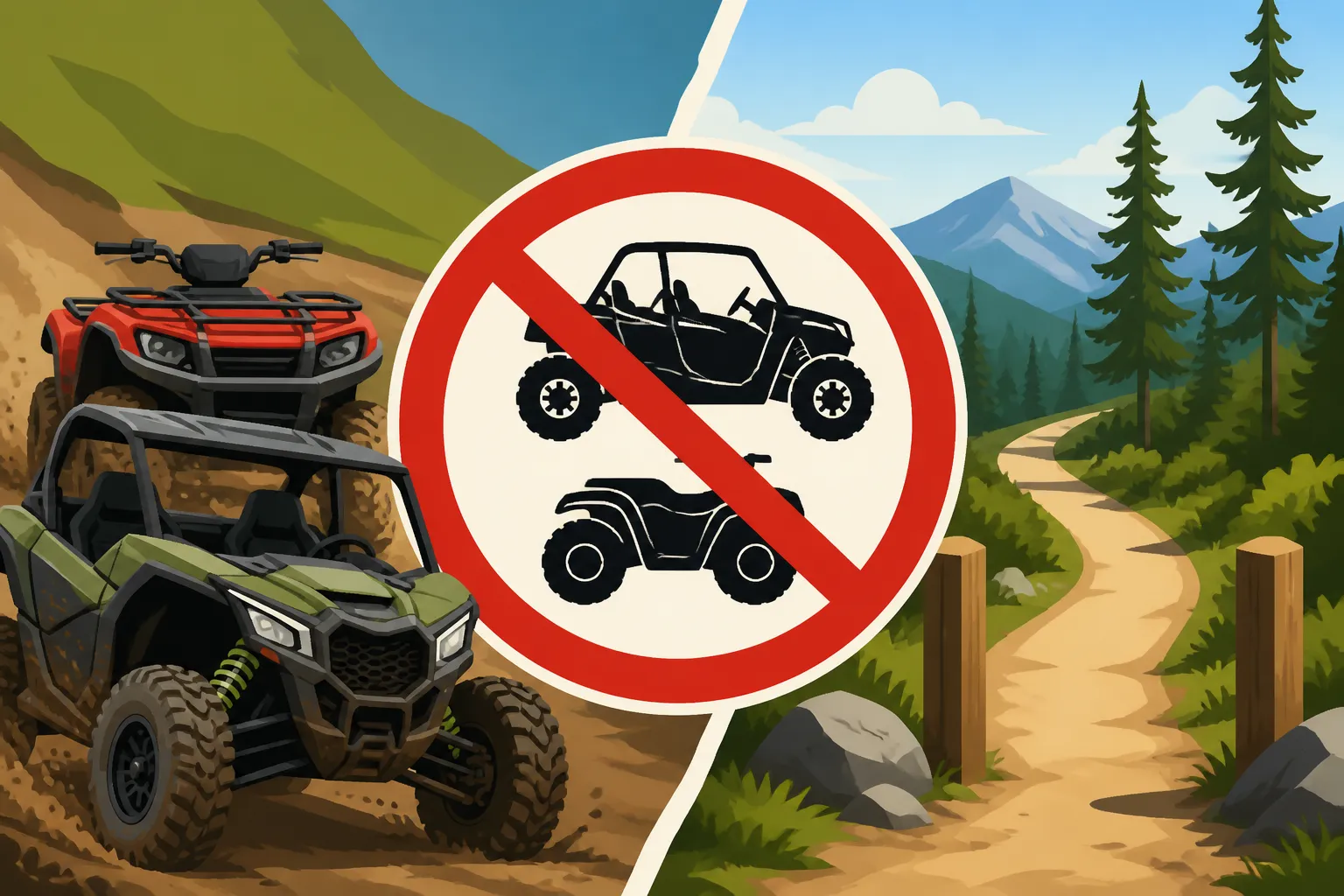
It's incredibly frustrating, isn't it? You spend time researching incredible places to explore on your ATV or side-by-side, picturing scenic rides through Washington's diverse landscapes, only to discover that some of the most beautiful spots, like the iconic Discovery Trail, are strictly off-limits to your machine. It can feel like a contradiction, especially when you're looking for new and exciting places to experience the outdoors. This guide is here to shed light on why the Discovery Trail, despite its allure, maintains a firm stance against motorized vehicle use, delving into the specific reasons rooted in its design, purpose, and the unique environment it protects.
Understanding the Discovery Trail's Design and Purpose
The Discovery Trail isn't just any path; it's a meticulously planned and passionately developed corridor designed with a very specific vision in mind. When you look at its entire history and how it came to be, you start to understand why it operates under a different set of rules than, say, a sprawling forest service road that's wide open to off-road vehicles.
A Coastal Path for Non-Motorized Recreation
Imagine a beautiful paved pathway stretching for miles along the breathtaking Washington coast, a place where the sound of the ocean, the cries of gulls, and the gentle rustle of dune grasses are the dominant soundtrack. This is the essence of the Discovery Trail. From its inception, it was conceived as a sanctuary for those seeking a tranquil, human-powered experience. Think families pushing strollers, avid cyclists enjoying the fresh sea air, brisk walkers getting their exercise, and even rollerbladers gliding along its smooth surface.
The entire design prioritizes safety and enjoyment for these slower-moving, non-motorized activities. There are benches placed strategically for rest and contemplation, interpretive signs that tell stories of Lewis and Clark's historic journey, and designated viewing platforms for whale watching or bird observation. The very fabric of the trail encourages a pace that allows for appreciation of the natural surroundings without the intrusion of engine noise or the speed of motorized vehicles. It’s a place for quiet reflection and active, yet unhurried, outdoor engagement, making it a beloved destination for a broad spectrum of visitors who are specifically looking for an escape from motorized traffic.
Historical Context and Funding for Specific Use
Trails like the Discovery Trail don't just spring up overnight. They are often the result of years, sometimes even decades, of planning, community advocacy, and significant financial investment. The historical context of the Discovery Trail reveals that its development was heavily influenced by grants and funding sources specifically earmarked for non-motorized recreational infrastructure. These funds often come with strings attached, mandating certain types of uses and prohibiting others to align with the funding entity's mission. For instance, many federal and state transportation grants are dedicated to pathways that promote walking and cycling, aiming to reduce reliance on automobiles and enhance public health.
The community vision for the trail also played a pivotal role. Local residents, conservation groups, and municipal governments collaborated to create a space that would preserve the unique coastal environment while offering accessible outdoor recreation. This collective agreement focused on pedestrian and bicycle access, framing the trail as a linear park rather than a multi-use vehicle corridor. Diverting from this original, funded, and communally agreed-upon purpose would not only jeopardize future funding opportunities but also betray the foundational principles that brought the trail into existence. It's a testament to a specific type of outdoor experience, distinct from the adventure sought by off-road vehicle enthusiasts.
Safety Concerns and User Conflicts
One of the most immediate and tangible reasons the Discovery Trail remains closed to ATVs and UTVs revolves around fundamental safety concerns and the inevitable conflicts that would arise if motorized and non-motorized traffic were to share the same narrow path. It’s not just about preference; it’s about the physics and practicalities of shared public spaces.
Mixing Speeds and Modes of Travel
Picture the scene: a jogger with headphones, a child learning to ride a bike, a couple on a leisurely stroll, and suddenly, an ATV or side-by-side approaches at a much higher speed and with significantly different maneuverability. The inherent danger is clear. The speed differential between motorized vehicles and pedestrians or cyclists creates an incredibly hazardous environment. While ATVs and UTVs are designed for rough terrain and open spaces, their introduction to a paved path frequented by vulnerable users presents a recipe for accidents. Even at low speeds, the sheer mass and power of these machines can be intimidating and dangerous in close quarters.
Furthermore, different modes of travel demand different awareness levels. A cyclist might be focused on the path immediately ahead, anticipating other cyclists or walkers, not the sudden acceleration or engine sound of a motorized vehicle. Similarly, a young child might veer unexpectedly. Introducing vehicles that require a wider turning radius, have blind spots, and are built for a completely different environment fundamentally undermines the safety a non-motorized trail is designed to provide. It forces a constant state of vigilance and anxiety for all users, which directly counteracts the trail's intended peaceful and recreational purpose.
Noise and Air Quality Impacts
Beyond the physical safety aspects, the very ambiance of the Discovery Trail would be irrevocably altered by the presence of motorized vehicles. One of the primary draws of coastal trails is the opportunity to immerse oneself in the sounds of nature – the ocean waves, the rustling dune grass, the calls of shorebirds. The roar of an engine, even a well-maintained one, shatters this tranquility. It’s an auditory intrusion that directly conflicts with the serene, contemplative experience that walkers and cyclists seek. Imagine trying to enjoy a quiet sunset stroll with the constant drone of engines in the background; it simply wouldn't be the same.
In addition to noise, exhaust fumes from gasoline-powered ATVs and UTVs introduce air quality concerns. While emissions from a single vehicle might seem minor, when multiplied by potentially many machines over the course of a day, these fumes can detract from the fresh, clean air that is another hallmark of a coastal environment. Many trail users specifically come to places like the Discovery Trail for the health benefits of breathing clean, sea-scented air. Introducing combustion engines would compromise this benefit, affecting not only human comfort but also potentially impacting sensitive local wildlife. The cumulative effect of noise and emissions fundamentally changes the character of the trail from a natural retreat to a more industrialized corridor, which is precisely what the trail's creators and users wished to avoid.
Environmental Protection and Trail Integrity
The Discovery Trail's route is not random; it's carefully laid out to traverse some of Washington's most delicate and vital coastal environments. The decision to keep motorized vehicles off the trail is deeply rooted in a commitment to environmental protection and preserving the physical integrity of the trail itself and the natural habitats it passes through.
Fragile Coastal Ecosystems Along the Trail
The Washington coast, particularly the dune systems, wetlands, and forest edges that border the Discovery Trail, are incredibly sensitive ecosystems. These areas are home to a diverse array of plant and animal species, many of which are specifically adapted to these unique, often fragile, conditions. For example, dune grass plays a critical role in stabilizing the sand, preventing erosion and protecting inland areas from storm surge. Just one off-road vehicle veering slightly off a paved path, even accidentally, could easily damage these root systems, leading to localized erosion that can spread quickly.
Furthermore, wildlife along the coast, from nesting birds to small mammals, relies on these areas for habitat, foraging, and breeding. The presence of ATVs and UTVs, with their noise, speed, and potential for disturbance, could easily disrupt these delicate ecological balances. Nesting shorebirds, for instance, are highly sensitive to disturbances, and repeated intrusions could lead to nest abandonment. The trail acts as a window into this natural world, but that window needs to be protected from activities that could inadvertently cause harm. Maintaining it as a non-motorized corridor is a crucial strategy for minimizing human impact on these irreplaceable natural treasures.
Maintaining the Trail Surface and Infrastructure
The physical construction of the Discovery Trail, largely paved or hard-packed gravel, is designed to withstand the wear and tear of foot traffic, bicycles, and even light maintenance vehicles. It is not, however, built to handle the heavier weight, higher speeds, and aggressive tire treads of ATVs and UTVs. The forces exerted by off-road vehicles are vastly different from those of non-motorized users. The concentrated pressure from knobby tires, especially during acceleration or turns, could rapidly degrade the paved surfaces, leading to cracks, potholes, and crumbling edges. Even on gravel sections, motorized use can quickly lead to washboarding, rutting, and scattering of the surface material, making it unsafe for cyclists and pedestrians.
Repairing such damage is not only costly but also disruptive to trail users and the environment. Constant maintenance cycles would detract from the overall experience and strain limited public resources. The trail's infrastructure, including its drainage systems, bridges, and culverts, is also vulnerable. Motorized vehicles can compact soil, altering natural drainage patterns and potentially leading to erosion or undermining structures. Therefore, restricting ATVs and UTVs is a pragmatic decision to preserve the significant investment in the trail's construction and to ensure its longevity for the purposes it was originally designed for, maintaining a safe and smooth surface for walkers and cyclists for years to come.
Legal Framework and Local Ordinances
Understanding why the Discovery Trail is closed to machines also requires a look at the legal landscape. It's not just a matter of local preference; it's often enshrined in state laws and specifically detailed in local ordinances that govern land use and recreation. This legal framework provides the authority for restrictions and ensures that the trail's intended purpose is protected.
State and Local Laws Governing Trail Use
In Washington State, while there are provisions for off-road vehicle (ORV) use, these laws also grant significant authority to local jurisdictions and land managers to establish their own regulations regarding specific trails and areas. [Washington's Off-Road Vehicle Rules Explained] outlines the broader context, but it's the localized interpretation and application of these rules that often dictate access. For trails like the Discovery Trail, which are often developed with specific grants and public input, local ordinances can be quite explicit in restricting motorized use. These ordinances are typically crafted to address the unique characteristics of the trail, the surrounding environment, and the needs of the community it serves.
A city or county might designate a trail as "non-motorized" to align with master plans for parks and recreation, to protect sensitive natural resources, or to ensure public safety in areas of high pedestrian and bicycle traffic. Once such an ordinance is passed, it carries the force of law, and any violation can result in fines or other penalties. These local laws are not arbitrary; they often reflect extensive public review processes, environmental impact assessments, and careful consideration of how to best manage diverse recreational demands within finite spaces. Therefore, the closure of the Discovery Trail to ATVs and UTVs is a direct reflection of these specific legal decisions made at the local level, backed by state provisions that allow for such nuanced management.
The Role of Long Beach in Trail Management
The city of Long Beach, where a significant portion of the Discovery Trail is located, plays a crucial role in its management and the enforcement of its use policies. Local municipalities have the authority to create and enforce ordinances that govern public spaces within their jurisdiction, including trails. In the case of the Discovery Trail, the City of Long Beach has made a deliberate choice to maintain its non-motorized status, consistent with its vision for coastal tourism and recreation. This decision is often influenced by factors such as community desires, visitor demographics, and the desire to preserve the distinct character of the area.
You might find that Long Beach, like other coastal communities, has a general approach to motorized vehicles on its beaches and trails. In fact, [Why Long Beach Bans WATVs Outright] further illustrates the broader policy in this specific area concerning off-road vehicles. These ordinances are designed to create a cohesive recreational experience and protect the unique environment that draws so many visitors. For example, a city might prioritize the peaceful enjoyment of its scenic assets, concluding that the noise and speed of motorized vehicles would detract from this core value. This local governance, informed by community input and environmental stewardship, solidifies the reasons why the Discovery Trail remains a haven exclusively for non-motorized activities.
Alternatives and Designated Riding Areas in Washington
While the Discovery Trail might be off-limits for your machine, Washington State is by no means lacking incredible opportunities for ATV and UTV enthusiasts. The key is knowing where to look and understanding that different types of terrain and land management dictate where you can legally and safely ride. You just need to pivot your planning towards areas specifically designated for motorized use.
Finding Approved ORV Trails and Parks
Washington boasts a fantastic network of designated Off-Road Vehicle (ORV) parks and trails on state and federal lands, specifically designed to accommodate machines like yours. Instead of trying to fit a square peg into a round hole, focus your energy on these incredible resources. Places like Capitol State Forest near Olympia, Walker Valley ORV Area in Skagit County, Reiter Foothills State Forest, Green Mountain and Tahuya State Forest, and Ahtanum State Forest are just a few examples. These areas offer a wide range of terrain, from challenging rocky climbs to flowing dirt trails and even designated play pits, ensuring there's something for every skill level and machine type.
Many of these areas are managed by the Washington Department of Natural Resources (DNR) or the U.S. Forest Service, and they often provide detailed maps, trail ratings, and information on current conditions. These are the places where the roar of your engine is welcomed, where mud-splattered adventures are the goal, and where you can really put your machine and its upgrades, like heavy-duty components or lift kits from SuperATV, to the test. Planning your adventure around these dedicated ORV areas ensures a legal, safe, and immensely satisfying experience, fulfilling that craving for motorized exploration that the Discovery Trail simply isn't designed for. For a deeper dive into these opportunities, be sure to check out [Where to Ride an ATV in Washington].
Planning Your Washington Off-Road Adventure
Preparing for an off-road adventure in Washington involves a bit more than just loading up your machine and hitting the road. It requires careful research and adherence to specific regulations to ensure a responsible and enjoyable outing. First and foremost, you'll need the proper permits and registrations. Most state-managed ORV areas require a Washington ORV tab on your machine, and many also require a Discover Pass for parking your tow vehicle at the trailhead. Federal lands might require a Northwest Forest Pass. Understanding [Washington ORV Permits Explained] is crucial before you go.
Always consult current trail maps and conditions for your chosen riding area. Websites for the DNR and Forest Service are excellent resources, often providing real-time updates on closures, fire restrictions, or logging activity, such as [Washington Trails Closed by Timber Work]. Consider the type of terrain you'll encounter. For instance, if you're heading to the sandy dunes, you might want specific paddle tires, whereas the muddy forests of the Olympic Peninsula call for aggressive tread and perhaps even a winch. Gear like durable skid plates, enhanced suspension components, and even specialized lighting from reputable brands like SuperATV can dramatically improve your experience and protect your machine on Washington's diverse trails. Remember to always ride on designated trails, respect private property boundaries, and leave no trace, ensuring these fantastic riding areas remain open for everyone to enjoy for years to come.
Here's a quick overview contrasting the Discovery Trail with typical ORV areas:
| Feature | Discovery Trail | Typical Washington ORV Area |
|---|---|---|
| Primary Use | Walking, cycling, rollerblading, quiet enjoyment | ATV/UTV riding, dirt biking, motorized recreation |
| Motorized Access | Prohibited | Permitted (with proper registration/permits) |
| Surface Type | Paved, sometimes hard-packed gravel | Dirt, gravel, rock, mud, sand (varied natural terrain) |
| Noise Level | Low, natural sounds preferred | Higher, engine noise expected |
| Speed Limit/Pace | Slow, leisurely, human-powered | Varies by trail, but higher speeds common, designed for machines |
| Environmental Focus | Protection of fragile coastal ecosystems, minimal impact | Managed for motorized use, balancing recreation and ecology |
| User Demographics | Families, pedestrians, cyclists, nature observers | ORV enthusiasts, off-road clubs, adventure seekers |
| Required Passes/Tabs | None for entry (parking may require Discover Pass elsewhere) | Washington ORV Tab (often Discover Pass or Northwest Forest Pass for parking) |
Disclaimer
This article is for general informational purposes only and does not constitute professional advice. Laws, prices and regulations vary by location and change over time. Consult a qualified professional for guidance on your specific situation.