Washington ORV Registration Lookup
There’s nothing quite like the knot of anxiety that forms when you're buying a used off-road vehicle in Washington, and you can’t quite shake the feeling that something might be amiss with the paperwork. Or maybe you're packing for a weekend trip to Capitol Forest, and you suddenly realize your registration card is nowhere to be found, and you can't remember when those tabs expire! This guide is here to walk you through the ins and outs of performing a Washington ORV registration lookup, whether you're trying to verify a seller's claims, replace a lost document, or simply check on your own machine's status.
Why You Might Need to Look Up an ORV Registration in Washington
Let's be real, life throws curveballs, and sometimes those curveballs involve a piece of paper that seems to have vanished into thin air, or a nagging doubt about a big purchase. Knowing how to look up an ORV registration isn't just bureaucratic red tape; it's a vital tool for peace of mind and legal compliance for anyone enjoying Washington's incredible trails.
Buying a Used Machine: Verifying Ownership and Status
This is perhaps one of the most common and crucial reasons to perform a registration lookup. Imagine you've found the perfect side-by-side for tackling the trails at Reiter Foothills, a great deal from a private seller. You're excited, maybe a little too excited to scrutinize every detail. But before you hand over your hard-earned cash, you absolutely must verify that the machine is legitimately owned by the seller and that its registration status is clear.
What if the machine has a lien against it? What if it was reported stolen at some point, even if the seller isn't aware? Or worse, what if the person selling it doesn't even have a valid title or current registration in their name? These scenarios can turn your dream machine into a bureaucratic nightmare, potentially costing you thousands in legal fees or even losing the machine altogether. A quick lookup can confirm that the VIN matches the seller's documentation and that there are no red flags. It gives you confidence in your purchase and helps you avoid inheriting someone else's problems. Remember, ignorance is not bliss when it comes to vehicle ownership, and due diligence here protects your investment. You can find more comprehensive advice on this topic in our article, [Buying a Used ATV in Washington].
Lost or Damaged Registration Card
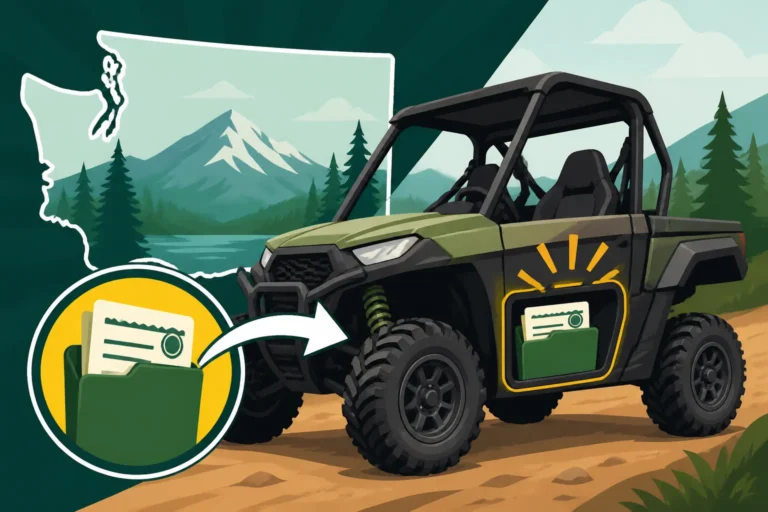
We've all been there. You swear you put it in the glove box, or maybe tucked it into your waterproof riding pack, but now it's gone. Perhaps it got soaked during a particularly enthusiastic river crossing, or it simply fell out somewhere along the trail. Your physical registration card is an important document you need to carry when you're out riding, whether you're on a forest road in the Ahtanum State Forest or exploring the dunes at Moses Lake. Law enforcement officers, whether a county sheriff or a DNR ranger, can ask for this document during a routine stop.
Losing your registration card can cause a moment of panic. How do you prove ownership or that you're legally registered? A successful lookup allows you to confirm the active status of your ORV's registration and provides the necessary information to order a replacement. This saves you from potential fines for not having your registration on hand and gets you back to focusing on the ride, not scrambling for paperwork. Don't let a lost card ruin your day; knowing how to confirm your registration details means you're always prepared. For more on this, check out [Carrying the Registration in the Machine] and [Replacing Lost Washington Decals].
Checking Your Own ORV's Current Status
Sometimes it's not about a crisis, but simply about staying on top of things. You might just want to confirm when your tabs expire, especially if you have multiple machines or if you renewed them months ago and the date is slipping your mind. Perhaps you recently moved and updated your address with the Department of Licensing (DOL), and you want to double-check that all your ORV records reflect the change accurately. Or maybe you're simply being proactive, making sure there are no unexpected issues with your registration status before you head out on a long trip.
Periodically checking your ORV's registration status online or through other means is a responsible practice. It ensures you're always in compliance, helps you budget for upcoming renewals, and prevents any unpleasant surprises, like riding on expired tabs without realizing it. Staying informed about your machine's legal status is part of being a responsible rider in Washington. Keep an eye on renewal dates with tips from [Renewing a Washington ORV Registration Yearly].
How to Conduct a Washington ORV Registration Lookup
When it comes to official vehicle records in Washington, the journey almost always starts and ends with the Department of Licensing. They are the central authority for all things related to vehicle titles and registrations, including our beloved off-road vehicles.
The Department of Licensing (DOL) as Your Primary Resource
The Washington State Department of Licensing (DOL) is the undisputed hub for all vehicle and driver records in the state. This includes the titling and registration of off-road vehicles (ORVs), which Washington refers to as wheeled all-terrain vehicles, or WATVs. While ORV registration might seem like a niche area, it falls directly under the DOL's purview. They maintain the comprehensive database of all registered machines, including their VINs, owner information, and current registration status.
When you're trying to look up an ORV registration, thinking of the DOL as your first point of contact is key. They process initial registrations, renewals, title transfers, and issue those all-important decals and metal tags. Understanding their role helps you navigate the process efficiently, knowing you're going straight to the source for accurate and up-to-date information. They are the keepers of the official records that prove your machine is legally allowed to hit the trails and roads (if you have the appropriate tabs). For a deeper dive into the DOL's role, check out [The Department of Licensing and Washington ORVs].
Online and In-Person Options
The DOL provides a few avenues for accessing information, though the level of detail you can retrieve often depends on whether you're the registered owner or not.
For registered owners, accessing your own vehicle's information is generally straightforward. The DOL typically offers online services where, by inputting your driver's license number and vehicle VIN or a registration number, you can view your current registration status, renewal dates, and sometimes even order replacement documents. These online portals are usually secure and designed to make managing your vehicle records convenient from home. If you've just renewed and are wondering about processing times, you might find some useful context in [Washington ORV Registration Processing Time].
If an online lookup doesn't yield the information you need, or if you prefer a more personal touch, visiting a local vehicle licensing office is always an option. These offices, often operated by county auditors or private subagents, can access the DOL database directly. When you visit, be prepared to provide identifying information such as your driver's license, the ORV's VIN, and any existing registration numbers you might have. They can print out your current registration, help you process renewals, or answer specific questions about your machine's status. It's always a good idea to call ahead to confirm their operating hours and any specific requirements for ORV services.
Accessing Records for a Machine You Don't Own (With Restrictions)
This is where things get a bit trickier due to privacy laws. You can't just walk into a DOL office or hop online and look up the registration details of any random ORV you see on the trail. That would be a huge invasion of privacy! However, there are legitimate circumstances where you might need to access information about a machine you don't yet own, primarily when you are considering purchasing it.
When buying a used ORV, the seller should be able to provide you with their current registration card and the vehicle's title. It's perfectly reasonable, and in fact, highly recommended, for you to verify this information. While the DOL generally restricts direct public access to personal owner details, in the context of a sale, the seller should be transparent. You might be able to verify the VIN against a police database to check for theft or use an online service (often paid, and not through the DOL directly) that can provide a vehicle history report using the VIN. These reports can sometimes reveal lien information, accident history, and discrepancies in ownership records, which could indirectly confirm registration validity.
If you're having trouble getting clear information from a seller, or if you suspect foul play, you might need to involve law enforcement. They have the authority to access full registration records for legitimate reasons, such as investigating a suspected stolen vehicle. In some cases, if you're trying to establish clear ownership for a private sale, a service like LawDepot could provide templates for official bills of sale or other legal documents that help formalize the transfer of ownership, contingent on you verifying the ORV's legitimate status through the seller's documentation and any available public checks. These legal documents become crucial once you've confirmed the legitimacy of the machine and the seller's right to sell it.
Information You'll Need for a Successful Lookup
Just like finding your way through a dense forest, knowing what landmarks to look for makes the journey much smoother. When it comes to looking up an ORV registration, specific pieces of information act as your essential compass and map.
The Critical Role of the Vehicle Identification Number (VIN)
Without a doubt, the Vehicle Identification Number (VIN) is the single most important piece of information you can have when performing an ORV registration lookup. Think of it as the machine's unique DNA, a 17-character code that identifies it specifically and permanently. Every ORV manufactured for sale has one, and it's designed to be tamper-proof and unique to that individual machine.
The VIN allows the Department of Licensing to pull up exact records for that particular vehicle, cutting through any potential confusion with similar makes or models. It’s what links the machine directly to its title and registration history. You'll typically find the VIN stamped onto the frame of your ORV, often on the lower left front frame tube for ATVs or on the steering head or frame near the engine for utility vehicles. When buying a used machine, always verify that the VIN on the physical machine matches the VIN on the title and registration documents the seller provides. A discrepancy here is a massive red flag. For more details on where to find this crucial identifier, see [Washington WATV VIN Requirements].
Owner Information and Privacy Considerations
If you are the registered owner of the ORV, providing your personal details like your full name, current address, and Washington driver's license number will be necessary for the DOL to access your records. This information is how they confirm your identity and ensure they are giving information only to the rightful owner. It's a security measure to protect your privacy and prevent unauthorized access to your vehicle's history.
If you are not the owner, this is where privacy considerations become paramount, as mentioned before. The DOL cannot simply hand out personal owner information to anyone who asks. You generally won't be able to look up an ORV's registration details using only a VIN to get the owner's name and address without a legal justification. However, if you're in the process of purchasing a machine, the seller should be providing you with the necessary documentation (title, registration card) that includes their name, allowing you to cross-reference with other checks. In such cases, if you and the seller are preparing to finalize the sale, tools like LawDepot can assist in generating a comprehensive bill of sale, which legally formalizes the transaction once you've done your due diligence on the machine's status.
Other Helpful Details (License Plate/Tab Numbers)
While ORVs don't have traditional license plates like cars, they do have registration numbers and decals (tabs) that are issued by the DOL. These tabs display your registration number and an expiration date. If you've lost your registration card but still have the tabs affixed to your machine, the registration number printed on those tabs can be incredibly helpful for a lookup. It acts as a secondary identifier, especially when combined with the VIN, to quickly pull up your machine's records at the DOL.
For instance, if you're trying to figure out when your off-road tab expires, that number on the decal can speed up the process. It's not as foolproof as the VIN, as tabs can be replaced or become unreadable over time, but it certainly helps narrow down the search. Think of it as having two different keys to the same lock – the VIN is the master key, but the tab number is a strong secondary option if you're the registered owner.
What to Do With the Information You Find
So, you've successfully navigated the lookup process, and now you have the information you needed. What comes next? The steps you take depend entirely on why you initiated the lookup in the first place.
If You're Buying: Confirming Clear Title and Registration
If you're in the market for a used ORV, the information you've gathered from your registration lookup is golden. The primary goal here is to confirm that the seller has a clear, legal right to sell the machine.
- Match the VIN: First and foremost, verify that the VIN you found in the lookup precisely matches the VIN stamped on the ORV itself, and on the title document provided by the seller. Any mismatch is a significant red flag that you should not ignore.
- Confirm Seller's Name: Ensure the name on the title and registration documents matches the seller's identification. If the name is different, ask for a clear explanation and supporting documentation, such as a previous bill of sale or power of attorney. This is where you might need to be extra cautious.
- Check for Liens: While a basic public lookup might not always reveal specific lien details due to privacy, a comprehensive vehicle history report (often a paid service) or direct inquiry with the seller about the title status can confirm if there are any outstanding loans or claims against the ORV. A "clear title" means no liens. You definitely want to ensure the machine you're buying can be properly titled in your name without any encumbrances. For guidance on this, our article [Titling a WATV in Washington] can be very helpful, as can [Do You Need a Title for a WATV in Washington?].
- Complete a Bill of Sale: Once satisfied, complete a comprehensive bill of sale. This is a crucial legal document that proves the transfer of ownership. A service like LawDepot can provide robust, legally sound bill of sale templates that cover all necessary details, helping you formalize the transaction and protect both parties. It outlines the purchase price, VIN, date of sale, and signatures of both buyer and seller, which is essential for registering the machine in your name later.
This thorough verification process gives you the peace of mind that you're making a legitimate purchase, avoiding costly legal headaches down the road. It's an investment in both your new machine and your future enjoyment on the trails.
Replacing Lost Decals or Registration Cards
If your lookup was prompted by a lost or damaged registration card or decals, the good news is that with confirmed information, replacing them is usually a straightforward process.
- Gather Information: You'll have the confirmed registration number, VIN, and expiration date from your lookup.
- Visit or Order Online: With this information in hand, you can visit a local vehicle licensing office or, if available, use the DOL's online services to request replacement documents. There's typically a nominal fee for replacements.
- Wait for Delivery: Replacement decals and cards are usually mailed to your registered address. Be aware of potential processing times, especially during busy periods. Knowing your registration is current means you can ride legally while you await the physical replacements. For more detailed instructions on getting new decals, refer to [Replacing Lost Washington Decals].
Addressing Discrepancies or Issues
Sometimes, a registration lookup might reveal unexpected information. This can be unsettling, but it's far better to discover issues early than when you're pulled over by a ranger.
- Expired Registration: If the lookup shows your ORV's registration is expired, you'll need to renew it immediately. Riding with expired tabs can lead to fines. Take the necessary steps to renew online or in person to avoid a [Washington Fines for an Unregistered WATV].
- Different Owner: If you're checking a machine you thought was yours or you're purchasing, and the lookup shows a different owner, this is a major problem. For a purchase, do not proceed until the seller can provide clear, verifiable documentation explaining the discrepancy and proving their legal right to sell. For your own machine, contact the DOL immediately to resolve any potential errors in their records.
- Active Lien: If a lien shows up on a machine you're trying to buy, it means someone else (usually a financial institution) has a legal claim to the ORV. The seller must satisfy this lien before they can legally transfer clear title to you. Do not purchase a machine with an active lien unless you understand the legal implications and have a clear, documented plan for its release.
- Processing Delays: If you recently renewed or transferred a registration, and the lookup doesn't show the updated information, it could simply be a processing delay. Check [Washington ORV Registration Processing Time] for typical waiting periods, and if it exceeds that, contact the DOL or the subagent where you processed the transaction.
In any scenario involving discrepancies, the key is to be proactive. Contact the DOL or seek legal advice if the situation is complex. Resolving these issues promptly ensures your ORV adventures remain smooth and compliant with Washington law. Taking the time to perform an ORV registration lookup can save you a world of trouble and keep you confidently exploring all the beauty Washington has to offer.
Disclaimer
This article is for general informational purposes only and does not constitute professional advice. Laws, prices and regulations vary by location and change over time. Consult a qualified professional for guidance on your specific situation.