The Washington Discover Pass Rise to $45
The Washington Discover Pass rise to $45 matters if you drive to public recreation sites, but it does not replace ATV or UTV registration, trail permits, or land-specific rules. The key is knowing what the pass covers, which vehicle needs to display it, and whether your destination is state or federal land. This guide explains how to plan around the higher price and avoid paying for the wrong pass.
What the Discover Pass rise means for riders
The Discover Pass is a vehicle access pass for certain Washington state recreation lands. It is commonly relevant when you drive a truck or other street-legal vehicle to a state park, Department of Natural Resources (DNR) recreation site, or Washington Department of Fish and Wildlife (WDFW) area. The rise to $45 is a change in the pass price, not a new ATV registration requirement.
Because pass prices and details can change, confirm the current amount and terms through the official Discover Pass channel before you buy. The price is only one part of your trip budget. You may also need ORV registration, a separate permit, or a campground reservation, depending on where you are going and what you plan to do.
The easiest way to avoid confusion is to separate these three things:
- Vehicle access: The Discover Pass may cover access to designated state recreation lands for the vehicle displaying it, subject to site rules.
- Machine registration: Your ATV or UTV may need Washington ORV registration or another valid registration arrangement. A Discover Pass does not register the machine.
- Land and trail permission: A pass does not automatically make every road or trail open to motorized riding. You still need to follow posted restrictions, land-manager rules, and any required permits.
For an overview of how these requirements fit together, start with Washington ORV Permits Explained. If you are unsure whether a particular destination requires the pass, Do You Need a Discover Pass to Ride in Washington? covers the distinction between riding requirements and vehicle-access requirements.
The pass is usually about how you arrive
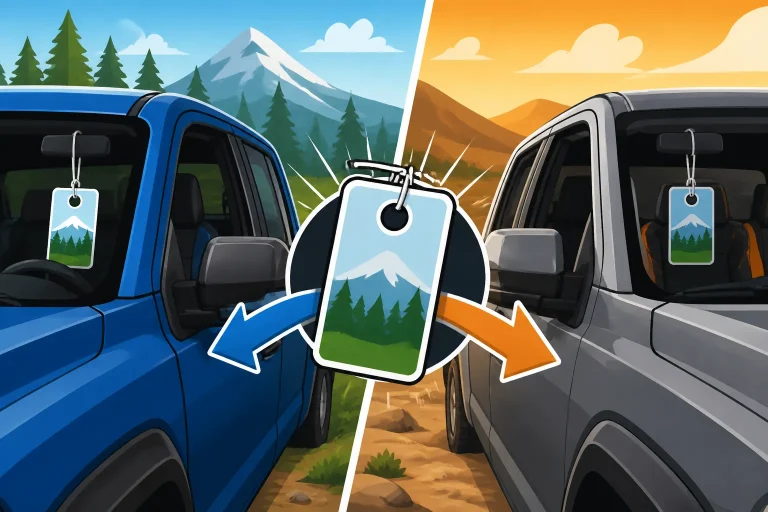
A common source of misunderstanding is assuming the Discover Pass is a riding sticker for the ATV or UTV. In many situations, the pass requirement is tied to the vehicle you use to access the recreation site, such as the truck parked at a trailhead or staging area. Your riding machine may have its own registration and decal requirements, separate from that vehicle pass.
That distinction can matter even when the pass and the ORV registration are both part of the same outing. For example, your truck may need a Discover Pass to park at a state-managed recreation area, while the quad you unload needs valid ORV registration for the type of riding you will do. One document does not stand in for the other.
The details depend on the land manager and location. A site might have an exception, a separate fee, or a different permit requirement. Check the destination’s current access information instead of assuming that a Discover Pass covers every vehicle or activity there. The broader guide to Where a Washington Discover Pass Is Required can help you identify which kinds of state sites to check.
A higher pass price does not change road access
Buying a Discover Pass does not open a public road to ATV or UTV traffic. It does not grant permission to ride a closed trail, cross private land, or use a road that is not open to ORVs. Road access is governed by separate laws and local decisions. If you plan to ride on pavement, check the relevant road rules and approved routes before unloading.
Likewise, a valid ORV tab is not a parking pass. It helps establish that the machine meets the relevant registration requirements, but it does not necessarily cover the truck’s access or parking at a recreation site.
Which pass or permit applies to your trip
Before you buy anything, work out which land manager controls your destination and what you intend to do there. Washington recreation areas can include state parks, DNR-managed forests, WDFW lands, federal lands, and private property. Nearby trailheads may have different rules even when they appear to be part of the same riding region.
| What you need to do | Requirement to check | What not to assume |
|---|---|---|
| Park your truck at a state recreation site | Whether the site requires a Discover Pass or has another access arrangement | That your ATV tab covers truck parking |
| Ride an ATV or UTV on an ORV trail | Machine registration, trail rules, and any required site permit | That the Discover Pass registers the machine |
| Visit federal land | The federal land manager’s access and recreation rules | That a Washington Discover Pass applies at a federal site |
| Camp overnight | Campground access, reservation, and camping requirements | That a day-use pass includes a campsite |
| Ride a county or city road | Local road-opening rules and the machine’s on-road requirements | That a pass or ORV tab makes an unopened road legal |
| Use a private timber road | Landowner permission and any stated access conditions | That public access nearby means private roads are open |
A useful first step is to identify whether the staging area and riding area are managed by the same agency. A parking lot might be on state land while a trail system crosses into federal land, or a route may pass through private timberland. The agency that manages the road or trail—not just the nearest sign or town—sets the applicable access rules. State Parks, DNR and Fish and Wildlife Land explains why checking the land manager matters.
Federal land is a separate check
A Washington Discover Pass is not a universal Washington recreation pass. Federal agencies manage their own lands and may have different access rules or require a separate federal pass at certain sites. The fact that a destination is in Washington, or that the drive begins at a state-managed site, does not mean the Discover Pass is accepted for every part of the trip.
Evans Creek is one example where riders should check the federal access requirement rather than assume the state pass applies. See [Why Evans Creek Needs a Northwest Forest Pass] before planning a visit there.
The same principle applies if a trip combines multiple areas. A single weekend might involve parking at a state recreation site on one day and entering a federal site on another. Confirm what each land manager requires, and keep the proof of purchase or pass available in the form the manager accepts.
A Discover Pass does not include camping by default
A vehicle access pass and a campsite reservation are different things. If you plan to stay overnight, check whether the campground requires a reservation, a camping fee, or another authorization. A pass that covers vehicle access does not automatically reserve a site, provide a hookup, or give permission to camp outside designated areas.
This is especially important for riders towing a trailer or arriving with a group. A staging lot may have limited room, a campground may require a separate booking, and overnight parking may be restricted even when daytime access is allowed. Check both the recreation site’s access rules and its camping rules before you leave home.
How to buy and display the pass without a last-minute scramble
Use the purchase method and display instructions currently provided by the official pass program. Rules for how a pass must be displayed, which vehicle it is associated with, and what proof is accepted can vary by pass type or change over time. Read the instructions before you head out, rather than relying on a photo of an old pass or a friend’s recollection.
If you buy at a staffed location or a trailhead machine, confirm that the pass is valid for the place you are visiting and keep any receipt or confirmation until you have checked the display instructions. A trailhead purchase option can be convenient, but it may not be available at every site or at every hour. Buying a Pass at a Trailhead Machine offers more context on that option.
If you buy in advance, make sure the pass is with the vehicle that needs it. Some pass arrangements may allow a pass to be used with more than one eligible vehicle under stated conditions, but do not assume that means it can be moved freely between any two vehicles or used at the same time. Check the current terms. One Discover Pass, Two Vehicles addresses that practical question.
A few simple habits can prevent a wasted trip:
- Confirm the site’s land manager and current pass requirement.
- Check the official pass terms for eligible vehicles, display, and expiration.
- Keep the pass or accepted proof with the vehicle you will use to access the site.
- Verify that the riding machine separately meets registration and trail requirements.
- Save a screenshot or receipt if the program provides digital proof, while following the official instructions about whether it must be displayed in another way.
- Recheck access alerts before departure, especially after storms, fire restrictions, or seasonal closures.
Keep the pass and riding paperwork separate
Store the vehicle access pass where it is easy to find, but keep the ATV or UTV registration paperwork protected separately. A clear document sleeve or small organizer can help keep papers from getting soaked, muddy, or mixed up with trail maps. If you shop for a waterproof pouch through Amazon, check that it closes securely and fits the documents you actually carry; it is for protecting paperwork, not a substitute for the official pass display method.
A second pouch in the tow vehicle can hold the pass receipt, campground information, and a printed map. Amazon is one place people look for compact organizers, but choose a size that fits the cab or glove box without obstructing the driver’s view or access to controls. For machine paperwork, use a secure, dry location recommended for your vehicle and follow the rule about carrying registration while riding. See Keeping the Registration Card Dry on a Wet Ride for ideas specific to damp trail conditions.
Do not rely on a loose pass or receipt sitting on a dashboard where it can slide, blow away, or become unreadable. If you use a holder, make sure it does not block your vision, create a safety hazard, or conflict with the official display directions. Amazon listings may use broad phrases such as “vehicle pass holder,” so verify the dimensions and intended use rather than assuming the product meets Washington’s requirements.
How to budget for the increase
The rise to $45 can change the cost of a day out, but it is rarely the only line item. A realistic budget should separate the pass from registration, fuel, maintenance, camping, and any land-specific fees. The pass is generally connected to vehicle access rather than the number of ATVs on the trailer, but the eligibility and use conditions matter. Check the current official terms before planning around a shared pass.
For a household that rides often, compare the available pass options against how many state recreation visits you expect to make. For an occasional trip, a single-visit option may be more sensible if one is offered for the location. For frequent visits, an annual option may be easier to manage. Do the comparison using current official amounts, not an old receipt or a price copied from a forum. Washington Discover Pass Cost is a useful companion when you are checking the cost structure.
Think through the trip as a whole:
- Access pass: Confirm whether your tow vehicle needs one at the staging site.
- ORV registration: Check that each machine has the correct registration for its intended use.
- Site-specific permit: Confirm whether the riding area requires an additional permit or pass.
- Camping: Add a reservation or overnight charge if applicable.
- Transport: Include fuel for the tow vehicle, trailer, and machines.
- Wear and maintenance: Budget for tires, belts, filters, and cleaning supplies, particularly after wet or sandy rides.
The higher pass price may make it tempting to skip a visit or combine destinations. That can be a sensible choice, but make sure combining sites does not leave you with the wrong pass for the second location. A state pass cannot be assumed to cover a federal site, private access road, or separate campground. Check each part of the route.
For some riders, the more useful question is not “How much does the pass cost?” but “How many visits does this pass realistically cover for my household?” If you ride only once, buying an annual pass may not be the best fit. If you regularly visit several eligible state recreation areas, the annual option may be more convenient. The right choice depends on actual travel plans and current terms, not just the listed price.
Common mistakes to avoid
Treating the Discover Pass like an ORV tab
A Discover Pass does not serve as ATV or UTV registration. If your machine needs an ORV tab, road tab, or another form of registration, obtain that separately. The correct registration depends on the machine and where you intend to ride. Washington ORV Permits Explained provides a broader introduction to those requirements.
Assuming every trailhead needs the same pass
Two trailheads in the same region can have different land managers and rules. A site might require the Discover Pass, another might use a federal pass, and another might have a separate fee or no pass requirement for the specific activity. Check the exact staging area rather than searching only for the name of the broader riding region.
Believing the pass opens a trail
A vehicle access pass does not override a gate, closure notice, seasonal restriction, or road rule. If a trail is closed, riding there is not made legal by having a pass. Always check current maps and notices before unloading. A trail shown open on an old map may have since closed for maintenance, fire danger, logging, or another management reason.
Forgetting who is responsible for the tow vehicle
It is easy to focus on the machines and forget that the truck may be the vehicle subject to the access-pass requirement. Before leaving, check the pass status for the vehicle that will park at the site. If the pass is associated with another vehicle, review the current transfer and display rules instead of assuming it can be moved without conditions.
Assuming a pass covers overnight use
Access for the day and permission to camp are not automatically the same. Confirm campground requirements, quiet hours, vehicle limits, and reservation conditions. Also check whether the trailer and tow vehicle may remain at the site overnight.
Counting on an expired pass or an old price
A pass from a previous season may no longer be valid. The stated rise to $45 is a reason to check the current program details, but the price itself should not be the only detail you verify. Confirm expiration, vehicle eligibility, accepted proof, and display requirements. If you need a replacement or have misplaced your pass, consult the official pass provider instead of relying on a used pass or an image sent by someone else.
Treating a nearby federal site as state land
A trail system can cross agency boundaries. A Discover Pass may be relevant at a state-managed staging area but not satisfy requirements at a federal site farther along the route. If you are unsure, check with the agency responsible for the specific parking area, road, or trail segment. What Happens If You Forget Your Discover Pass explains what to do if you arrive and discover that you do not have the required pass.
A small amount of preparation can save a long drive and a frustrating turn-around. Confirm the pass requirement for the actual parking site, confirm registration for every machine, and check the trail status on the day of your trip. Treat the $45 rise as one budget change—not as a change to the rules for riding.
Disclaimer
This article is for general informational purposes only and does not constitute professional advice. Laws, prices and regulations vary by location and change over time. Consult a qualified professional for guidance on your specific situation.