Paddle Tires on Washington Dunes
Soft sand can turn an ordinary Washington ride into a tiring struggle: the rear tires dig holes, the machine loses momentum, and steering starts to feel vague. Paddle tires can help an ATV or UTV float and move forward in sand, but the right setup depends on your machine, the terrain, and where you plan to ride. Here’s how to choose and use them thoughtfully.
How paddle tires work on Washington dunes
What the paddles do in soft sand
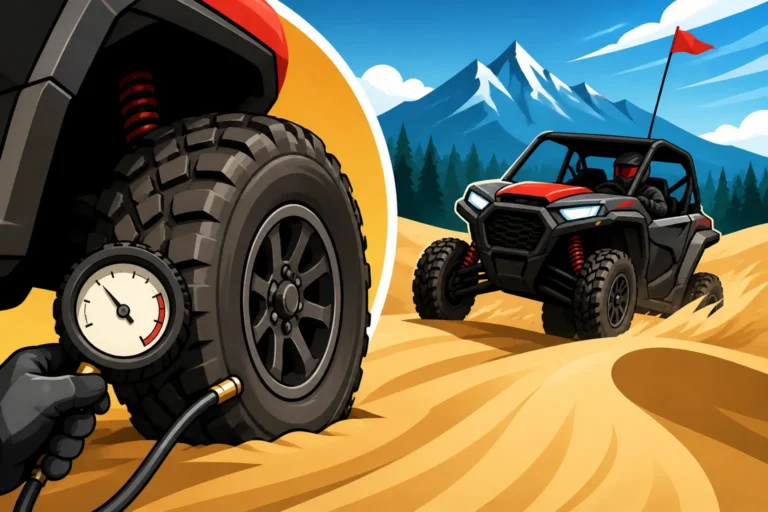
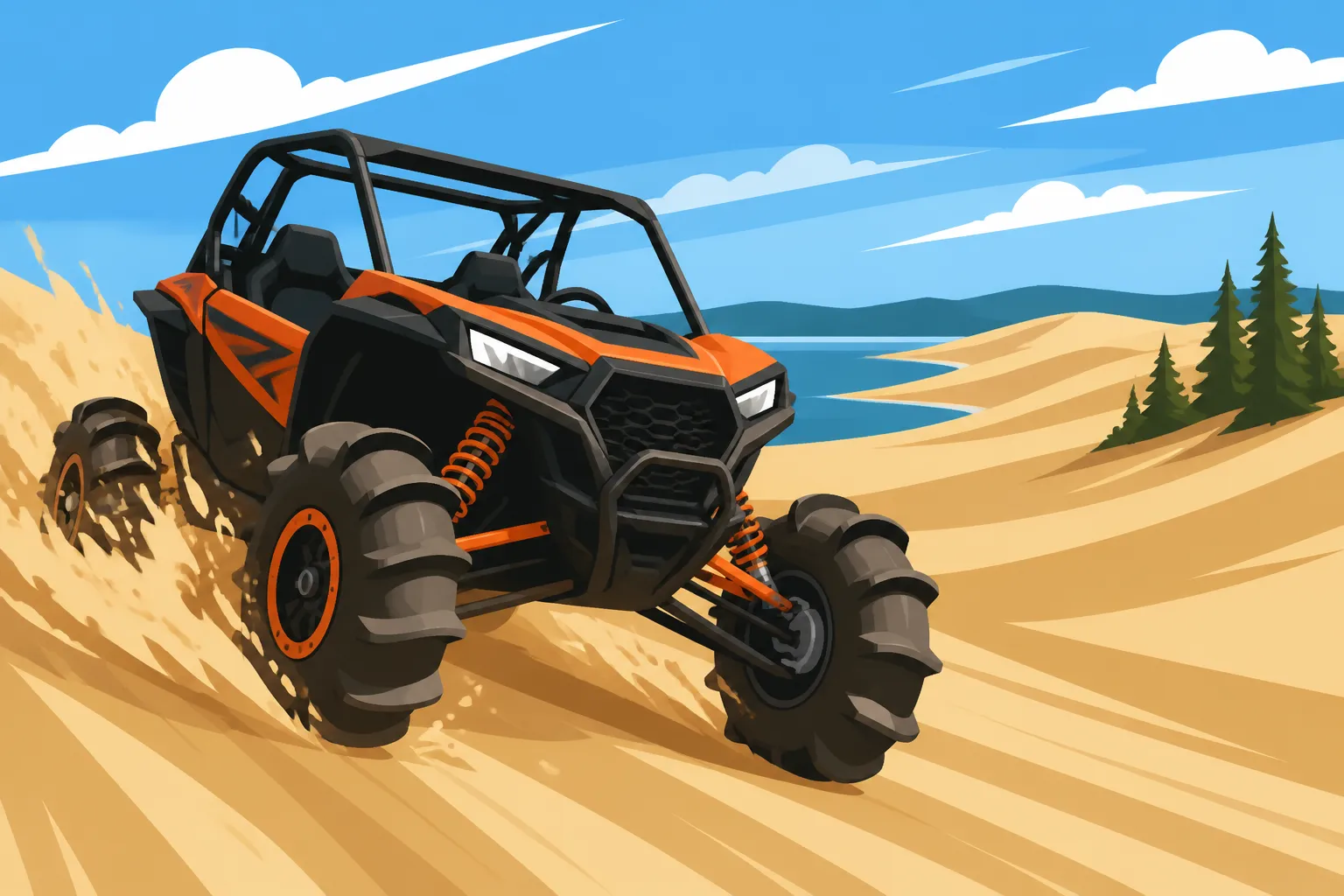
A paddle tire has raised bars across its tread. As the tire rotates, those paddles push against loose sand and help move the machine forward. That extra traction can make a noticeable difference on a dune, where a conventional trail tire may spin and dig rather than climb.
The benefit is not simply “more grip” everywhere. Paddle tires are designed for sand, and their performance depends on the machine’s power, weight, tire size, sand conditions, and how the rider uses the throttle. A paddle that works well on one ATV might be poorly matched to a heavier side-by-side or a less powerful machine.
The paddles also change how the machine behaves. A setup that feels lively and predictable in soft sand may feel harsh, noisy, or awkward on firm ground. Paddle tires are specialized equipment, not a universal upgrade for every Washington trail.
If you’re new to sand riding, start by getting familiar with the area and its terrain before changing your tires. Washington’s sand riding areas are not interchangeable; the size, access, conditions, and rules can differ. The overview in [Washington's Sand Dune Riding Areas] can help you identify possible destinations before you plan around a particular tire setup.
Why sand tires need a matched front and rear setup
Rear paddle tires provide much of the forward drive, but the front tires still matter. Front tires designed for sand often use a narrower or more open tread pattern than ordinary trail tires. Their job is to help the front end track and steer without pushing too much sand aside.
A mismatched setup can make the machine difficult to control. For instance, strong rear paddles paired with front tires that dig aggressively may leave the rear pushing while the front wanders. A front tire that floats but does not give you enough directional control can also make turns feel uncertain. Think about the tire package as a whole, not just the rear paddles.
Your vehicle type matters, too. An ATV and a side-by-side place weight differently and may have different wheel sizes, drivetrains, and power delivery. Check the tire maker’s fitment information and your machine’s specifications, and ask an experienced sand-riding shop for guidance if the options are unclear. Avoid assuming that a tire will fit because its diameter appears close; width, wheel compatibility, clearance, and load suitability all count.
Choosing paddle tires for your machine
Match tire design to your vehicle and riding style
Before buying, consider where you’ll ride, how often you’ll go, and whether the machine will spend most of its time on sand or on mixed terrain. A rider who makes occasional dune trips may prefer a setup that can be changed back for trail use. Someone who rides sand regularly might be more comfortable keeping a dedicated sand package ready.
Paddle count, paddle height, tire width, and construction affect how the tire behaves. More aggressive paddles can provide stronger drive in some conditions, but the best choice is not automatically the most aggressive one. Too much tire for the machine or rider can create an abrupt response, make throttle control harder, or add strain to components. A lighter or less powerful machine may need a different approach from a powerful UTV.
Ask the tire retailer or manufacturer about the specific machine model, wheel size, riding area, and typical sand conditions. Also ask how the tire is intended to be used and whether it is suitable for the type of terrain you expect. A helpful conversation should cover fit and handling, not just whether the tire can be mounted.
| Riding situation | What to consider | Practical takeaway |
|---|---|---|
| Occasional sand trip | Cost and effort of swapping tires, storage, and transport | A dedicated sand set may make sense if you visit often enough |
| Regular dune riding | Machine weight, power, tire dimensions, and sand conditions | Seek a setup matched to the exact vehicle |
| Mixed sand and trail route | Hard ground, road connections, and changing terrain | Specialized paddles may be inconvenient outside soft sand |
| New sand rider | Predictable steering and manageable throttle response | Prioritize control and practice over the most aggressive tire |
| Side-by-side use | Vehicle weight, wheel fitment, load rating, and clearance | Confirm compatibility for the specific UTV |
Tire pressure is another part of the setup, but there is no single pressure that suits every tire, machine, and sand condition. Follow the tire and vehicle manufacturers’ guidance, and make adjustments cautiously within their recommendations. Lower pressure can change flotation and traction, but going too low may increase the risk of the tire coming off the bead or being damaged. For more background, see [Airing Down for Washington Sand].
Check fitment, direction, and safe use
Paddle tires are directional when designed that way. Look for the rotation arrow or installation instructions and make sure each tire is mounted in the intended direction. An incorrectly mounted tire may not work as intended, and correcting it at the riding area is a frustrating way to start a day.
Before loading up, check that the tire clears suspension parts, bodywork, and other components through the range of movement. Inspect wheel condition and fasteners, and confirm that the tires are suitable for the machine’s intended use. If you change tire size, recheck clearance and handling rather than assuming the old setup still applies.
Paddle tires are usually a poor choice for riding long distances on pavement or hard-packed surfaces. The paddles are built to work in loose material, and firm ground can make the ride uncomfortable, reduce predictable handling, and wear the tire unnecessarily. Plan how the machine will get from the trailer or staging area to the sand, and avoid using a sand-only setup for road travel.
Planning a Washington dune ride
Choose the area before choosing the tire
Washington has several places associated with sand riding, but the conditions and access arrangements vary. Juniper Dunes in Eastern Washington, Beverly Sand Dunes near Quincy, and the Moses Lake sand area are distinct destinations, not one uniform riding environment. Their access points, boundaries, nearby land uses, and current restrictions may differ.
Start with the destination rather than the gear. Read the area-specific rules, check for closures, and confirm what kind of machine use is allowed. [Juniper Dunes in Eastern Washington], [Beverly Sand Dunes in Central Washington], and [Moses Lake Sand in Central Washington] offer useful starting points for thinking about which location fits your trip.
Pay close attention to boundaries. At Juniper Dunes, for example, it is important to know where riding access ends and protected land begins. A map can help with planning, but it does not replace signs or posted restrictions on the ground. Review [Where the Dunes End and Wilderness Begins] before riding near a boundary, and do not assume a visible track means the route is open.
Mapping tools such as onX Offroad can help you prepare a route and understand the surrounding terrain. Use them as planning aids, then compare what you see with current area information and signs at the site. A line on a map is not permission to ride, and conditions or access can change. Checking a relevant map layer before leaving home—and again when you arrive—can prevent an avoidable detour.
Prepare for sand, heat, and changing conditions
Sand riding asks more of both the machine and the rider than a casual, slow trail ride. Keep a steady, controlled pace where appropriate, look well ahead, and leave room for other riders. Sudden steering inputs or abrupt throttle changes can unsettle the vehicle, especially on slopes or in soft patches. If the machine starts to bog down, avoid repeatedly spinning the tires; that can dig it in deeper.
Keep water, basic tools, and recovery equipment suited to your vehicle and group. Make sure everyone knows what to do if a machine gets stuck, and agree on a meeting point if riders become separated. A side-by-side can carry more supplies than many ATVs, but that does not remove the need to pack thoughtfully or check the vehicle before the ride.
Sand can work into moving parts and cooling areas. After riding, inspect the tires, wheels, air intake, and other areas identified in your owner’s manual. Clean the machine before traveling to another riding area, especially if mud, seeds, or plant material have collected on it. [Washing a Machine Before You Leave] covers why a careful post-ride cleanup matters.
Conditions and closures deserve a final check close to departure. A route you rode previously may be affected by weather, land-management work, or a temporary restriction. Review [Washington Trail Closures to Check First] and use onX Offroad, where useful, to help orient yourself—but verify the area’s own current notices and follow posted directions. In practice, the best preparation combines a map, official site information, and what you observe at the trailhead.
Riding with paddle tires and caring for them
Use smooth inputs and make room for changing grip
Paddle tires can provide helpful drive in soft sand, but they do not make every dune easy or safe. A slope that looks gentle from below may be steeper than expected, and the surface can change from loose sand to a firmer or rutted patch. Choose a line you can manage, avoid crowding other riders, and do not follow someone else’s track without checking where it leads.
Keep your movements measured. Smooth throttle and steering inputs generally make it easier to maintain control than sudden corrections. If the vehicle begins to lose momentum, assess the situation rather than increasing throttle without thinking; spinning tires can deepen the hole and make recovery harder. When conditions exceed your comfort or the machine’s capability, turn back or choose another route.
Riding with a group can be reassuring, but it also takes coordination. Agree on spacing, signals, and where to stop before entering a busy area. Give the rider ahead room to handle a climb or turn, and avoid stopping where another machine may be approaching. A passenger in a UTV should be secured according to the vehicle’s instructions, with everyone following the relevant safety rules for the area.
Inspect and store the tires between rides
After a ride, look for torn or bent paddles, cuts, punctures, loose wheel fasteners, and signs of unusual wear. Check the tires while they are clean enough to inspect properly, and follow the manufacturer’s instructions for repairs and maintenance. If a tire behaves differently from the rest of the set, investigate before the next ride rather than hoping the issue will disappear.
Sand tires can be inconvenient to store and transport, particularly if you only use them for occasional trips. Keep them out of conditions that could damage the rubber, and store them in a way that follows the tire maker’s recommendations. Labeling a dedicated set by machine can also prevent a last-minute mix-up when you have more than one ATV or UTV.
onX Offroad may be useful for keeping ride plans and location notes organized, especially when you return to the same area or travel with a group. It should complement—not replace—posted information, land-manager guidance, and common-sense boundary checks. If a map and a sign appear to disagree, treat the sign and the responsible land manager’s instructions as the safer guide, and clarify access before continuing.
Paddle tires are most useful when they suit the machine and the terrain, and when the rider treats them as a sand-specific tool. A careful fitment check, a suitable front-and-rear setup, and a confirmed route can make dune riding more manageable without suggesting that any tire removes the need for judgment. For destination planning, compare the area resources with [Washington Trail Maps From DNR] and verify local access details before you haul your machine.
Disclaimer
This article is for general informational purposes only and does not constitute professional advice. Laws, prices and regulations vary by location and change over time. Consult a qualified professional for guidance on your specific situation.