Juniper Dunes in Eastern Washington
Juniper Dunes can look like an open invitation to ride, but the dunes sit beside protected wilderness, access roads can be rough, and services are limited. This guide explains how to plan a responsible ATV or UTV trip near Pasco, understand where motorized riding is allowed, prepare for sand and isolation, and avoid the common mistake of treating every visible dune as an open riding area.
Understand Juniper Dunes Before You Go
Where the dunes are and what makes them different
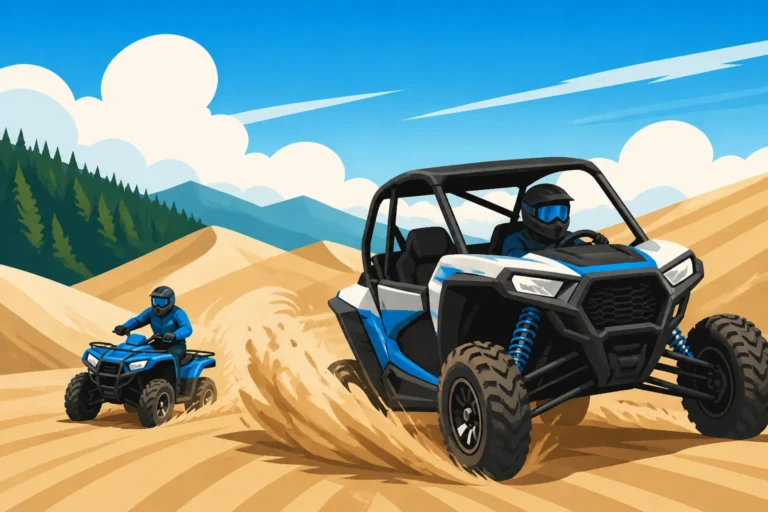
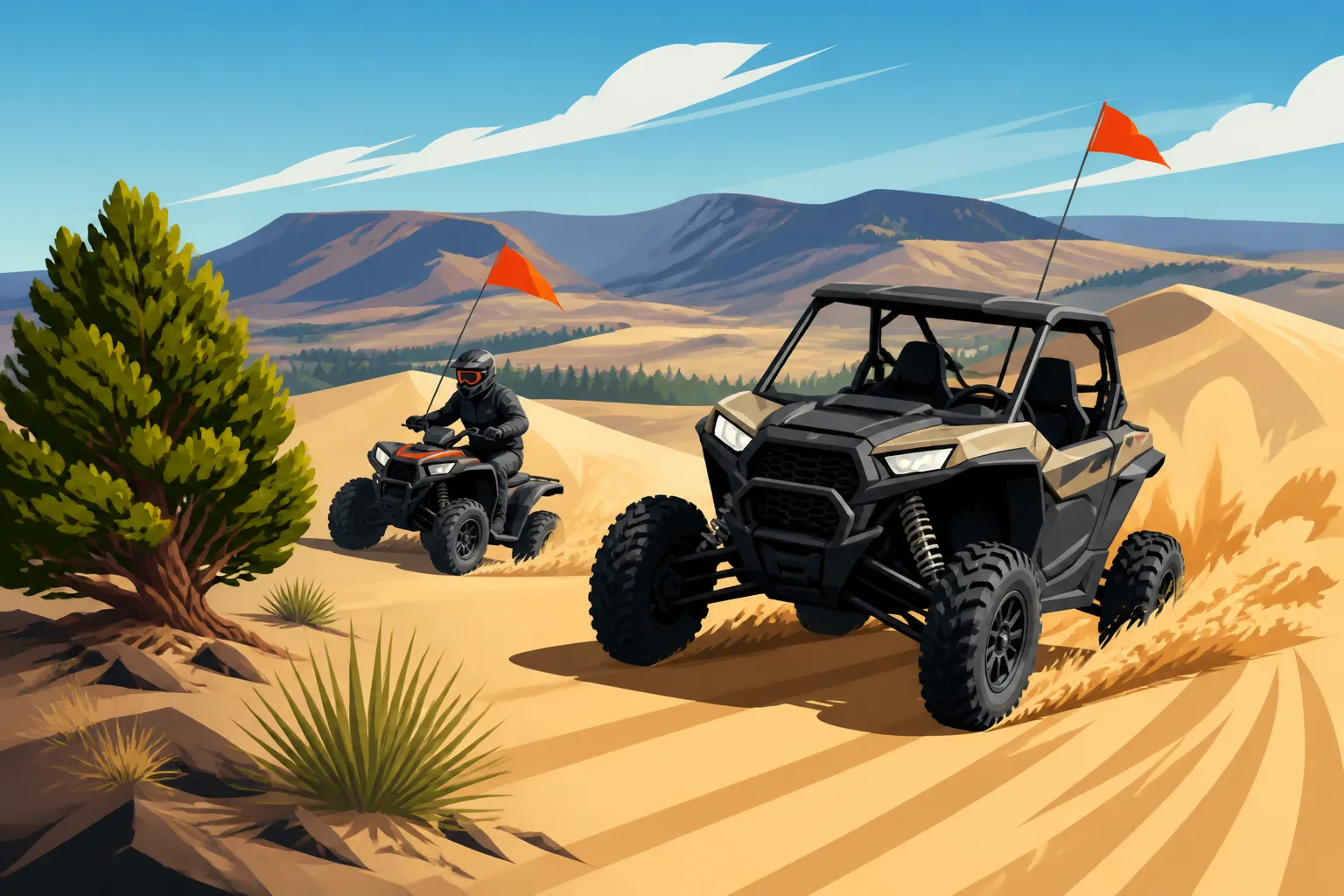
Juniper Dunes is in Franklin County, north of Pasco, in the dry, open country of southeastern Washington. It is a very different ride from the forest trails around Capitol State Forest or Tahuya: expect wide views, exposed terrain, loose sand, and little shade. The landscape is part of the appeal, but the remote setting means you need to plan more carefully than you might for a quick afternoon ride near town.
The name can cause confusion because the area includes both a motorized recreation area and the nearby Juniper Dunes Wilderness. Those are not interchangeable destinations. Wilderness areas are closed to motor vehicles, while off-highway use is restricted to places where it is allowed. A dune that looks rideable from a distance is not necessarily within the open riding area.
That boundary matters even if you are following other riders’ tracks. A track on a phone may be old, incomplete, or recorded by someone who crossed a closed area. Before heading out, check current land-manager information and use a map that helps you identify the recreation-area boundary. For a closer look at the protected area next door, read [Why a Wilderness Area Borders Juniper Dunes]. For the practical riding boundary question, [Where the Dunes End and Wilderness Begins] is a useful companion.
Know what kind of riding area you are visiting
Juniper Dunes is managed as a motorized recreation destination, not as a network of maintained, signed trails like you might find in a developed state forest riding area. Sand can shift, routes can become indistinct, and familiar landmarks may look different after wind or weather. That makes navigation and staying within the authorized area part of the ride itself.
Riders sometimes arrive expecting a formal trailhead with a staffed entrance, marked loops, nearby fuel, and clear signs at every turn. A remote riding area may not provide those conveniences. Treat the trip as a self-supported outing: arrive with a full tank, enough water, recovery gear, and a plan for getting back to your vehicle or staging area without relying on cell service.
It also helps to understand the broader range of riding options in Washington. Dune riding has its own demands, especially for traction, cooling, and recovery, so it is not simply a sandy version of forest riding. If you are comparing destinations, [Washington Sand Dune Riding Areas] gives helpful context on where sand riding fits into the state’s wider ORV scene.
Plan Access, Maps, and Regulations
Confirm access and closures before loading up
The drive to Juniper Dunes is part of the trip. Access roads may be unpaved, dusty, rutted, or affected by recent weather, and conditions can change between visits. A route that worked for a high-clearance pickup in dry weather may be uncomfortable or unsuitable for a low-clearance vehicle, a long trailer, or a rig carrying several machines.
Before leaving home, check land-manager notices for access restrictions, closures, fire rules, and any changes to the designated riding area. It is worth checking again shortly before departure rather than relying on a saved social-media post or an old trip report. A closure notice posted at a gate or on an official land-management page takes priority over a route line displayed in a mapping app.
A mapping tool such as onX Offroad can help you prepare by showing routes and helping you organize a planned trip, but do not treat any app as the final authority on whether an area is open. Compare your route with official BLM information and make sure your map is available offline before you lose reception. Use [Checking Alerts Before You Load Up] as a reminder to verify conditions before the trailer is packed.
Sort out registration, permits, and land rules
Washington registration and riding rules still matter when you take an ATV or UTV onto public land. The machine may need the appropriate registration or off-road tabs, and a visitor’s home-state registration may not automatically settle every Washington requirement. Check the rules that apply to your machine, your home state, and the land you plan to ride.
Do not assume a state recreation pass is required everywhere, or that it replaces ORV registration. Pass requirements depend on who manages the land and what facilities or access points you use. Juniper Dunes is associated with federal land management, so confirm the current requirements directly with the managing agency rather than buying a pass based on a rule for a Washington state park or DNR trailhead. [Washington Rules for Riding Federal Land] explains why the land manager matters.
If you are visiting from another state, take a few minutes to confirm whether your home-state registration is recognized for the kind of riding you intend to do. Rules can differ between riding off road and using a machine on public roads. [Washington ORV Reciprocity With Other States] is a useful starting point, but verify the details that apply to your specific machine before your trip.
| Trip detail | What to check | Why it matters |
|---|---|---|
| Riding boundary | Official land-manager maps and notices | Helps keep your ride inside the authorized motorized area |
| Access route | Road conditions, gates, and closures | A trailer or low-clearance tow vehicle may need a different plan |
| Registration | Washington requirements or applicable reciprocity | A machine’s home-state paperwork may not answer every use question |
| Pass or permit | Requirements for the specific land and facilities | Passes are not interchangeable across every land manager |
| Weather and fire rules | Current restrictions and forecasts | Wind, heat, and fire conditions can change the day’s plan |
| Communications | Offline map, charged phone, and backup plan | Cell coverage may be inconsistent in remote terrain |
Prepare Your Machine and Riding Group
Set up for sand, heat, and a remote location
Sand asks more of a machine than a casual gravel road does. Loose surfaces can make a tire spin, bury a machine that stops in the wrong place, or make a climb feel harder than it looked from below. Inspect your tires, belts or chain, cooling system, brakes, and steering before the trip. A small problem at home is easier to fix than the same problem far from a shop or paved road.
Bring recovery equipment appropriate to your machine and know how to use it. A winch, shovel, tow strap, and basic tools can be useful, but gear only helps if it is compatible with the vehicle and the recovery point. Avoid using improvised attachment points that could fail under load. If your group has a recovery plan, talk through it before anyone gets stuck; a stressful recovery is a poor time to discover that nobody knows where the strap is.
Heat and exposure deserve attention even when the forecast seems manageable. Carry more water than you expect to drink, protect yourself from sun and wind, and give the machine time to cool if conditions are demanding. On a hot, dry day, a ride that feels easy at the staging area can become tiring after repeated climbs and recoveries. Plan breaks before fatigue affects judgment.
Pack for the people, not just the machines
A well-prepared group includes riders with different experience levels, and that can shape the day. A first-time sand rider may need time to learn how the machine responds before joining faster or more technical riding. Start with terrain that matches the least experienced rider, agree on a regrouping point, and make sure nobody feels pressured to follow a line that feels unsafe.
Helmets and protective riding gear are basic preparation, not an optional extra because the area feels remote or informal. Bring eye protection, gloves, clothing suited to the weather, and any personal medications your group may need. Carry identification and emergency contact information, and make sure someone outside the riding group knows where you are going and when you expect to return.
Keep the group together in a practical way. Agree on hand signals, a lead rider, and a sweep rider, and decide what everyone should do if a machine breaks down or someone becomes separated. On a broad, open landscape, distance can be deceptive: a person who looks close may be much farther away than expected. A map app such as onX Offroad may help the group follow a planned route, but each rider should still know the basic route and carry a reliable way to navigate if a phone battery dies.
Ride Sand Responsibly and Stay Within the Open Area
Choose lines carefully and ride within your ability
Sand riding rewards smooth, deliberate control. Sudden throttle changes, abrupt turns, and stopping halfway up a soft slope can make a machine dig in or lose momentum. If you are new to dunes, begin on gentler terrain and pay attention to how your machine behaves before attempting a steep climb or unfamiliar route. Do not let another rider’s confidence make the decision for you.
Look beyond the immediate crest. A rise can hide a drop, another rider, a soft patch, or an obstacle on the far side. Approach unfamiliar terrain at a pace that leaves room to stop or change direction, and avoid launching over a crest when you cannot see the landing. On a UTV, occupants should be secured as required by the machine’s design and equipped protective systems; passengers should never be treated as cargo that can brace themselves at the last second.
Give other riders space and make your intentions clear. A machine climbing a slope may have limited ability to stop or change course, so avoid cutting across its path. When passing, use a visible, predictable line and leave generous room. If visibility is poor because of dust, slow down and wait rather than riding blind into a cloud kicked up by another group.
Keep motorized riding out of wilderness and closed land
The most important boundary rule is simple: ride only where motorized use is authorized. Do not enter the Juniper Dunes Wilderness on an ATV or UTV, and do not assume that a visible track, tire mark, or informal route proves that motorized travel is allowed. The protection of a wilderness boundary is not a suggestion, and crossing it can damage a place intended to remain free of motorized use.
If you are uncertain about your position, stop and check the map before moving farther. Use landmarks and official boundary information rather than guessing from the shape of the dunes. A downloaded map in onX Offroad or another navigation tool can be a useful backup, but it should be checked against authoritative land-manager maps. If you cannot establish that a route is open, turn back instead of testing the boundary.
Stay off closed routes and respect gates, signs, and temporary restrictions. A closure may be in place for safety, resource protection, fire conditions, or another management reason that is not obvious from the trail. For more on the distinct landscape and riding context, [Juniper Dunes in Spring] can help you think through seasonal conditions, while [Riding Juniper Dunes in Spring] offers a focused companion for planning a spring outing.
Make the Day Comfortable and Leave the Area in Good Shape
Plan for fuel, food, and a basic overnight contingency
There is no good reason to count on finding fuel, food, or repair help at the riding area. Start with enough fuel for the tow vehicle and machines, and consider how much extra you will need for detours or a longer-than-planned day. If a machine’s fuel range is uncertain, keep the ride conservative rather than assuming you can return to the staging area before the tank runs low.
Pack food and water where they are easy to reach, not buried under riding gear or recovery equipment. A small first-aid kit, headlamp, spare charging option, and warm layer can make a delayed return much more manageable. Even if you do not plan to camp, a flat tire, stuck machine, or access-road delay can stretch a day into the evening.
If you intend to camp, confirm where camping is allowed and whether any restrictions apply. Do not assume that an open patch of ground is automatically an authorized campsite, especially near wilderness, private property, or a designated access route. Check fire restrictions before lighting anything, and be prepared to use a stove or skip a campfire when conditions or rules require it. [Why Juniper Dunes Charges Nothing] may help with one common planning question, but do not interpret a lack of an entry charge as permission to ignore registration, camping, or land-use rules.
Protect the landscape and make the next visit easier
Pack out everything you bring in, including small items that are easy to overlook: food wrappers, broken tie-downs, zip ties, and drink containers. Do not leave vehicle parts or abandoned gear at the staging area. Sand and wind can spread litter quickly, and small scraps can remain in the landscape long after a group has gone home.
Respect wildlife, vegetation, and other visitors. Avoid creating new routes around soft spots or obstacles, and do not widen a track just to make a difficult section easier. Staying on authorized routes helps reduce damage and keeps a maze of informal tracks from making it harder for future visitors to understand where riding is permitted.
Before towing away, check the machine and trailer for loose gear, mud, plant material, or anything that could fall onto the road. Think through the trip in reverse: confirm that everyone is accounted for, the area has been left clean, and your tow vehicle is ready for the access road. A little care at the end of the day helps protect the place and saves you from discovering a preventable problem halfway home.
Disclaimer
This article is for general informational purposes only and does not constitute professional advice. Laws, prices and regulations vary by location and change over time. Consult a qualified professional for guidance on your specific situation.