Washington’s Sand Dune Riding Areas
Washington’s sand riding can look deceptively simple: open dunes, wide horizons, and plenty of room to play. But access boundaries, soft-sand conditions, seasonal closures, and the wrong tire setup can turn a fun outing into a frustrating one. This guide explains where to ride, how the main areas differ, what to check before unloading, and how to plan a safer day.
Washington’s main sand riding areas
Washington’s best-known sand destinations are in the drier eastern part of the state. Juniper Dunes, Beverly Sand Dunes, and the Moses Lake area each offer a different kind of outing, and they do not all have the same land manager, access conditions, or riding layout. Treat each as a separate destination rather than assuming rules at one area apply to another.
The broader overview in [Where Washington Sand Riding Happens] can help you put these destinations in context. For a trip, though, your most important job is to identify the exact riding area, confirm the current route to it, and stay within the open motorized boundaries once you arrive.
Juniper Dunes near Pasco
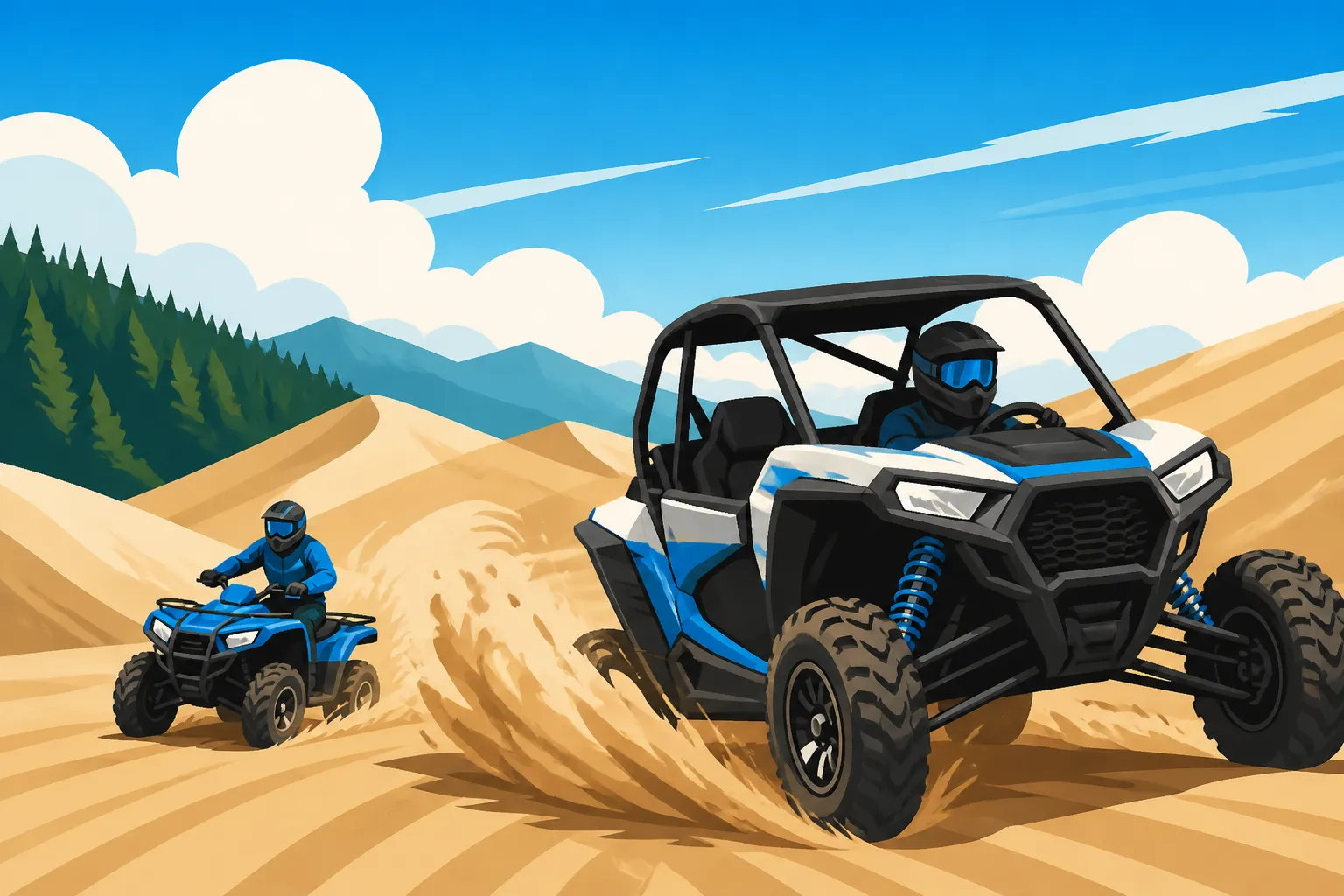
Juniper Dunes is a distinctive eastern Washington destination north of Pasco, with rolling sand and a broad, open landscape. The appeal is easy to understand: compared with a tight forest trail, dunes give riders more room to choose their line, build confidence, and explore changes in terrain. A machine that feels wide and bulky on single track may feel at home in open sand.
The important caution is that Juniper Dunes is not one unrestricted block of motorized terrain. The area includes protected land where motorized use is not allowed, and open riding areas have boundaries. A tempting track across a low ridge can lead toward a place where riding is prohibited. Before a first visit, review the official land information and posted signs, and do not treat tire tracks as proof that a route is open.
Plan the last part of the drive carefully, too. Access roads can be rough, dusty, and slower than they look on a map. A loaded trailer needs room to turn around, and a large tow rig can be awkward on narrow approaches. Read [Juniper Dunes in Eastern Washington] before setting out, then use your navigation tools to help you stay oriented without replacing signs or official boundary information.
Beverly Sand Dunes and Moses Lake
Beverly Sand Dunes in central Washington are another well-known sand riding destination. They are a good option for riders looking for a sandy open-area experience without assuming that the landscape or access is identical to Juniper. The surface, surrounding roads, staging conditions, and riding space may feel different from one visit to the next, particularly after weather or heavy use.
Moses Lake is also associated with sand riding, but “Moses Lake” can be used broadly when people talk about nearby riding and recreation. Confirm the specific site you intend to visit, who manages it, where the legal staging point is, and which areas are open to motorized use. Do not assume that a pin or a social post labeled “Moses Lake dunes” necessarily points to an authorized riding area.
The individual guides [Beverly Sand Dunes in Central Washington] and [Moses Lake Sand in Central Washington] can help you compare the destinations. For either one, check current local notices before driving out. A short confirmation at the planning stage can save you from arriving at a closed entrance or discovering that the place you had in mind is a different property than the one shown on your map.
| Riding area | What it is known for | Planning detail to confirm |
|---|---|---|
| Juniper Dunes | Open eastern Washington sand and dune terrain | Motorized boundaries, legal access, and protected-area limits |
| Beverly Sand Dunes | Central Washington sand riding | Current access, staging location, and site notices |
| Moses Lake area | Sand riding associated with the Moses Lake region | The exact site, land manager, and authorized riding area |
How to choose the right dune destination
The best destination depends on more than distance. A rider with a small quad and a few hours available may want a straightforward day trip, while a group of side-by-sides might care more about trailer access, turning room, and how easy it is to regroup. Families may prioritize a clear staging area and a manageable place for newer riders to learn.
Match the area to your group
Start with the machines in your group. A narrow ATV and a wide side-by-side do not move through terrain in the same way, and a mixed group may need to choose routes that work for the largest machine. Open sand can feel spacious, but dunes still have blind rises, soft pockets, and places where it is difficult to see a rider coming from the other side.
Think about experience as well as vehicle size. If someone is new to sand, a destination with room to practice gradual turns and gentle climbs may be a better first outing than a trip built around steep faces or fast riding. Set expectations before you leave: the goal is not to keep up with the most experienced rider but to make sure everyone can ride within their comfort level.
The group’s support needs matter, too. Consider whether everyone has suitable protective gear, whether the machines have enough fuel for the intended day, and whether someone can assist if a vehicle becomes stuck. In a remote area, the difference between “we can help each other” and “we have no plan” becomes obvious quickly. Agree on a regrouping point, a turnaround time, and a simple response if someone is separated from the group.
Compare convenience with the kind of ride you want
A closer destination is not automatically the easier trip. The drive may be shorter, but the access road could be slower, the staging area less suited to a large trailer, or the actual riding terrain unfamiliar to your group. Compare the full trip: highway miles, final approach, parking, unloading, and how much time remains to ride before heading home.
Also consider what kind of riding you enjoy. Dune riding can mean climbing, traversing, exploring open sand, or carefully practicing basic handling. It does not have to mean high speed. If your group prefers quiet exploration, choose a plan that leaves room for breaks and avoids pressure to cover every part of the area in one visit.
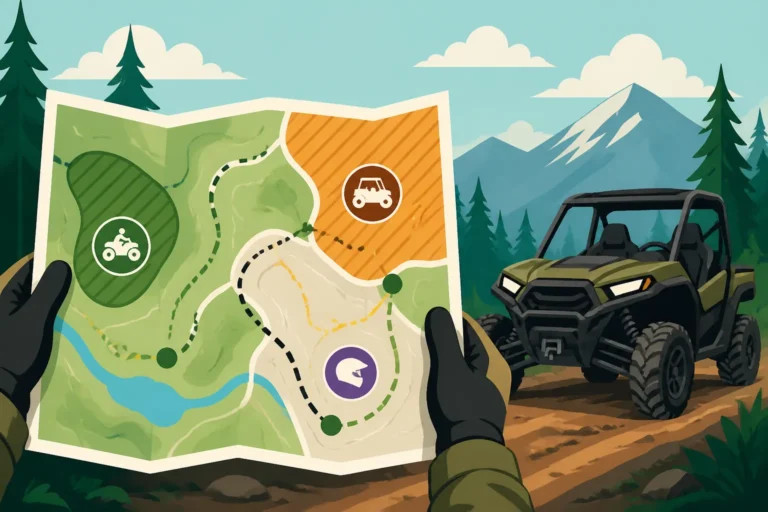
Use maps as a planning aid, not as permission to ride. Apps such as onX Offroad can help you orient yourself and review mapped routes, while official land-manager information and posted signs should guide your decisions about closures and access. Before leaving home, save the information you will need in case mobile service is poor. Do the same for the return route, rather than relying on a single phone with an active connection.
Prepare your machine for sand
Sand changes how a machine responds. Tires can sink or spin more readily than they do on packed dirt, and a rider who tries to steer or climb exactly as they would on a forest road may find the machine struggling. Preparation cannot eliminate every problem, but it can make the ride more predictable.
For a closer look at setup basics, see [Airing Down for Washington Sand] and [Paddle Tires on Washington Dunes]. The right choice depends on the machine, tire design, rider experience, and conditions. Avoid making a tire change based on someone else’s setup alone.
Choose tires and pressure thoughtfully
Tire choice affects traction, steering, and how the machine floats over softer ground. A tire that works well on mixed terrain may not behave the same way in deep or loose sand. Paddle-style tires can suit some machines and types of dune riding, but they are not a universal answer for every vehicle or every route. Check the manufacturer’s guidance and consider how the machine will be used on the full trip, including the ride back to the staging area.
Some riders reduce tire pressure for sand to increase the contact area. That can help in certain conditions, but lowering pressure too far can increase the risk of a tire coming off the bead or being damaged. Make adjustments carefully, stay within the tire and vehicle manufacturer’s recommendations, and bring a reliable gauge and inflation method. If you are unsure, ask an experienced technician familiar with your machine rather than guessing at the trailhead.
Carry what you need to restore the setup when you leave. A pressure adjustment that works for soft sand may not be ideal for a long road drive or rough access road. Keep a suitable compressor or inflation device in your support vehicle, and do not assume you will find one nearby. Make tire checks part of the pre-ride routine, especially if several people are sharing tools or equipment.
Check cooling, air filtration, and recovery gear
Sand and dust can work their way into places that need to stay clean. Inspect the air filter before the trip, and make sure the machine’s intake and filter are correctly installed. A filter that is overdue for service or poorly seated can become a bigger problem when the vehicle spends hours in dusty conditions.
Cooling is worth checking as well. A machine working hard at low speed or climbing soft terrain may need more attention to airflow than it would on a steady, firm road. Clear debris from the radiator area where appropriate, check coolant and fluid levels according to the owner’s manual, and watch for warning signs during the ride. If a machine starts running hot, continuing to push it can turn a pause into a repair problem.
Bring recovery equipment that matches the vehicles and the group’s skill level. A tow strap, shovel, basic tool kit, gloves, and a way to communicate can be useful, but a strap should only be used with appropriate recovery points and safe technique. Agree in advance that nobody will stand in the path of a tensioned strap or try an improvised pull without checking the setup. Simple rules matter when everyone is tired and eager to get moving again.
Ride safely on changing dune terrain
Dunes are not a flat playground. A crest can hide another rider, a sharp drop, a deep pocket, or a route that bends out of sight. Sand also changes with wind, moisture, traffic, and temperature. A line that felt firm earlier may become loose or rutted later in the day.
Read the terrain before committing
Approach unfamiliar slopes at a speed that leaves you time to react. Do not charge over a crest when you cannot see what is on the other side. Stop short, look over the terrain if it is safe to do so, and choose a line that matches your machine and ability. If you cannot see a safe route down, do not assume one will appear after you reach the top.
Keep extra distance between riders. Sand can throw a dust cloud behind a machine, making it harder for the next person to see bumps or changes in direction. A rider who follows too closely may also have less time to respond if the first vehicle slows, turns, or gets stuck. Agree on spacing and hand signals before splitting into smaller groups.
Avoid crossing a slope at an angle that feels unstable for your particular machine. Vehicle design, seat position, tire traction, and the slope itself all affect rollover risk. If you feel the vehicle tipping or losing control, follow the owner’s guidance and your training rather than trying a sudden, aggressive correction. New riders should learn on gentle terrain with an experienced person nearby, not by copying the boldest person in the group.
Set group rules and protect other visitors
A group ride works better when everyone knows the plan. Choose a lead rider and a sweep rider, and agree on stops where the group will gather. That helps prevent a common problem: one person waits at a junction while others assume the group has continued, then the whole party spends time searching across open terrain.
Keep a controlled pace near staging areas and wherever people are walking, unloading, or learning to ride. Dunes can attract people with different levels of experience, and sightlines may be limited. A responsible rider should expect that another person may appear from behind a rise or move across a route unexpectedly.
Respect other users and avoid unnecessary noise or disturbance. Give people room, do not roost sand toward another group, and do not ride through areas that are closed or clearly being protected. Washington’s public-land rules and site-specific notices still apply on sand. If you are unsure whether a route is open, stop and check rather than relying on what another rider seems to be doing.
Plan around access, permits, and closures
A good dune trip begins before the trailer is loaded. Distant riding areas can have limited services, variable access roads, and weak cell coverage. A plan that works on paper may need adjustment if an access route is closed, weather changes, or the staging area is too crowded.
Confirm land management and legal access
Identify the land manager for the precise site you plan to visit. A region may include land managed by different agencies or private owners, and the rules can change at a boundary that is not obvious from the terrain. Confirm where motorized use is allowed, where vehicles may be unloaded, and whether any pass, registration, or permit is required for your machine or vehicle.
Washington’s general riding requirements are covered in [Washington ORV Permits Explained]. That is a useful starting point, but do not treat a general guide as a substitute for checking the rules for a particular area. Your registration status, the type of machine, where you are riding, and the land manager can all affect what you need to carry or display.
Look at official maps and current site notices before you go. [Washington Trail Maps From DNR] can be a helpful resource when planning on DNR-managed land, while other sites may require information from a different land manager. If a map shows a road or trail but a sign says it is closed, follow the posted restriction. When you use onX Offroad or another navigation app, compare its information with official notices and the signs at the site.
Check for closures and plan a backup
Closures can happen for reasons that have nothing to do with how appealing the weather looks at home. Fire danger, maintenance, habitat protection, damage to access roads, or land-management work can affect whether a route or riding area is available. A destination that was open on a previous trip may not be open on the day you plan to visit.
Check [Washington Trail Closures to Check First] as part of your preparation, and look for current notices from the agency responsible for the specific property. Check again before departure if your trip is planned well in advance. Save the contact details or notice page you used so the group can confirm information if plans change on the road.
It is sensible to choose a backup destination before leaving. Make sure the alternative is genuinely open to your machines and that you know the route, access requirements, and staging location. A backup should not mean pulling into an unfamiliar parcel and assuming that a sandy area is public riding land. If the first site is closed, take the time to verify the alternative instead of letting the group’s excitement rush the decision.
Pack for a remote sand ride
A dune trip can feel casual because the terrain is open and the vehicles are close together. But eastern Washington riding areas may be far from convenient fuel, food, repair, or phone service. Plan as if a small mechanical issue or a delayed return could happen.
Build a practical ride-day kit
Start with the basics for people and machines: water, food, protective gear, sunscreen, eye protection, a first-aid kit, tools suited to your vehicles, and a way to inflate tires. Pack more water than you expect to need, especially when the ride involves sun, wind, or physical work helping a stuck machine. Dust and exertion can make people forget to drink until they already feel unwell.
Bring navigation information in a form that does not depend on cell coverage. Download maps for offline use if your chosen app offers that function, and keep a separate record of the staging location and return route. onX Offroad can be useful for pre-trip orientation and offline map planning, but a phone app is not a replacement for checking official access information or carrying a backup power source.
A basic emergency plan should include a meeting point, an expected return time, and a contact who is not on the ride. Tell that person where you are going and when they should expect to hear from you. If someone has a medical condition or takes medication, make sure the group knows what to do in an emergency without sharing more personal information than necessary.
Make the tow vehicle and trailer part of the plan
The ride begins when you leave home, not when you turn the key in the ATV. Check the trailer’s tires, lights, hitch connection, safety chains, and tie-downs before the trip. Make sure the load is secured so that it cannot shift over rough access roads, and leave enough room for machines to be unloaded without blocking the road or another party’s staging space.
Fuel planning deserves attention. Do not assume that a station will be open at the time you arrive or that fuel will be close to the riding area. Fill up before the final approach, and consider whether the machine’s tank is enough for the route and riding time you intend. Carry fuel only in appropriate containers and store it securely in a way that follows applicable rules.
If you are camping, check the location’s rules and facilities in advance. [Camping Near Washington ORV Areas] can help you think through the options, but verify details for the specific campground or dispersed site. A convenient place to sleep is not automatically a legal place to ride from, and a campground may have different access or vehicle rules from the nearby riding area.
Ride with care for the land
Sand riding has a visible impact. Repeated traffic can carve ruts, widen routes, and damage places that take a long time to recover. Staying on authorized routes and leaving closed areas undisturbed helps preserve access for other riders and protects sensitive land.
Stay within designated riding areas
Use signs, official maps, and posted boundaries to guide your route. At a site with a protected area nearby, do not treat an open dune as a reason to explore beyond the motorized boundary. A shortcut can cross into restricted land even when the surface looks identical on both sides.
If you find tracks heading into a closed area, do not follow them. Other riders may have made a mistake, ignored a sign, or entered before conditions changed. Track marks tell you where a vehicle went; they do not establish that the route is legal or still open. When boundary details are unclear, pause and confirm rather than guessing.
Avoid creating new routes around soft spots, obstacles, or crowded sections. Detouring around a difficult patch may widen the disturbed area and encourage others to do the same. If a route is too challenging for your group, turn around or choose a safer line within the open area. Leaving the terrain as you found it is part of making sure it remains available for future visits.
Leave the area clean and ready for the next group
Pack out everything you bring in, including food scraps, broken straps, and small pieces of packaging that can blow away. Walk around the staging area before leaving and check under the trailer, beside the loading ramp, and near where the group stopped for lunch. Small items are easy to overlook in sand.
Keep machines and equipment in good condition to reduce the chance of fluid leaks or roadside breakdowns. If a vehicle has a mechanical problem, move it to a safe location if possible and avoid leaving parts or debris behind. Clean machines and gear before moving between recreation areas when practical; sand, seeds, and mud can travel with you and spread into places where they do not belong.
Finally, share accurate information with your group. If you learn that an access route is closed or that a boundary is easy to misread, tell the others before the next trip. A useful trip report should distinguish what you personally observed from what you are unsure about. That habit helps riders make better decisions without turning an old anecdote into a misleading promise about current access.
Disclaimer
This article is for general informational purposes only and does not constitute professional advice. Laws, prices and regulations vary by location and change over time. Consult a qualified professional for guidance on your specific situation.