Which Lewis County Roads Are Open
It's incredibly frustrating, isn't it? You've got your side-by-side or your quad all gassed up, ready for an adventure, and you're staring at a map, wondering if you can legally take that county road to connect to the trails, or even just get from your cabin to the store. Washington's laws around riding All-Terrain Vehicles (ATVs) and Utility Terrain Vehicles (UTVs) – which the state calls Wheeled All-Terrain Vehicles or WATVs – on public roads can feel like a tangled mess. This guide is here to untangle that specifically for Lewis County, helping you understand how to figure out which roads are open and what you need to know before you hit the pavement.
Understanding Washington's WATV Road Laws
Navigating the rules for riding your WATV on public roads in Washington can feel like trying to solve a puzzle with half the pieces missing. It’s not a blanket yes or no across the entire state, which is where much of the confusion comes from. Each county and even some cities have the authority to make their own decisions, creating a patchwork of regulations that can be a real headache for riders. You might be perfectly legal on a county road in one jurisdiction, only to find yourself facing a hefty fine just a few miles down the highway in another.
The state law, while enabling this local control, also sets some overarching guidelines that all counties must adhere to. It’s a framework designed to give local communities flexibility while ensuring some level of consistency. For us riders, it means we have to do our homework for each specific area we plan to explore, which can be time-consuming, but absolutely essential for a legal and worry-free ride. Understanding this foundational structure is the first step in knowing whether that Lewis County road is truly open for your machine.
The County Opt-In/Opt-Out System and Population Thresholds
Washington's WATV road law introduces a critical distinction based on population. Essentially, counties with a population of 15,000 or fewer are open by default for WATV use on their roads, unless they specifically pass an ordinance to close certain segments. It’s an "opt-out" system for smaller counties. Think of places like Garfield or Columbia County; their roads are generally open unless posted otherwise. This makes it a bit easier for riders in those rural areas, but still requires checking for specific closures.
On the flip side, counties with populations over 15,000 operate under an "opt-in" system. This means their roads are closed by default, and they must actively pass an ordinance to open specific roads or segments for WATV use. Lewis County, with a population typically above that 15,000 threshold, falls squarely into this "opt-in" category. This is why you can't just assume any Lewis County road is open. The county commissioners had to take a specific action, passing an ordinance, to designate any roads as open for WATV use. If you're riding in a county like this, you absolutely need to consult their official list, because if a road isn't explicitly on that list, it's considered off-limits. You can read more about this in [Washington Counties Over Fifteen Thousand Must Opt In].
This system creates a significant difference in how riders need to approach planning their routes. In an opt-out county, you might look for signs prohibiting WATVs. In an opt-in county like Lewis, you're looking for signs or official documents explicitly allowing them. It’s a subtle but crucial distinction that can save you from an uncomfortable conversation with law enforcement.
General Rules for Riding Pavement in Washington
Even when you find a road that is legally open for your WATV in Lewis County, there are still state-level rules you absolutely must follow. These aren't just Lewis County's suggestions; these are codified laws that apply to all WATVs on any public road segment in Washington. Ignoring them, even on an approved road, can lead to fines and legal trouble. One of the primary rules relates to speed: your WATV can generally only operate on roads with a posted speed limit of 35 miles per hour or less. This immediately restricts you from most major highways and busier arterial roads, regardless of whether the county has "opened" them. So, while a county might open a rural back road, if that road's posted limit is 40 mph, your WATV is still barred. You can dive deeper into this topic by checking out [Washington's 35 mph Road Rule].
Beyond speed, there are strict equipment requirements. Your machine needs to be street-legal in terms of lighting, mirrors, a horn, and turn signals. It’s not enough to just have working headlights; these are specific requirements for road use, mimicking what a traditional motor vehicle needs. Furthermore, you're generally restricted to riding single file, not two abreast, and you must have a valid driver's license. For a comprehensive overview of what your machine needs to have, take a look at [Equipment a Washington WATV Needs on a Road]. These foundational rules are universal throughout the state, ensuring a baseline of safety and compliance no matter where you're riding your WATV on a legally open road.
Navigating Lewis County's WATV Road Network
Now that we understand the statewide framework, let's zoom in on Lewis County itself. Given its population, Lewis County had to actively decide to open roads to WATV use, and that decision came in the form of a specific ordinance. This is great news for riders, as it means there are legal roads you can use. However, the key is knowing which ones, because it's certainly not every road. The county's approach is designed to balance recreational opportunities with public safety and the concerns of residents.
It’s easy to get excited when you hear a county has "opened roads," but that enthusiasm needs to be tempered with precise information. You can't just assume every gravel lane or paved country road is fair game. Lewis County, like others that have opted in, goes through a deliberative process to determine which roads are suitable, considering factors like traffic volume, road conditions, residential density, and potential impact on other road users. This process results in a very specific list, and any road not on that list remains closed to WATV use, even if it feels like a quiet, rural path.
Lewis County Ordinance 1286: What It Means for Riders
Lewis County officially joined the ranks of counties embracing WATV use on certain roads through the adoption of Lewis County Ordinance 1286. This ordinance is the legal document that designates specific county-maintained roads as open for WATV travel. For riders, this was a significant step, as it created a network of legal connections that weren't there before. The ordinance typically specifies certain categories of roads, or even named roads, that are permissible for WATV use, often focusing on less-trafficked, rural, or connector roads that facilitate access to trail systems or provide convenient routes between communities.
What's important to remember is that this ordinance isn't just a free-for-all. It usually includes specific provisions and conditions. For example, it might reiterate the statewide speed limit of 35 mph, require specific safety equipment beyond what's needed off-road, and mandate that riders possess a valid driver's license. Understanding the nuances of this ordinance is key. It means that while the door is open, you still have to walk through it correctly. It's not uncommon for such ordinances to designate roads primarily for access rather than long-distance touring, linking a community to a staging area, or connecting two parts of a trail system, for instance.
Identifying Approved Roads in Lewis County
So, how do you find the definitive list of approved roads in Lewis County? This is where your investigative skills come into play. The official source for this information will always be the Lewis County government itself. Your best bet is to start with the Lewis County Public Works Department or the Lewis County Commissioner's Office website. They are typically responsible for maintaining and publishing the most current version of the list of designated roads. Sometimes, this information is found within the text of Ordinance 1286 itself, or in an appendix to it. Local planning departments might also have this information available.
It’s crucial to seek out the official county list, not just rely on word-of-mouth or outdated maps. Road designations can change over time due to new ordinances, road construction, or safety concerns. What was open last year might not be open this year. One of the biggest challenges for riders is keeping up with these changes. While local clubs or online forums can offer helpful insights, always verify with the county’s official publications. Don't be afraid to make a phone call to the appropriate county department if you can't find clear, up-to-date information online. Taking the time to do this homework can save you a lot of grief on your ride.
Important Considerations for Lewis County Riders
Even with a confirmed list of open roads, there are other factors that Lewis County WATV riders need to keep in mind. First and foremost, the county only has authority over county-maintained roads. This means state highways (even small segments running through Lewis County) are still under the jurisdiction of the Washington State Department of Transportation (WSDOT). Unless WSDOT has specifically authorized WATV use on a particular highway segment, those roads are off-limits, even if they appear to connect perfectly with an open county road. This can lead to situations where you're legally riding a county road, but suddenly have to stop and trailer your machine to cross a state highway that acts as a barrier. For specifics on how to handle these situations, you might find [Washington Rules for Getting Across a Road] helpful.
Another critical consideration is private property. Even if a road appears to be a public right-of-way, straying onto adjacent private land without permission is trespassing. Always be mindful of property lines, especially in rural areas where roads might abut farms or timberlands. Speaking of timberlands, many roads in Lewis County traverse or are adjacent to private timber company lands or even federal forest lands. While a county ordinance might open a county-owned road, it doesn't automatically grant you access to adjacent private or federal property. [Meeting a Log Truck on a Gravel Road] also highlights the reality of sharing these roads. Always check with the specific land manager (DNR, Forest Service, private timber company) if you plan to access their roads or property, as they often have their own rules, permits, or seasonal closures in place, especially during fire season or active logging operations.
Essential Gear and Safe Practices for Lewis County Road Riding
So, you've found the open roads in Lewis County, and you're ready to roll. But before you pull out of the driveway, it's absolutely critical to ensure your WATV and yourself are properly equipped and prepared for road use. Riding on pavement, even on quiet county roads, presents different challenges and legal requirements than riding strictly off-road. You're now sharing the road with cars, trucks, and potentially even logging vehicles, and you need to be seen, heard, and able to signal your intentions just like any other vehicle. This isn't just about avoiding a ticket; it's about your safety and the safety of others.
Many riders invest heavily in off-road performance, but don't always think about the specific upgrades and safety measures needed for legal road access. The state of Washington has a clear set of mandates for WATVs on public roads, and these requirements are there for a reason. Taking the time to ensure your machine meets these standards and that you're riding defensively will make all the difference in having a safe and enjoyable experience on Lewis County's open roads.
Required Equipment for Road-Legal WATVs
To be legally ridden on designated public roads in Washington, your WATV must be outfitted with specific equipment that goes beyond what's typically needed for trail riding. This includes:
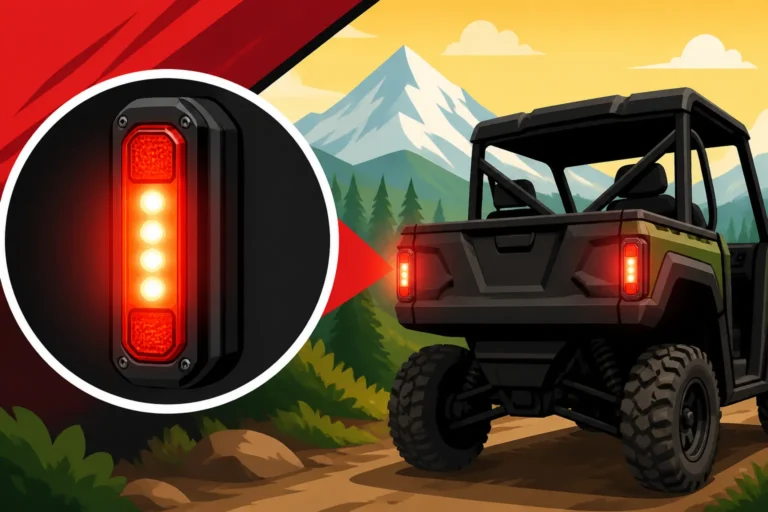
- Headlights and Taillights: These must be fully functional and visible from appropriate distances, especially if you plan on riding during dawn, dusk, or nighttime hours.
- Turn Signals: You need working turn signals on both the front and rear of your machine, just like a car. This allows you to clearly communicate your intentions to other drivers. For many aftermarket accessories to make this happen, companies like SuperATV offer kits. You can learn more in [Turn Signals on a Washington Road Machine].
- Mirrors: Your WATV must have at least one rearview mirror, properly affixed, so you can see traffic approaching from behind. Many riders opt for two mirrors for better visibility. Check out [Mirrors and a Horn for Washington Road Use] for more details.
- Horn: A functional horn is essential for alerting other drivers or pedestrians to your presence. Again, this is a standard safety feature for any road-going vehicle.
- Windshield or Eye Protection: You must either have a windshield on your machine (common on UTVs) or wear approved eye protection (like goggles or a face shield on a helmet).
- Brakes: Your braking system must be in good working order, capable of stopping your machine effectively.
- Spark Arrester and Muffler: Your exhaust system must be equipped with an approved spark arrester and a muffler that keeps noise levels within legal limits.
Ensuring your machine has all this equipment isn't just about checking boxes; it's about being visible and predictable to other road users, which is paramount for safety.
Rider Responsibilities and Safety Tips
Beyond equipping your machine, your responsibilities as a rider on public roads are significantly elevated. First, helmets are mandatory. Everyone riding on a WATV on a public road in Washington, regardless of age, must wear a USDOT-compliant helmet. This isn't just a recommendation; it's the law. For full details, see [Washington Helmet Law for WATV Riders]. Second, you must possess a valid driver's license. This means you need a standard driver's license (not just an ORV safety card) to operate a WATV on open roads. Minors under 16 have additional supervision requirements. You can learn more at [Washington Driver License Rules for WATVs].
Third, insurance is required for any WATV operating on a public road. This is standard auto liability insurance, just like you would carry for a car. It's crucial for protecting yourself and others in the event of an accident. [Washington WATV Insurance Requirement] provides more information on this.
Beyond the legalities, here are some safety tips for riding Lewis County roads:
- Be Highly Visible: Wear bright, high-contrast clothing. Consider adding a safety flag or reflective decals to your machine, especially if you're riding in low light conditions or on dusty roads. SuperATV, for instance, offers a range of flags and whip lights that enhance visibility.
- Ride Predictably: Use your turn signals well in advance. Maintain a consistent speed and position on the road. Avoid sudden movements that could startle other drivers.
- Stay Alert: Scan the road far ahead for potential hazards like potholes, gravel patches, or oncoming traffic. Be aware of driveways and cross-streets.
- Know Your Machine's Limits: WATVs handle differently on pavement than off-road. Cornering, braking, and accelerating all have different dynamics. Ride within your machine's capabilities and your own skill level.
- Watch for Traffic: Assume other drivers may not see you. Make eye contact, use your horn if necessary, and always be prepared for unexpected maneuvers by other vehicles.
By combining the right equipment with responsible riding practices, you can enjoy Lewis County's open roads safely and legally.
Planning Your Lewis County WATV Adventure
Having the knowledge of which roads are open and what equipment you need is fantastic, but the real fun begins when you weave it all together into a memorable adventure. Lewis County is a diverse region, offering a blend of rural roads, forested landscapes, and agricultural areas. The ability to use certain county roads for WATV travel opens up a whole new realm of possibilities for exploring this beautiful part of Washington, connecting previously disparate riding zones and making longer, more varied trips feasible.
However, planning isn't just about marking points on a map. It's about understanding the synergy between road access and off-road trails, knowing where to find up-to-date information, and being prepared for the realities of rural travel. A well-planned trip minimizes surprises and maximizes enjoyment, allowing you to focus on the experience rather than worrying about legalities or logistics.
Combining Road Access with Trail Systems
One of the greatest benefits of having legal WATV road access in Lewis County is the ability to connect different riding areas. Imagine being able to ride from your campsite or cabin directly to a trailhead without having to load your machine onto a trailer. This can be a game-changer for riders, turning shorter, isolated trail rides into longer, more immersive journeys. Many of Lewis County's open roads are likely those that traverse rural landscapes, often leading to or through forest service roads, DNR (Department of Natural Resources) lands, or private timberlands that might offer designated off-road trails (with appropriate permits or permissions, of course).
This connectivity allows for exciting "link-up" rides, where you might spend an hour on a quiet county road, then transition onto a gravel forest road, and finally hit some technical trails, all in one continuous ride. It’s perfect for exploring diverse terrain and seeing more of the region. This ability to "ride from a campground to a trailhead" is a huge convenience and makes for a more seamless experience. Always consult DNR or Forest Service maps for the specific areas you plan to access, as those trails and forest roads will have their own rules and potentially require a Discover Pass or a Northwest Forest Pass.
Resources for Staying Informed
Staying informed is perhaps the most critical aspect of planning a legal and enjoyable WATV trip in Lewis County. As mentioned, road designations, trail conditions, and access rules can change. Here are some key resources you should consult:
- Lewis County Government Websites: Start with the official Lewis County Public Works Department or Commissioners' website. Search for "WATV ordinance" or "off-road vehicle access." This is the ultimate source for the official list of open roads.
- Washington State Department of Natural Resources (DNR): If you plan to ride on DNR lands (which Lewis County has plenty of), their website is invaluable. They provide maps, trail status updates, and information on required passes like the Discover Pass.
- USDA Forest Service: If your route takes you into National Forests, check the local Forest Service district's website for trail conditions, road status, and any necessary passes like the Northwest Forest Pass.
- Local ORV Clubs: Joining local ATV/UTV clubs in the Lewis County area can provide a wealth of real-time, ground-level information. Club members often share updates on trail closures, road conditions, and new regulations. They can also be a fantastic resource for discovering new routes and meeting fellow enthusiasts.
- Online Forums and Communities: Websites and social media groups dedicated to Washington ATV/UTV riding can offer valuable insights. While unofficial, discussions can highlight challenges or recent changes that you might not find elsewhere. Even communities associated with aftermarket parts providers, like SuperATV, might have forums where local riders share information.
- Mapping Apps: While not official sources, mapping apps can help you visualize your route and identify potential connectors. Just be sure to cross-reference with official county lists for legal access.
Before any ride, make it a habit to check for current conditions. This includes looking for temporary closures due to logging operations, fire restrictions, or adverse weather conditions like heavy snow or flooding. A quick check can prevent you from driving all the way out to a closed area.
To help visualize some of the key requirements, here's a quick summary:
| Feature/Requirement | Description | Legal Status (Lewis County Roads) |
|---|---|---|
| WATV Registration | Machine must be properly registered with WA DOL (off-road and/or on-road tabs) | Required |
| Driver's License | Operator must possess a valid driver's license | Required |
| Helmet | All riders and passengers must wear a USDOT-compliant helmet | Required |
| Insurance | Liability insurance for road operation | Required |
| Speed Limit | Road speed limit 35 mph or less | State Law Applies |
| Turn Signals | Front and rear, functional | Required |
| Mirrors | At least one rearview mirror | Required |
| Horn | Functional horn | Required |
| Head/Tail Lights | Functional and visible | Required |
| Eye Protection | Windshield or approved goggles/face shield | Required |
| Access Authority | Roads must be explicitly opened by Lewis County Ordinance 1286 | Check Official County List |
This article is for general informational purposes only and does not constitute professional advice. Laws, prices and regulations vary by location and change over time. Consult a qualified professional for guidance on your specific situation.