Washington Rules at a Sno-Park in Summer
It's easy to assume that "Sno-Parks" are solely dedicated to winter sports, but for many Washington ATV and UTV enthusiasts, these sites can offer valuable access to summer riding adventures. The challenge lies in understanding the distinct rules that govern these areas when the snow melts and a new season of recreation begins. This guide will walk you through what you need to know about utilizing Washington's Sno-Parks for your off-road vehicle escapades during the warmer months, helping you avoid common pitfalls and ensure a smooth, legal ride.
Sno-Parks Aren't Just for Snow: Unlocking Summer Access for Your Washington ORV
When you hear "Sno-Park," visions of snowmobiles, cross-country skiers, and winter wonderland scenes probably dance in your head. And for good reason – that's their primary function, complete with specialized permits for winter use. However, the infrastructure put in place for winter recreation, like large parking areas, access roads, and often vault toilets, makes many of these locations incredibly practical as staging points for summer off-road vehicle (ORV) activities. It's less about riding in the Sno-Park itself, and more about riding from it.
The Dual Nature of Washington's Sno-Park System
Washington's Sno-Park system is managed by the Washington State Parks and Recreation Commission, but many of the actual Sno-Park sites are located on lands managed by the Washington State Department of Natural Resources (DNR) or the U.S. Forest Service. This multi-agency involvement means that while the "Sno-Park" designation applies to winter operations, the underlying land ownership and its associated summer recreation rules come into play as soon as the snow melts. In summer, the trails that once buzzed with snowmobiles might transform into multi-use trails, logging roads, or dedicated ORV routes, depending on the specific location and land manager.
Many of these Sno-Parks are strategically situated to provide access to extensive networks of forest roads and trails that wind through the Cascade Mountains, the Colville National Forest, or various DNR forests. For instance, a Sno-Park near [Ahtanum State Forest] might become an ideal spot to unload your machine and head out onto the green dot roads, while one closer to [Capitol State Forest Near Olympia, Washington] could be your gateway to miles of motorized trails. The key is understanding that the purpose of the site shifts. It moves from being a winter play area to a summer staging ground, a place to park your rig and get your machine onto approved motorized routes.
The transition from winter to summer use also often means a change in vehicle types allowed. Where snowmobiles were once king, you'll now find hikers, mountain bikers, horseback riders, and, if the connecting trails are designated for them, ATVs and UTVs. This shift necessitates a different approach to rules and etiquette. It’s crucial not to assume that just because you're at a Sno-Park, all surrounding trails are open to your ORV. You must verify that the specific routes you intend to ride are indeed open to motorized vehicles for summer use.
Navigating Permits and Passes Beyond Winter
One of the biggest areas of confusion for riders eyeing Sno-Parks in summer is the permit situation. Let's clear this up right away: the specific Sno-Park permit you'd buy for winter is not required for summer use. That permit is tied directly to the winter season and the plowing/maintenance services for snow access. However, this doesn't mean summer Sno-Park access is always free.
Because many Sno-Parks are located on state (DNR) or federal (Forest Service) lands, you might need a different kind of pass. If the Sno-Park acts as an access point to trails on DNR land, you'll likely need a [Washington Discover Pass Cost] displayed in your tow vehicle. This pass helps fund state recreation lands and is mandatory for parking at many trailheads and access points on DNR and State Parks property. Conversely, if you're using a Sno-Park that leads into a National Forest, you might need a [Washington Northwest Forest Pass Cost] instead. It's a common misconception that one pass covers all public lands in Washington, but the land management agency dictates the pass requirement.
It’s always best practice to check the specific Sno-Park’s information, which is usually posted on signage at the site itself or available on the Washington State Parks website, as well as the websites of the relevant DNR or Forest Service district. Sometimes, if you're merely parking your truck and immediately heading onto a public road that doesn't require a pass, you might be in the clear. But for accessing designated trails or parking for extended periods on managed lands, budgeting for and acquiring the correct pass is a non-negotiable step. Failing to display the required pass can lead to a citation, which is definitely not the kind of souvenir you want from your summer adventure.
What You Can and Can't Do With Your WATV at a Summer Sno-Park
Using a Sno-Park in summer for your ATV or UTV requires a clear understanding of its intended function during the warmer months. It's a logistical hub, not a recreational riding area in itself. Think of it as the starting line to your adventure, not the track itself.
Permissible Staging and Access Points
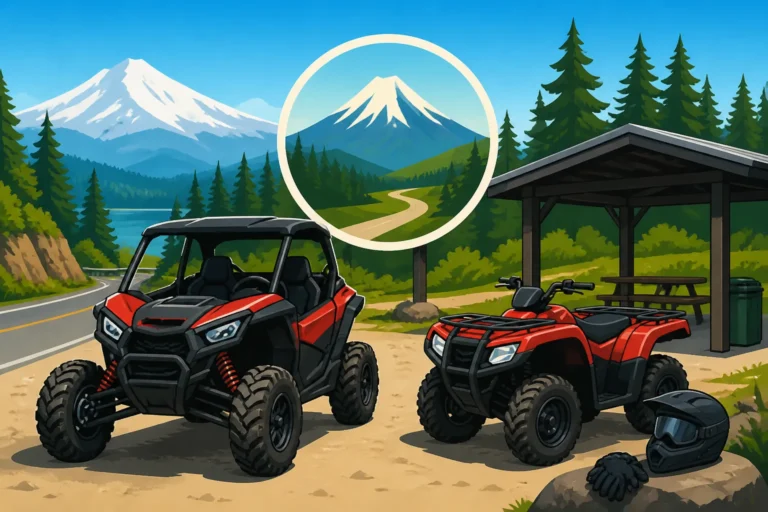
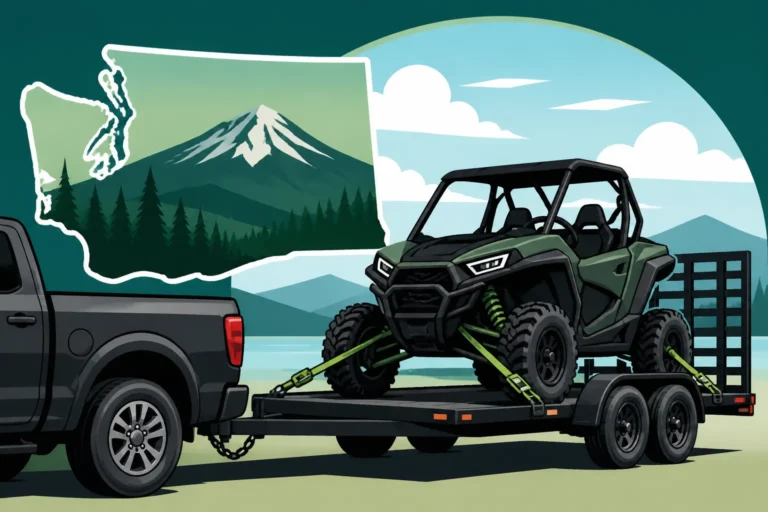
The primary allowable activity for ORV users at a summer Sno-Park is staging. This means you can park your truck and trailer, unload your machine, and prepare for your ride. These spacious parking lots are ideal for safely getting your quad or side-by-side off the trailer, performing any last-minute checks, and gearing up. Once your machine is ready and you're helmeted up, the expectation is that you will proceed directly from the parking area onto an identified and designated ORV trail or forest road. This is much like how you might stage your machine when [Riding From a Campground to a Trailhead]; the campground is for overnighting, the trail for riding.
Many riders find that having the right equipment for quick and efficient staging is key. Robust tie-downs that secure your machine effectively, and perhaps a specialized ramp system, can make unloading and loading a breeze. Some riders even invest in gear from companies like SuperATV, known for their durable accessories, to ensure their machines are always trail-ready right from the moment they unload. The goal is to minimize your time in the parking area and maximize your time on the trails.
Remember, the Sno-Park parking area itself is often shared with other users – hikers, mountain bikers, families getting ready for a picnic. Therefore, it's crucial to be considerate, keep noise to a minimum, and ensure your unloading and staging doesn't impede others or create a hazard. Once you're off the trailer, your machine should be idling or moving slowly and directly to the trail entrance, not zipping around the parking lot.
Staying Within the Lines: Prohibited Activities
While staging is permitted, "playing" in the Sno-Park itself is strictly off-limits. This means no joyriding, no donuts in the gravel parking lot, no creating impromptu mud pits in adjacent fields, and absolutely no riding off-trail. Sno-Parks are generally maintained areas, and allowing ORV play would quickly degrade the facilities and surrounding environment. The specific areas around Sno-Parks, especially in higher elevations, can be ecologically sensitive. Creating new tracks or disturbing vegetation is considered off-trail riding, which carries significant penalties.
Washington state laws and regulations are very clear on [Washington Rules for Riding Off a Designated Trail]. Riding off-trail can lead to substantial fines, impoundment of your vehicle, and even prosecution for environmental damage. This isn't just about protecting the environment; it's about preserving access for all users. When a few individuals disregard rules, it often leads to stricter regulations or outright closures for everyone, impacting the entire ORV community.
Furthermore, consider the social aspect. Sno-Parks in summer are popular destinations for a variety of outdoor enthusiasts seeking peace and quiet. Excessive noise, dust, or reckless behavior from ORVs can quickly create friction and complaints, fueling negative perceptions of the sport. We want to be good stewards of these shared public lands, and that means adhering to the rules, respecting other users, and keeping our machines strictly on designated motorized routes once we leave the main staging area.
Connecting to the Trails: Your Route from Sno-Park to Adventure
The real adventure begins once you leave the Sno-Park parking area. But making sure your route is legal and safe is paramount. This isn't the time for guesswork; it's the time for preparation and verification.
Identifying Designated ORV Routes
Your absolute first step after deciding to use a Sno-Park as a launch point is to consult current maps and local signage. Land management agencies like the DNR and the U.S. Forest Service publish detailed [Washington Trail Maps From DNR] and motorized recreation maps. These are your bibles for navigating the complex web of trails and roads. Many Sno-Parks are located in areas where motorized access can be highly variable – some trails are year-round ORV routes, others are seasonal, and many are designated for non-motorized use only in summer. You might encounter "green dot roads" on DNR lands, indicating specific allowances for motorized vehicles, but this system isn't universal across all jurisdictions.
Always look for updated information from the specific ranger district or DNR unit responsible for the area. Websites, local visitor centers, and even dedicated apps often provide real-time updates on trail closures due to timber sales, fire restrictions, or environmental concerns. Never rely on old maps or assumptions. Imagine driving all the way to a Sno-Park only to find the trail you intended to ride is closed, or worse, prohibited to ORVs entirely. To prevent such disappointments, and to keep yourself out of trouble, verify your route beforehand. Having a clear route planned is key, and some riders even equip their machines with robust GPS mounts from SuperATV to ensure they stay on track and adhere to designated trails.
Essential Machine and Rider Readiness
Before you even load up your machine for a summer Sno-Park trip, ensure it meets all Washington state requirements for ORV use on public lands. This includes having a properly functioning [Washington Spark Arrester Requirement] to prevent wildfires, and a muffler system that adheres to [Washington Muffler Requirements for an ORV] and sound limits. Lights, brakes, and tires should all be in excellent working order. Your machine must also be properly registered with [Washington's Off-Road Tab Explained] and display its [Washington's Metal Tag Explained] and current registration decals.
Rider readiness is equally important. In Washington, helmets are mandatory for all ORV riders on public lands, regardless of age. Make sure everyone in your party has a DOT-approved helmet, as specified by the [Washington Helmet Law for WATV Riders]. Beyond the basics, consider carrying a first-aid kit, enough water and snacks for your trip, a basic tool kit, and navigation aids like a GPS or paper map. Many Sno-Park areas are in remote locations with limited cell service. Carrying a winch, perhaps a reliable model from SuperATV, can be a lifesaver if you encounter unexpected obstacles or get stuck deep in the backcountry.
Finally, practicing good environmental stewardship is crucial. Before you leave home, give your machine a thorough cleaning, especially if you've ridden in other areas recently. This helps prevent the spread of invasive weeds and pathogens from one riding area to another. This practice, often referred to as "PlayCleanGo," is an important part of responsible recreation. [Washing a Machine Before You Leave] isn't just a suggestion; it's a vital part of protecting our natural landscapes for future generations.
Summer Sno-Park Checklist for Washington ORV Riders
To help you prepare for a seamless summer Sno-Park adventure, here’s a quick checklist of essential items and considerations:
| Item | Status/Requirement | Notes |
|---|---|---|
| Sno-Park Permit | NOT Required in Summer | This permit is for winter activities only. |
| Discover Pass | Required (if on DNR land) | Display in tow vehicle for parking at DNR-managed trailheads. Check specific Sno-Park location. |
| Northwest Forest Pass | Required (if on USFS land) | Display in tow vehicle for parking at Forest Service-managed trailheads. Check specific Sno-Park location. |
| ORV Registration Tabs | Required | Your machine must have current Washington ORV registration tabs. |
| Metal Tag | Required | Ensure your machine's metal tag is securely mounted and legible. |
| Current Trail Maps | Highly Recommended | Use up-to-date maps from DNR or Forest Service to verify designated ORV routes. GPS with loaded maps is a plus. |
| Spark Arrester | Required | Must be USFS-approved and in good working order to prevent wildfires. |
| Helmet | Required | DOT-approved helmet for all riders and passengers on public lands. |
| Water/Snacks | Recommended | Stay hydrated and fueled, especially in remote areas. |
| Winch | Optional, but Recommended | Can be invaluable for self-recovery or assisting others on challenging trails. A quality winch from SuperATV is a smart investment. |
| First Aid Kit | Recommended | For minor injuries; pack for remote locations. |
| Tool Kit | Recommended | Basic tools for trailside repairs. |
| Fire Extinguisher | Recommended | Small, easily accessible extinguisher for your machine. |
| Trash Bag | Required | Pack out everything you pack in, and more. Leave No Trace. |
| Properly Washed Machine | Required | Prevents the spread of invasive species. [Washing a Machine Before You Leave] is crucial. |
Disclaimer
This article is for general informational purposes only and does not constitute professional advice. Laws, prices and regulations vary by location and change over time. Consult a qualified professional for guidance on your specific situation.