Washington Lighting Requirements for WATVs
Navigating the world of Washington's street-legal Wheelers (WATVs) can feel like deciphering an ancient scroll, especially when it comes to something as critical as lighting. Many riders find themselves scratching their heads, wondering if their trusty side-by-side or quad is truly ready for county roads, or if a simple bulb outage could land them a costly ticket. This guide is here to shed some much-needed light on Washington's specific lighting requirements for WATVs, ensuring you're safe, seen, and compliant on public thoroughfares.
Why Specific Lighting Matters for Washington Roads
Riding your WATV on paved or maintained gravel roads in Washington isn't just about the thrill; it's about blending safely with other traffic. This means your machine needs to speak the same language as cars, trucks, and motorcycles – and a huge part of that language is your lighting system. It's not just a suggestion; it's a fundamental aspect of road safety and legal compliance.
The Safety Imperative: Seeing and Being Seen
Imagine driving your car down a winding country road at dusk. You rely heavily on other vehicles' lights to know where they are, what they're doing, and how fast they're approaching. The same goes for your WATV. When you take your machine onto a public road, you instantly become part of that shared environment. Your headlights illuminate the path ahead, helping you spot deer, potholes, or an unexpected turn. But just as crucially, your tail lights, brake lights, and turn signals are your primary way of communicating your presence and intentions to everyone else around you.
Without proper lighting, you're a ghost on the road, a hazard waiting to happen. Other drivers might not see you until it's too late, especially with the smaller profile of many WATVs compared to traditional vehicles. This isn't just about protecting yourself; it's about protecting every other driver, cyclist, and pedestrian sharing that road. Investing in good, compliant lighting isn't an expense; it's an essential safety measure for anyone considering street-legal use.
Legal Compliance and Avoiding Fines
Beyond the critical safety aspect, Washington law is very clear about what’s expected of any vehicle operating on public roads, and WATVs are no exception. The moment your tires hit pavement or an open county road, you're subject to the same traffic laws and equipment requirements as any other registered motor vehicle. Ignoring these rules can lead to more than just a stern talking-to from a state trooper or county sheriff.
Non-compliant lighting is a common reason for roadside stops and can result in significant fines. These aren't just minor infractions; they're tickets that add up, making your enjoyable ride suddenly quite expensive. Imagine being halfway through a fantastic day of exploring [Washington Roads That Allow WATVs on Roads] only to get pulled over because your turn signals aren't visible enough, or your brake light is out. Such a stop can ruin your day, cost you money, and in some cases, even result in your machine being deemed unfit for continued road use until the issue is fixed. Understanding and adhering to these requirements from the outset saves you headaches, keeps you legal, and ensures that the privilege of riding your WATV on roads continues for all of us.
Mandatory Lighting for On-Road WATV Use in Washington
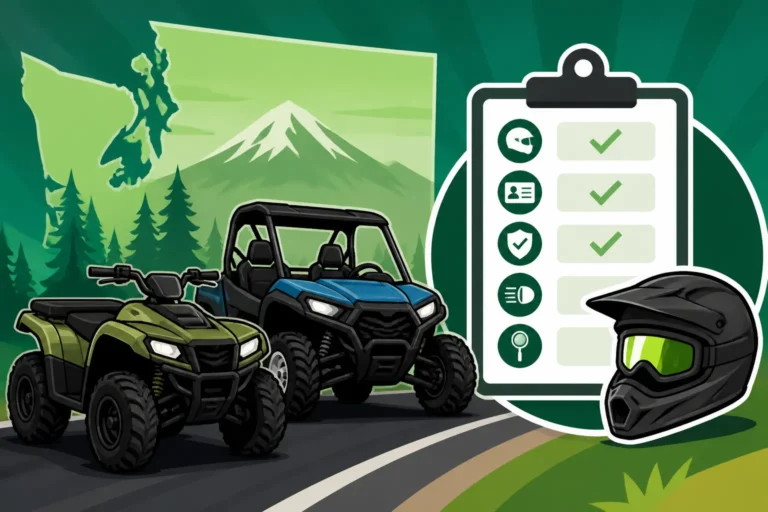
When you decide to equip your WATV for road use in Washington, there's a specific checklist of lighting components that are absolutely non-negotiable. These aren't suggestions; they are legal necessities designed to ensure your machine is safe and visible, just like any other vehicle sharing the road. Skimping on these can turn a fun ride into a legal headache.
Headlights and Tail Lights: Seeing and Being Seen
First and foremost, your WATV needs working headlights and tail lights. This might sound obvious, but there are specific requirements to meet. Your headlights must be capable of illuminating the road for a sufficient distance, allowing you to react to hazards. They need to have both a high beam and a low beam function, just like a car. The low beam is crucial for not blinding oncoming traffic, while the high beam provides necessary illumination on unlit rural roads. The color must be white or amber, projected straight ahead. It's not enough for them to just "turn on"; they must be properly aimed and bright enough to meet state standards for visibility.
Similarly, tail lights are paramount for ensuring you are seen from behind, especially at night or in low-light conditions. These must emit a red light and be visible from a certain distance. Most WATVs come equipped with some form of tail light, but for street legality, they often need to be brighter or positioned more prominently than what might suffice for purely off-road excursions. Many riders find that upgrading to brighter LED tail lights provides an extra layer of safety and peace of mind. Remember, the point of these lights is not just for you to see, but for everyone behind you to clearly see you.
Brake Lights and Turn Signals: Communicating Your Intent
Beyond simply being seen, you need to communicate your intentions to other drivers. This is where your brake lights and turn signals come into play. A functional brake light system is absolutely critical. When you hit the brakes, a bright red light (or lights) must illuminate at the rear of your machine, immediately signaling to following traffic that you are slowing or stopping. This instantaneous communication is a huge factor in preventing rear-end collisions, particularly with vehicles that may have longer stopping distances.
Turn signals are equally vital for safe road navigation. They must be amber in color, both front and rear, and clearly visible from a set distance. When you plan to change lanes, make a turn, or even pull over, your turn signals let others know exactly what you're about to do, allowing them time to react accordingly. While many aftermarket kits, like those from SuperATV, provide integrated solutions for adding turn signals and brake lights to your WATV, it's essential to ensure they meet all Washington State visibility and color requirements. Poorly visible or non-functional signals are effectively no signals at all, leaving other drivers guessing and increasing accident risk. [Washington Turn Signal Requirements] details these needs further.
Beyond Illumination: Other Visibility Tools
While not strictly "lighting," other items are bundled into the overall visibility requirements for a street-legal WATV in Washington. Mirrors, for instance, are crucial. You'll need at least one rear-view mirror, and often two (one on each side), to give you an unobstructed view of traffic approaching from behind. These are just as important as your lights for situational awareness and safe lane changes. Without proper mirrors, you're driving blind to what's coming up behind you.
Another crucial, often overlooked, piece of equipment is a horn. While it doesn't illuminate, a working horn is a critical audible warning device, allowing you to alert other drivers or pedestrians to your presence in situations where visual cues might be missed. Whether it's to signal your approach around a blind corner or to prevent an imminent collision, a reliable horn is a requirement that should never be ignored. [Does Washington Require a Horn on an ORV?] Yes, absolutely. These components, combined with your lighting, create a comprehensive system for safety and communication on the road.
Beyond the Basics: Enhancing Your WATV's Visibility
Meeting the minimum legal lighting requirements is a great start, but savvy riders know that when it comes to safety on the road, "minimum" doesn't always mean "optimal." There are many ways to go above and beyond the basic mandate to make your WATV even more visible, both to you and to other road users, especially given the diverse riding conditions Washington can throw at you.
Auxiliary Lighting and Light Bars: When and Where It's Okay
Many WATV owners love the powerful light bars and auxiliary spotlights that are readily available for off-road use. These can turn night into day on a dark trail. However, when it comes to road use, there's a very important distinction to make: most high-intensity light bars are not street legal for use while driving on public roads. Their intense brightness can blind oncoming drivers, creating a severe hazard. While you might have an impressive 30-inch LED light bar from SuperATV mounted on your roof, it must be covered or turned off when you're on a public road or highway.
That said, there are legal ways to enhance your auxiliary lighting. Smaller, less intense auxiliary lights designed specifically for road legality, often in the form of fog lights or ditch lights, can be added to improve your visibility to others and provide supplemental illumination in adverse weather. The key is to ensure they meet the specific candlepower and aiming regulations for on-road use. Always check the local regulations and product specifications carefully before installing any auxiliary lighting you intend to use on public roads.
Reflectors and Reflective Gear: Passive Visibility
Sometimes, the simplest solutions are the most effective. Even with a fully compliant lighting system, adding passive reflectors can significantly boost your visibility. Reflective tape, strategically placed on the sides, front, and rear of your WATV, catches and bounces back light from other vehicles, making you more noticeable even if your primary lights are temporarily obscured or not yet on. This is especially useful on the sides of your machine, which often have minimal lighting.
Beyond the machine itself, consider your riding gear. Wearing a helmet with reflective strips, a jacket with high-visibility colors and reflective panels, or even a simple reflective vest can make a dramatic difference. In Washington's often overcast or rainy conditions, being seen is paramount. These passive measures work 24/7, without drawing any power, offering an additional layer of protection that could be crucial in preventing an accident.
Maintenance and Inspection of Your Lighting System
The best lighting system in the world is useless if it's not working correctly. Regular maintenance and inspection of your WATV's lighting are not just good practice; they're essential for safety and compliance. Before every road ride, do a quick walk-around. Check your headlights (both high and low beam), tail lights, brake lights, and turn signals. Have a friend stand behind you while you apply the brakes to confirm the brake lights are firing.
Check for cracked lenses, corroded connections, or loose wiring. Vibrations from off-road riding can be brutal on electrical components, so even if everything worked last week, a quick check is always warranted. During your annual [Washington WATV Safety Inspection Cost], the inspector will thoroughly check all these components, but waiting for that annual check isn't enough. Proactive maintenance ensures you're never caught off guard and always riding legally and safely.
Common Pitfalls and How to Avoid Them
Even with the best intentions, riders can sometimes fall into common traps or misunderstandings when it comes to equipping their WATV for road use in Washington. Being aware of these pitfalls can save you time, money, and frustration, ensuring your street-legal journey is smooth sailing.
"Trail Lights" vs. "Road Lights": A Critical Distinction
One of the biggest mistakes riders make is assuming that the powerful lighting they use for aggressive night riding on trails is also suitable for public roads. As mentioned earlier, "trail lights"—high-powered LED light bars, rock lights, or auxiliary floodlights designed to illuminate vast areas off-road—are almost universally illegal for use on public highways when driving. These lights are often designed to scatter light broadly or project it intensely, which, while fantastic for spotting obstacles on a dark trail, will blind oncoming drivers and create a dangerous situation on the road.
If you have such lights installed, you must ensure they are covered or switched off when you're on any public road. Many aftermarket kits and accessories, including some from SuperATV, are explicitly designed for off-road use, and their road-legal counterparts will have different specifications. Always read product descriptions carefully and understand the distinction. Using trail lights on the road is a surefire way to attract attention from law enforcement and receive a citation for illegal equipment.
DIY Wiring and Electrical Issues
Modern WATVs have increasingly complex electrical systems, and while a do-it-yourself approach to modifications can be tempting, improper wiring of lighting components is a significant pitfall. Poor connections can lead to intermittent failures, blown fuses, or even more serious electrical issues that could damage your machine or, in extreme cases, lead to a fire. Road-legal lighting often requires integrating with existing wiring harnesses for turn signals, brake lights, and head/tail lights, which can be tricky without proper knowledge and tools.
If you're not confident in your electrical skills, it's always best to consult a professional or use reputable, plug-and-play wiring harnesses designed specifically for your machine and the intended lighting upgrade. Companies that specialize in WATV accessories often provide detailed instructions, but for peace of mind and reliability, professional installation might be a worthwhile investment. Ensuring every wire is properly secured, insulated, and fused prevents headaches down the road and keeps your lighting system functioning reliably.
Understanding State vs. County Rules
While Washington State law provides the overarching framework for WATV road legality, including lighting, it's important to remember that counties and some cities have the authority to open or close their specific roads to WATV traffic. While these local ordinances primarily govern where you can ride, they rarely override the state-mandated equipment requirements. This means that if a county or city has opened its roads to WATVs, you still need to meet the full state lighting requirements, regardless of any specific local nuances.
It’s crucial to distinguish between permissions to ride and equipment requirements. A county might have very specific rules about which roads are open, what hours you can ride, or speed limits, as detailed in articles like [Washington Counties That Allow WATVs on Roads]. However, the basics of needing functional headlights, tail lights, brake lights, turn signals, mirrors, and a horn remain consistent statewide for any WATV venturing onto public roadways. Always check both state laws and local ordinances to ensure you're fully compliant on all fronts.
| Lighting Component | Requirement for On-Road Use (Washington) | Common Pitfalls to Avoid |
|---|---|---|
| Headlights | White/Amber, high/low beam, proper aim. | Blinding oncoming traffic with high beams; insufficient brightness. |
| Tail Lights | Red, visible from specified distance. | Too dim to be seen clearly; faulty wiring. |
| Brake Lights | Red, activates with brake pedal/lever. | Non-functional; single light only where two are required. |
| Turn Signals | Amber, front & rear, clearly visible. | No signals; incorrect color; poor visibility. |
| Mirrors | At least one rear-view (often two). | Missing; inadequate field of view; easily vibrated loose. |
| Horn | Audible warning device. | Non-functional; too quiet. |
| Auxiliary Lights | Covered or off on public roads. | Using high-intensity off-road light bars on pavement. |
| Reflectors | Recommended additional side/rear. | Forgetting passive visibility aids. |
Disclaimer
This article is for general informational purposes only and does not constitute professional advice. Laws, prices and regulations vary by location and change over time. Consult a qualified professional for guidance on your specific situation.