Washington Turn Signal Requirements
The Washington landscape offers an incredible backdrop for ATV and UTV adventures, from winding forest trails to vast sand dunes. But if you’ve ever considered taking your machine beyond the dirt—even just to cross a paved road or ride a short distance to a trailhead—you've likely found yourself scratching your head about what's actually required to do so legally. One of the biggest head-scratchers for many riders is undoubtedly the topic of turn signals. This guide will clarify exactly when and how Washington state requires your wheeled all-terrain vehicle (WATV) to be equipped with turn signals, ensuring you stay safe and compliant on your rides.
When Washington WATVs Need Turn Signals
Navigating the rules for WATVs in Washington can sometimes feel like trying to find your way through a dense thicket of regulations. The key to understanding turn signal requirements often comes down to where you plan to ride. The state differentiates significantly between purely off-road use and any instance where your machine touches public pavement.
Riding Off-Road Only
For the vast majority of your WATV adventures in Washington that take place strictly on designated off-road trails, forest service roads not open to general traffic, or private property, dedicated turn signals are generally not required by state law. Think about it: when you're deep in [Capitol State Forest Near Olympia, Washington] or tearing through the [Juniper Dunes in Eastern Washington], the focus is on navigating challenging terrain, not signaling a lane change to a semi-truck.
Off-road riding is a different beast entirely. Here, communication within your riding group often relies on established hand signals—like pointing in the direction of a turn, or holding up a fist to indicate a stop. Many riders never even think about installing turn signals because their machine’s primary purpose is pure dirt. Adding complex electrical systems might even seem counterproductive in environments prone to mud, water, and debris, which can wreak havoc on wiring and lights. So, if your WATV never leaves the dirt and you're not planning to operate it on any approved public roads, you can breathe a little easier regarding this particular piece of equipment.
The Moment You Hit Pavement: Roads and Crossings
This is where the game changes entirely, and it’s arguably the most critical distinction for any WATV owner in Washington. The moment your wheels touch any public road in the state—even for a brief crossing of a state highway or a short jaunt on an approved county road to link up with another trail—your WATV transitions, legally speaking, into a "street-legal" machine, at least for that specific segment of travel. And with that transition come specific equipment requirements, including functional turn signals.
Washington law is very clear: if a WATV is operated on a public roadway open to them, it must meet certain equipment standards designed to ensure safety and communicate intent to other drivers. This includes the need for proper [Washington Lighting Requirements for WATVs], a horn, mirrors, and, yes, turn signals. Whether you're riding a designated [Washington County That Allows WATVs on Roads] or simply crossing a two-lane highway where it's permitted, your machine needs to be able to signal its movements clearly. Trying to use hand signals while navigating road traffic, especially on a machine that might be wider or less agile than a standard car, simply isn't a safe or legally compliant substitute for proper electronic signals. This is precisely why turn signals become a mandatory safety feature for any on-road use. If you're pondering [Riding Pavement With Only the Off-Road Tab], know that this is one of the key distinctions that an off-road only setup won't cover.
Washington's Specific Turn Signal Requirements for Road Use
So, you've decided to outfit your WATV for road use in Washington. That's a fantastic way to extend your riding opportunities and connect trails! But simply slapping on some lights isn't enough; they need to meet specific criteria outlined in the state's vehicle codes.
What the Law Says About WATV Turn Signals
While it’s always best to consult the current Revised Code of Washington (RCW) for the exact legal wording, the spirit of the law for WATV turn signals on public roads mirrors that for any other road-going vehicle. Essentially, your turn signals must be:
- In Good Working Order: This isn't just a suggestion; it's a requirement. All lights must be operational, free from damage, and securely mounted. A broken bulb or a signal that only works intermittently isn't going to cut it.
- Visible: The signals need to be clearly seen from a reasonable distance by other drivers, both day and night. This means they can't be obstructed by cargo, mud, or parts of your machine.
- Clearly Indicate Intent: The primary purpose of a turn signal is to communicate your intention to turn or change lanes. They must flash distinctly and effectively.
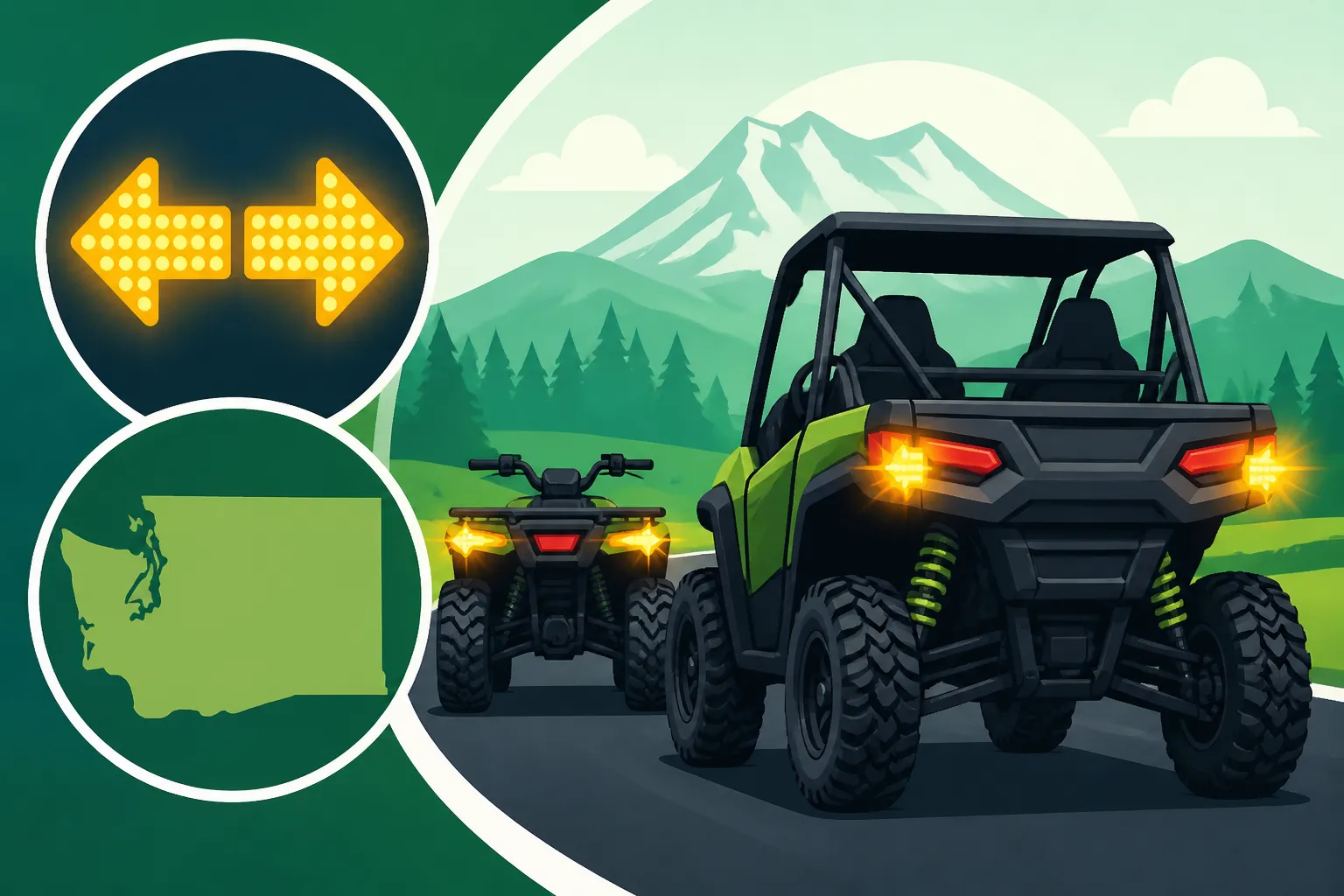
- Front and Rear: You need turn signals on both the front and rear of your WATV. This ensures visibility from all angles to traffic approaching from the front, rear, and sides.
- Amber in Color: The standard color for turn signals is amber (or yellow). This distinct color helps differentiate them from brake lights (red) or headlights (white/amber).
- Flashing Mechanism: They must flash at a consistent and appropriate rate. A solid light isn't a turn signal.
For utility vehicles (UTVs or side-by-sides), which are often wider and have more enclosure, factory-installed turn signals might be an option on some newer models. However, many ATVs and older UTVs don't come equipped with this from the factory, which brings us to aftermarket solutions. If you're planning to ride on roads, you’ll also need to have all the other essential equipment in place, as detailed in [Washington WATV Road Requirements].
Aftermarket Solutions and Installation Considerations
If your trusty quad or side-by-side didn't roll off the assembly line with road-legal turn signals, don't despair! The aftermarket industry has stepped up big time to offer solutions that make compliance achievable. You’ll find a wide variety of kits available, from universal setups that require a bit more wiring expertise to plug-and-play options specifically designed for popular WATV models.
When searching for a good aftermarket kit, you’ll typically be looking for components like:
- LED Turn Signal Lights: LEDs are popular due to their brightness, low power draw, and durability, often surviving vibrations and impacts better than traditional incandescent bulbs.
- Wiring Harness: A good kit will include a pre-made or easily integrated wiring harness to connect everything correctly.
- Flasher Relay: This is the component that makes your lights blink. Ensure it's compatible with LED lights if that's what you choose, as some older flashers require a certain resistance load to work correctly.
- Control Switch: A dash-mounted or handlebar-mounted switch to activate your signals.
- Mounting Hardware: Brackets and fasteners to secure the lights.
Brands like SuperATV offer comprehensive turn signal kits specifically designed for a wide range of UTVs, often including everything you need for a road-legal setup, from the lights themselves to the wiring and switches. They understand the unique demands of off-road vehicles that sometimes venture onto pavement, designing products that can withstand varied conditions. When you're looking for a reliable and robust turn signal solution, especially for a side-by-side that sees a lot of varied terrain, SuperATV has a reputation for offering durable options that can withstand the rigors of off-road and on-road use.
Installation can be a DIY project for those comfortable with basic electrical work, or you might prefer a professional shop to handle it, especially if you want everything integrated cleanly and reliably. Whichever route you choose, ensure the components are weatherproof, securely mounted, and that all wiring is protected from abrasion, heat, and moisture, which are common challenges in WATV environments. Remember, a robust installation is key to avoiding issues down the road – literally!
The Practicalities of Riding with Turn Signals
Once you've got your WATV equipped with proper turn signals, it's not just about having them; it's about using them correctly and ensuring they stay in top shape. Compliance is an ongoing effort, not a one-time installation.
Ensuring Compliance: Checks and Maintenance
Before every ride that might involve public roads, make it a habit to perform a quick visual and functional check of your turn signals. This quick pre-ride inspection can save you from a potential citation and, more importantly, a dangerous situation.
Common issues that can arise include:
- Blown Bulbs/LEDs: Even robust LEDs can fail. A quick glance to ensure all four signals illuminate is essential.
- Loose Wires or Connections: Vibrations from off-road riding can jiggle wires loose, leading to intermittent failures.
- Faulty Flasher Relay: If your signals aren't flashing, or are flashing too quickly or slowly, the relay might be the culprit.
- Mud or Debris Obstruction: After a muddy trail ride, signals can become caked with dirt, severely reducing their visibility. A quick wipe-down is often all that's needed.
The implications of non-compliance can range from a warning to a citation for [Washington Fines for Illegal WATV Road Use]. Beyond the legal aspect, riding on roads without functional turn signals is a significant safety hazard. You're depriving other drivers of critical information about your intentions, increasing the risk of an accident. Regular maintenance, such as protecting wiring with loom, using dielectric grease on connections, and simply keeping your lights clean, will go a long way in ensuring your signals are always ready for the road.
Integrating Turn Signals with Other Road-Legal Gear
Turn signals are just one piece of the puzzle when it comes to making your WATV road-legal in Washington. They work in conjunction with other mandatory equipment to ensure you're as visible and predictable as possible to other road users. Think of it as a complete safety system.
To operate your WATV on approved public roads, you’ll also need:
- Mirrors: Typically, at least one rear-view mirror is required, often mounted on the handlebar or side-by-side cage. Make sure to check [Washington Mirror Requirements for Road Use].
- Horn: A functional horn that can be heard at a reasonable distance is essential for alerting others. Does [Does Washington Require a Horn on an ORV?] Yes, for road use!
- Headlights and Taillights: These must be operational, providing adequate illumination forward and visibility from the rear, especially when riding during low light conditions or at night.
- Brake Lights: Clear, bright brake lights that activate when you apply the brakes.
- Windshield or Eye Protection: Depending on the machine, a windshield might be required, or at minimum, eye protection for the rider. See [Washington Windshield or Goggle Rule] for details.
- Spark Arrester and Muffler: Your exhaust system must meet noise and emissions standards, including a functional spark arrester.
All these components together contribute to a safe and legally compliant road-going WATV. Just like you'd ensure your headlight beam is properly aimed, give your turn signals a quick check before hitting any pavement. When you submit your [Washington Road Use Declaration Form] and get your WATV inspected, the inspector will be looking for all these items to be present and functional. Remember that the cost for this check is capped, so it's worth it to ensure everything is ready before your [Washington WATV Safety Inspection Cost].
Common Questions and Misconceptions
Despite the regulations, there's still a lot of confusion among riders about turn signals. Let's tackle a couple of the most frequently asked questions.
Do I Need Turn Signals if I Only Cross a Road?
This is a very common point of confusion, and the answer is a resounding yes, if that road is open to WATVs. The Washington law does not make an exception for brief road crossings. If you are operating your WATV on a public road, even just to get from one section of a trail to another, or to access fuel or food, you are required to have the necessary road-legal equipment. This includes functional turn signals.
Think of it this way: when you're crossing a road, you're still interacting with other vehicle traffic. You need to signal your intentions (turning left, turning right, going straight across) just as clearly as a car or truck would. The duration of your presence on the road doesn't negate the safety requirement. This is especially important when considering [Washington Rules for Getting Across a Road], which often occur at intersections or where visibility can be limited. Always assume that if you're on public pavement, the road-use rules apply.
What About Hand Signals?
Hand signals are an invaluable part of off-road riding culture, especially when communicating with others in your group about hazards, turns, or stops. They foster safety and coordination within a convoy on the trail. However, when it comes to operating a WATV on an approved public road in Washington, hand signals are generally not an acceptable substitute for functional electrical turn signals.
Washington state law, like most jurisdictions, mandates electrical turn signals for vehicles operating on public roads. While hand signals are a good secondary form of communication or an emergency measure if your electrical signals temporarily fail (while you are safely trying to exit the road), they do not fulfill the legal requirement for primary signaling on a public roadway. Other drivers, especially those unfamiliar with WATV group riding etiquette, may not understand hand signals, leading to confusion and potential accidents. For safety and legal compliance, always ensure your WATV's electrical turn signals are operational and used whenever you're on approved pavement.
Here's a quick overview to help clarify the requirements:
| Riding Scenario | Turn Signals Required? | Notes |
|---|---|---|
| Designated Off-Road Trails | No | Hand signals common in groups; no state law requirement for electrical signals. |
| Crossing an Approved Road | Yes | Mandatory for communicating intent to other road users; part of overall road-legal equipment. |
| Riding an Approved County Road | Yes | Essential for visibility and safe communication with other vehicles; same requirements as crossing. |
| Riding a City Street (if open) | Yes | Crucial for safety in urban environments with higher traffic volumes. |
| Private Land (no road access) | No (unless specified) | State law does not require them; private property owners may set their own rules for access or organized events. |
| Off-Road Trail to Road Access | Yes | If you're riding an approved route to get to a trailhead via public road, signals are needed while on the pavement. |
Disclaimer
This article is for general informational purposes only and does not constitute professional advice. Laws, prices and regulations vary by location and change over time. Consult a qualified professional for guidance on your specific situation.