Washington Passenger Rules on a WATV
It’s a common scenario: you’ve got your awesome Washington All-Terrain Vehicle (WATV) ready for a weekend adventure, and everyone in the family wants to come along for the ride. But before you load up, there's a crucial question many riders grapple with: who can actually ride with you, and where can they sit? The rules around carrying passengers on WATVs in Washington State can feel a bit confusing, especially when you consider the differences between traditional ATVs and their multi-seat utility vehicle (UTV) cousins. This guide is here to cut through the confusion and explain exactly what Washington law says about carrying passengers, helping you keep everyone safe and legal on your next outing.
The Core Differences: ATVs Versus UTVs for Passengers
One of the biggest sources of confusion regarding WATV passenger rules comes from the fundamental design differences between a traditional All-Terrain Vehicle (ATV) and a Utility Terrain Vehicle (UTV), often called a side-by-side. Washington's regulations acknowledge these distinctions, and understanding them is the first step to staying compliant.
Single-Rider ATVs and the "No Passenger" Rule
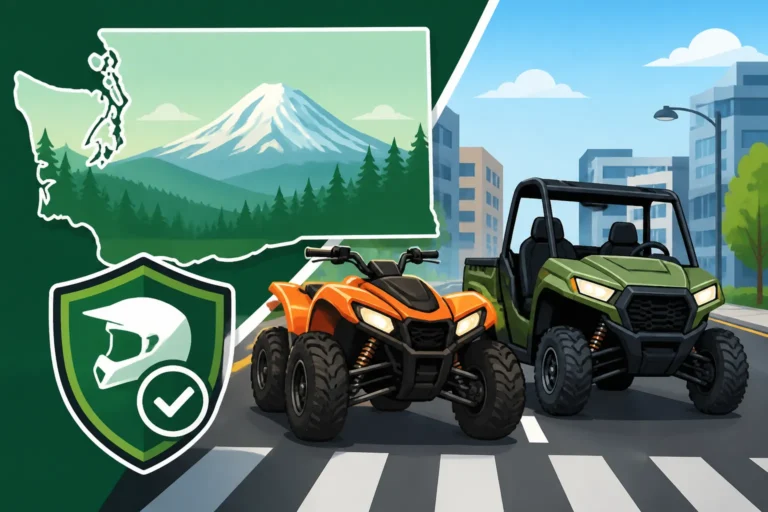
For many riders, the classic ATV is the image that comes to mind: a powerful machine designed for a single operator. If you ride a quad that's built with one seat, meant for one person, the law in Washington is very clear: you cannot carry a passenger. Period. This isn't just about rules and regulations; it's a critical safety measure. ATVs are designed with a specific weight distribution and center of gravity that assumes only one rider is on board. Adding a passenger, even a small child, drastically alters the machine's handling characteristics. It makes it harder to steer, harder to balance, and significantly increases the risk of tipping over, especially on uneven terrain, during turns, or when climbing hills.
Imagine trying to navigate a tight, rutted trail in [Capitol State Forest Near Olympia, Washington] with an extra person perched precariously behind you. Their weight shifts, you lose control, and suddenly a fun ride turns into a dangerous situation. We all want to share the thrill of off-road riding, but doing so on a single-rider ATV puts everyone at unnecessary risk. There's no special exception for "just a short ride" or "they're really light." The rule is firm for a reason: safety above all else.
UTVs and Their Designated Seating
In stark contrast to ATVs, Utility Terrain Vehicles (UTVs) are purpose-built to carry multiple occupants. These machines, often called side-by-sides because passengers sit next to the driver, come equipped from the factory with designated seating positions, seatbelts, and often roll-over protection structures. This design makes them inherently safer for carrying passengers, provided you follow the rules for their use. The key here is "designated seating." This means a seat that was part of the original design and construction of the vehicle, complete with proper restraints.
If your UTV has two seats, it’s designed for two people. If it has four seats, it’s for four people. Simple as that. Many UTVs, like those from popular brands, offer configurations for two, four, or even six passengers, all with factory-installed seats and harnesses. This is where the family-friendly aspect of UTVs truly shines, allowing you to share the adventure responsibly. However, it's not a free-for-all; you can only carry as many passengers as there are designated seating positions. [Washington Rules for a Passenger Under 16] are also important to consider when planning your UTV outings.
Age and Supervision for Passengers
Washington State has specific rules concerning the age of operators and passengers, especially minors, on WATVs. While the general rule for operating an ORV on public land is that riders under 16 need direct adult supervision, similar considerations apply to passengers. For UTVs, children old enough to properly use a seatbelt and keep their feet on the floorboards are generally permitted as passengers in designated seats. However, younger children, especially infants or toddlers, might not be safe even in a UTV if they cannot be properly secured by the vehicle's restraint system or an appropriate child safety seat.
Always verify that any child passenger can safely and securely use the UTV's seatbelts or harness system. For particularly adventurous families, looking into aftermarket solutions from companies like SuperATV that offer more robust harnesses or even child-specific seating inserts can be a great way to enhance safety for younger passengers, ensuring they are snug and secure for the ride. The goal is not just compliance with the law, but absolute confidence in your passenger's safety. When operating any WATV, remember that [Washington Rules for Riders Under 16] require a licensed adult to supervise riders younger than 16 on public lands and trails.
Safety Equipment and Seating Requirements
Beyond simply knowing if you can carry a passenger, it’s equally important to understand how to do so safely and legally. Washington takes passenger safety seriously, and there are specific requirements for equipment and seating that apply to all WATVs when carrying anyone other than the operator.
Mandatory Helmets for All Riders, Passengers Included
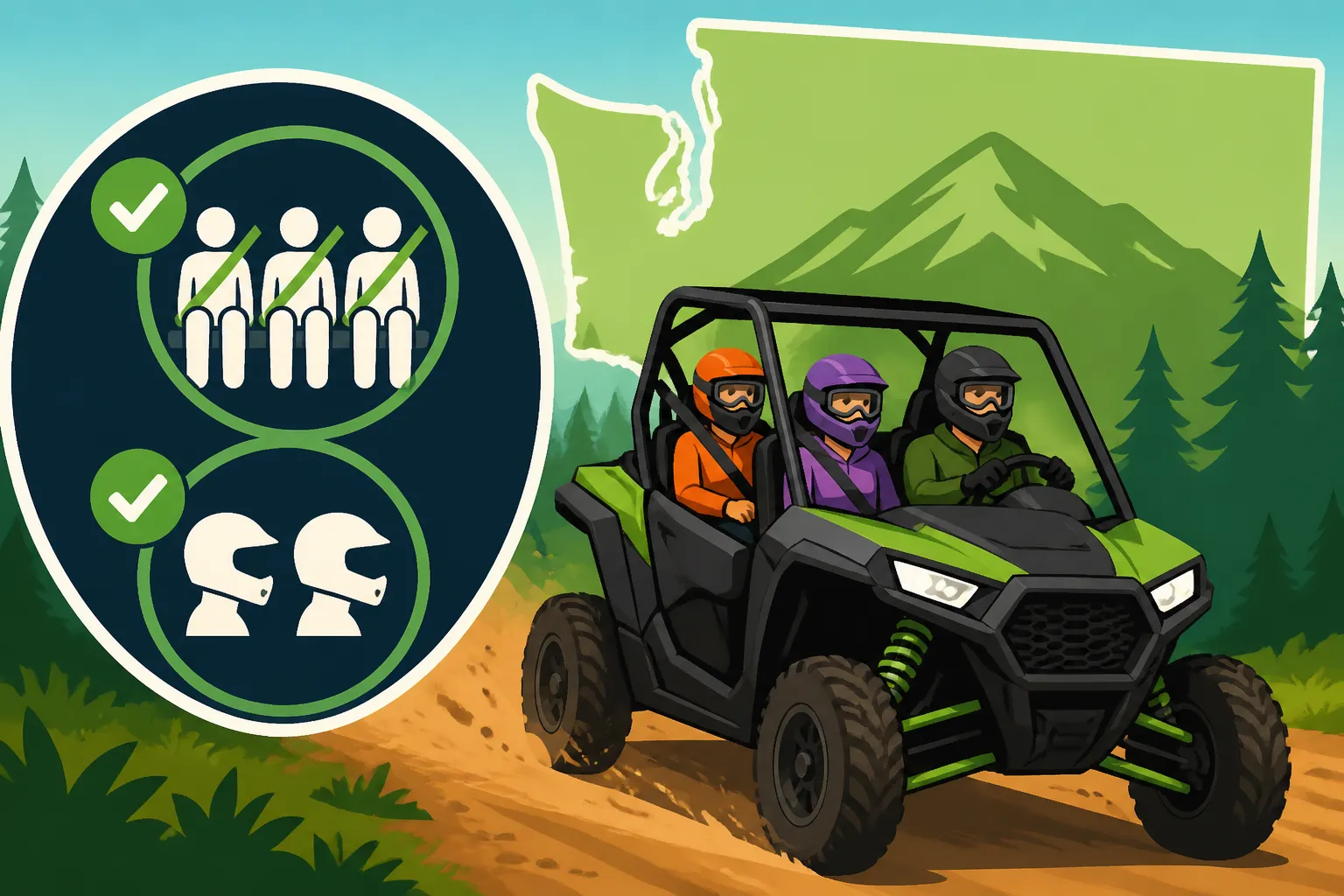
This is one rule that tolerates absolutely no exceptions: anyone operating or riding as a passenger on a WATV in Washington State must wear an approved safety helmet. This isn't just a suggestion; it's the law. This applies whether you're on a single-rider ATV (where carrying a passenger is already illegal, but if it happens, a helmet is still required) or a multi-passenger UTV. It applies to adults and children alike. There’s no age limit where helmets become optional; if you're on the machine, you need a helmet. This is explicitly covered in the [Washington Helmet Law for WATV Riders].
Choosing the right helmet is crucial. It should be a U.S. DOT-compliant helmet, fit properly, and be securely fastened. Many serious injuries in WATV accidents involve head trauma, and a helmet is your single best defense. Don't compromise on this. Ensure everyone, from the smallest passenger to the most experienced driver, has a helmet that fits well and is in good condition. If you’re heading out to [Walker Valley ORV in Washington's Skagit County] or any other riding area, a helmet for every head is non-negotiable.
Proper Seating and Seatbelt Use in UTVs
For UTVs, which are designed for multiple occupants, proper seating and seatbelt use are paramount. Each passenger must occupy a designated seating position and utilize the corresponding seatbelt or harness system. These aren't just for show; they're vital safety features designed to keep occupants contained within the vehicle in the event of a roll-over, sudden stop, or collision. You should never have more passengers than there are factory-installed seating positions with working seatbelts.
It's tempting sometimes to cram an extra person in, especially with kids, but resisting this urge is critical. Overloading a UTV can exceed its weight limits, affecting braking, handling, and suspension performance. Moreover, having an unsecured passenger means they could be ejected from the vehicle, suffering severe injuries. Regularly inspect your UTV's seatbelts and harnesses to ensure they are in good working order, free from cuts, fraying, or damage. If you're looking to upgrade for enhanced safety or comfort, aftermarket harness systems from reputable brands can provide superior occupant retention compared to some factory lap belts, offering peace of mind on rough trails.
The Dangers of Improvised Seating or Overloading
The temptation to make your WATV accommodate more people than it's designed for can be strong, but the dangers associated with improvised seating or overloading are severe. Never attempt to add makeshift seats, benches, or have passengers sit on fenders, racks, or any part of the vehicle not explicitly designed and designated for seating with a restraint system. This is incredibly dangerous and highly illegal in Washington State.
An improvised seat offers no protection from ejection during a sudden movement or impact. A passenger sitting on a fender could easily lose their grip and fall off, potentially under the wheels of your own machine or another. Overloading, as mentioned, compromises the vehicle's stability and performance, making it difficult to control and increasing the risk of mechanical failure. When you're out exploring trails in [Washington's Ahtanum State Forest] or other challenging terrain, you need your machine to perform predictably, and an overloaded vehicle simply won't. Always adhere to the manufacturer's stated capacity and seating configurations to ensure everyone's safety and to avoid legal penalties.
On-Road Versus Off-Road Passenger Rules
The landscape of WATV use in Washington is a mix of off-road trails and, in certain areas, approved public roads. It's important to understand that passenger rules can have subtle differences depending on whether you're strictly off-pavement or venturing onto a county road.
Off-Road Riding: The Basic Passenger Guidelines
When you're strictly sticking to designated off-road trails and areas – places like [Reiter Foothills State Forest] or the sand dunes – the fundamental WATV passenger rules apply. This means: no passengers on single-rider ATVs, and UTVs can only carry as many passengers as there are designated seats with functioning seatbelts. And, of course, everyone must wear a DOT-compliant helmet. These rules are consistent across DNR (Department of Natural Resources) lands, Forest Service roads designated for ORV use, and private land where you have permission to ride.
It's easy to get complacent on trails that feel remote and unsupervised, but the laws are still in effect, and more importantly, the physics of safety don't change. A rollover on a dirt trail is just as dangerous as one on a gravel road, if not more so due to uneven terrain. Always ensure your passengers, especially children, understand the importance of keeping their arms and legs inside the vehicle, holding onto designated grab handles, and remaining seated and belted at all times.
On-Road Riding: Stricter Rules for Pavement
If you've gone through the process of getting your WATV street legal with the [Washington's On-Road Tab Explained], you've unlocked the ability to ride on certain county roads and city streets where local ordinances permit. This also brings some additional legal requirements into play, and while the core passenger rules remain the same (no passengers on ATVs, UTVs limited to designated seats with belts), the scrutiny can be higher. When riding on public roads, the operator must possess a valid driver's license.
Furthermore, a street-legal WATV typically requires additional equipment such as turn signals, mirrors, and a horn, as outlined in [Washington WATV Road Requirements]. While these don't directly impact passenger capacity, they are part of the overall safety framework for on-road use, indirectly contributing to the safety of your passengers by making the vehicle more visible and controllable in traffic. When you're driving on an open road, even a quiet county road, you're interacting with other traffic, and the stakes for passenger safety are arguably even higher. It’s imperative to follow all road rules and ensure your passengers are as secure as possible. Many local jurisdictions, like [Lewis County Ordinance 1286], have specific rules that riders must familiarize themselves with before venturing onto public roads.
When a Minor Can Be a Passenger on the Road
The rules for minors as passengers on a WATV operating on a public road largely mirror those for off-road use, with the added context of road safety. Children must be able to sit in a designated seat, properly secured by a seatbelt or harness, and wear a DOT-compliant helmet. There isn't a separate, higher minimum age for passengers on the road compared to trails, but the general requirement for supervision of riders under 16 still applies to the operator, meaning a licensed adult must be at the controls.
The critical factor is that the child must be able to maintain proper posture and be securely restrained by the vehicle's safety system throughout the ride. If a child is too small for the seatbelt to fit correctly, even with a booster seat (if compatible with the vehicle's design and legal), they should not be a passenger. The vehicle’s manufacturer specifications regarding passenger weight and height should always be consulted and adhered to. Riding on a public road, even one with a low-speed limit, demands a higher level of attention to detail for everyone's safety.
Common Misconceptions and Legal Consequences
It’s easy to make assumptions when it comes to WATV regulations, especially if you’re new to the sport or coming from a state with different rules. However, misunderstanding Washington’s passenger laws can lead to serious consequences, both legal and physical.
The "Temporary Ride" Myth
One of the most common misconceptions is that rules can be bent for "just a temporary ride." "We're just going to run down to the campground entrance," or "It's only a quarter-mile to the next staging area." The truth is, there's no legal exception for a "short distance" or "temporary" ride. If you're operating a WATV on public land or a public road (where allowed), Washington's passenger laws apply fully, regardless of how far you intend to travel.
This myth is particularly dangerous because those short, seemingly harmless trips are often when complacency sets in, and accidents can happen. A quick, unplanned stop, a sudden swerve to avoid an obstacle, or hitting an unexpected bump can eject an improperly seated or unsecured passenger in an instant. Law enforcement officers, whether a county sheriff's deputy or a DNR ranger, will enforce the rules, and "I was just going a little ways" isn't a valid defense. Always operate your WATV as if you're going on a long, challenging ride, with all safety precautions in place for every passenger, every time.
Fines, Citations, and Liability
Violating Washington's WATV passenger rules can result in citations and fines. While specific amounts can vary, getting pulled over for an unsafe passenger arrangement on your ATV or UTV can quickly put a damper on your day. Beyond the immediate financial penalty, there are more significant implications, especially concerning liability in the event of an accident. If an accident occurs and you are found to have been operating your WATV with an illegal passenger (e.g., a passenger on a single-rider ATV, or too many passengers in a UTV), you could face significant legal liability.
This liability could include civil lawsuits for injuries sustained by your passenger, and it could also impact your insurance coverage. Most insurance policies require adherence to all applicable laws. If you were in violation of passenger rules, your insurance provider might deny coverage, leaving you personally responsible for medical bills, property damage, and legal fees. For road-registered WATVs, [Washington WATV Insurance Requirements] are especially important. This is a very real, very serious risk that far outweighs the convenience of carrying an extra person.
Here's a quick overview of key passenger rules:
| Feature | Single-Rider ATV (Quad) | Multi-Passenger UTV (Side-by-Side) |
|---|---|---|
| Passenger Allowed? | No | Yes, in designated seats only |
| Required Seating | N/A | Factory-installed seats with restraints |
| Required Restraint | N/A | Seatbelts or harnesses for each passenger |
| Helmet for Passenger | Yes (if, illegally, present) | Yes, mandatory for all occupants |
| Minor Passenger | No | Yes, if properly secured and supervised by licensed adult (operator) |
| Overloading | Illegal | Illegal |
| Improvised Seating | Illegal | Illegal |
Protecting Your Passengers and Yourself
Ultimately, Washington's WATV passenger rules are in place for one reason: to protect everyone involved. As the operator, you bear a significant responsibility for the safety of your passengers. Adhering to these rules isn't just about avoiding tickets; it's about ensuring a safe and enjoyable experience for all and preventing potentially life-altering injuries. Before every ride, take a moment to confirm that your UTV is not overloaded, that every passenger has a designated seat with a functioning seatbelt or harness, and that everyone, including yourself, is wearing a properly fitted, DOT-approved helmet.
Educate your passengers, especially children, about the safety protocols. Explain why they need to keep their hands and feet inside the vehicle and why staying seated is paramount. By taking these precautions, you're not just following the law; you're cultivating a culture of safety that allows everyone to fully appreciate the incredible outdoor opportunities Washington State offers for WATV enthusiasts. Ride safe, ride smart, and enjoy the trails responsibly. [Washington Rules for Riding to a Trailhead] provides further context on general safety and legal considerations.
Disclaimer
This article is for general informational purposes only and does not constitute professional advice. Laws, prices and regulations vary by location and change over time. Consult a qualified professional for guidance on your specific situation.