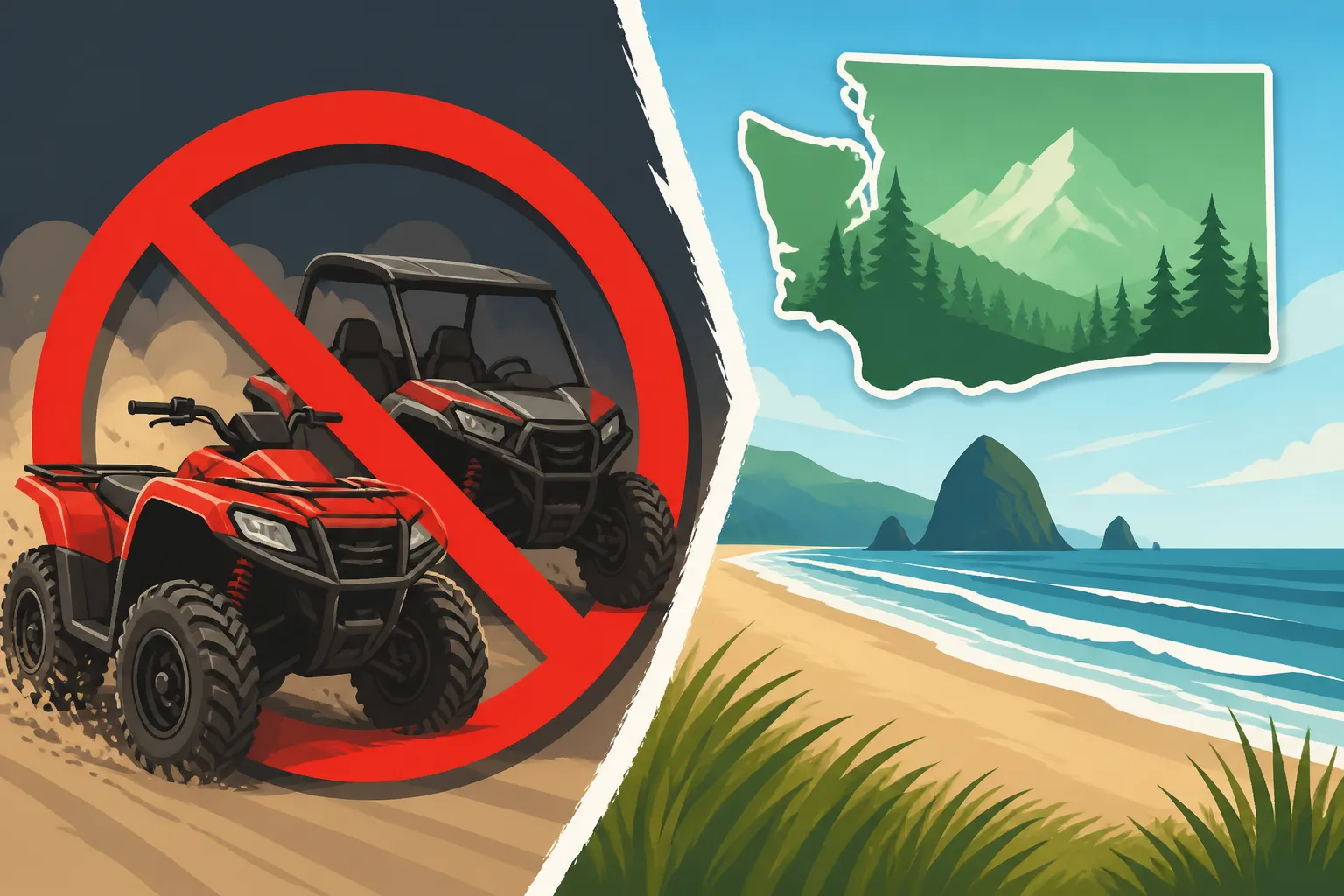
Why Long Beach Bans WATVs Outright
It's incredibly frustrating when you're looking forward to exploring a beautiful area like Long Beach, Washington, with your Side-by-Side or ATV, only to discover that the very roads you hoped to cruise are completely off-limits. Many riders assume that if a machine is street legal in Washington, it should be fair game everywhere, but that's simply not how local ordinances work. This guide will dive deep into why Long Beach, despite Washington's statewide WATV road rules, has chosen to outright ban these machines from its streets and famous beach, helping you understand the local reasoning behind this common point of confusion for riders.
The General Landscape of WATV Road Use in Washington
When you first hear about the possibility of making your Off-Road Vehicle (ORV) street legal in Washington, it opens up a world of potential. Imagine being able to ride from your campsite directly to a trailhead without having to trailer your machine, or even run into town for supplies. It's a dream for many, and indeed, Washington state law does provide a framework for this. However, it's crucial to understand that the state law sets the possibility, not a universal mandate for every city and county. Local jurisdictions retain significant power to make their own decisions about what kind of traffic is allowed on their roads, especially when it comes to WATVs.
Washington's Approach to Street Legal WATVs
Washington State's Legislature, through RCW 46.09, has made provisions for certain wheeled all-terrain vehicles (WATVs) to operate on public roads, provided they meet specific equipment requirements and the local jurisdiction allows it. This means your quad or side-by-side isn't automatically street legal just because it has headlights and brake lights. There's a whole list of upgrades your machine needs, from turn signals and mirrors to a horn and sometimes even a windshield or eye protection. We've gone into detail about this in [Washington WATV Road Requirements]. Even after all those modifications, and getting your machine titled and registered with both the off-road and on-road tabs, the ability to ride on a specific road ultimately comes down to local decisions.
The state law really provides a foundation, an option for counties and cities. It acknowledges that there's a desire for this type of recreational use, and it offers the blueprint for how to equip your machine properly. You can get your machine ready, add all the necessary bits and bobs – perhaps even some robust accessories from a brand like SuperATV to ensure you meet all the safety and visibility standards. But getting your machine fully equipped is only half the battle. The other half involves checking the local rulebook, which, as we'll see with Long Beach, can throw a real wrench in your plans.
The Local Control Factor for Cities and Counties
This is where things get really nuanced and often confusing for riders. While the state says "yes, you can make your WATV street legal," it quickly adds "but only where local governments say so." Washington is a "home rule" state in many respects, meaning counties and cities have considerable autonomy to regulate local matters, including traffic and land use. This means a county can choose to open up its roads to WATVs, or it can choose to keep them closed. The same applies to cities. You might find that one county embraces WATV road use, allowing you to connect trails and access services, while its neighbor keeps a firm "no machines on pavement" policy.
This patchwork of regulations is why you can't just assume. A common misconception is that if one city in Washington allows WATVs on its streets, then all cities must. Nothing could be further from the truth. Each jurisdiction, whether it's a bustling urban center or a quiet coastal town, has the right to assess its own unique circumstances, traffic patterns, public safety concerns, and community values when making these decisions. For counties with populations over fifteen thousand, they must explicitly "opt in" to allow WATV road use, typically by passing an ordinance and publishing a list of approved roads. Conversely, smaller counties under fifteen thousand are open by default but can "opt out" specific roads. This local control is the primary reason why Long Beach can, and does, ban WATVs outright, regardless of state law. If you're wondering which roads in your chosen county might be open, we've covered the basics in [How a Washington County Opts In].
Long Beach's Unique Environment and Tourism Focus
Long Beach is not just any town; it's a renowned coastal destination, famous for its expansive sandy beach, kite festivals, and a laid-back, family-friendly atmosphere. This unique identity plays a massive role in its regulatory decisions regarding WATVs. Unlike a rural area where roads might primarily serve resource extraction or agricultural purposes, Long Beach's economy and lifestyle are inextricably linked to tourism and the preservation of its natural beauty. When you visit Long Beach, you're looking for a specific kind of experience, and the city works hard to maintain that.
Prioritizing Pedestrian and Bicycle Traffic
One of the defining characteristics of Long Beach is its commitment to pedestrian and bicycle-friendly infrastructure. The town boasts the Long Beach Discovery Trail, a paved path that stretches for miles, inviting walkers, runners, and cyclists to enjoy the ocean breeze and stunning scenery safely away from vehicular traffic. The streets themselves are designed to be walkable, with many shops, restaurants, and attractions within easy strolling or biking distance. This emphasis on non-motorized recreation and transportation is a core part of the Long Beach appeal.
Introducing WATVs to these streets, even if they're street legal elsewhere, immediately creates a conflict. The speed, size, and noise of these machines, while perfectly fine in designated off-road areas or even on certain rural roads, can be perceived as disruptive and potentially unsafe in an environment dedicated to quieter, human-powered activities. The city's investment in trails like the Discovery Trail, and its overall promotion of a relaxed, pedestrian-centric experience, makes the presence of motorized ORVs a direct counterpoint to their established identity. In many ways, the city has made a clear choice: they want visitors to experience the coast on foot or by bike, rather than roaring through town on an ORV. This same logic is why you won't find machines on the Discovery Trail itself, as explored in [Why the Discovery Trail Is Closed to Machines].
Preserving the Coastal Aesthetic and Quiet Experience
Beyond the practicalities of traffic flow, Long Beach actively cultivates a specific aesthetic and auditory experience for its visitors and residents. People come to the coast to escape the hustle and bustle, to listen to the waves, and to enjoy a sense of peace. The continuous hum or sudden roar of a WATV engine, even a properly muffled one, can significantly detract from this desired tranquility. It's about maintaining the character of the place.
The long, wide beach, while historically having some allowance for certain types of vehicles, is primarily seen as a natural wonder. The city wants to protect this image and ensure that the serene beauty of the coastline remains paramount. Allowing WATVs on city streets and beach approaches could introduce unwanted noise pollution and a more industrial feel to what is intended to be a pristine natural setting. Imagine trying to enjoy a quiet walk along the boardwalk with the constant drone of engines in the background. It changes the entire ambiance. Long Beach's decision is a direct reflection of its deep-seated desire to preserve this unique coastal charm, ensuring that visitors continue to find the peaceful, natural escape they seek. This perspective often clashes with the desire of riders to access areas like the beach, as discussed in [Washington Rules for Riding a Beach] and [Washington Rules for Riding a Dune].
Safety Concerns and Community Input
The decision to ban WATVs isn't just about aesthetics or quiet enjoyment; it's also deeply rooted in very practical concerns about public safety and community well-being. Any time a local government considers opening roads to a new type of vehicle, especially one with different operating characteristics than traditional cars, safety becomes a paramount consideration. For Long Beach, with its unique traffic patterns and demographics, these concerns are amplified.
Mixing ORVs with Diverse Traffic and Vulnerable Users
Long Beach experiences a significant influx of tourists, especially during peak season and special events like the kite festival. This means its streets often have a mix of unfamiliar drivers, distracted sightseers, families with young children, and a high volume of pedestrians and cyclists. Introducing WATVs into this already complex mix presents unique safety challenges. While modern WATVs are much safer than older models, they still handle differently than cars, have a higher center of gravity, and can be less visible, particularly to larger vehicles or in busy intersections.
Think about a crowded summer weekend. You have cars slowly cruising, looking for parking, people crossing streets at crosswalks and sometimes not. Kids on bikes might dart out from side streets, and tourists might be too focused on the scenery to be fully aware of their surroundings. Adding WATVs, which accelerate quickly and have different turning radii, into this environment can create an increased risk of accidents. Even the most cautious rider can find themselves in a challenging situation when navigating such diverse and unpredictable traffic. The city's role is to ensure the safety of all its residents and visitors, and for Long Beach, prohibiting WATVs on roads is seen as a necessary step to mitigate these potential risks, especially when considering the significant number of children and older visitors present in the area. This concern isn't unique to Long Beach; similar issues lead to bans in other busy recreational areas.
Resident Concerns and Public Hearings
Local governments don't make these kinds of decisions in a vacuum. Community input plays a vital role, and often, decisions to ban specific activities are a direct response to concerns voiced by residents and local businesses. For Long Beach, it's highly likely that there have been extensive discussions, public hearings, and ongoing feedback from the community regarding WATV use. Residents often express concerns about noise, dust, safety, and the general disruption that off-road vehicles can bring to a residential or tourist-heavy area.
Imagine living in a quiet neighborhood and suddenly having WATVs regularly driving past your home. Even if legal, the cumulative effect of noise and traffic can significantly impact quality of life. Businesses might also weigh in, some seeing potential benefits from ORV tourism, others fearing that it could deter their primary customer base or disrupt their operations. When a city council makes a decision to ban WATVs, it's often a reflection of listening to these community voices and balancing competing interests. In Long Beach's case, the strong community value placed on tranquility, pedestrian safety, and its family-friendly atmosphere likely led to a consensus that unrestricted WATV use on its public roads and beach was simply not compatible with the town's character and goals. If you're curious about the potential consequences of riding where you're not allowed, we have information on [Washington Fines for Illegal WATV Road Use].
Protecting Natural Resources and Wildlife
The Pacific Northwest coastline is a place of incredible natural beauty and delicate ecosystems. Long Beach, situated on the Long Beach Peninsula, is no exception. Its long sandy beach, extensive dune systems, and proximity to diverse wildlife habitats mean that any human activity, especially motorized recreation, must be carefully considered for its environmental impact. This concern for natural resources is a significant underlying factor in the city's decision to ban WATVs.
Sensitive Dune Ecosystems and Beach Habitats
The towering dunes behind the Long Beach shoreline are not just piles of sand; they are complex and fragile ecosystems that provide vital habitat for a variety of plant and animal species. These dunes act as natural barriers, protecting inland areas from storm surges and erosion. They are home to specialized grasses and plants that stabilize the sand, as well as insects, birds, and small mammals. Any disruption to these dunes, whether by direct access or by vehicles driving too close, can have long-lasting negative consequences. The roots of dune grasses can be easily damaged, leading to erosion and the destabilization of the entire system.
While WATVs are primarily vehicles, their operation inherently involves potential for impacting these areas. Even if riders stick to designated paths, the potential for straying off course, the churning of sand, and the introduction of non-native plant seeds (from muddy tires, for example) are all concerns. Many coastal communities, including Long Beach, prioritize the conservation of these natural barriers, understanding their critical role in coastal resilience and biodiversity. This careful stewardship means limiting activities that could compromise the delicate balance of the dunes and their unique inhabitants. Understanding the rules for riding in these sensitive areas is key, as discussed in [Washington Rules for Riding a Dune].
Noise and Environmental Impact
Beyond direct physical disturbance, the noise and emissions associated with WATV operation are also environmental considerations. While modern machines are significantly cleaner and quieter than their predecessors, they still produce exhaust and engine noise. In a natural setting where wildlife thrives, excessive noise can be disruptive, affecting mating patterns, foraging behaviors, and overall stress levels for animals. Birds nesting in the dunes, for example, might be driven away by persistent noise.
Furthermore, even with advanced emission controls, any internal combustion engine produces pollutants. While the individual impact of one WATV might be minimal, the cumulative effect of many machines in a sensitive area over time is a concern for environmental conservationists and local governments. Long Beach, with its strong focus on ecotourism and preserving its natural heritage, likely views these environmental impacts as too significant to ignore when balanced against the recreational desires of WATV riders on city roads and the immediate beach environment. The decision to ban WATVs outright helps to ensure that the air remains cleaner, the natural soundscape is preserved, and the delicate balance of coastal wildlife is maintained, aligning with a broader commitment to environmental protection.
What This Means for Riders Visiting Long Beach
So, if you're a WATV owner planning a trip to the Washington coast with visions of cruising the streets of Long Beach or accessing the beach directly, this ban changes your plans significantly. It's important to be realistic about what you can and cannot do, and to plan accordingly to avoid disappointment or, worse, a costly citation.
Navigating the Local Regulations
First and foremost, the ban means that no matter how street-legal your WATV is according to Washington state law, you cannot operate it on any public road within the city limits of Long Beach. This includes primary thoroughfares, side streets, and any designated access points to the beach. The city's ordinance overrides the state's permissive framework. This is a strict "no riding" zone for WATVs. Trying to "just sneak through" or ride "a little bit" is not advisable, as local law enforcement is likely well-versed in the specifics of their municipal code and will enforce the ban.
It's also important to remember that this ban extends to the beach itself within Long Beach's jurisdiction. While some parts of the Washington coast historically allow certain vehicles on the sand, Long Beach's stance is unequivocal. Your WATV, even if theoretically capable of beach riding, is not permitted. You'll need to find alternative ways to enjoy the area, perhaps by bringing bicycles, walking shoes, or even renting an electric bike if you want to explore the Discovery Trail. For those interested in understanding the nuances of how beach access varies, [Washington Rules for Riding a Beach] provides a helpful overview.
When planning any trip with your WATV, it is always your responsibility to verify the current local ordinances for every city, county, and land management agency you intend to visit or pass through. Relying on general state rules alone can lead to problems. Many experienced riders use online resources, county websites, or even make a quick phone call to local law enforcement or the city clerk's office to get the most up-to-date information before they load up the trailer.
Alternative Riding Opportunities
While Long Beach itself is a no-go for WATVs on roads or the beach, this doesn't mean all of Washington is off-limits. Washington State boasts an incredible network of off-road trails and areas where WATVs are not just permitted, but actively encouraged. You'll need to re-think your coastal riding plans, but there are plenty of other places to explore.
For example, areas like the Capitol State Forest near Olympia, Walker Valley ORV in Skagit County, or the Ahtanum State Forest near Yakima offer extensive trail systems for all skill levels. These dedicated ORV areas provide hundreds of miles of diverse terrain, from muddy tracks to rocky climbs and forest roads, perfect for a weekend adventure. Some of these locations even offer camping, making for a comprehensive off-road experience. While you might not be cruising past ocean waves, you'll be immersed in the beauty of Washington's inland forests and mountains. Many riders invest in specialized equipment, perhaps some heavy-duty protection or a lift kit from SuperATV, specifically for these more rugged environments.
If your heart is set on sand, areas like the Beverly Dunes or Moses Lake Sand Dunes in central Washington offer different kinds of open riding experiences, albeit far from the ocean. The key is to shift your focus from attempting to integrate your WATV into a coastal town's infrastructure to enjoying it in its intended environment – the vast and varied landscapes of Washington's designated off-road areas. Always remember to check the specific rules and regulations for these locations, as they can also have seasonal closures, permit requirements (like the Discover Pass for DNR lands), or specific rules regarding vehicle width or noise limits. Understanding [Where to Ride an ATV in Washington] is a great starting point for finding these alternative adventures.
| Feature | Washington State WATV Road Law (General) | Long Beach City Ordinance (Specific) |
|---|---|---|
| Road Use | Permitted if street legal and local jurisdiction opts in. | BANNED (No WATVs on any public road). |
| Equipment | Requires specific items (turn signals, mirrors, horn, etc.). | Irrelevant, as road use is banned. |
| Beach Access | Varies by specific beach segment and local rule. | BANNED (No WATVs on the beach). |
| Primary Goal | Provides a framework for recreational use and connectivity. | Prioritizes pedestrian safety, quiet, and environmental preservation. |
| Enforcement | State Patrol, County Sheriff, Local Police. | Long Beach Police Department. |
| Penalties | Fines, potential impoundment for illegal use. | Fines, potential impoundment. |
Disclaimer
This article is for general informational purposes only and does not constitute professional advice. Laws, prices and regulations vary by location and change over time. Consult a qualified professional for guidance on your specific situation.