Helmet Rules for Washington Riders
Figuring out the exact helmet rules for riding your ATV or UTV in Washington State can feel like navigating a dense forest trail blindfolded. There's a lot of chatter out there, and it's easy to get confused about when you absolutely must strap on a lid and when you might have a bit more leeway. This guide is here to clear up that confusion, giving you a comprehensive, no-nonsense look at Washington's helmet laws for all your off-road and on-road WATV adventures.
The General Washington Helmet Rule for ORVs
Let's start with the basics, because this is where many riders get tripped up. Washington State has a pretty clear stance on helmets for off-road vehicle use, even if it feels a little different than what you might be used to in other states or even on a motorcycle. The core idea is simple: if you're on public land, expect to wear a helmet. This isn't just a suggestion; it's a legal requirement designed to keep you safe when you're out there tackling trails, dunes, or forest roads.
Who Must Wear a Helmet on Public Land
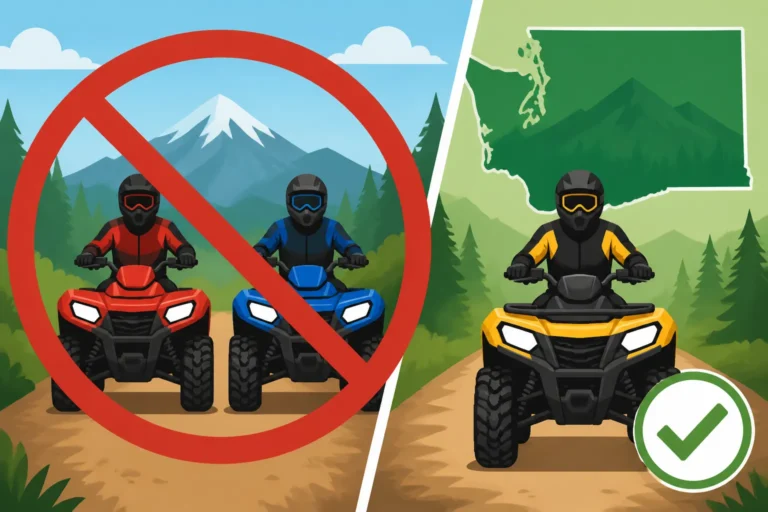
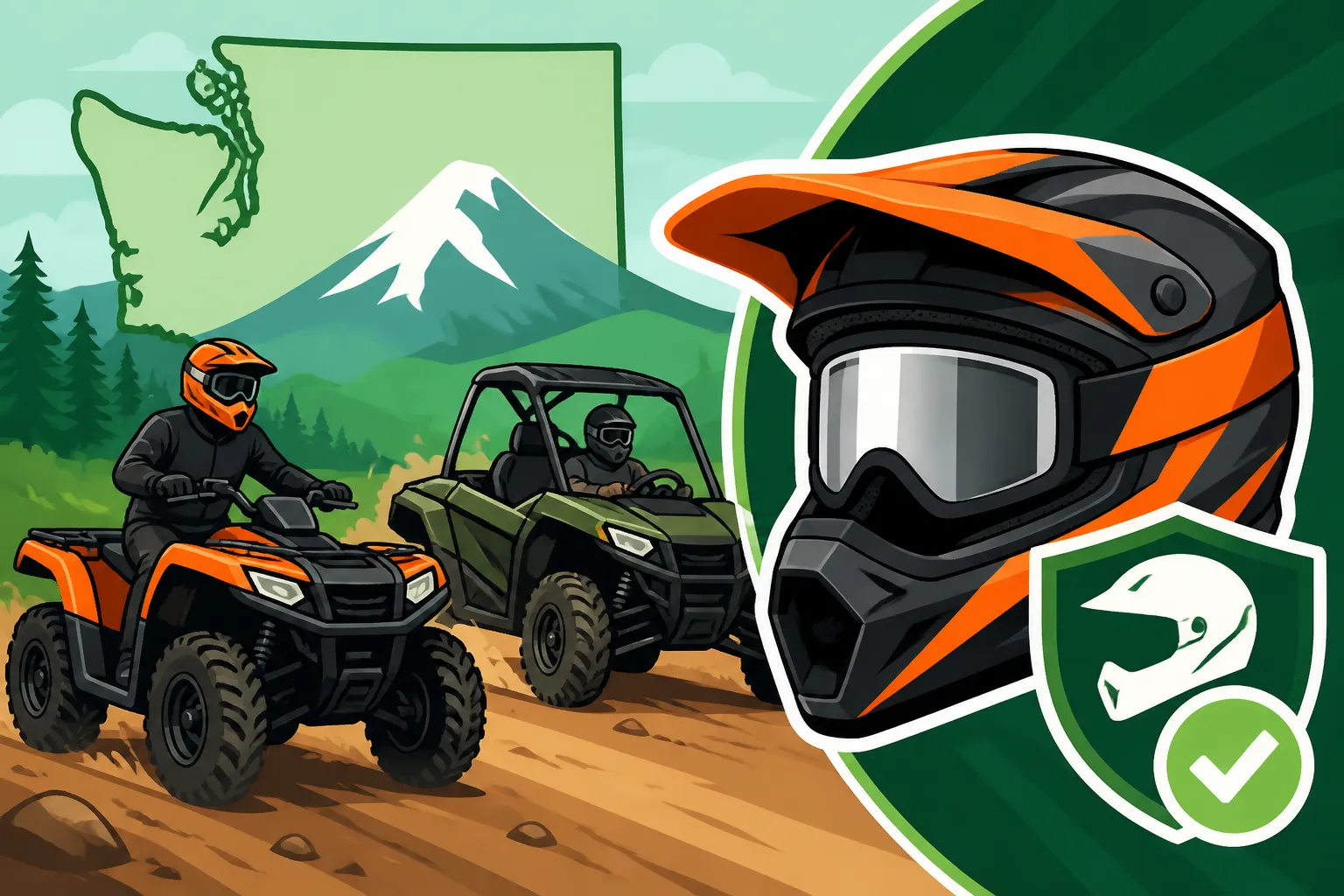
In Washington, if you're operating an off-road vehicle (ORV), which includes ATVs, UTVs, and dirt bikes, on public lands, everyone on board needs to be wearing an approved helmet. This applies to the operator, any passengers, and especially to younger riders. It doesn't matter if you're just cruising along a flat gravel path or tackling some gnarly technical terrain; the law is consistent. The reasoning behind this is straightforward: public lands often have varying terrain, unpredictable conditions, and shared use with other recreationists. A helmet is your primary defense against head injuries, which, let's be honest, nobody wants to deal with.
Think about it: even a low-speed tip-over can result in a serious bump to the head if you're not protected. You might be riding a well-maintained trail in [Capitol State Forest Near Olympia, Washington] or exploring the vastness of the [Ahtanum State Forest], but the risk of an unexpected branch, a hidden rut, or a sudden stop is always there. This rule helps ensure that everyone is taking that basic safety precaution. It's about protecting yourself and setting a good example for others, especially the younger generation of riders who look up to us.
Many riders initially resist wearing a helmet, especially on a hot day, but the protection it offers is invaluable. Head injuries can be life-altering, and a helmet is a relatively small investment for such a significant safeguard. Plus, with modern helmet technology, you can find options that offer excellent ventilation without sacrificing safety.
Defining "Public Land" for Off-Road Use
Understanding what "public land" means in Washington is crucial because it dictates where the helmet rule applies. Generally, this refers to any land owned or managed by federal, state, or local government entities that are open to ORV use. This includes vast expanses like state forests managed by the Department of Natural Resources (DNR), national forests managed by the U.S. Forest Service, and designated ORV parks. Basically, if you didn't buy it, and it's not explicitly owned by a private individual or company where you have explicit permission to ride without a helmet, assume it's public land.
This definition covers popular riding areas like [Walker Valley ORV in Washington's Skagit County], [Reiter Foothills State Forest], and the many miles of designated trails within the state's diverse landscapes. It also includes the extensive network of forest roads that crisscross Washington, often used by hunters, campers, and ORV enthusiasts alike. When you're driving your rig down one of these roads to get to a trailhead, or simply exploring, the helmet rule is in effect. It’s not just about the technical trails; it’s about any public access road or area where an ORV is permitted.
Even areas that might feel remote or untamed, far from any paved road, still fall under this umbrella. A key point here is that these public lands are often managed with specific regulations to ensure safety and environmental protection, and helmet use is a core part of that safety framework. If you're ever unsure whether a specific area qualifies as public land, it's always best to err on the side of caution and wear your helmet. It's better to be overly prepared than to face a fine or, worse, an injury.
Exceptions and Private Property Considerations
While the rule is clear for public lands, there are situations where a helmet might not be legally required, though it's still highly recommended. The most common exception is when you're riding on private property with the owner's permission. If you're on your own land, a friend's farm, or a privately owned motocross track that doesn't explicitly mandate helmets, the state's public land helmet law doesn't apply.
However, just because it's not legally required doesn't mean it's a good idea to skip the helmet. Gravity still works the same way on private land as it does on public land. Even experienced riders can have an unexpected mishap. Many experienced riders, and especially those who participate in competitive events, will always wear a helmet, regardless of the legal mandate, because they understand the inherent risks. Safety should always be your top priority, whether you're shredding some turns on your own acreage or navigating technical sections in the woods.
Another important nuance: some organized private events or riding parks may have their own internal rules that do require helmets, even if state law wouldn't otherwise mandate it on that specific property. Always check with the event organizer or property owner before you ride. For instance, a facility might host a [Washington ORV Registration for a Club Machine] event, and that club might have stricter rules than the state. It's essential to respect those rules, not just for legal compliance but for the safety of everyone involved.
Specific Helmet Requirements for On-Road WATV Use
Now, this is where things can get a little more complex and where many riders find themselves scratching their heads. Washington State has a unique system for "Wheeled All-Terrain Vehicles" (WATVs) that allows them to be legally operated on certain public roads. This "street-legal" status brings with it a whole new set of rules, and helmet requirements are a big part of that. It's not the same as just riding your dirt bike off-road; the rules shift once you hit the pavement.
The Distinction Between Off-Road and On-Road Rules
The moment your WATV touches a county road or city street that has been designated as open, the rules for helmets change significantly. While off-road, the general requirement is simply an approved helmet. However, for on-road use, Washington's vehicle code specifically refers to the helmet requirements for motorcycles. This means your helmet needs to meet stricter standards and often influences the type of helmet you should be wearing. This distinction is crucial and often overlooked by riders who are accustomed to only off-road rules.
The logic behind this stricter standard for on-road use is rooted in the different types of hazards present on public roads compared to trails. On roads, you're sharing space with cars, trucks, and other vehicles traveling at higher speeds. The potential for impact and the severity of injuries increase dramatically. Therefore, the law aims to provide a higher level of protection for riders operating in this environment. It's not just about meeting [Washington WATV Road Requirements]; it's about acknowledging the added risks of pavement.
It's a subtle but critical difference that can catch riders off guard. You might be riding legally on a [Washington Logging Road] that crosses into a county-designated segment of pavement, and suddenly, the helmet rule you were following minutes ago changes. Always be aware of your surroundings and the specific regulations for the area you're in. This level of preparedness is what keeps you safe and avoids potential citations.
How Road-Legal WATVs Change the Helmet Game
When you register your WATV for road use in Washington, typically by adding the [Washington's On-Road Tab Explained], you're agreeing to abide by a whole new set of regulations. For helmets, this means adhering to the standards outlined for motorcyclists. This generally translates to needing a helmet that is certified by the Department of Transportation (DOT). A DOT-certified helmet has undergone rigorous testing to ensure it meets minimum safety performance criteria for impacts and penetration.
This can be a point of confusion because many off-road helmets are DOT approved, but some popular ones might only meet recreational standards without formal DOT certification. If you plan to ride your WATV on public roads, you absolutely need to make sure your helmet carries that DOT sticker. Without it, even if you are wearing a helmet, you could still be in violation of the law. This is particularly important for riders of side-by-sides, where the open cab might give a false sense of security; helmets are still mandatory for all occupants on open roads.
The shift to motorcycle helmet standards also means considering helmets that offer full face protection, though open-face DOT helmets are generally acceptable for motorcycles as well. However, for the best protection on roads, many riders opt for a full-face helmet or a modular helmet. Brands like SuperATV, known for a wide range of accessories, understand these safety needs and often offer products compatible with various helmet types, ensuring riders can secure their gear while complying with regulations.
Comparing WATV Helmets to Motorcycle Helmets
So, what does it mean to wear a helmet that meets "motorcycle helmet" standards for your WATV on the road? Essentially, it means you're looking for a helmet that bears the DOT certification label. This label is usually on the back of the helmet and confirms that it has met the Federal Motor Vehicle Safety Standard (FMVSS) 218. While many off-road specific helmets are indeed DOT-certified, not all are. It’s crucial to verify this before you hit the pavement.
A typical off-road helmet, often referred to as a "moto-style" helmet, has a distinct visor and a prominent chin bar. Many of these are DOT approved and perfectly suitable for road use. However, you might also consider a street-oriented motorcycle helmet. These typically have a full-face design with an integrated clear shield, offering better wind and debris protection at higher road speeds. While your WATV won't be hitting freeway speeds, the protection from wind, dust, and small projectiles is a significant benefit on county roads.
The key takeaway here is not necessarily that you need a motorcycle helmet, but rather a helmet that meets the standards required for motorcycles. This gives you flexibility in choosing between a robust off-road helmet that happens to be DOT-certified, or a more traditional street helmet. The choice often comes down to personal preference, comfort, and the primary type of riding you anticipate doing. What matters most is that critical DOT certification. Always double-check that label before you head out on any public roadway in Washington.
Helmet Standards and Safety Features
When you're choosing a helmet, especially for something as exhilarating and potentially risky as riding an ATV or UTV, you want to make sure you're getting the best protection possible. It's not just about wearing a helmet; it's about wearing the right helmet that meets specific safety standards. These standards are your assurance that the helmet has been tested and proven to offer a certain level of protection in the event of an impact.
Understanding DOT Certification
DOT certification is the absolute baseline for legal helmet use on public roads in the United States, including Washington State. It stands for Department of Transportation, and their FMVSS 218 standard sets minimum performance requirements for helmets to protect against impacts and penetration. When a helmet is DOT-certified, it means the manufacturer asserts that the helmet meets these federal standards. You'll typically find a DOT sticker on the back of the helmet as proof of this certification.
It’s important to understand that DOT certification is a self-certification process, meaning manufacturers test their own helmets to ensure compliance. However, the DOT does conduct random testing to ensure manufacturers are holding up their end of the bargain. If a helmet doesn't have that DOT sticker, it's not legal for on-road use, and honestly, you should question its protective capabilities for any serious riding. Without that certification, you could face fines for violating [Washington Fines for Illegal WATV Road Use], even if you are technically wearing a helmet.
For off-road riding on public lands, the Washington law simply states "an approved helmet." While "approved" is a bit vague, nearly all reputable off-road helmets on the market today are also DOT-certified, making them a safe and compliant choice for both environments. Always prioritize a DOT-certified helmet to ensure you're meeting legal requirements and providing a good level of protection for your head.
Beyond DOT: SNELL and ECE Standards
While DOT certification is the legal minimum, many riders, especially those who prioritize maximum safety, look for helmets that meet additional, often more stringent, safety standards. Two of the most common and respected are SNELL and ECE. These certifications represent a commitment to higher levels of protection and more rigorous testing protocols.
SNELL Memorial Foundation certification is a non-profit, independent standard that typically involves more aggressive testing than the DOT standard. SNELL-certified helmets are designed to withstand multiple impacts and offer a higher degree of penetration resistance. You'll often see SNELL certifications like M2020 (for motorcycle helmets), and it signifies a top-tier commitment to safety. For serious off-road enthusiasts who push their limits, a SNELL-certified helmet offers an extra layer of reassurance.
ECE (Economic Commission for Europe) 22.05 or 22.06 is another globally recognized standard that is mandatory for helmets sold in over 50 countries, primarily in Europe. ECE testing is very comprehensive, including tests for impact, abrasion, shell rigidity, and retention system performance. Many high-quality helmets sold worldwide carry both DOT and ECE certifications, providing excellent protection for both on-road and off-road applications. If a helmet has ECE certification, you can be confident it offers robust protection. When shopping for gear, don't just look for an accessory to customize your ride; also invest in the protective gear itself. Many top accessory providers, including those like SuperATV, also highlight the importance of high-quality, certified helmets in their safety discussions.
Features to Look For in a Quality Helmet
Beyond certifications, a quality helmet should have several features that enhance both safety and rider comfort. After all, if a helmet is uncomfortable, you're less likely to wear it, or you might be distracted while riding. The fit is paramount: a helmet should be snug but not uncomfortably tight, with no pressure points. It should not move around on your head when you shake it. Different manufacturers have different head shapes, so trying on several brands is usually necessary to find the right fit.
Ventilation is another crucial feature, especially for active off-road riding or warm Washington summers. Good ventilation helps keep your head cool, reduces fogging of goggles or face shields, and prevents heat exhaustion. Look for helmets with multiple intake and exhaust vents. The liner material should be moisture-wicking and, ideally, removable and washable to keep your helmet fresh. Many manufacturers also offer anti-microbial liners.
Weight is also a factor. A lighter helmet can reduce neck fatigue, especially during long rides. Modern materials like fiberglass composites, carbon fiber, and advanced polycarbonate alloys contribute to both strength and reduced weight. Finally, consider features like emergency release cheek pads, which allow first responders to remove the helmet more easily after an accident, and compatibility with neck braces, if you wear one. [Washington ATV Helmet Costs] can vary greatly, but remember, this is one area where you absolutely should not skimp on quality.
Helmets for Passengers and Minors
The rules regarding helmets don't just apply to the person holding the handlebars; they extend to everyone enjoying the ride. This is especially true when you have passengers, and even more so when those passengers are minors. Washington State takes the safety of young riders very seriously, and specific regulations are in place to ensure they are adequately protected.
Washington Helmet Law for Passengers
If you're riding an ATV or UTV on public lands in Washington, and you have a passenger, that passenger is also required to wear an approved helmet. This is a non-negotiable safety rule. It doesn't matter if they're sitting in a designated passenger seat on a side-by-side or riding pillion on a two-up ATV; the helmet rule applies equally to them. The intent is clear: every person exposed to the risks of off-road riding needs head protection.
This requirement holds true whether you're navigating easy trails in [Green Mountain and Tahuya State Forest] or tackling steeper climbs in other recreation areas. Just as the operator is susceptible to impacts from falls, branches, or collisions, so too is the passenger. Often, passengers are even more vulnerable, as they don't have direct control over the machine and might not anticipate sudden movements or hazards. Therefore, providing them with a properly fitting, approved helmet is paramount.
When you're preparing for a ride, especially if you plan on bringing guests, make sure you have enough compliant helmets for everyone. It's not just a matter of law; it's a matter of basic courtesy and responsibility to ensure your passengers are as safe as possible. Neglecting this could not only lead to a citation but, more importantly, put someone you care about at unnecessary risk.
Special Rules for Riders Under 16
Washington State has particular focus on the safety of young riders. For anyone under the age of 16 operating or riding as a passenger on an ORV on public lands, not only is a helmet absolutely mandatory, but it must be worn in conjunction with specific supervision requirements. [Washington Rules for a Rider Under 16] are quite clear: all riders under 16 must wear a helmet. This aligns with the overall state philosophy on protecting minors in high-risk activities.
Furthermore, children under 16 operating an ORV on public land must also be under the direct supervision of a licensed adult. This adult must be riding on an ORV themselves, or be in a position to adequately supervise the youth. The combination of mandatory helmets and adult supervision is designed to mitigate the inherent dangers of ORV riding for minors who may lack the judgment, experience, or physical strength of an adult.
This means if you're out with your family, and your child is riding their youth ATV, they need to have their helmet securely fastened, and you, as the supervising adult, need to be actively overseeing their ride. It's a dual responsibility that underscores the state's commitment to youth safety. These rules apply universally, whether the youth is learning on an open flat area or navigating more challenging terrain.
The Role of Parental Supervision
Beyond the legal mandates, parental supervision plays a critical, often understated, role in the safety of young riders. The presence of a helmet provides physical protection, but active and informed supervision provides the guidance and judgment that children naturally lack. This isn't just about making sure they wear their helmet; it's about teaching them proper riding techniques, understanding trail etiquette, and respecting the machine's capabilities.
For instance, when teaching a child to ride, ensuring they wear a properly sized and approved helmet from the very first moment they sit on a machine is vital for developing good safety habits. The supervising adult should be modeling safe riding behavior, including always wearing their own helmet, demonstrating proper use of safety gear, and explaining potential hazards. This is part of the broader education that goes into [What Washington Requires of a Young Rider].
Moreover, supervision involves choosing appropriate riding areas and machines for a child's age and skill level. You wouldn't put a small child on an adult-sized machine on a difficult trail. Instead, you'd start with a [Youth Machine Sizes and Washington Rules] on a gentle, open area, slowly progressing as their skills and confidence grow. The helmet is a crucial piece of that puzzle, but it's part of a larger, ongoing effort to instill a culture of safety and responsibility in young riders.
Common Misconceptions and Enforcement
Despite the clear rules, there are still quite a few misconceptions floating around about helmet laws in Washington. These misunderstandings can lead to unnecessary risks, potential fines, and even serious injuries. It's important to dispel these myths and understand how enforcement actually works on the ground. Knowing what to expect can save you a lot of hassle and keep you safe.
"I'm Just Crossing the Road" — The Pavement Myth
One of the most persistent myths is that you only need a helmet when actively riding on a trail, or that if you're "just crossing a road," the rules don't apply. This is absolutely incorrect and a dangerous assumption. In Washington, any time your WATV is on a public road, even for a short segment or merely to cross it, the on-road helmet rules (DOT-certified) kick in. The law doesn't differentiate between sustained travel and brief crossings.
Imagine you're riding a network of trails and one segment requires you to cross a county road to connect to the next section. That brief moment your tires are on the asphalt, you are legally operating on a public roadway. If that road is designated as open for WATV use, you must be wearing a DOT-certified helmet. If the road is not open for WATV use, then crossing it might be illegal in itself, but the helmet rule still applies. [Washington Rules for Crossing a State Highway] are explicit about the requirements, including helmet use.
This misconception often stems from casual riding habits or a lack of awareness about the specific nuances of Washington's WATV laws. It's easy to think "it's just a few feet," but those few feet are where interactions with other traffic, or even a simple fall, can have severe consequences. Always assume that if you're on public pavement, a compliant helmet is required for all occupants.
Roadside Checks and Citations
Law enforcement agencies, including the Washington State Patrol, county sheriffs, and DNR rangers, actively enforce ORV laws. This means roadside checks are a real possibility, especially in popular riding areas or on roads known for ORV traffic. Officers will be looking for proper registration, legal operation, and, crucially, helmet compliance. If you're caught without a required helmet, or with a helmet that doesn't meet the correct standard for the riding environment, you can expect a citation.
A typical roadside stop might involve an officer checking for your valid ORV tabs, ensuring your machine has the necessary safety equipment for its operating environment, and verifying that everyone on board is wearing a helmet. If you're on a designated county road, they'll specifically look for that DOT certification on your helmet. They might also check for [A Valid Driver License on a Washington Road] if you are operating on a county road. Ignorance of the law is generally not a valid defense.
The penalties for helmet violations can include fines, and in some cases, can even lead to your ride being cut short if you're deemed unsafe to continue. It's a hassle you definitely want to avoid. The fines associated with ORV violations in Washington can quickly add up, making the cost of a good helmet seem like a bargain in comparison. It's far better to invest in proper gear and follow the rules than to face the consequences of non-compliance.
Fines for Not Wearing a Helmet
Let's talk brass tacks: what happens if you're caught without a helmet when one is required? The specific fines for not wearing a helmet on an ORV in Washington can vary depending on the jurisdiction (state, county, city) and the specific circumstances of the violation. However, you should expect a monetary penalty. These aren't usually minor slap-on-the-wrist tickets; they are designed to be a deterrent.
For instance, riding an unregistered ORV on public land can result in a significant fine, and similar penalties apply to safety equipment violations. While a specific dollar amount can fluctuate, you can anticipate fines that often run into the hundreds of dollars. This means that a single citation for a helmet violation could easily cost you more than purchasing a high-quality, DOT-certified helmet in the first place. When considering [What an ATV Costs to Own in Washington], budgeting for proper safety gear, including helmets, should be at the top of your list.
Beyond the immediate financial cost, there's also the inconvenience of dealing with the citation, potentially going to court, and the possibility of other related penalties. More importantly, however, is the increased risk of severe injury. A fine is temporary; a head injury can be permanent. The law is there to protect you, and compliance is the easiest way to ensure both your safety and your wallet stay intact.
Choosing the Right Helmet for Washington Riding
Selecting a helmet isn't just about meeting legal requirements; it's about finding one that offers optimal protection, fits comfortably, and suits the specific type of riding you do in Washington. With so many options on the market, it can feel a little overwhelming. Let's break down how to make an informed choice that keeps you safe and happy on the trails and roads.
Different Helmet Types for Different Riding Styles
The world of helmets is diverse, designed to cater to various riding disciplines. For ATV and UTV riders in Washington, the primary choices usually fall into a few categories:
- Off-Road/Motocross Helmets: These are characterized by an elongated chin bar for airflow and impact protection, and a sun visor. They are designed to be worn with goggles. Many of these are DOT-certified and suitable for both off-road and on-road WATV use. They excel in ventilation, which is great for strenuous trail riding. Brands often offer accessories that enhance the utility of these helmets, and even SuperATV offers gear solutions to complement your helmet.
- Full-Face Street Helmets: These offer complete protection for the face, jaw, and head, usually with an integrated face shield. While primarily designed for motorcycles, a DOT-certified full-face helmet is perfectly legal and often preferred by side-by-side riders on roads for its wind and debris protection. They might be less ventilated than moto-style helmets but offer superior comfort at higher speeds.
- Modular (Flip-Up) Helmets: These combine features of full-face and open-face helmets. The chin bar and face shield can be flipped up, offering convenience for talking or taking a break. When closed, they provide full-face protection and are DOT-certified. They offer versatility for riders who transition frequently between interacting with others and riding.
- Open-Face (3/4) Helmets: These cover the top, back, and sides of the head but leave the face exposed. While DOT-certified open-face helmets exist, they require separate eye protection (goggles or glasses) and offer less protection for the face and jaw. They are generally not recommended for aggressive off-road riding but might be considered by some UTV riders for casual on-road excursions.
Consider where you spend most of your riding time. If you're mainly in the dirt on places like [Juniper Dunes in Eastern Washington], an off-road helmet with goggles is probably your best bet. If you primarily use your side-by-side for utility work or leisurely cruises on [Washington Counties That Allow WATVs on Roads], a full-face or modular helmet might offer more comfort and protection against the elements.
Sizing and Fit for Maximum Protection
No matter how many certifications a helmet has, if it doesn't fit correctly, it won't offer maximum protection. A helmet that's too loose can shift during an impact, compromising its ability to absorb energy. One that's too tight can cause headaches and discomfort, making you less likely to wear it. Getting the right fit is crucial for both safety and comfort.
To find your size, measure the circumference of your head just above your eyebrows. Helmet manufacturers provide sizing charts, but these are just a starting point. The best method is always to try helmets on. When you put a helmet on, it should feel snug all the way around your head, with no significant pressure points. The cheek pads should press firmly against your cheeks, and there should be no gaps around your temples or forehead.
Once the helmet is on, try to move it from side to side and up and down. If it slides around easily, it's too big. If it's difficult to get on or causes painful pressure, it's too small. Your vision should not be obstructed, and the chin strap should be adjusted so it's snug but not choking you. Remember, different helmet brands and models can have different internal shapes (round oval, intermediate oval, long oval), so one brand's "medium" might fit differently than another's. Take your time and find a helmet that feels like an extension of your head.
When to Replace Your Helmet
Helmets are not designed to last forever, and knowing when to replace yours is just as important as choosing the right one in the first place. Even if a helmet looks perfectly fine on the outside, its protective capabilities can degrade over time due to various factors.
The golden rule for helmet replacement is after any significant impact. Even if you drop your helmet on a hard surface from a moderate height, the internal EPS (Expanded Polystyrene) liner, which is designed to crush and absorb energy, could be compromised. This damage is often invisible from the outside. A helmet is designed for one major impact; after that, it's a goner. So, if you've been in an accident, even a minor one, replace your helmet immediately.
Beyond impacts, helmets have a lifespan due to material degradation. Sunlight, sweat, oils from your skin, and general wear and tear can cause the resins and glues in the shell and liner to weaken. Most manufacturers and safety organizations recommend replacing a helmet every five to seven years from its manufacture date, or sooner if it shows signs of wear such as cracked shells, frayed straps, or loose padding. Check the manufacture date, usually found inside the helmet or under the comfort liner, and plan accordingly. Your brain is worth the investment.
The Bigger Picture: Safety Beyond the Helmet
While a helmet is undeniably the most critical piece of safety gear, it's just one component of a comprehensive approach to safe ATV and UTV riding. To truly minimize risks and maximize enjoyment on Washington's diverse terrain, you need to consider a broader spectrum of safety measures, from protective clothing to responsible riding practices and ongoing education.
Other Essential Riding Gear
Beyond the helmet, a full complement of riding gear provides protection for the rest of your body, shielding you from scrapes, bruises, and more serious injuries.
- Eye Protection: Whether you're wearing a moto-style helmet with goggles or an open-face helmet with glasses, proper eye protection is non-negotiable. Dust, branches, insects, and even small stones can be kicked up, causing serious eye damage. Look for impact-resistant lenses with good anti-fog properties. [Washington Windshield or Goggle Rule] for road use even specifies this!
- Gloves: Gloves protect your hands from blisters, abrasions, and impacts. They also improve grip on the handlebars, which is crucial for control, especially on rough terrain or in wet conditions.
- Long Sleeves and Pants: While it might be tempting to ride in a t-shirt and shorts on a hot day, long sleeves and durable pants (like riding pants or heavy jeans) offer essential protection against scrapes, brush, and minor impacts. Purpose-built riding gear often includes padded sections for added protection.
- Over-the-Ankle Boots: Sturdy boots protect your feet and ankles from impacts, crushing injuries, and hot engine parts. They also provide better grip on footpegs and floorboards, helping you maintain control.
- Body Armor/Chest Protector: For more aggressive riding or in areas with increased risk (like rocky trails), a chest protector or full body armor can shield your torso, shoulders, and elbows from impacts. This is especially recommended for dirt bike riders and youth riders.
Remember, every piece of gear has a purpose in protecting you from the environment and potential hazards. Investing in quality [Washington ATV Gear Costs for a Family] pays off in comfort and, more importantly, in injury prevention.
Riding Responsibly in Washington
Safety isn't just about what you wear; it's also about how you ride. Responsible riding practices are the foundation of preventing accidents and ensuring enjoyable experiences for everyone on the trails.
- Stay on Designated Trails: Adhering to marked trails is not only crucial for environmental protection but also for your safety. Going off-trail can lead you into unforeseen hazards like deep ravines, hidden obstacles, or even private property where you're not permitted. Respecting the land means respecting your own safety. [Washington Rules for Riding a Logging Road] will have clear boundaries.
- Ride Within Your Limits: Don't let ego override good judgment. Ride at a speed and skill level that is comfortable for you and your machine. Attempting obstacles beyond your capability is a recipe for disaster. Slowly build your skills and confidence.
- Never Ride Impaired: Alcohol or drugs severely impair judgment, reaction time, and coordination, making riding incredibly dangerous. [Washington DUI Rules for ORV Riders] are strict and will be enforced. It's simply not worth the risk.
- Maintain Your Machine: A well-maintained ATV or UTV is a safer machine. Regularly check tires, brakes, fluids, and steering components. A mechanical failure on the trail can lead to a serious accident. Keeping up with [Washington ATV Maintenance Costs] is part of being a responsible owner.
- Ride with Others: While solo rides can be enjoyable, riding with a buddy or in a group is safer, especially in remote areas. If something goes wrong, help is immediately available. Have a plan, know your route, and inform someone of your itinerary. Consider bringing a communication device, especially in areas with limited cell service.
The Value of Training and Experience
Perhaps the most underrated aspect of ORV safety is training and experience. A helmet protects your head, but knowledge and skill prevent the accident from happening in the first place.
- Formal Training Courses: Washington State does not mandate ORV safety certification, but taking a voluntary training course from a certified instructor is highly recommended, especially for new riders and youth. These courses teach fundamental riding techniques, hazard awareness, proper machine operation, and emergency procedures. They can significantly reduce the risk of accidents. You can find information on [Where Washington Riders Take a Safety Course].
- Progressive Skill Building: Don't try to tackle the toughest trails on your first day. Start on easy, open terrain and gradually progress to more challenging conditions as your skills improve. Learn how your machine handles different types of terrain, from sand in [Beverly Sand Dunes in Central Washington] to mud in [Washington Trails With Mud].
- Continuous Learning: Even experienced riders can benefit from refreshing their skills and staying updated on new techniques or changes in regulations. Watch instructional videos, read articles, and learn from other experienced riders. Every ride is an opportunity to refine your skills and expand your knowledge.
- Pre-Ride Checks and Planning: Before every ride, conduct a quick safety check of your machine. Plan your route, check weather conditions, and understand the specific rules and regulations for the area you'll be riding in. This proactive approach to safety can prevent many common riding mishaps.
By combining the physical protection of a quality helmet and other gear with responsible riding habits, continuous learning, and proper machine maintenance, you can ensure that your Washington ATV and UTV adventures are as safe and enjoyable as possible.
Disclaimer
This article is for general informational purposes only and does not constitute professional advice. Laws, prices and regulations vary by location and change over time. Consult a qualified professional for guidance on your specific situation.