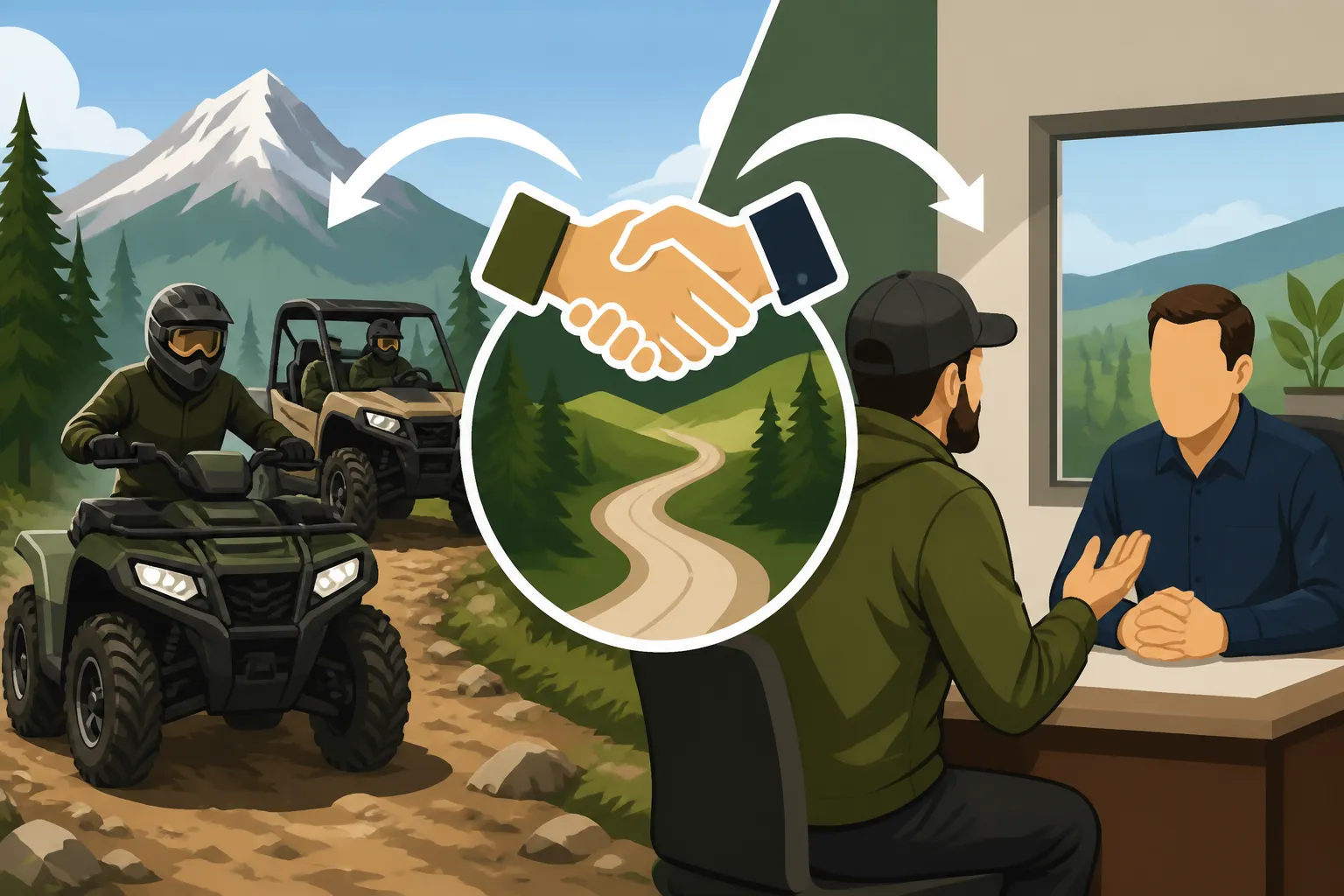
Asking a County to Open a Road
It's incredibly frustrating when you know your Washington All-Terrain Vehicle (WATV) is capable of so much, but local road access feels like navigating a maze with constantly changing rules. Many riders dream of safely connecting trails, accessing remote areas, or simply getting from their property to a nearby store without having to trailer up every single time. This guide is here to unravel the complexities of local road access and give you a clear, actionable roadmap for how to approach your county officials about opening more roads for WATV use, transforming that frustration into proactive advocacy.
Understanding Washington's WATV Road Laws
Before you even think about approaching your county commissioners, it's absolutely crucial to understand the lay of the land when it comes to Washington's WATV laws. This isn't just about knowing the rules; it's about knowing why the rules are the way they are, so you can speak intelligently and persuasively to those who have the power to make changes. Many riders feel a sense of bewilderment when trying to figure out where they can and cannot legally ride, and that's completely understandable given the nuances of the state law.
The Legislative Landscape: Why Counties Have the Power
Washington state law provides the framework for WATV use, but it delegates significant authority to local jurisdictions, particularly counties, when it comes to opening or closing roads. Essentially, the state says, "Here are the baseline rules for a WATV to be street legal, and here's how counties can decide where those machines can actually operate." This decentralized approach means that what might be perfectly legal in one county could lead to a citation just a few miles down the road in another. It's not always intuitive, and it certainly contributes to the feeling of inconsistency many riders experience. The intent behind this delegation was to allow local communities to tailor regulations to their specific geography, traffic patterns, and community desires, but it often results in a patchwork of rules that can be tough to navigate. You can dive deeper into the general guidelines in our article [Washington Rules for Riding a County Road].
Counties are tasked with considering factors like public safety, traffic volume, road surface types, and the overall character of their communities. They have the ability to enact ordinances that either permit or restrict WATV use on roads under their jurisdiction. This local control means that your county commissioners and council members are the key decision-makers you need to influence. They interpret the state law and apply it to their specific county's infrastructure and population. Understanding that their decisions are rooted in these local considerations, rather than simply state mandates, is vital for framing your arguments effectively.
Differentiating Between County Sizes
One of the most significant distinctions in Washington's WATV road laws is how they treat counties based on population. This often surprises riders who assume a blanket rule applies across the state. For counties with a population of less than 15,000 residents, the state law generally presumes that all county roads are open to WATV use by default, unless the county specifically passes an ordinance to close them. This means that if you live in a smaller, more rural county, the burden of proof is on the county to justify closing a road, rather than on riders to lobby for opening one. This can be a huge advantage for riders in those areas. For more details on this, check out [Washington Counties Under 15,000 Open by Default].
Conversely, for counties with a population of 15,000 or more residents, the default is the opposite: county roads are generally presumed to be closed to WATV use unless the county specifically passes an ordinance to open them. This means that if you're in a larger, more urban, or suburban county, the onus is on you and other riders to actively advocate for specific roads or entire road systems to be opened. This distinction profoundly impacts the strategy you'll need to employ. Knowing which category your county falls into is the first critical step in your advocacy journey. It defines whether you are asking for something new or pushing back against a restriction.
| County Population | Default Status for County Roads | Action Required from County | Burden of Advocacy |
|---|---|---|---|
| Less than 15,000 | Open to WATVs | Must close roads by ordinance | On county to justify closure |
| 15,000 or more | Closed to WATVs | Must open roads by ordinance | On riders to justify opening |
Preparing Your Case: Building a Compelling Argument
You wouldn't head out on a long trail ride without packing the right gear, right? The same goes for advocating to your county. Showing up unprepared is like trying to climb a steep hill with bald tires – it’s not going to go well. Building a strong, fact-based argument is absolutely essential if you want your county officials to take your proposal seriously. They are often bombarded with requests and concerns from various groups, so yours needs to stand out and demonstrate tangible benefits to the community as a whole, not just to WATV riders. This phase requires dedication and a bit of research, but the payoff can be huge.
Gathering Data and Identifying Specific Roads
Start by doing your homework. Which specific roads are you interested in opening? Don't just say "all roads." Be precise. Are there key arterial roads that connect residential areas to trailheads, or provide access to gas stations or local businesses? Perhaps there are less-traveled gravel roads that would offer safer passage than busier routes. Use maps, local knowledge, and even GPS data from your rides to pinpoint these routes. Document why these particular roads are important to the riding community. Are they critical for accessing popular riding areas like [Capitol State Forest Near Olympia, Washington] or [Walker Valley ORV in Washington's Skagit County]?
Beyond identifying the roads, gather data that supports your request. Look at traffic counts for the roads in question – are they low-volume roads? Research accident statistics on those roads to demonstrate they aren't inherently dangerous. Are there existing studies or reports on WATV economic impact in other areas that you can cite? The more concrete data you can bring, the more credible your request becomes. It moves the conversation from personal preference to informed decision-making. Think about how many miles of pavement you could connect, or how many more trail opportunities would become accessible by opening a short stretch of county road.
Crafting Your Argument: Safety, Economy, and Recreation
When presenting your case, focus on arguments that resonate with county officials and the broader community. These typically fall into three main categories:
-
Safety: This is often the biggest concern for officials and residents alike. You need to address it head-on. Argue that opening appropriate roads can actually enhance safety by getting WATVs off busy state highways (where they might cross legally but cannot ride alongside traffic) and onto safer, lower-speed county routes. Emphasize that riders understand and will adhere to [Washington WATV Road Requirements] such as speed limits, helmets (including [Washington Helmet Law for WATV Riders]), proper lighting, and turn signals. You can suggest that riders are often more visible on their machines than a cyclist, for example, and that most are very aware of their surroundings. Highlighting the availability of aftermarket accessories from companies like SuperATV that ensure machines are fully compliant with road-legal equipment (mirrors, horns, proper lights) can bolster your safety argument by demonstrating that riders are prepared to meet these standards.
-
Economic Impact: WATV riders are often consumers! Point out how opening roads can boost local economies. Riders need fuel, food, lodging, and supplies. If they can easily access local businesses via their WATV, they are more likely to spend money there. Imagine riders stopping at a local diner or a small-town grocery store because they can conveniently ride there from a nearby trail system. This can be a significant benefit for rural communities struggling with economic development. You might even find statistics from other states or regions that show how motorized recreation contributes millions to local economies through tourism and related spending.
-
Recreation and Quality of Life: Emphasize the recreational benefits for residents and visitors. Opening roads allows more people to enjoy the outdoors, access public lands, and connect with nature. It promotes healthy outdoor activities and can be a significant draw for tourism, bringing people from other parts of Washington or even out of state. For local residents, it can mean easier access to hunting, fishing, or camping spots. It also improves the quality of life for WATV owners who simply want to enjoy their machines responsibly close to home, reducing the need for trailering and making riding more accessible for families and individuals alike.
Building a Coalition: Strength in Numbers
You are much stronger together than alone. Your voice carries more weight when it's part of a chorus. Reach out to other WATV riders, local riding clubs, and even other recreational user groups who might benefit from expanded road access. Consider forming a formal or informal advocacy group. Local businesses that stand to gain from increased rider traffic (gas stations, restaurants, hardware stores) can also be powerful allies. They can write letters of support, speak at public meetings, or simply put up flyers to gather signatures.
Gathering signatures for a petition can be a visible demonstration of support. A list of 100 local residents supporting your proposal is far more impactful than one person making the same request. Think about finding a respected community member who isn't necessarily a rider but understands the economic or recreational benefits – perhaps a small business owner or a local tourism advocate – to speak on your behalf or lend their support. This broadens the appeal of your request beyond just the immediate riding community, showing that this is a community-wide benefit.
The Advocacy Process: How to Engage with Your County
Once your case is prepared, it's time to put on your public speaking hat and engage directly with your county government. This process can feel daunting, but remember, your local officials are elected to serve the community, and that includes you. Approaching them with respect, clear information, and a collaborative spirit will get you much further than an aggressive or demanding tone.
Engaging with County Commissioners and Staff
Your first step should be to establish contact with your county commissioners or council members. Don't wait for a public meeting; try to schedule individual appointments to introduce yourself, explain your proposal, and share your research. These one-on-one interactions are invaluable for building relationships and understanding their perspectives and potential concerns. Bring your data, maps, and a concise summary of your arguments. Be prepared to listen to their questions and address any reservations they might have. They may raise issues about [Washington Fines for an Unregistered WATV] or the difficulties of enforcement, so be ready with solutions.
Also, identify key county staff members who might be involved in evaluating such proposals. This could include staff from the Public Works Department, the Sheriff's Office, or the Planning Department. These individuals often conduct the detailed analysis that commissioners rely on for their decisions. Getting them on board early or at least understanding their input can help refine your proposal and proactively address technical or safety concerns. They might also be able to guide you on the specific procedural steps your county requires for changing road use ordinances.
Presenting Your Proposal at Public Hearings
After engaging one-on-one, the next formal step is usually a public hearing or council meeting where your proposal will be officially discussed. This is your moment to shine! Prepare a concise, impactful presentation. You typically have a limited amount of time (often just a few minutes), so make every second count. Clearly state your request, highlight the key benefits (safety, economy, recreation), and briefly present your supporting data. This is where all your preparation from "Gathering Data" and "Crafting Your Argument" comes into play. You can find more tips in [Speaking at a Council Hearing on a WATV Ordinance].
Bring visual aids if allowed – a map showing the proposed roads, photos demonstrating safe riding practices, or even a simple chart of economic benefits. Encourage your coalition members to attend and speak as well, showing a united front. Each person should have a slightly different point to make, to cover more ground and avoid repetition. Anticipate questions from commissioners and the public, and have well-thought-out answers. Reiterate your commitment to responsible riding and adherence to all rules, including those for [Washington Driver License Rules for WATVs] and [Washington WATV Insurance Requirements].
Following Up and Maintaining Momentum
The advocacy process is rarely a one-and-done deal. After presenting your case, follow up respectfully with the commissioners and staff. Send a thank-you note, reiterate your key points, and offer to provide any additional information they might need. Don't be discouraged if a decision isn't made immediately; these processes often take time, sometimes months or even longer, as staff conduct reviews, studies, and gather public input.
Continue to engage your coalition and keep the issue on the radar. Attend future meetings, even if just to listen, and stay informed about the county's agenda. If there are new developments or a vote is scheduled, mobilize your supporters to attend and express their opinions once again. Persistence, combined with polite and well-reasoned advocacy, is often the key to success. Remember, building trust and demonstrating sustained, responsible interest can eventually lead to positive change.
Common Roadblocks and How to Overcome Them
Even with the best preparation, you're likely to encounter some pushback. It's just part of the process, and it's essential to anticipate these challenges so you can address them proactively and constructively. Many of these concerns stem from unfamiliarity with WATVs or past negative experiences, so education and reassurance will be key.
Addressing Concerns About Safety and Environmental Impact
One of the most frequent objections will revolve around safety. Residents and officials might worry about increased accidents, faster speeds, or reckless driving. They may raise concerns about children riding without proper supervision or the potential for machines to exceed posted speed limits on newly opened roads. To counter this, emphasize the safety features of modern WATVs and the commitment of the riding community to responsible use. You can suggest public education campaigns about safe riding practices, helmet use, and adherence to road rules if roads are opened. Highlight that many riders also use aftermarket safety gear and accessories, with brands like SuperATV providing robust options for things like wider mirrors, brighter turn signals, and enhanced protection, which all contribute to safer road use.
Environmental concerns are also common. Opponents might fear noise pollution, dust, or damage to natural areas adjacent to roads. While these are legitimate concerns in certain contexts, for county roads, the impact is often minimal compared to off-road trails. You can emphasize that WATVs would be operating on existing paved or gravel roads, not creating new trails. Discuss muffler requirements (like [Washington Muffler Requirements for an ORV]) and the fact that most riders want to be good stewards of the land. Proposing a pilot program on specific roads could also help alleviate fears, allowing the county to evaluate impacts before a broader expansion.
Navigating Bureaucracy and Public Opposition
Dealing with county bureaucracy can be slow and frustrating. There are processes, committees, and multiple levels of approval that need to be navigated. Don't let this discourage you. Understand that this is how government functions, and patience is a virtue. Keep accurate records of who you've spoken with, what was discussed, and when. Follow up on every promise or request. If you encounter procedural roadblocks, politely ask for guidance on how to overcome them. Sometimes, a county might require a formal study or traffic analysis, which takes time and resources. Offer to help facilitate data collection or research if possible.
Public opposition, especially from residents living along proposed routes, is also a real possibility. They might voice concerns about noise, privacy, or perceived disruption to their quiet neighborhoods. Engage these residents directly if you can, listening to their concerns and explaining your perspective calmly. Offer compromises where possible. For instance, you might suggest specific hours of operation for WATVs on certain roads, or perhaps propose only opening roads that don't pass directly through residential areas. Show that you're willing to be part of the solution and address their concerns thoughtfully, rather than dismissing them. This willingness to collaborate can turn potential opponents into neutral observers, or even supporters.
Disclaimer
This article is for general informational purposes only and does not constitute professional advice. Laws, prices and regulations vary by location and change over time. Consult a qualified professional for guidance on your specific situation.