When a Washington Temporary Permit Makes Sense
It's incredibly common to find yourself in a bind when you're itching to hit Washington's amazing trails with your ATV or UTV, but the full registration process feels like a daunting mountain of paperwork and waiting. Maybe you just bought a machine, or you're visiting from out of state, and you just need to get riding now. This guide is all about demystifying Washington's Temporary ORV Use Permit, helping you understand exactly when this handy, short-term solution makes perfect sense and when it might just leave you wanting more.
Understanding Washington's Temporary ORV Use Permit
Let's be honest, government paperwork and permits can feel like navigating a maze blindfolded. The Washington Temporary ORV Use Permit is designed to cut through some of that immediate confusion, offering a quick path to legal trail access for a limited time. It's not a permanent fix, but it's a fantastic stopgap that many riders overlook, either because they don't know it exists or they're unsure of its limitations.
What Exactly Is It?
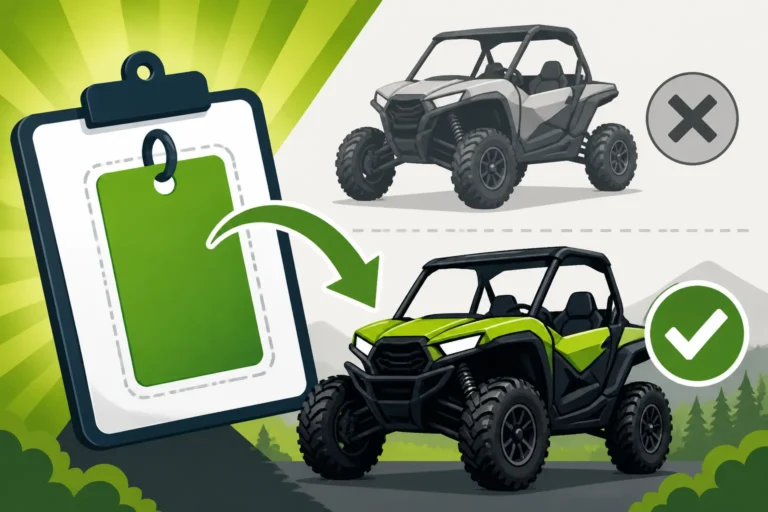
Think of the Washington Temporary ORV Use Permit as a kind of fast-pass for the trails. It's a temporary authorization to operate your off-road vehicle (ORV) on designated non-highway ORV trails and areas within Washington state. This permit allows you to legally enjoy the thrill of the dirt, mud, and forest roads without having the full, annual registration tabs and metal tag affixed to your machine. It's perfect for situations where you don't need or can't immediately get the full [Registering a WATV in Washington] completed. It's a single piece of paper, often printed on official state letterhead, that serves as your proof of temporary compliance.
It's really important to distinguish this from full registration. This temporary permit doesn't involve [Titling a WATV in Washington] or getting your permanent decals and metal tag. It's purely about granting you temporary riding privileges for a specific period. It's not about making your machine street legal, and it doesn't give you any of the privileges that come with a [Washington's On-Road Tab Explained]. Its purpose is singular: to get you onto off-road trails quickly and legally.
The Key Limitations: Trail Use Only
Here's the crucial part, and it's where many riders get confused or even run into trouble: the Washington Temporary ORV Use Permit is strictly for trail use only. This means no pavement. None. Not even a quick hop across a county road to get from one section of trail to another, unless that specific segment of road is explicitly designated as an ORV route and you have confirmed it with local authorities. This limitation is a significant one, and it's the primary reason why it might not be suitable for everyone.
The state is very clear on this. The purpose of this permit is to allow access to the non-highway trail system, such as those managed by the Department of Natural Resources (DNR) or other agencies. As the name implies, it's for "off-road use." If you envision any portion of your ride involving paved roads, even just to connect to a trailhead from a nearby camp, this permit will not cover you. For detailed information on this restriction, you can look into [Why a Temporary Permit Is Trail Only]. It's a common frustration for riders, but understanding this upfront saves a lot of headaches – and potential citations – down the line.
The Time Constraint: How Long Does It Last?
Another critical aspect of the temporary permit is its duration. It's not designed for long-term use. A Washington Temporary ORV Use Permit is valid for [Sixty Days on a Washington Temporary Permit] from the date of purchase. That's two months, and it's a firm deadline. There's no renewal process for the temporary permit itself; once those sixty days are up, you either need to have obtained your full, annual Washington ORV registration, or you'll have to purchase another temporary permit (though continuous use of temporary permits isn't the spirit of the law and can get expensive).
This sixty-day window is intended to provide ample time to complete the full registration process, which involves getting your title, paying for your [Washington Off-Road Tab Cost] and potentially the [Washington On-Road Tab Cost], and receiving your decals and metal tag. It acknowledges that sometimes the wheels of bureaucracy turn slowly, or you simply need a little more time to gather all your [Washington WATV Registration Paperwork]. But after sixty days, the expectation is that you've moved on to a more permanent solution.
Scenarios Where a Temporary Permit Shines (and When It Doesn't)
Knowing the "what" and "how long" of the temporary permit is one thing, but figuring out if it's the right fit for your situation is another. Let's explore some common scenarios to help you decide.
For Out-of-State Visitors and Non-Residents
This is arguably one of the most common and beneficial uses for the Washington Temporary ORV Use Permit. If you're visiting Washington from another state or province and your home state doesn't have a reciprocal ORV registration agreement with Washington, or if you simply don't have your machine registered in your home state, this permit is your golden ticket to the trails. Instead of going through the hassle of fully [Registering an Out-of-State Machine in Washington] for a short visit, you can grab a temporary permit and be legal for your trip.
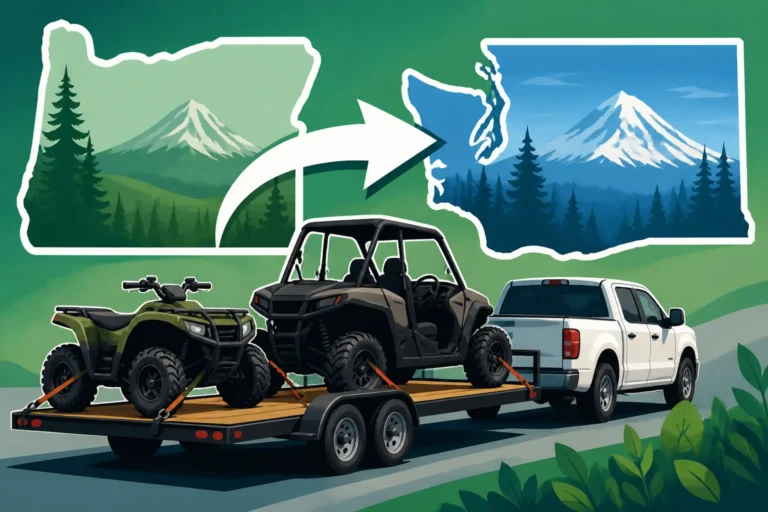
Imagine you're driving up from Oregon for a long weekend to explore the trails around Capitol State Forest. Your Oregon registration might not cover you in Washington, or maybe your machine isn't registered at all. Rather than trying to navigate Washington's full system for a few days of riding, you can simply purchase a temporary permit. This is exactly [What a Visitor With No Home-State Registration Buys] to legally access Washington's extensive trail network without the long-term commitment. It's convenient, relatively inexpensive, and keeps you compliant with state law during your visit.
Bridging the Gap While Awaiting Full Registration
Buying a new or used ATV or UTV is exciting! The last thing you want is for paperwork delays to keep you off the trails. This is another prime scenario where a temporary permit can save the day. Perhaps you just bought a machine from a private seller, and you're waiting for the title to be processed in your name, or maybe you're gathering all the necessary documents for a new purchase. The state allows for [Fifteen Days From Purchase in Washington] to register your machine before penalties might apply, but sometimes that window isn't enough, especially if there are unexpected hiccups.
Let's say you bought a used side-by-side last Saturday. You have the bill of sale, but the Department of Licensing appointment isn't for another week, and then processing time for the title and tabs could add more delay. Rather than letting your new toy sit idle, you can purchase a temporary permit. This gives you those crucial sixty days to complete your full [Titling a WATV in Washington] and registration without missing out on prime riding weather. When dealing with private sales, for instance, a solid bill of sale is crucial for the titling process, and resources like LawDepot can provide excellent templates to ensure you're covering all your bases, which can help smooth out the subsequent registration.
Trying Out the Sport or a New Machine
Maybe you're new to the off-roading world, or you're considering upgrading to a different type of machine – say, from an ATV to a side-by-side – and you want to try it out on public trails before fully committing to the annual registration. A temporary permit allows you to test the waters without investing in a full year's tabs right away. This is particularly useful if you're borrowing a friend's machine (with their permission, of course) or if you've purchased one that you're not sure you'll keep long-term.
It's a low-commitment way to get a feel for Washington's varied terrain, from the damp, rooted trails of the coast range to the dusty, rocky routes of Eastern Washington. Instead of paying the full [Washington WATV Registration Cost] and getting the [Washington WATV Metal Tag Cost] right away, you can get a taste of the experience. If you decide the sport isn't for you, or the machine isn't the right fit, you haven't over-invested in a long-term registration that you won't use.
When a Temporary Permit Isn't Your Best Bet
While the temporary permit is incredibly useful in certain situations, it's definitely not a catch-all solution. If you're a Washington resident who plans to ride frequently throughout the year, especially if you want the flexibility to use roads (where allowed by local ordinance), then investing in the full annual registration is almost always the smarter, more cost-effective choice. The cumulative cost of continually buying temporary permits will quickly exceed the price of an annual off-road tab.
Furthermore, if your typical riding involves connecting trails via county roads that are open to ORVs, or you need to access trailheads via a short paved stretch, the temporary permit's "trail use only" restriction will be a constant source of frustration and legal risk. For such scenarios, obtaining both the [Washington's Off-Road Tab Explained] and the [Washington's On-Road Tab Explained] is absolutely essential. The temporary permit is for temporary, off-road only access – remember that distinction clearly.
How to Get Your Washington Temporary ORV Permit
Alright, so you've decided a temporary permit is exactly what you need. Now, how do you actually get one? The process is thankfully pretty straightforward, designed for quick access rather than bureaucratic hurdles.
Where to Purchase and What You Need
Getting your temporary permit is fairly simple. You can purchase them at any authorized vehicle licensing office or subagent across Washington state. These are the same places where you'd go to register your car or get your annual ORV tabs. You won't find them online, unfortunately, so a quick trip to your local licensing office is usually required.
When you go, you'll need to bring a few things with you. Crucially, you'll need information about your ATV or UTV, primarily its Vehicle Identification Number (VIN). This ensures the permit is tied to a specific machine. You'll also need identification for yourself. While you might not need the full battery of [Washington WATV Registration Paperwork] that's required for permanent tabs, having your bill of sale or proof of ownership handy is always a good idea, especially if the machine is a recent purchase. The licensing agent will enter the VIN into the system and issue you a paper permit.
The Cost and What It Covers
The Washington Temporary ORV Use Permit has a fixed cost, which is designed to be accessible for short-term use. Currently, the cost for a temporary permit is [Washington Temporary ORV Permit Cost]. This fee goes towards maintaining Washington's non-highway vehicle recreation areas and programs, contributing to the upkeep of the very trails you'll be riding.
While it covers your legal access for sixty days, remember that this fee is separate from the annual [Washington ORV Tab Cost] you would pay for full registration. It's an immediate solution, not a down payment on your annual tabs. It solely covers your temporary riding privilege for designated off-road areas. It does not include the [Washington WATV Metal Tag Cost] or any other fees associated with a full, permanent registration.
Displaying Your Temporary Permit
Once you have your temporary permit, you need to display it correctly on your machine. The permit is a physical piece of paper, and Washington law requires that it be carried on the ORV when it is being operated. This means having it readily accessible for inspection by law enforcement or park rangers.
The best practice is often to keep it in a waterproof bag or container that's secured to your machine. Many riders will put it in a clear plastic sleeve and attach it to the handlebar bag, a fender, or even a visible spot on the dash of a side-by-side. The key is visibility and accessibility. While it's not a sticky decal like your annual tabs, it serves the same purpose of immediate proof of registration. Ensure it's legible and protected from the elements, as the Washington weather can be notoriously damp, and a soggy, illegible permit isn't much better than no permit at all!
Navigating the Transition from Temporary to Full Registration
The temporary permit is a fantastic stepping stone, but it's crucial to remember its transient nature. For any serious or long-term riding in Washington, you'll want to transition to a full, annual registration.
The Importance of a Permanent Solution
Relying solely on temporary permits year after year isn't practical or economical. The sixty-day window is intentionally short to encourage riders to complete their full registration. A permanent registration offers peace of mind, consistency, and often, more flexibility (especially if you opt for the on-road tab). It also means you won't have to keep track of expiration dates every two months or make repeated trips to the licensing office.
The funds from annual registrations also play a vital role in maintaining the state's ORV trail system. By getting your annual tabs, you're contributing to the long-term health and accessibility of the trails you love to ride. It's a small investment that pays dividends in keeping Washington a premier destination for off-road enthusiasts.
Steps to a Full Washington WATV Registration
Once your temporary permit's sixty days are ticking down, or if you simply decide you're ready for the full commitment, the process for obtaining your annual Washington WATV registration involves a few key steps. First and foremost, you'll need proof of ownership, typically your vehicle title. It's critical that the title is in your name. If you purchased the machine from a private party, you'll need a properly filled out bill of sale, and again, resources like LawDepot can be helpful for ensuring you have a complete and legally sound document that supports your title application.
You'll take your title and other required [Washington WATV Registration Paperwork] to a vehicle licensing office. There, you'll pay the annual off-road tab fee, and if you intend to ride on approved roads, you'll also pay for the optional on-road tab. After this, you'll receive your annual decals and a [Washington's Metal Tag Explained], which are then affixed to your machine in the designated locations. This full registration will typically be valid for one year from the date of issuance, and then you'll simply need to [Renewing a Washington ORV Registration Yearly].
Comparison of Temporary vs. Full Washington ORV Registration
| Feature | Washington Temporary ORV Permit | Full Washington ORV Registration |
|---|---|---|
| Duration | 60 days from purchase date | 1 year from issuance, renewable annually |
| Cost | Single, fixed fee (check current rate) | Annual fee for Off-Road Tab, plus optional On-Road Tab and Metal Tag fee |
| Road Legality | No – strictly off-road trail use only | Yes – with On-Road Tab on approved roads |
| Paperwork Needed | VIN, ID (sometimes proof of ownership) | Title, Bill of Sale, ID, various forms |
| Physical Markings | Paper permit carried with machine | Annual decals and metal tag affixed to machine |
| Best For | Visitors, short-term use, awaiting full registration | Regular riders, long-term use, road access |
Disclaimer
This article is for general informational purposes only and does not constitute professional advice. Laws, prices and regulations vary by location and change over time. Consult a qualified professional for guidance on your specific situation.