How Long a Washington Temporary Permit Lasts
Navigating the world of off-road vehicle registration in Washington can feel like a maze, especially when you're just trying to get out on the trails. One common hurdle many riders face is understanding the ins and outs of temporary permits: how they work, who they're for, and most importantly, how long they actually last. This guide is here to cut through the confusion and explain exactly what you need to know about the duration of a Washington temporary ORV use permit, ensuring you can plan your rides with confidence.
Understanding the Washington Temporary ORV Permit
When you're eager to hit the vast and beautiful trails of Washington, but perhaps you've just bought a new machine, or you're visiting from out of state, the idea of a temporary permit can sound like a quick fix. And in many ways, it is! However, it's crucial to understand what this permit is, and what it isn't, before you rely on it for your off-road adventures. It's a stop-gap measure, a bridge to full registration, or a brief welcome mat for visitors.
What Is a Temporary ORV Permit For?
Imagine you just bought that dream side-by-side or quad on a Friday afternoon. You want to ride it that weekend, but you haven't had a chance to get it fully registered and obtain your permanent Washington off-road tabs. This is a classic scenario where a temporary permit becomes your best friend. It allows you to legally use your off-road vehicle on designated non-highway trails and areas for a limited time. It's designed to give you a window to get all your ducks in a row for full registration without missing out on riding time. For visitors, it's a way to enjoy Washington's incredible trail systems without needing to fully register their machine in Washington if their home state doesn't have a reciprocal agreement or an ORV program. It's a common misunderstanding that this permit makes your machine street legal; it absolutely does not. The temporary permit is strictly for off-highway use.
Who Typically Uses a Temporary Permit?
The folks who often find themselves needing a Washington temporary ORV permit fall into a few distinct categories. First, new owners of machines bought within Washington often grab one. This gives them time to [Titling a WATV in Washington] and then officially register it with the Department of Licensing. It's a relief to know you can pick up your machine and ride almost immediately, instead of waiting weeks for the mail.
Second, out-of-state riders are frequent users. If your home state doesn't have an ORV registration program, or if Washington doesn't have a reciprocity agreement with your state, then a temporary permit is your ticket to ride here. It's much simpler than going through the full Washington registration process for a machine you'll only use occasionally in the state. Think about visitors bringing a machine from, say, California, who plan a long weekend trip to [Capitol State Forest Near Olympia, Washington] or [Walker Valley ORV in Washington's Skagit County]. A temporary permit keeps them legal. Finally, sometimes machines change hands quickly, or there's a delay in paperwork. The temporary permit smooths over these transitions, ensuring continuous legal trail access.
The Cost and Acquisition of a Temporary Permit
Let's talk brass tacks about getting one of these. The cost for a Washington temporary ORV use permit is quite modest, especially when you consider the peace of mind it offers. It's designed to be an accessible option, not a financial burden. You can often obtain these permits through various Department of Licensing (DOL) subagents, which are typically vehicle licensing offices found in towns and cities across the state. The process is usually straightforward: you provide proof of ownership, some basic information about your machine, and pay the fee. It's a quick transaction, often taking just a few minutes, which is exactly what you want when you're eager to get riding. You can also get more details on [Washington's $15.75 Temporary ORV Permit].
The Sixty-Day Window Explained
Now, for the core question: how long does this handy permit actually last? The answer is a clear and consistent sixty days. This isn't a vague timeframe; it's a specific window designed to be long enough for most temporary needs but short enough to encourage full compliance with long-term registration requirements.
Counting the Days: Start and End Dates
When you receive your temporary permit, pay close attention to the issue date. The sixty-day clock starts ticking from that very day. So, if you get your permit on January 1st, it will be valid until the end of the day on March 1st (assuming January has 31 days and February has 28). It’s not about calendar months; it's exactly 60 consecutive days. This finite period means you really need to be mindful of its expiration. Don't let that last weekend slip by because you miscalculated! It's worth putting a reminder on your phone or marking it on a calendar. When riding, it's critical to carry [Carrying the Registration in the Machine] or at least a printed copy of your temporary permit. A Washington State Patrol trooper or a DNR ranger will look for that date.
Why Sixty Days? The Intent Behind the Duration
The sixty-day duration isn't arbitrary. It's a carefully considered period that serves multiple purposes for the state of Washington and its riders. For new owners, 60 days provides ample time to complete the title transfer process, address any lienholder issues, and then apply for permanent [Registering a WATV in Washington]. It recognizes that sometimes life gets in the way, or the DOL office might be busy. For visitors, it's generally more than enough time for an extended vacation or a couple of trips throughout a season without having to jump through the hoops of full registration. It offers flexibility without becoming a loophole for avoiding permanent registration. The state wants to ensure that all machines using its trails are accounted for in the long run, contributing to trail maintenance and management through permanent tab fees.
Limitations of a Temporary Permit
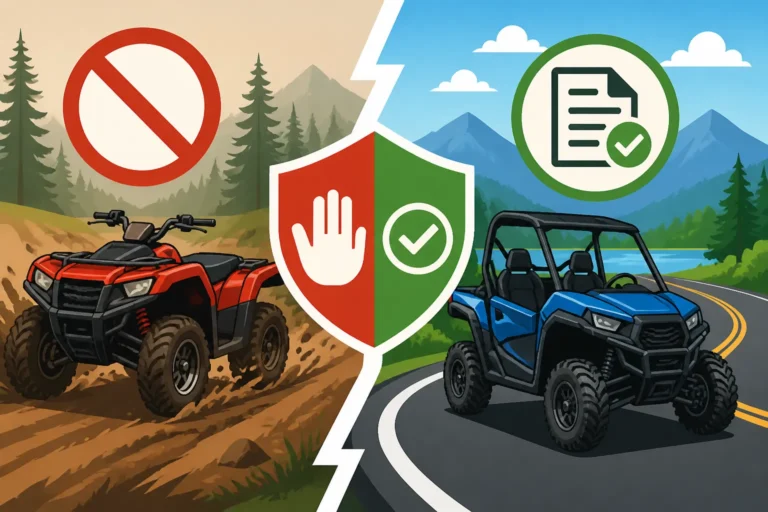
While incredibly useful, the temporary permit comes with some significant limitations that every rider must understand to avoid fines or legal trouble. The most crucial limitation is its trail-only nature. This permit does not authorize you to ride your ORV on any public roads, streets, or highways that are open to conventional vehicle traffic. Even if a county or city has opened its roads to WATVs, a temporary permit does not grant you this access. For that, you would need a fully registered machine with both the off-road and on-road tabs, meaning your machine has passed a safety inspection and meets all [Washington WATV Road Requirements].
Another important limitation is its non-transferability. The temporary permit is issued for a specific machine and, in some cases, to a specific owner. You cannot transfer this permit to another machine or pass it along to a friend if you sell your ORV within that 60-day window. It's tied directly to the initial transaction or visitor period it was issued for. So, if you sell your machine after only 30 days of a temporary permit, the new owner will need to obtain their own temporary permit or complete full registration. This ensures accountability and helps prevent misuse.
Here's a quick look at the core differences:
| Feature | Washington Temporary ORV Permit (60 Days) | Full Washington ORV Registration (Annual) |
|---|---|---|
| Duration | 60 days from issue date | 1 year, renewable annually |
| Usage | Designated non-highway ORV trails/areas ONLY | Designated ORV trails/areas |
| Road Use | NOT PERMITTED | Permitted with additional "on-road" tab & inspection in open areas |
| Cost | Modest, one-time fee | Annual fee for off-road tab (and optional on-road tab) |
| Transferability | Non-transferable between machines/owners | Stays with the machine, transfers with sale |
| Primary Beneficiary | New owners, out-of-state visitors | All resident ORV owners for regular use |
| Safety Inspection | Not required for permit issuance | Required for "on-road" tab |
When a Temporary Permit Makes Sense
Understanding the duration is one thing, but knowing when to choose a temporary permit over full registration can save you time, money, and hassle. It's not always the right choice, but for specific situations, it's invaluable.
Buying a New-to-You Machine
This is probably the most common use case. You've just found that perfect used quad or side-by-side. The excitement is palpable! But before you can get those permanent tabs, you need to transfer the title into your name. This step alone can sometimes take a little while, especially if there are any hiccups with the previous owner's paperwork or if you're dealing with a private sale where you might use a service like LawDepot to draft a [Washington WATV Bill of Sale Requirements] to ensure all details are legally sound.
During this waiting period, a temporary permit allows you to legally use your new toy on the trails. It means you don't have to stare at it in your garage, itching to ride, while the bureaucracy grinds. It gives you a legitimate bridge between purchase and permanent registration, letting you enjoy your machine from day one. Just remember that 60 days will fly by quickly, so use that time wisely to get your title and registration finalized.
Visiting Washington from Out of State
Washington boasts some incredible off-road riding opportunities, from the dense forests of the Cascades to the sandy dunes of eastern Washington. If you're planning a trip and bringing your ORV, but your home state either doesn't have an ORV registration program or doesn't have a reciprocity agreement with Washington, then the temporary permit is your go-to. It's often referred to as [Washington Temporary Permit for Nonresidents] for good reason.
This allows you to legally access Washington's designated ORV trails without the need for a full, annual registration process for a machine that will only be in the state temporarily. It's a fantastic option for those who might visit once or twice a year for a special trip. It saves you the complexity and cost of registering an out-of-state machine permanently. Just make sure to double-check the reciprocity rules if your state does have an ORV program, as you might not even need the temporary permit.
Expediting First-Time Trail Access
Sometimes, life just happens. Maybe you procrastinated, or maybe there was an unexpected opportunity to go riding that you simply couldn't pass up. A temporary permit can get you onto the trails quickly when other registration steps might still be pending. Think of it as an express pass for immediate trail access. It bypasses the need for some of the more in-depth steps that come with full registration, allowing you to ride while those processes are underway. This is especially true for those first-time owners who are still learning the ropes of [Washington WATV Registration Paperwork] and might need a little extra time to gather all the necessary documents. It's a great tool to ensure you don't miss out on a planned trip while waiting for final processing.
What Happens When Your Temporary Permit Expires?
The sixty days pass quickly, especially when you're having fun on the trails. It's critical to know what to do when that expiration date looms, as riding on an expired temporary permit can lead to fines and legal headaches. Don't let your excitement turn into a costly mistake.
The Need for Permanent Registration
Once your 60-day temporary permit is up, your ORV is no longer legally authorized for use on Washington's public trails. This means it's time to secure your permanent Washington ORV tabs. The good news is that those 60 days should have provided you with ample opportunity to get your title transferred and apply for your annual [Washington Off-Road Tab Explained] (and if you plan to ride on legal roads, the [Washington's On-Road Tab Explained] as well).
This involves providing proof of ownership (your new title), completing the necessary forms, and paying the annual fees. You'll then receive your physical tabs (decals) to affix to your machine and a registration card to carry with you. This annual registration is the long-term solution, ensuring you're good to go for a full year of adventures. You can learn more about the complete process in guides like [Registering a WATV in Washington].
Consequences of Riding on an Expired Permit
This is where realism comes in. Riding on an expired temporary permit is essentially riding an unregistered off-road vehicle. And that, my friends, can lead to a world of trouble. Washington law enforcement, including State Patrol, county sheriffs, and DNR rangers, actively patrol ORV areas. They are checking for current registration.
If you're caught, the consequences can include a citation, which means a fine. The amount can vary, but it's always more than the cost of simply getting your tabs in the first place. Beyond the financial penalty, an expired permit can also cause delays, potential impoundment of your machine in severe cases, and generally put a damper on your day. It's simply not worth the risk. Always ensure your documentation is current before you load up and head out. Think of it like this: if you can take the time to draft a personal use agreement with a friend using a tool like LawDepot for borrowing a machine, you can certainly check your permit's expiration date.
Options for Renewing or Extending (Hint: There Aren't Many)
It's important to understand that the Washington temporary ORV permit is generally a one-time, non-renewable document. You can't just keep buying a new 60-day permit over and over to avoid annual registration. The system isn't designed for that. The intent is for it to be a bridge, not a permanent solution.
If you find yourself approaching the 60-day limit and still haven't completed your permanent registration, you need to prioritize getting that done immediately. There isn't typically an option to "renew" or "extend" a temporary permit. In very rare, specific circumstances where a processing error or an extraordinary delay directly from the DOL has occurred, you might have a case for a new temporary permit. However, this is the exception, not the rule, and would require direct communication with the DOL. For most riders, the temporary permit is a countdown to full, annual registration. If you're a nonresident and plan to ride for more than 60 days in a year, or plan multiple visits, it might be more cost-effective and simpler in the long run to go through the [Registering an Out-of-State Machine in Washington] process for permanent tabs.
Navigating the nuances of ORV permits and registration doesn't have to be intimidating. By understanding the 60-day limit of Washington's temporary ORV permit and its specific purpose, you can confidently plan your rides and ensure you stay on the right side of the law. Happy trails!
Disclaimer
This article is for general informational purposes only and does not constitute professional advice. Laws, prices and regulations vary by location and change over time. Consult a qualified professional for guidance on your specific situation.