Which Adult Signs a Rental Waiver
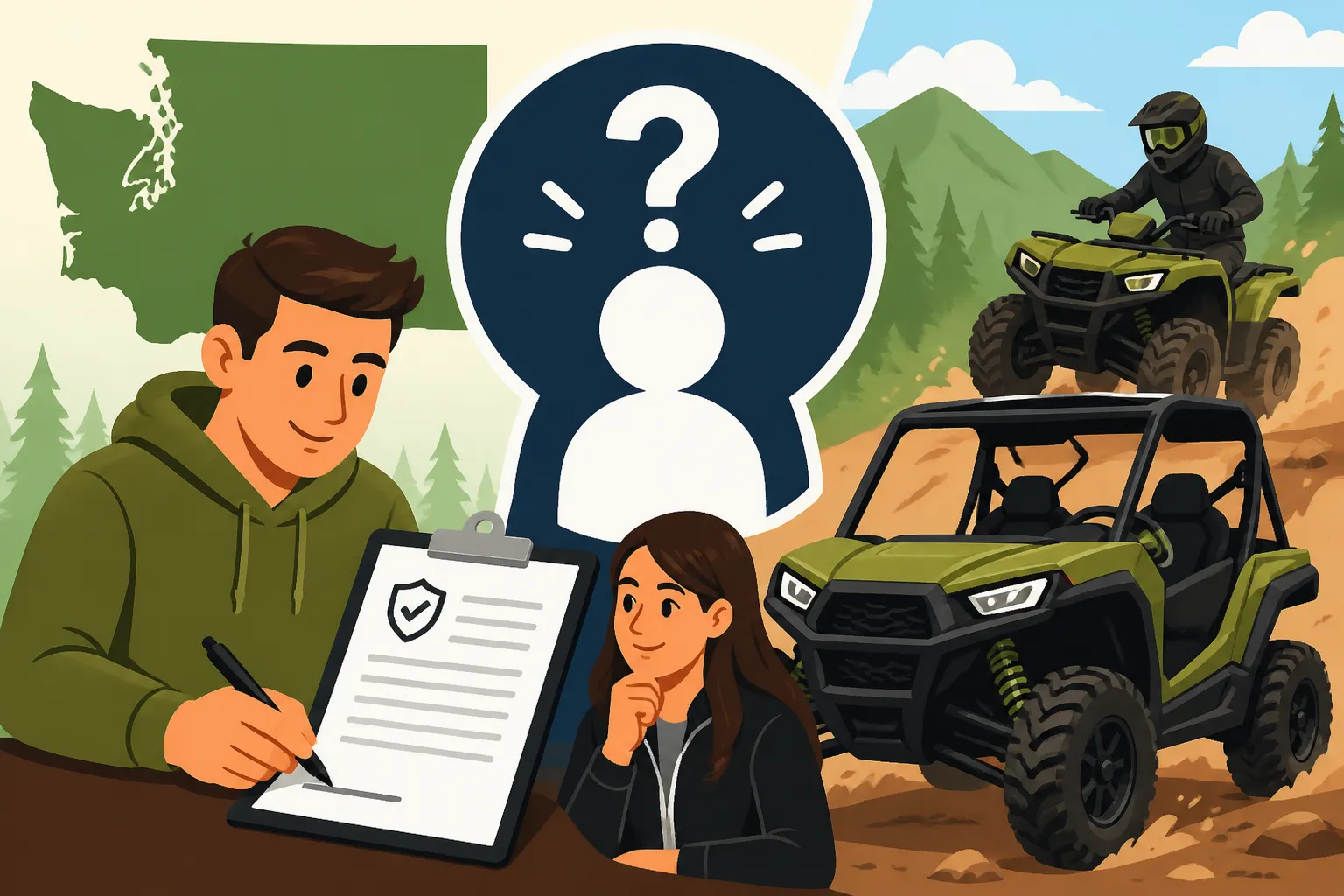
A parent may assume they can sign a Washington ATV or UTV rental waiver for a young rider, but the rental company’s rules decide who can sign and what that signature covers. The answer can depend on the rider’s age, who is renting the machine, and whether the adult has legal authority to sign for the minor. Here’s what to confirm before pickup.
Who should sign a rental waiver for a minor
Start with the rental company, not an assumption that any adult in the group can sign. A provider may require a parent or legal guardian to sign a minor’s waiver or consent form. It may also require the adult who signs to be the renter, to accept responsibility for the machine, or to stay with the young rider. Those requirements can differ between providers.
If a teenager is renting or riding, call ahead and ask the company to explain its process for minors. Do this before booking if possible. A waiver signed by the wrong person may not meet the provider’s requirements, even if that adult is a relative, family friend, or the person who brought the teenager to the rental location.
| Situation | What to confirm with the rental company |
|---|---|
| A parent or legal guardian is present | Whether that person must sign the waiver, the rental agreement, or both |
| A parent or guardian will not be present | Whether the company accepts written authorization or requires a different arrangement |
| Another adult is bringing the young rider | Whether that adult can sign, and whether proof of authority is needed |
| An adult rents while a minor rides | Whether the minor can operate the machine and what supervision the company requires |
| Several adults and riders are in the group | Which person is the named renter and who accepts responsibility for the machine |
A signature is not simply a formality. The waiver may describe risks, set participation conditions, and connect to the rental agreement’s terms about machine use, damage, and responsibility. Read the actual documents and ask about any wording you do not understand.
Do not sign as a parent or guardian if you do not have that authority. If the parent or guardian cannot attend, ask the rental business what it will accept before relying on a permission note or phone call. The business may have a specific form or may not allow the arrangement.
For more on the provider’s requirements for younger renters, see Washington Rules for Renting to a Teenager. That topic is related, but the practical point is the same: confirm the rental company’s age, signing, and supervision rules directly.
What the adult’s signature does and does not mean
A waiver and a rental agreement may be separate documents, even if they are presented together. The waiver commonly addresses risk and release language; the rental agreement may identify the renter, machine, permitted operators, and conditions of use. A parent or guardian may be asked to sign one, both, or a separate consent form. Ask which document the signature applies to and request a copy.
Read carefully for conditions such as who may operate the machine, where it may be taken, whether passengers are allowed, and what happens if the machine is damaged or returned late. If an adult signs as the renter, the contract may place obligations on that adult even when a teenager operates the machine. Do not assume the person who signs is responsible only for giving permission.
A waiver also does not guarantee that every claim is barred. The effect of a waiver can depend on its wording and the circumstances. If you are unsure what a clause means or what responsibility you are accepting, ask the provider to explain it before signing. For advice about a specific dispute or legal obligation, consult a qualified professional.
The adult’s signature does not automatically make a young rider eligible to ride everywhere. It does not replace age-related riding rules, operator requirements, land-manager permission, registration, or any required pass. An adult may be able to authorize participation for the rental company while still needing to meet separate requirements to supervise a minor on a particular route or public riding area.
That distinction matters especially for younger riders. Check Washington Rules for a Rider Under 16 and What a Fifteen-Year-Old Needs to Ride in Washington if the rider is under 16. A waiver is a rental document; it is not a substitute for checking the rules that apply to the rider and location.
Rental paperwork is separate from Washington riding requirements
Before you leave the rental site, ask who is responsible for confirming that the machine is ready and authorized for the route you plan to use. A rental business may provide information or equipment for a particular riding area, but you should not assume that a signed waiver covers access or compliance beyond the rental relationship.
If you plan to ride on public land, confirm the land manager’s requirements for that area. For example, rules for riding on Department of Natural Resources land are not the same thing as a rental company’s waiver requirements; see Washington Rules for Riding DNR Land. If your trip is on national forest land, check the applicable area information as well as Washington Rules for Riding a National Forest.
Ask the rental business whether the machine has the required registration or tabs for the type of use you have planned. A machine rented for off-road use may not be equipped or authorized for public-road riding. If you plan to use it on a road, check the provider’s restrictions and the road-use rules before you go. A waiver does not make an otherwise prohibited route legal.
The same separation applies to passes. A rental agreement or waiver does not, by itself, establish that you have paid for access to a trailhead or riding area. Ask whether the rental includes any required pass, who must display it, and whether it applies to the vehicle you are driving. The question Does a Rental Carry Its Own Pass? can help clarify what to check.
If the rental is from another state or you are visiting Washington with a machine registered elsewhere, do not assume the waiver resolves permit or registration questions. Confirm the machine’s status and the rules that apply to your visit. Washington ORV Reciprocity With Other States explains why a visitor’s home-state registration or permit may not answer every Washington-use question.
A useful way to avoid confusion is to separate the paperwork into three groups:
- Rental documents: Waiver, rental agreement, operator list, and any parent or guardian consent.
- Rider requirements: Age, supervision, training, license, or other conditions that may apply to the rider and activity.
- Location and machine requirements: Registration, tabs, passes, equipment, and permission for the particular land or route.
Ask the provider which items it supplies and which ones you must arrange yourself. In particular, verify whether the rental comes with the required ORV tabs for the intended use. Do Rentals Come With Their Own ORV Tabs? addresses that separate issue.
Before pickup: questions to ask and documents to bring
A quick call can prevent a rejected waiver or a last-minute change of plan. Give the business the rider’s age, identify the adult who will be present, and explain whether that adult is the parent or legal guardian. Also describe where you expect to ride; the provider may have restrictions based on the machine, the rider, or the destination.
Use this checklist:
- Ask who must sign. Confirm whether the company requires the parent or legal guardian, the named renter, or both.
- Ask about absent guardians. If a parent or guardian will not be there, find out whether the company accepts any alternative and what documentation it requires.
- Confirm who can operate. Ask whether the teenager may ride or drive the specific machine and whether the adult must remain present.
- Read the full agreement. Check operator restrictions, permitted areas, passenger rules, damage terms, and the return conditions.
- Get copies. Keep copies of signed documents and any written instructions from the provider.
- Check the riding destination. Confirm access rules, required passes, and any route or road restrictions independently of the waiver.
- Verify machine paperwork. Ask what registration or tabs the rental includes and whether they match the planned use.
Do not treat a general permission letter as a guaranteed substitute for the rental company’s own paperwork. If the provider says a parent or guardian must sign, an accompanying adult may not be able to replace that person. If it allows another arrangement, ask what exactly the adult is authorized to sign and what responsibility that creates.
Likewise, do not let a signed waiver create a false sense that the ride is cleared. A rental can be approved by the business while the planned route still requires a separate pass, has a different age or supervision condition, or does not allow that machine. If the trip includes public roads, check the road-access rules and the machine’s eligibility separately. Washington Road Reciprocity With Its Conditions is relevant when considering out-of-state road authorization, but it does not replace checking the particular route.
The safest answer to “which adult signs?” is therefore: follow the rental provider’s written policy, and expect it to specify whether the parent or legal guardian must sign for a minor. Make sure the adult understands whether they are signing a waiver, taking on the renter’s contractual obligations, or doing both. Then check rider and location rules separately, since the signature alone does not authorize every rider or route.
Disclaimer
This article is for general informational purposes only and does not constitute professional advice. Laws, prices and regulations vary by location and change over time. Consult a qualified professional for guidance on your specific situation.