Washington Rules for Carrying Fuel
Carrying extra fuel on an ATV or UTV can make a remote Washington ride possible, but a loose can is a serious spill and fire risk. The rules can also depend on whether you are riding on DNR, federal, or other land, and whether fire restrictions are in effect. Here’s how to transport fuel more safely and what to check before you leave.
Check the rules for the land you plan to ride
There is not one simple fuel-carrying rule that answers every question for every Washington riding area. Requirements and restrictions may depend on the land manager, the route, current fire conditions, and how you are transporting the fuel. A container that is acceptable for one trip may not be permitted under a temporary restriction elsewhere.
Before loading up, identify who manages the riding area and check its current notices. For state-managed riding areas, start with the rules for Washington Rules for Riding DNR Land. For federal areas, check Washington Rules for Riding Federal Land. The rules for a road or trail can also differ from those for a campground or staging area, so confirm the requirements that apply to your whole route.
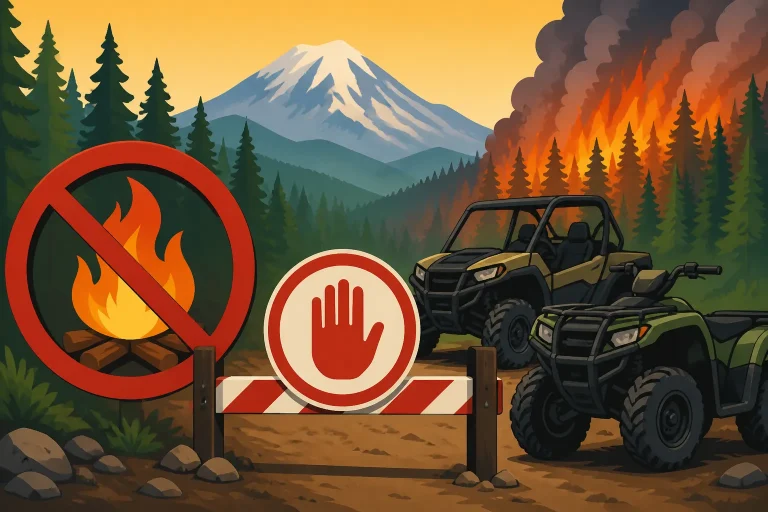
Fire restrictions matter even when you are carrying fuel only for your machine. A land manager may close roads or trails, limit activities, or impose other conditions during dry or high-risk periods. Check Washington Rules for Riding During Fire Season and Washington Fire Restrictions That Close Trails, then review current alerts before loading your machine. A familiar trail can have different access conditions from one visit to the next.
Do not assume that an open trail means every activity is allowed. Restrictions may apply to campfires, equipment, or access independently of your fuel container. If a notice is unclear, contact the land manager before riding rather than relying on an old map, a previous trip, or someone else’s recollection.
A few checks before departure can prevent a wasted trip:
- Confirm the riding area is open and identify the land manager.
- Read current fire restrictions and access notices.
- Check whether the rules say anything specific about fuel containers or refueling.
- Confirm that the machine and any carried container are allowed on the route.
- Review any access permit or land-use conditions that apply. Washington ORV Permits Explained can help distinguish riding permits from other access requirements.
There may not be a single fuel quantity that works everywhere. Do not assume that a container is allowed just because it fits on the machine or because you have carried it there before. Follow the current instructions for the specific property and ask the land manager if you cannot find a clear answer.
Choose a container and mount it securely
Use a container made for the type of fuel you are carrying. A beverage bottle, household jug, or improvised container is not an appropriate substitute. Check the container’s label and instructions, make sure its cap and seal are in good condition, and follow any applicable transport requirements. A container that is cracked, swollen, leaking, or missing its closure should not go on the ride.
The container needs to stay upright and secured when the machine climbs, descends, turns, and crosses rough ground. Use a suitable mount or a robust restraint designed for the job, and check that it cannot shift, bounce free, or rub against a sharp edge. A strap that is loose at the staging area may become looser after a few miles of vibration.
| Carrying option | Practical considerations | Avoid |
|---|---|---|
| Purpose-built mount on an ATV rack | Keeps the container in a planned position; check that the rack and mount hold it firmly | Letting the can hang over the side or interfere with controls |
| Secured cargo-bed location on a UTV | Offers a stable place outside the passenger area; prevent the can from sliding or tipping | Leaving it loose among tools or gear |
| Container carried in a trailer | Can keep fuel off the machine; secure it against movement and protect it from damage | Placing it where other cargo can crush or puncture it |
| Backpack or passenger area | Usually a poor choice because a leak puts fuel close to the rider or occupants | Carrying an ordinary can on a person or inside the cab |
For an ATV, keep the load balanced and do not block the rider’s movement, access to the controls, or visibility. A container mounted too far to one side can affect handling. For a UTV, keep fuel outside the passenger compartment whenever practical and secure it so it cannot become a projectile if the machine stops abruptly or tips. Do not place it where it can obstruct a seat belt, door, or emergency exit.
Keep the container away from hot exhaust parts, moving components, electrical hazards, and anything that can puncture or abrade it. The exact safe location depends on the machine and its accessories, so follow the mount and vehicle manufacturers’ instructions. Avoid stacking gear on top of the container or securing it with a strap that presses on the cap.
If you buy a replacement can or mount through Amazon or another retailer, check that it is intended for the fuel you plan to carry and fits your machine’s mounting arrangement. A product listing alone does not confirm that an item meets the rules for a particular riding area.
Before riding, tug the container and its mount by hand. Check again after the first short stretch of rough trail and whenever you stop for a break. If the container has shifted, stop in a safe place and fix the problem before continuing.
Prevent leaks, fumes, and ignition risks
Fuel vapor can ignite, and spilled fuel can create a hazard for riders, land, and water. Treat an extra container as part of the machine’s safety equipment, not as loose cargo.
Keep the cap closed and the container upright. Do not overfill it; leave the space the manufacturer specifies for expansion. A can filled to the brim may leak as temperatures change or as the machine jolts over uneven terrain. Never use a container that smells strongly of fuel on the outside or shows signs of a leak.
Refuel in a stable, well-ventilated place away from open flames, sparks, and smoking. Turn the engine off and allow hot parts to cool before opening a fuel container or refueling. Keep fuel away from camp stoves, lanterns, and campfires. If your machine has its own refueling instructions, follow those as well.
A safe refueling routine is:
- Stop on stable ground in a suitable, well-ventilated location.
- Turn off the engine and wait for hot components to cool.
- Keep the container and machine away from flames, smoking, and sources of sparks.
- Open the container carefully and refuel without rushing or overfilling.
- Close the cap securely and wipe up any small drips before restarting.
- Put the container back in its mount and verify that it is secure.
Do not refuel beside a stream, lake, wetland, or drainage channel. A small spill can travel farther than it looks, especially on sloped or wet ground. If fuel spills, stop the source if you can do so safely, keep ignition sources away, and follow the land manager’s instructions for reporting and cleanup. Do not rinse spilled fuel into soil or water.
A suitable fire extinguisher can be a useful part of a riding kit, but it does not make an unsafe container or mount safe. Choose equipment intended for the potential fire risks, secure it where it can be reached, and know how to use it. Follow applicable land rules for required safety equipment, including any rules about spark arresters; Washington Arrester Rules on Public Land covers that separate requirement.
Plan the amount and route before departure
Carry only the fuel you reasonably expect to need, plus a sensible reserve for the route and conditions. More fuel means more weight and another item that can leak, shift, or be damaged. Estimate consumption using the machine’s condition, terrain, riding pace, and distance between fuel stops rather than assuming a familiar road will be equally easy on every trip.
Fuel use can rise in deep sand, mud, steep climbs, low-speed technical riding, or when a UTV is heavily loaded. Detours, closures, weather, and changing trail conditions can also extend a ride. Build a plan around realistic stops and keep enough reserve to respond to an unexpected delay, but do not use a larger load than your machine and mount can safely carry.
Before setting out, tell someone your planned route and return time, and know what you will do if the route closes or the machine develops a problem. If you are riding with others, agree on fuel stops and on what the group will do if one machine has to turn back. For a group trip, the guidance in [Washington Rules for a Group Ride] may help with the broader planning.
A road used to reach a trail is not automatically open to every machine or every kind of use. Confirm the route and any restrictions, especially if your ride includes forest roads or other shared routes. Washington Rules for Riding a Forest Road explains why access conditions need checking rather than guessing from the road surface.
Before each ride, use a simple final check:
- The riding area and route are open.
- Current fire restrictions have been checked.
- The container is suitable, sealed, undamaged, and upright.
- The mount is secure and the load does not interfere with riding.
- Fuel is separated from passengers, hot parts, and ignition sources.
- Your route and expected fuel use leave room for a reasonable reserve.
If you cannot secure a container properly, do not carry it on the machine. Adjust the plan, use a suitable trailer or vehicle arrangement, or choose a route with a practical fuel stop. Arriving with less spare fuel is safer than riding with a can that can fall, leak, or expose the rider to fumes.
Disclaimer
This article is for general informational purposes only and does not constitute professional advice. Laws, prices and regulations vary by location and change over time. Consult a qualified professional for guidance on your specific situation.