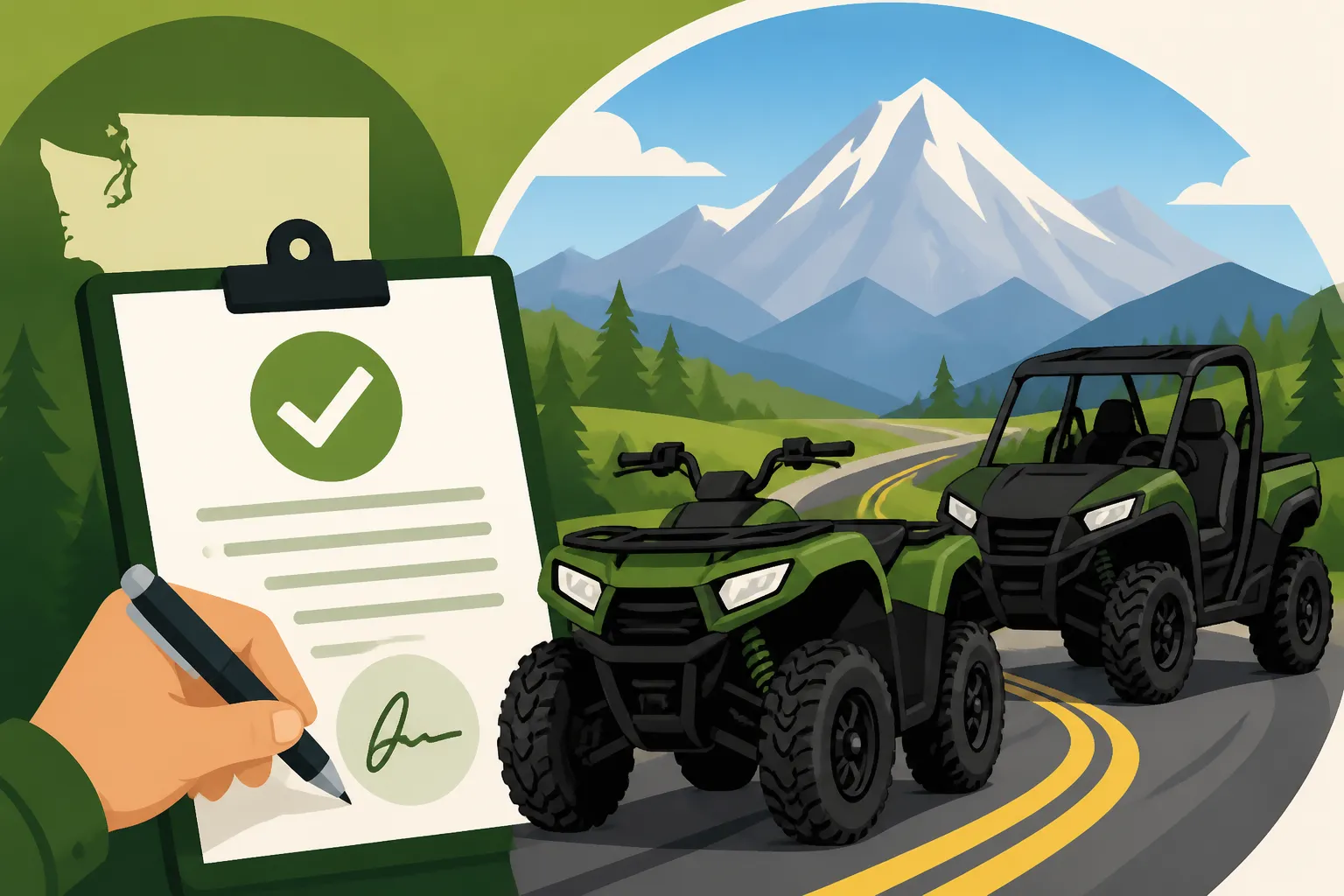
Signing the Road Use Declaration for On-Road Tabs
It's incredibly frustrating when you're itching to take your Washington ATV or UTV – what we affectionately call a WATV here – onto those open county roads, only to find another layer of paperwork standing in your way: the Road Use Declaration. This seemingly simple form can feel like a gatekeeper to pavement freedom, leaving many riders scratching their heads about what it is, why it's needed, and how to properly sign it to finally get those coveted on-road tabs. This guide is here to cut through the confusion and walk you through every step of confidently signing that declaration so your WATV can legally hit the streets.
What Exactly Is the Road Use Declaration?
When you decide you want to equip your WATV for road use in Washington and apply for those special on-road tabs, you're stepping into a different legal realm than purely off-road riding. The state needs a formal acknowledgment from you that your machine is ready for this transition, and that's precisely where the Road Use Declaration comes in. It's not just another piece of paper to check off a list; it's a critical component of ensuring safety and compliance on our public roadways.
More Than Just a Form: Your Pledge for Road Use
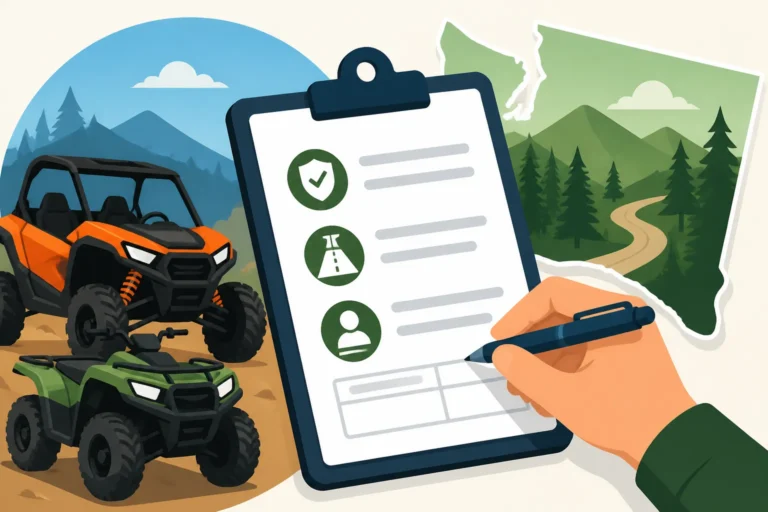
Think of the Road Use Declaration as a solemn vow you're making to the state of Washington. You are, in essence, legally declaring that your WATV has been fitted with all the necessary safety equipment to operate on public roads, just like any other motor vehicle. This is a crucial distinction, as the standards for off-road use are often much less stringent than those for on-road travel. By signing this document, you're not just confirming; you're attesting under penalty of law that your machine meets these criteria. This declaration is what truly bridges the gap between a dirt-slinging trail machine and one capable of responsibly sharing the pavement with cars and trucks. It's a foundational step that directly ties into securing your [Washington's On-Road Tab Explained], demonstrating your commitment to legal and safe operation. Without this declaration, the Department of Licensing (DOL) won't issue those on-road privileges, as they rely on your sworn statement that your machine is road-ready.
The state isn't just taking your word for it, either; the declaration serves as a legal basis for holding owners accountable if a machine is found to be non-compliant after being registered for road use. It underscores the serious nature of operating a WATV on public roads and the responsibility that comes with it. This isn't a form you can gloss over or sign blindly; it demands your full attention and honesty. It’s part of a larger framework designed to integrate WATVs safely into the existing traffic ecosystem, protecting both riders and other road users.
The Specifics: What You're Confirming on the Form
So, what exactly are you declaring when you put your signature on this important document? The Road Use Declaration specifically asks you to confirm that your WATV is equipped with a comprehensive list of safety features and complies with various operational requirements. This includes, but isn't limited to, having at least one headlight (and often two are standard on modern machines), one taillight, and at least one brake light. Furthermore, you must attest that your WATV has turn signals for both front and rear, at least one mirror (most riders opt for two for better visibility), and a functional horn. For occupant protection, the declaration also covers the presence of a windshield or eye protection for the rider, and seatbelts for all designated seating positions if your machine is a utility-style vehicle (UTV or side-by-side).
These aren't optional upgrades you might consider; they are absolute prerequisites for your WATV to be deemed road-legal in Washington. The declaration also implicitly confirms your understanding of operational rules, such as adherence to posted speed limits, particularly the 35 mph cap on WATV use on many public roads. Each item on this list is there for a reason, contributing to the overall safety of your ride and the safety of others on the road. It ensures that your WATV can signal turns, be seen, stop effectively, and generally behave predictably in a mixed-traffic environment. Failing to have even one of these components properly installed and functional means your declaration would be false, opening you up to serious legal repercussions.
The Step-by-Step of Signing the Declaration
Navigating the bureaucracy of vehicle registration can sometimes feel like a puzzle with missing pieces. The Road Use Declaration, while critical, is just one part of a larger process. Understanding how to properly obtain, complete, and submit this form is key to a smooth registration experience. It's about getting the timing right and ensuring all your ducks are in a row.
Where to Get the Form and Who Needs to Sign It
The Road Use Declaration is a standard form provided by the Washington State Department of Licensing (DOL). When you're ready to register your WATV for on-road use, you'll typically receive this form as part of the application packet from any DOL office or authorized vehicle licensing subagent. Many riders also find it convenient to download and print the form directly from the DOL's official website, allowing them to fill it out at their leisure before heading to the licensing office. This can be particularly helpful if you want to review the requirements thoroughly or need to gather additional documentation. Along with this declaration, you'll generally be providing other essential documents, which are covered in depth in [Washington WATV Registration Paperwork].
As for who needs to sign it, the rule is straightforward: the registered owner or owners of the WATV must affix their signature. If the WATV is owned by a single individual, that person is the sole signatory. However, if the machine is co-owned – for example, by a married couple or business partners – all registered owners listed on the title and registration must sign the Road Use Declaration. This ensures that everyone with a legal stake in the machine acknowledges and agrees to the terms of road use. It’s a collective affirmation of compliance, legally binding all parties to the machine's road-readiness.
The Importance of the Safety Inspection Before Signing
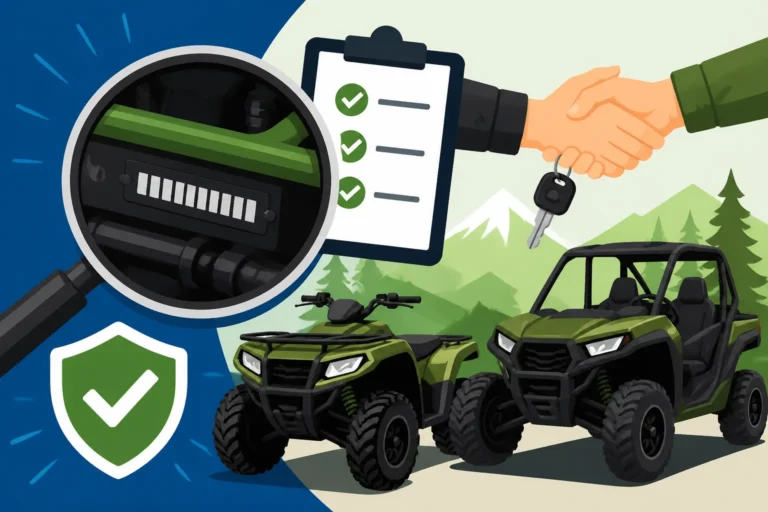
Here's a crucial piece of advice that many riders overlook in their eagerness to get those on-road tabs: do not sign the Road Use Declaration until your WATV has passed its required safety inspection. This isn't just a suggestion; it's a critical sequence of events. The declaration is your sworn statement that your machine meets specific safety and equipment standards. The safety inspection, on the other hand, is the independent verification by a certified professional that your machine actually possesses those declared features and functions correctly. Imagine signing an affidavit claiming you're fluent in a language, then immediately failing a proficiency test – it undermines the credibility of your statement.
The inspection process involves a qualified mechanic or inspection station thoroughly checking all the items listed on the declaration – headlights, taillights, turn signals, mirrors, horn, windshield/eye protection, and seatbelts – to ensure they are present and fully operational. This step provides an objective assessment, giving you the peace of mind that your WATV is indeed up to snuff for road use. You'll want to be prepared for the [Washington WATV Safety Inspection Cost] and know [Where to Get a Washington WATV Inspection] beforehand. Only once you have that signed inspection report in hand, confirming compliance, should you proceed to sign the Road Use Declaration. Signing prematurely, especially if your machine doesn't pass the inspection, could be considered a false declaration, carrying potential legal ramifications. It's always best to be honest and ensure your machine is truly ready before making that official statement to the state.
What Happens After You Sign and Submit
Once you've diligently filled out and signed the Road Use Declaration – ensuring all registered owners have added their signature – the next step is to submit it alongside your complete WATV registration application. This usually takes place at your local Department of Licensing office or through an authorized subagent. The declaration is a vital piece of the puzzle for [Registering a WATV in Washington] for on-road use. It acts as the final confirmation to the state that you, the owner, are taking full responsibility for the machine's compliance with road safety regulations. Without it, the on-road portion of your registration simply won't be processed.
Upon successful submission, along with all other required documentation, fees, and the passed inspection report, the DOL will then issue your WATV registration, which will prominently feature the coveted on-road tab. This tab is your official permission slip to ride on approved public roads. It's imperative to keep a copy of your signed Road Use Declaration for your own records, just in case there are ever questions or discrepancies in the future. While you won't typically carry the declaration itself while riding, the act of submitting it is what enables your vehicle registration card to reflect its street-legal status. It’s the behind-the-scenes legal handshake that makes your on-road adventures possible.
Common Pitfalls and Important Considerations
Getting your WATV street legal can feel like a triumph, but the journey doesn't end with a signature on a form. There are still crucial aspects to consider, from maintaining compliance to understanding how your declaration interacts with broader rules, especially for visitors or those new to Washington's specific regulations. Forewarned is forearmed, and knowing these details can save you a lot of headaches down the road.
Don't Rush It: The Equipment Must Be There
It's tempting, when you've done all the hard work of buying a WATV and getting it titled, to rush through the final paperwork to hit the trails – or in this case, the roads. However, rushing the Road Use Declaration is a significant misstep that can lead to serious consequences. The declaration is a legal document where you attest that your machine meets specific, non-negotiable equipment standards for road use. Signing it without your WATV actually having fully functional headlights, taillights, brake lights, turn signals, mirrors, a horn, and appropriate eye protection (or a windshield) isn't just a minor oversight; it's a false declaration.
Operating a non-compliant WATV on public roads after signing this declaration can result in hefty [Washington Fines for an Unregistered WATV] or for operating a vehicle that doesn't meet safety standards. Law enforcement officers are trained to spot these deficiencies, and if your machine doesn't match your declaration, you could face penalties, have your on-road privileges revoked, or even experience insurance complications in the event of an accident. The temptation to "get it later" or "hope nobody notices" is a dangerous path. Invest the time and money upfront to ensure your WATV is genuinely road-ready before you put your name on that form. It protects your wallet, your legal standing, and most importantly, your safety and the safety of others on the road.
Understanding Reciprocity and Out-of-State Riders
The Road Use Declaration is a Washington-specific requirement for WATV owners seeking on-road privileges within the state. For riders visiting Washington from other states, the concept of reciprocity can be a bit tricky, especially when it comes to on-road use. Washington does have [Washington ORV Reciprocity With Other States] for off-road purposes, meaning if your home state has a similar ORV registration program, your out-of-state sticker might be honored on Washington trails. However, on-road use is an entirely different ballgame.
Even if your home state considers your ATV/UTV "street legal," the specific equipment requirements and legal framework for on-road operation often differ significantly between states. Washington's Road Use Declaration, and the stringent safety inspection it implies, is designed to ensure that any WATV operating on its public roads meets a consistent standard. Therefore, a visitor with an out-of-state registration typically won't be able to ride their machine on Washington's approved roads unless their machine meets Washington's specific [Washington WATV Road Requirements] and they satisfy any other state-specific requirements. A temporary ORV permit, like the [Washington Temporary ORV Permit for a Visitor], primarily grants off-road access and explicitly does not authorize on-road travel, further emphasizing that the Road Use Declaration and its associated inspection are key to legal street riding here.
| Feature/Requirement | Road Use Declaration | Safety Inspection |
|---|---|---|
| Headlights | Declared as present | Verified functional |
| Taillights | Declared as present | Verified functional |
| Brake Lights | Declared as present | Verified functional |
| Turn Signals | Declared as present | Verified functional |
| Mirrors | Declared as present | Verified present |
| Horn | Declared as present | Verified functional |
| Windshield/Eye Protection | Declared as present | Verified present |
| Seatbelts (UTV) | Declared as present | Verified functional |
| Muffler/Spark Arrester | Implied compliance | Checked for presence |
| Overall Safety | Owner's attestation | Professional verification |
Keeping Your Documentation Safe While Riding
Once you've successfully navigated the process of [Filling Out the Road Use Declaration] and obtained your on-road tabs, you'll be eager to hit the pavement. However, your responsibilities don't end there. While the Road Use Declaration itself isn't a document you need to carry with you on every ride, your current registration card showing those on-road tabs absolutely is. Law enforcement may ask to see it at any time, whether you're on a trail, a forest road, or a paved county road. Therefore, ensuring this crucial piece of paper is always accessible and protected is paramount.
Washington weather can be notoriously damp, especially on the west side of the Cascades, and riding through mud and water is often part of the fun. This means your paper documents are vulnerable to the elements. Investing in a waterproof document holder, often a small, rigid plastic case or a heavy-duty zip-lock bag, is a wise move. You can typically find these at outdoor gear stores, motorcycle shops, or even office supply stores. Securing it within a sealed compartment on your WATV, like a glove box, under the seat, or in a securely latched storage box, will keep it dry and legible. You can find more tips on [Keeping a Registration Card Dry on a Wet Ride]. Beyond registration, remember other important documents like proof of insurance (if required for road use), and perhaps even a copy of your [Washington Bill of Sale for a WATV], especially if you've just purchased the machine. Resources like LawDepot can be helpful for easily creating and organizing such personal legal documents, though they aren't directly involved with state registration forms. Always be prepared, and you'll keep your riding experiences smooth and worry-free.
Disclaimer
This article is for general informational purposes only and does not constitute professional advice. Laws, prices and regulations vary by location and change over time. Consult a qualified professional for guidance on your specific situation.