Washington Rules for Riding a Wilderness Boundary
Washington ATV and UTV riders may travel near a wilderness boundary only on confirmed motorized routes outside designated wilderness.
Your sticker stops at the state line.
Non-resident permits, what they cost and how long they last, and which states honor each other’s — or, increasingly, none at all.

Washington ATV and UTV riders may travel near a wilderness boundary only on confirmed motorized routes outside designated wilderness.

Washington electric ORV trail access depends on registration, reciprocity, trail designation and land-manager rules, not motor type alone.
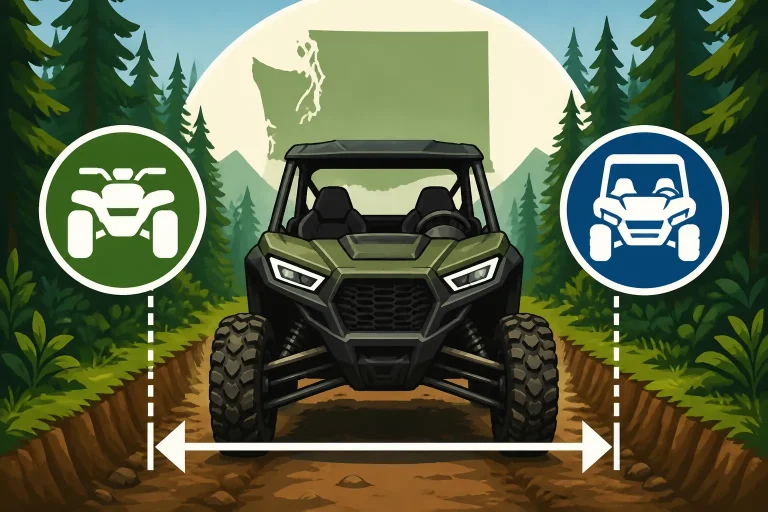
Washington forest trail width limits vary by route. Check the current designation and measure your ATV or UTV before choosing a trail.
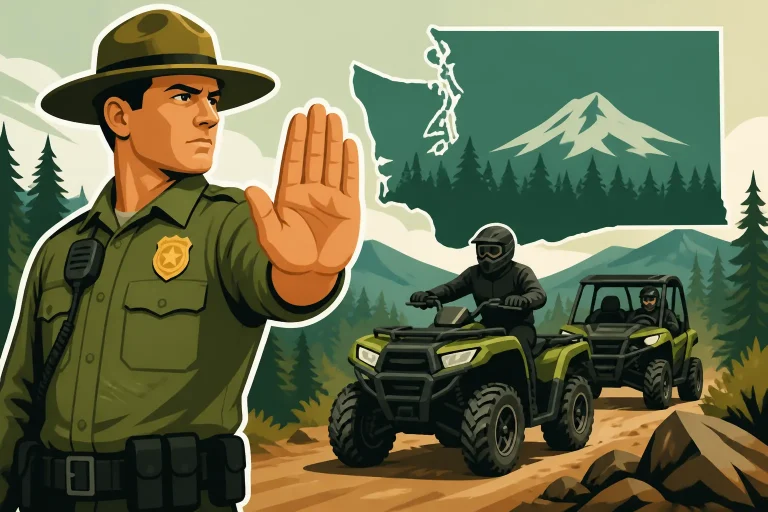
Washington ATV and UTV riders should verify an approved, intact spark arrester and check each public-land manager’s rules and fire closures.
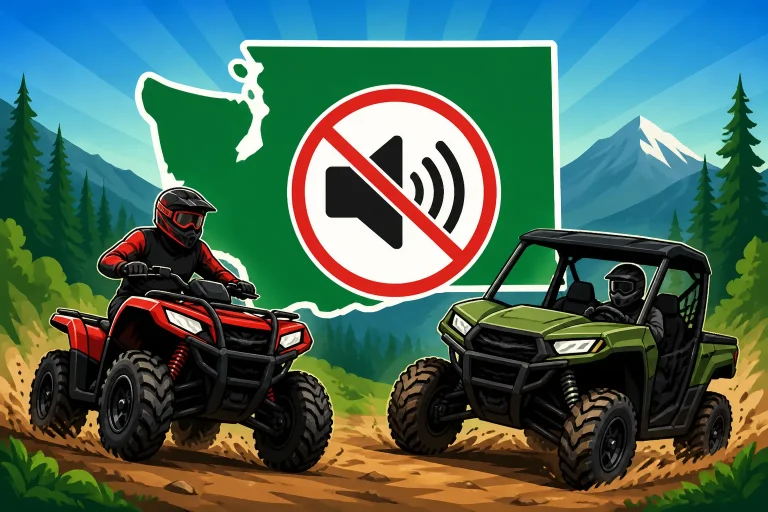
Washington ORV sound limits commonly use 96 dBA on public riding areas; learn how testing works, prepare your exhaust, and check local rules.

Washington ATV and UTV riders risk citations on closed trails; penalties vary by land manager, closure notice, riding circumstances, and location.
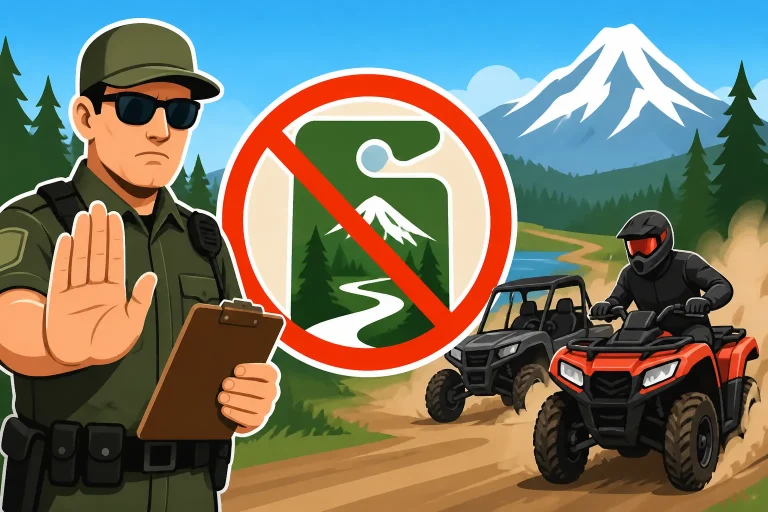
Washington ATV and UTV riders can avoid a Discover Pass citation by checking land rules, displaying the right pass, and responding promptly if cited.
Washington guided ATV and UTV tours need land-specific permission, compliant machines, eligible riders, and checks for route closures and commercial-use rules.
Washington forest filming rules depend on land manager, commercial use and shoot impact; check permits before bringing crews, vehicles or drones.

Washington ATV and UTV group rides need route checks, individual permits and registrations, and event approval when required by the land manager.