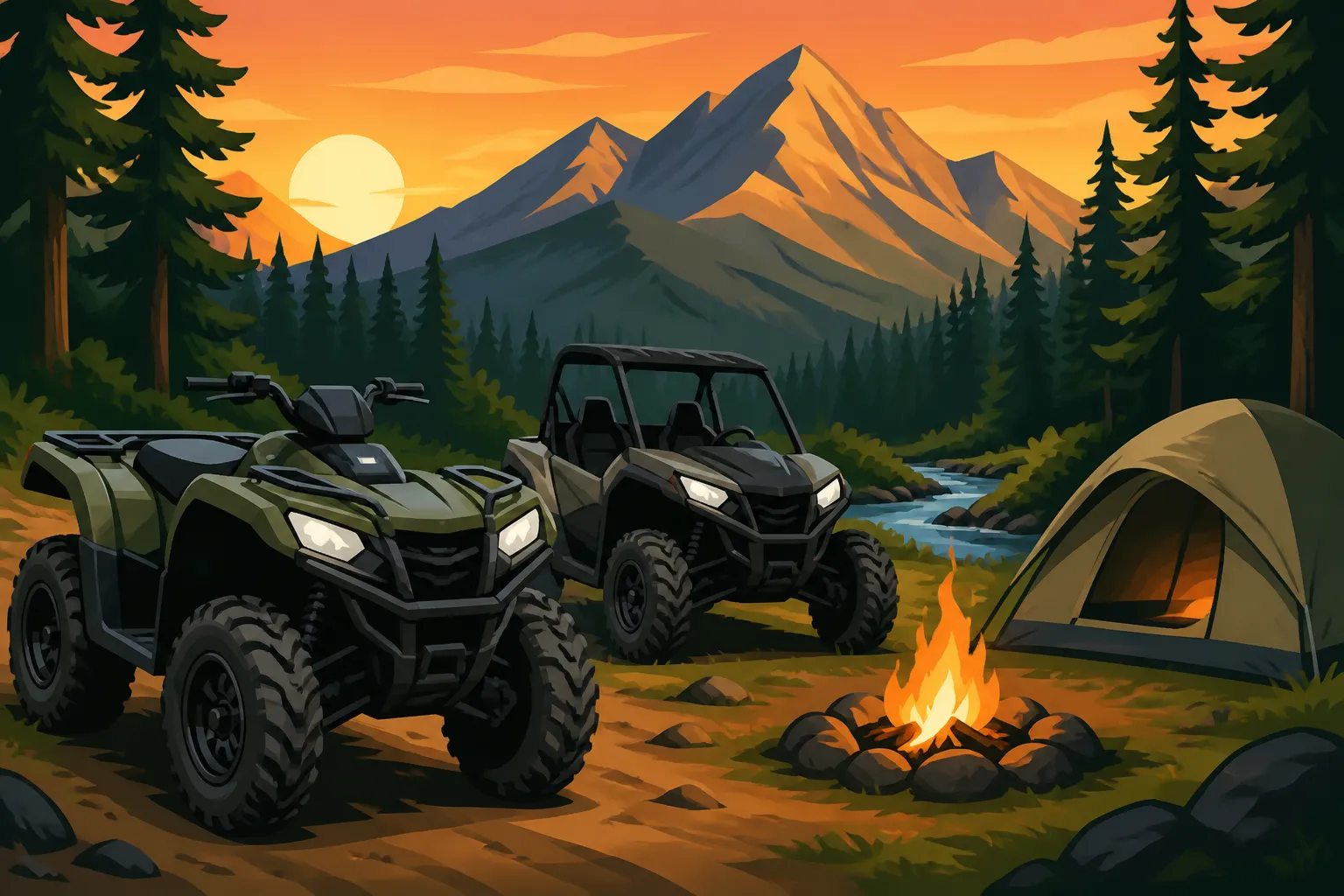
Camping at Evans Creek
Camping at Evans Creek can turn a quick trail ride into a full weekend, but the logistics matter: the access road, campsite setup, passes, weather and trail closures can all affect the trip. This guide explains what to plan before you go, what to bring, and how to camp and ride responsibly near this Washington ORV area.
Plan your Evans Creek camping trip
Evans Creek ORV Area sits in the foothills near Buckley, southeast of Tacoma, and is a popular base for riding nearby forest trails. Camping close to the riding area can save you from repeatedly hauling machines between a distant campground and the trailhead. It also means you need to think beyond campsite comfort: your machine, trailer, riding gear and access requirements all need to be part of the plan.
Check the campground and access details before leaving
Do not assume that every campsite or facility you remember from a previous visit will be available on your next trip. Forest recreation sites can be affected by maintenance, weather, seasonal conditions, timber work and other closures. Before loading the trailer, check current land-manager notices for access, campground availability, road conditions and any restrictions that affect riding.
This matters especially when your plan depends on arriving late or setting up in the dark. A forest road that looks straightforward on a map can take longer than expected, and a temporary closure can change your route. Build in time to find your site, unload safely and secure your equipment without rushing. For trip-planning basics near other riding areas, see [Camping Near Washington ORV Areas].
Think about your rig as well as your machine. A long trailer, a large tow vehicle or a wide side-by-side may need more room to maneuver than a pickup carrying a quad. If you are travelling with friends, agree in advance on a meeting point and a backup plan in case one vehicle is delayed or cannot reach the campground.
Know what kind of facilities to expect
Treat the campground as a forest recreation site rather than a full-service RV resort. Facilities may be limited, and you should not count on services such as potable water, electrical hookups or a reliable mobile connection unless you have confirmed them for your visit. Pack drinking water, food, lighting and sanitation supplies with the assumption that you will need to be self-sufficient.
If you are unsure about restroom facilities, look for current campground information before you go. The conditions and amenities at one ORV area may differ from those at another, even when the sites seem similar on a map. [Washington ORV Areas With Vault Toilets] can help you understand what to check when choosing a riding-area campground.
A useful rule is to bring what you would need for a night at a simple forest campground, then add the items that make an ORV trip different: machine tie-downs, riding gear, tools, spare parts and a way to keep documents dry. That extra preparation is much easier than discovering after dark that you forgot a basic necessity.
Understand passes and registration separately
A campground or trailhead pass and your machine’s registration serve different purposes. A recreation pass may apply to parking or site access, while ORV tabs or other machine paperwork relate to riding. Do not assume that one replaces the other.
Evans Creek has pass requirements that riders should confirm before setting out. For background on why the area has its own pass considerations, read [Why Evans Creek Takes a Forest Pass]. Check the land manager’s current information for the pass that applies to your visit and where it must be displayed or carried.
| Trip item | What to confirm | Why it matters |
|---|---|---|
| Campground access | Whether the site is open and what facilities are available | Prevents arriving with assumptions that do not match conditions |
| Recreation pass | Which pass applies and how it must be shown | Parking and site access rules may be separate from ORV registration |
| Machine paperwork | Registration, tabs and any required documents | Helps ensure the machine is properly prepared for public-land use |
| Road and trail access | Current closures, restrictions and approved routes | A route shown on an older map may not be open |
| Group arrangements | Arrival time, meeting point and backup plan | Makes delays and separation easier to manage |
Prepare your machine and camping gear
A comfortable camp is useful, but a dependable machine and a secure trailer setup are what keep a riding weekend from turning into a repair exercise. Evans Creek’s forest setting calls for gear that can handle changing conditions, limited services and muddy or rough travel.
Pack for a wet, changeable forest environment
Conditions in the foothills can shift during a trip. Even when the forecast looks manageable, rain, damp ground or cool evenings can make an otherwise simple campsite feel uncomfortable. Pack layered clothing, waterproof outerwear, spare dry clothes and footwear that can handle wet ground. Store bedding and clothing in waterproof bags or sealed containers rather than relying on a tent or vehicle to keep everything dry.
Bring a headlamp or other hands-free lighting for setting up camp and working around the trailer. Keep a separate light in your day pack in case a ride takes longer than expected. A basic first-aid kit, drinking water, food and a way to communicate your plan are sensible essentials, particularly if your group splits up.
Mobile coverage can be unreliable in forested terrain. Download maps and trip information before leaving service, and do not make your safety plan depend on being able to call or load a map at the trailhead. The onX Offroad app can be useful for reviewing mapped routes and saving trip information ahead of time, but it should supplement—not replace—official closure notices, posted signs and sound judgment.
Do a machine and trailer check before you tow
A quick inspection at home is easier than diagnosing a problem on a narrow forest road. Check tire condition and pressure, lights, brakes, hitch connection, safety chains and tie-downs before departing. Secure loose cargo so it cannot shift during the drive, and make sure the machine is properly fastened for the entire trip.
Before riding, inspect the machine for obvious leaks, loose parts, worn tires and damaged protective equipment. Carry basic tools and any spare parts that are appropriate for your machine and planned ride. A small repair kit cannot solve every mechanical problem, but it can help with common issues and prevent a minor inconvenience from ending the day.
If you are riding a side-by-side, consider its width when planning routes. A machine that fits comfortably on a gravel road may not be suitable for every trail. Check posted restrictions and trail information rather than assuming that all routes in the area allow every type of machine.
Make camp secure and easy to manage
Choose a site that gives you enough room to park, unload and move around without blocking access or spilling into another camper’s space. Keep riding gear organized in one area and food, cooking equipment and rubbish in another. A tidy setup makes it easier to find essentials when everyone is tired after a ride.
Secure machines and trailers when you are away from camp, and keep keys, registration papers and valuables in a consistent, protected place. If rain is possible, cover equipment thoughtfully so that water does not pool or trap moisture against vulnerable parts. Pack out rubbish and leftover food rather than leaving it for wildlife or other visitors.
For a group, decide who is responsible for shared tasks such as checking the cooking area, collecting rubbish and confirming that the machines are ready for the next day. Small routines help prevent the familiar end-of-evening scramble for a missing key, a wet jacket or a tool that was left in another truck.
Ride safely and respect the area
Camping close to the trails makes it tempting to head out as soon as the machines are unloaded. Take a few minutes first to understand current conditions, the group’s abilities and the rules that apply to the routes you plan to ride.
Review maps, signs and closures
Use current land-manager information before choosing a route. A trail map is a planning aid, not a guarantee that every route is open or suitable on the day you arrive. Closures may be posted because of weather, maintenance, fire danger, resource protection or other operational needs. Respect signs and barriers even if an online map shows a route as open.
Check notices again before each ride, not just when you are planning the trip at home. Conditions can change while you are in the area, and an alert may affect only one section of a trail network. [Washington Trail Closures to Check First] and [Checking Alerts Before You Load Up] offer useful habits for avoiding a wasted drive or an unsafe detour.
A saved map can help you follow your intended route, but keep your attention on the ground and posted information. The onX Offroad app may help you review your route offline, yet downloaded information can become outdated. If a posted closure conflicts with what an older map shows, follow the current sign and land-manager direction.
Match the route to your group
A ride that feels easy to one person may be demanding for another, especially if someone is new to riding, has a smaller machine or is not comfortable with mud and uneven terrain. Agree on a route that suits the least experienced rider in the group. Make sure everyone knows the regrouping points and what to do if they lose sight of the group.
Set realistic expectations about pace. Stopping to check a map, let another rider catch up or reassess a difficult section is not wasted time. It is often what keeps a group together and prevents a small mistake from becoming a rescue situation. Carry water and basic supplies with you, rather than leaving everything back at camp.
If visibility, weather or fatigue starts to make the ride feel less safe, turn around or return to camp. There is no need to finish a planned loop simply because it was on the itinerary. The forest will still be there for another trip, and a conservative decision is usually easier than managing an injury or breakdown far from camp.
Leave the site and trails in good condition
Use only designated riding routes and obey posted speed, sound and equipment rules. Avoid cutting corners around muddy sections or creating new routes to get around an obstacle. Riding off designated trails can damage vegetation and soil, and it can close access for everyone.
Keep noise considerate, particularly near campsites and during quiet hours set by the campground. Give hikers, other riders and wildlife room, and slow down when sightlines are limited. If you meet a larger vehicle or work truck on a forest road, be prepared to yield safely and avoid assuming that the road belongs to recreational traffic.
Before leaving, check the campsite for rubbish, food scraps and gear. Make sure your machine and trailer are secured, and clean off mud and debris where appropriate before travelling to another area. Responsible riding includes the drive home and the condition in which you leave the site.
Build a practical weekend itinerary
A little structure makes an Evans Creek camping trip smoother without turning it into a rigid schedule. Plan for arrival, setup, riding and departure in a way that leaves room for changing conditions.
The day before you leave
Confirm the campground and access information, check for alerts and make sure you understand pass and machine-paperwork requirements. Download any maps or trip details you may need outside mobile coverage. Share your destination and expected return plan with someone who is not travelling with you.
Then do a final equipment check. Put frequently needed items—registration documents, pass, first-aid kit, water, headlamps and rain layers—somewhere you can reach them without unloading the entire vehicle. Check trailer lights and tie-downs, and make sure the machine is ready to ride rather than assuming you will have time for repairs at camp.
If you are travelling with others, agree on a departure window and a plan for late arrivals. The group should know whether to wait at a safe meeting point or continue to the campground. Clear expectations help avoid distracted driving and last-minute phone calls while someone is towing.
Arrival day
Arrive with enough daylight to locate the site, park the trailer and set up camp safely. Take a moment to read any posted rules and confirm that you are in the correct camping area. Keep access lanes clear and avoid setting up in a spot that limits another visitor’s ability to maneuver.
Once camp is settled, check the machines and review the next day’s plan. Choose a route based on current conditions and the group’s comfort level, and make sure everyone knows where to regroup. Resist the urge to squeeze in a long ride simply because the machines are ready; a short orientation ride can be a better way to learn the area.
Riding and departure days
Start the riding day with a quick check of the machine, gear and current notices. Let someone know which general route you intend to ride and when you expect to return. If the group’s plans change, adjust the check-in plan too.
On departure day, leave enough time to pack, secure equipment and inspect the campsite before towing out. Check that all rubbish and personal items are collected, the machine is tied down correctly and no gear has been left behind. If your next stop is another riding area, remove excess mud and debris where practical so you do not transport seeds or soil between locations.
For broader context on planning a ride in the area, see [Riding Evans Creek From Buckley]. If you are deciding when to go, [Washington Riding Seasons by Forest] can help you think through how season and elevation may affect a forest riding trip.
Disclaimer
This article is for general informational purposes only and does not constitute professional advice. Laws, prices and regulations vary by location and change over time. Consult a qualified professional for guidance on your specific situation.