Riding Two Forests in One Weekend
A two-forest weekend sounds like a great way to squeeze more variety into a Washington riding trip, until the drive, loading, changing trail conditions, and campsite logistics start eating into your ride time. This guide helps you choose a sensible pairing, plan the transfer, and keep the weekend flexible when weather, closures, or fatigue change the plan.
Choose two forests that make sense together
The best pairing is usually not the one with the most miles between trailheads. It is the one that gives you two distinct riding experiences without turning the middle of your weekend into a long, tiring haul. Start by looking at the route between riding areas, the kind of trails you want, and where you can comfortably stay overnight.
Pair by geography and riding style
For a western Washington weekend, Capitol State Forest and Tahuya State Forest can make a workable pairing if you are comfortable with a substantial drive between areas. Capitol Forest, near Olympia, offers a broad forest-road and trail network; Tahuya, on the Kitsap Peninsula, gives you a different setting and terrain. Check the route before you commit, though: ferry schedules, traffic, and where you are staying can make a seemingly reasonable map distance take much longer.
Another possible pairing is Walker Valley and Reiter Foothills. Walker Valley, in Skagit County, and Reiter, near Sultan, are both popular choices for off-road riding, but getting between them can take a meaningful part of the day. This pairing works best when you plan the transfer as part of the trip rather than assuming you will finish a full ride at one area and still have plenty of energy for another.
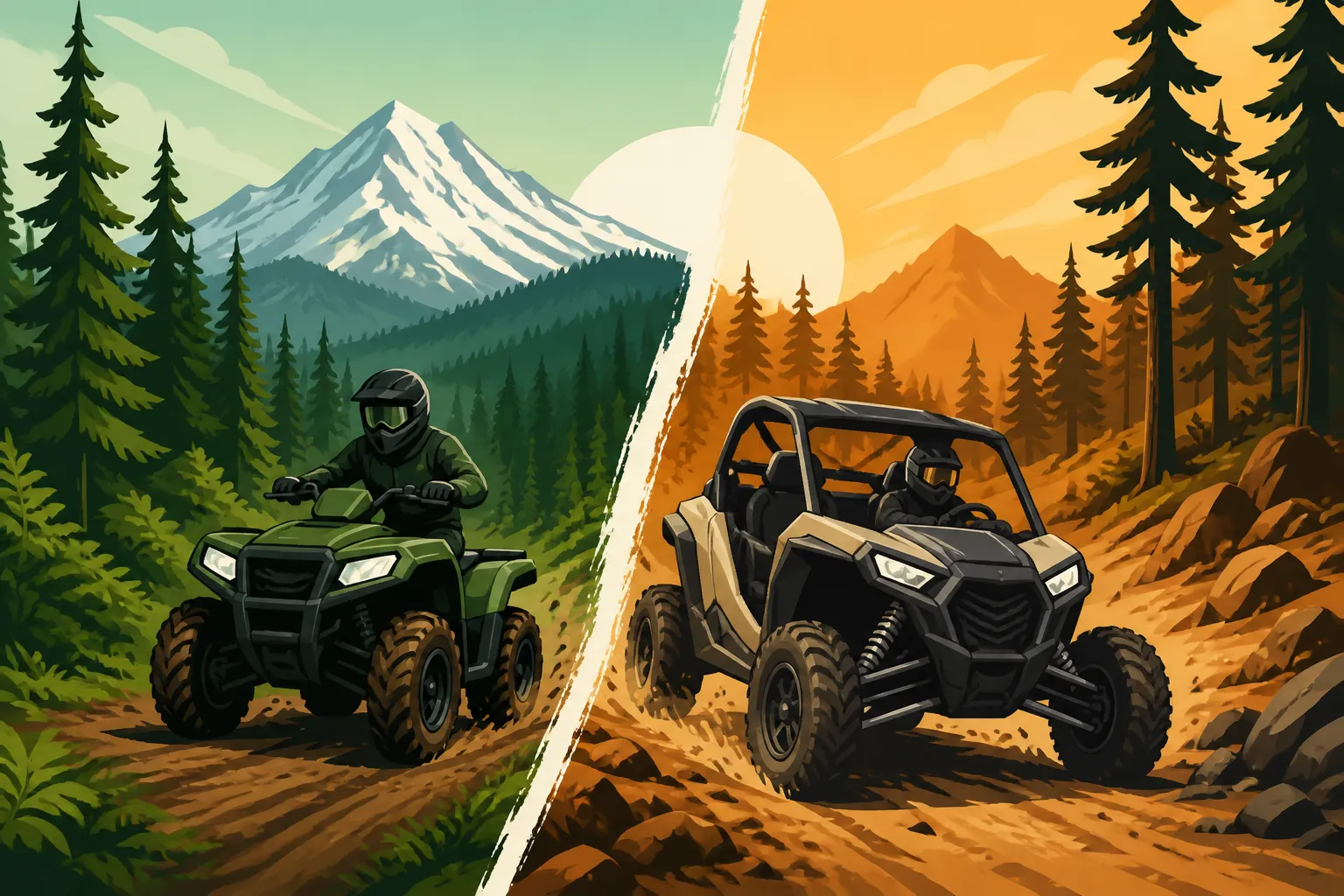
Think about contrast, not just quantity. If the first day is a muddy, technical ride, a second day on easier forest roads may be more enjoyable than choosing another challenging area. If your group includes newer riders, children, or machines with different capabilities, a scenic route with several easy turnaround points may be a better second-day choice than a trail network that pushes everyone to their limit.
For a broader look at how Washington riding areas differ, start with Washington’s DNR Forests Compared. Then narrow the choice by the kind of terrain your group actually enjoys. A location that looks ideal in a trail description may feel very different after rain, during active timber work, or when the access road is busy.
Check the season and current access before deciding
Washington riding conditions can change sharply between regions and elevations. A forest that is wet and slick in spring may be dusty later in the season; higher trails can remain snow-covered or closed after lower-elevation areas have opened. The calendar alone does not tell you what a trail will be like on your weekend.
Look at official recreation maps and notices for both forests before settling on the pairing. Review access roads, staging areas, designated routes, seasonal restrictions, and any posted closures. Washington Riding Seasons by Forest can help you think through broad seasonal patterns, while Washington Trail Closures to Check First is a useful reminder to check the specific areas you plan to visit rather than relying on an old map or a past trip report.
A trail app such as onX Offroad can help you compare the two areas, save routes, and orient yourself when mobile service is unreliable. Treat any app as a planning aid, not the final word on whether a road or trail is open. Confirm land-manager notices and posted signs, and do not ride around a closure just because a route still appears on your screen.
Plan the overnight stop and the transfer
A two-forest weekend is a small road trip as well as a riding trip. The overnight plan affects how much riding you get, how tired the group becomes, and whether the second day starts smoothly. Decide early whether you want to sleep near the first forest, near the second, or somewhere practical between them.
Choose an overnight base that reduces friction
Staying near the first riding area makes it easier to start early and avoid towing before you have even unloaded. The trade-off is that you may need to pack camp and move the trailer on day two. Staying near the second area can simplify the morning ride on your final day, but it may add a drive after the first day’s riding.
Before booking or choosing a campsite, check what the site can actually accommodate. A place that fits a tent may not have room for a truck, trailer, and one or more machines. Confirm whether overnight parking is allowed, whether reservations are needed, and whether the campground is open and accessible for your vehicle. Washington ORV Camping With Hookups is a helpful starting point if power, water, or other amenities matter to your group.
Some riders prefer a single base camp and drive to both areas; others pack up and relocate between nights. Neither approach is automatically better. A single base works well when the areas are close enough that the extra drive is manageable. Moving camp can make sense when the areas are far apart, but build in time to secure loose gear, check the trailer, and handle the ordinary delays that come with loading after a dusty or muddy day.
Budget enough time for the move
Do not plan the transfer based only on the shortest driving estimate. Allow time to return to the staging lot, load machines, secure tie-downs, make a fuel stop, and reach the next area before dark. If you are crossing a mountain pass or using a ferry, give those parts of the route special attention. Driving Over a Cascade Pass With a Trailer is relevant if your route crosses the Cascades; a loaded trailer can make a scenic shortcut less appealing than it looks on a phone.
A simple plan might look like this:
| Weekend task | What to plan for | Why it matters |
|---|---|---|
| First forest ride | Set a clear turnaround time | Keeps the group from starting the transfer late |
| Loading and departure | Allow time for fuel, tie-down checks, and cleanup | Mud and tired riders slow things down |
| Overnight stop | Confirm trailer parking and access | Prevents an awkward arrival with nowhere to leave the rig |
| Second forest ride | Choose a route that fits the group’s energy | Makes the final day enjoyable rather than rushed |
| Return drive | Leave room for traffic and unloading at home | Reduces fatigue at the end of the weekend |
Share the plan with the whole group before departure. A rider who expects an all-day first ride may be frustrated when you need to leave early, while someone who expects an easy second day may not be prepared for technical terrain. Agree on the transfer time and the kind of ride you are aiming for.
Get ready for different trails and rules
Each forest has its own layout, access points, and conditions. Even if you have ridden one area many times, do not assume the next one will have the same signage, route markings, or facilities. A little preparation at home can prevent a lot of confusion at the trailhead.
Carry the right maps and verify your route
Download or save maps before leaving service. Review them together so everyone knows the staging area, the planned route, and the simplest way back if the group splits up or a machine has a problem. Washington Trail Maps From DNR and Reading a DNR Recreation Map can help you get more comfortable with official map information and how it relates to roads and recreation access.
Use onX Offroad or another suitable mapping tool to keep your planned tracks available offline, but do not treat a digital line as permission to ride. Forest roads can be closed temporarily for maintenance, fire danger, timber activity, or other reasons. A map may also show a route without making clear whether your specific machine is allowed on it. Follow signs at the site and obey closures even if a saved route suggests otherwise.
Before the trip, pick a meeting point and a turnaround rule. For example, the group can agree to stop at the next signed junction if anyone loses sight of the riders ahead. Establish what everyone should do if they become separated: stay on the designated route, avoid exploring side roads alone, and use the agreed meeting point rather than trying to chase a moving group.
Check machines, paperwork, and site requirements
A machine that ran well at the first forest still needs a quick check before day two. Look over tires, brakes, lights, fluid levels, tie-down points, and visible damage after the first ride. Clear mud and debris from areas that could hide a leak or interfere with cooling. Washing a Machine Before You Leave covers why cleaning matters when moving between riding areas, especially when mud and plant material could be carried from one place to another.
Bring the registration and other required riding documents, and make sure each machine has the appropriate tabs for how and where you plan to use it. Site access passes are a separate consideration from vehicle registration. Requirements can differ by land manager and trailhead, so check the rules for both destinations rather than assuming one pass covers the whole weekend. If you are visiting from outside Washington, review Washington ORV Reciprocity With Other States before you travel.
Also check for riding-specific requirements such as helmets, spark arresters, sound limits, width restrictions, and rules for young riders. A two-forest itinerary does not change those obligations. If a machine is road-registered for a short public-road connection, confirm that the road is legally open to that use and that the machine meets the relevant requirements. Do not assume a nearby road is an approved connector simply because other riders have used it.
Build a weekend plan that can bend
The most satisfying two-forest trips are planned with enough structure to avoid wasted time and enough flexibility to handle real conditions. You do not need to ride every mile in both areas. The goal is a safe, enjoyable weekend that leaves the group wanting to come back.
Use a simple two-day itinerary
For the first day, choose the forest that is easiest to reach or that needs the earliest start. Arrive with enough time to unload, check the machines, and review the day’s route before riding. Keep the first loop moderate if you need to drive and load afterward. A group that spends the whole day pushing through difficult terrain may find the evening transfer much less appealing.
After riding, return to the staging area with time to inspect the machines and secure them properly. Clean off heavy mud and plant material where practical, then check tie-downs once more after a short drive. If the overnight stop is at a campground, respect its parking and noise rules and keep fuel and equipment stored safely.
On the second day, choose a route based on how the group feels, not just what you hoped to accomplish at home. If the first day was tiring, make the second ride shorter or easier. If the weather has changed, switch to a route that is appropriate for the conditions, or skip riding in an area with a closure. An app like onX Offroad can help you find your bearings and compare route options, but use land-manager information and on-site signs to make the final call.
Keep a backup plan for the things you cannot control
Have a fallback if one forest becomes inaccessible or the drive takes longer than expected. That might mean spending the whole weekend in one area, choosing a shorter ride near camp, or saving the second forest for another trip. Flexibility is especially valuable when the group includes different skill levels or you are traveling with children.
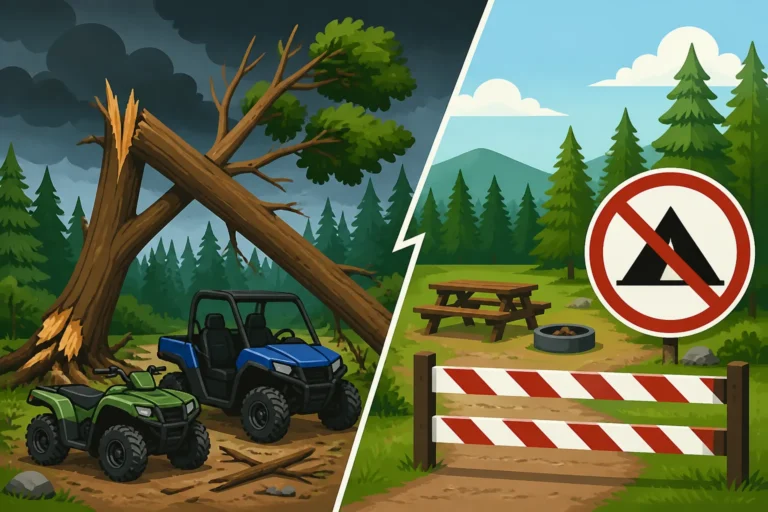
Check alerts again before you load the trailer, and recheck them before leaving the overnight stop. Weather, road work, fire restrictions, and land-management closures can change the practical plan. If a route is closed, do not bypass a gate or follow an old track around it. Choose a legal alternative or call it a day.
Finally, be realistic about fatigue. Towing, trail riding, loading, and then towing again can make a weekend feel longer than expected. Build in meal breaks, water, fuel, and time to handle a flat tire or loose strap. A little extra margin can be the difference between a relaxed trip and a rushed one, and it makes a two-forest weekend much easier to repeat.
Disclaimer
This article is for general informational purposes only and does not constitute professional advice. Laws, prices and regulations vary by location and change over time. Consult a qualified professional for guidance on your specific situation.