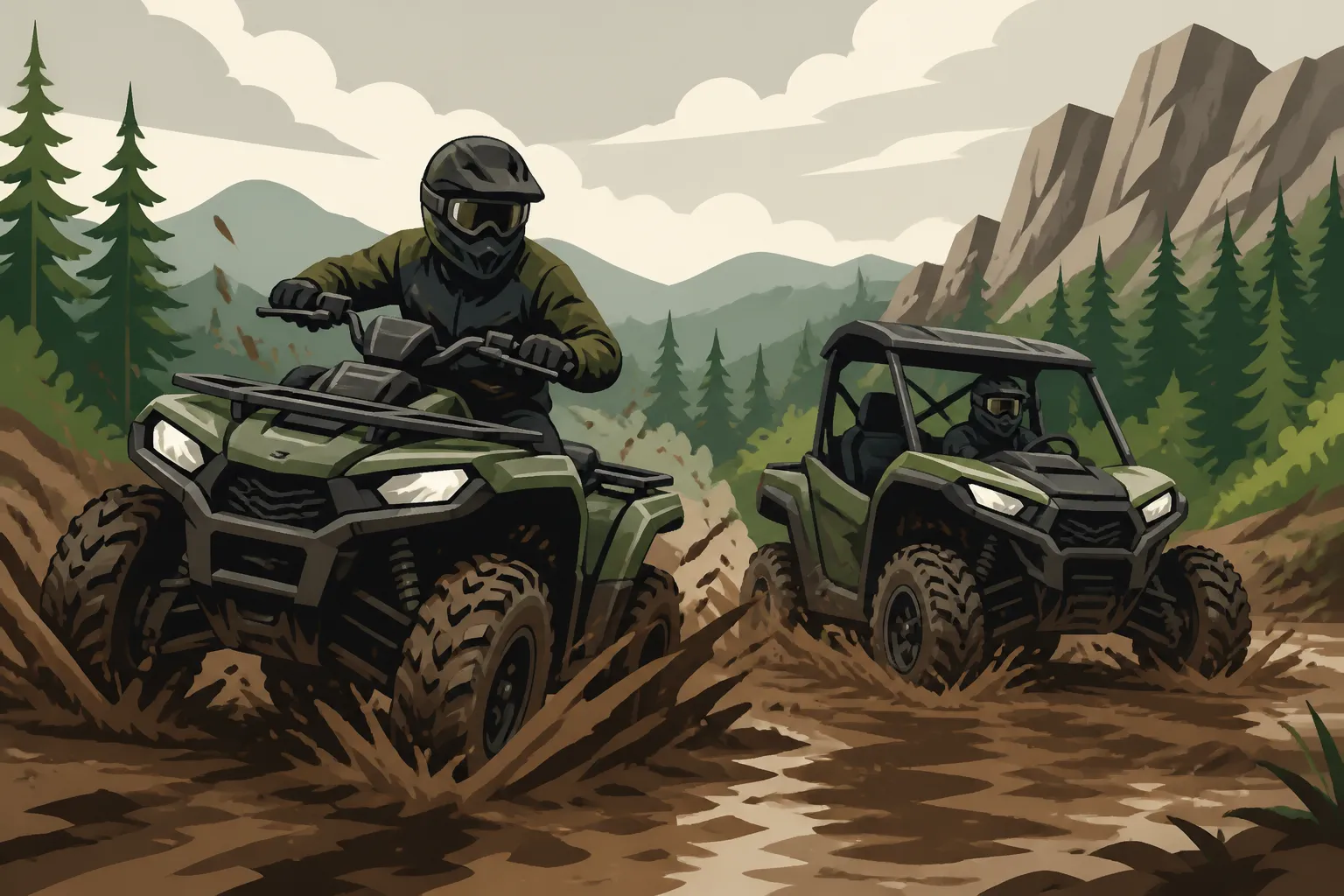
Mud Season in the Black Hills
Mud season in the Black Hills can turn a familiar forest ride into slick clay, standing water, and ruts that are harder to see than they look. This guide explains how to judge conditions, prepare your ATV or UTV, ride with less risk of getting stuck, and check access before hauling to the trails near Olympia.
What mud season is like in the Black Hills
Why the trails get difficult
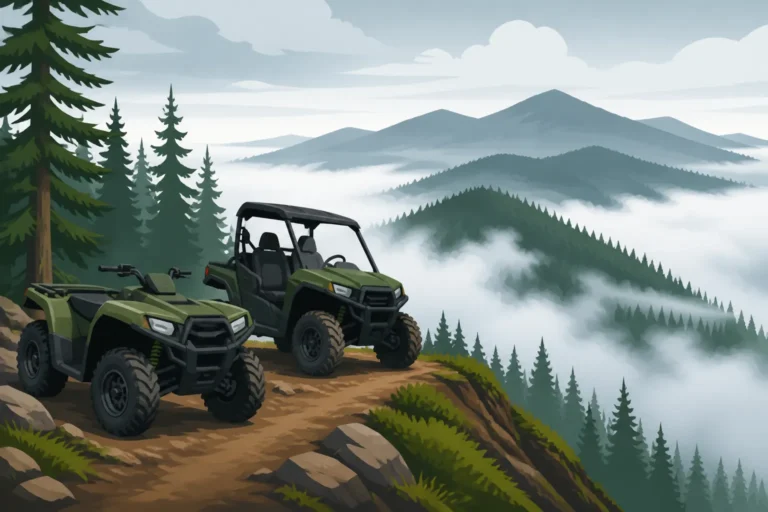
The Black Hills west of Olympia are part of a forest landscape where rain, damp ground, and shaded routes can keep trails soft even when a nearby road seems reasonably dry. Clay can feel firm under a thin surface layer and then give way beneath your tires. Roots, rocks, and old ruts become slippery, while puddles can hide uneven ground or a deeper hole.
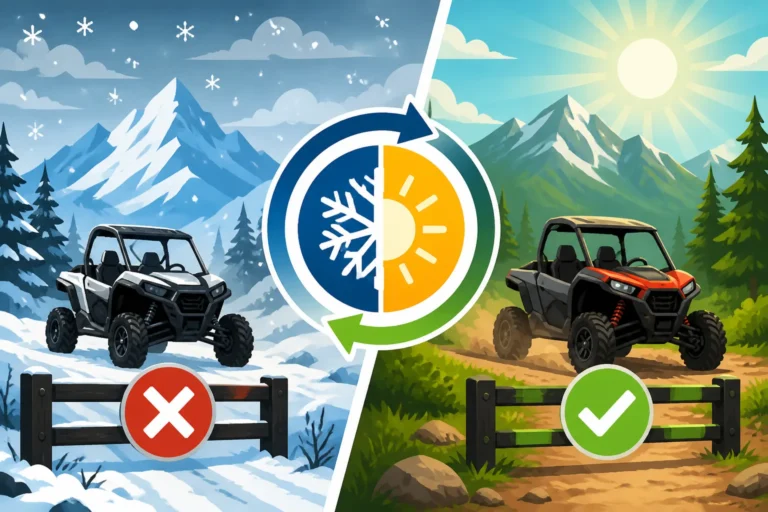
Conditions can vary a lot within one ride. A sunny stretch may be packed down and easy to navigate, while a shaded section nearby remains wet. Elevation, drainage, recent rainfall, and the amount of traffic all matter. A route that felt manageable on a previous trip may be very different after a fresh round of rain.
That variation is part of the appeal for some riders, but it is also why mud season calls for more patience than a dry-weather outing. If you want a broader sense of how rain affects riding elsewhere in the state, [Washington Riding in the Wet Season] offers useful context. For the Black Hills specifically, [Capitol Forest Near Olympia, Washington] can help you think about the area as part of a larger forest recreation system rather than a single, uniform trail network.
When to rethink the ride
A little mud is not automatically a reason to cancel. The more useful question is whether conditions let you travel safely without widening the trail, damaging soft ground, or repeatedly spinning your tires. If a route is already deeply rutted, waterlogged, or marked closed, take that seriously instead of treating it as a challenge to overcome.
Look for signs that the ground is too soft for your machine and experience level: tires sink quickly, the tread fills with clay, the machine slides sideways on a mild slope, or a shallow-looking puddle stops you unexpectedly. If you need repeated throttle bursts just to move a few feet, continuing may worsen the damage and increase the chance of getting stuck.
Give yourself permission to turn around early. That can feel frustrating after loading the trailer and making the drive, but it is usually less frustrating than spending the afternoon recovering a machine or repairing a torn-up section of trail. A shorter ride on suitable ground is a better outing than forcing a route that is clearly beyond the day’s conditions.
Check access and conditions before you leave
Confirm current closures and route access
Before you load the ATV or UTV, check the land manager’s official recreation information for closures, alerts, and any route-specific restrictions. Forest access can change because of weather, maintenance, timber activity, or safety hazards. Do not assume that a road or trail shown on an older map is open today. [Washington Trail Closures to Check First] is a useful reminder to make closure checks part of trip planning, not an afterthought.
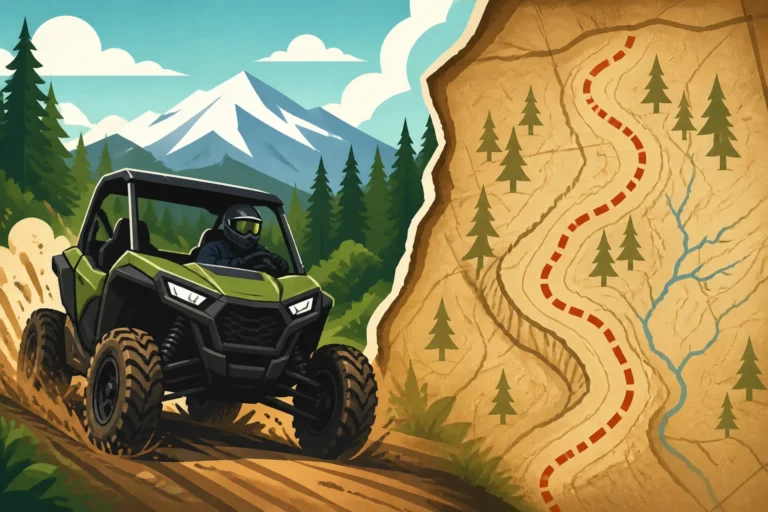
Bring a map you can use without reliable cell service. Washington DNR recreation maps are an important starting point for forest routes and recreation areas; [Washington Trail Maps From DNR] explains why it is worth checking the official map before riding. A GPS or mapping app can add helpful navigation features, but it should not replace official closure notices or posted signs.
Some riders use onX Offroad to review mapped routes and orient themselves before a trip. Treat it as a planning aid, not proof that a route is open or suitable for your machine. Compare what you see in the app with official DNR information and any signs at the entrance or along the route. Keep a downloaded map available in case service drops in the hills.
Use the forecast as one clue, not a guarantee
Rain forecasts can help you anticipate the day, but they do not tell the whole story. A recent downpour may leave low-lying or shaded areas muddy after the skies clear. Conversely, a light shower may not make every route impassable. Pay attention to the ground you are actually riding, and be ready to change plans as conditions become clearer.
If you are traveling from outside the area, ask someone familiar with the local conditions before committing to a specific route. A trailhead conversation can be helpful, but do not let a casual report override a closure sign or a posted restriction. If you arrive and see standing water, deep ruts, or a closed gate, choose another legal route or save the ride for another day.
| What to check | Why it matters | Practical response |
|---|---|---|
| Official closure notices | Routes may close for safety, maintenance, or land-management work | Check before loading and again if plans change |
| Posted signs and gates | They reflect local restrictions at the route itself | Follow them even if an app shows a mapped route |
| Recent rain and drainage | Shaded or low areas may stay soft after the rain stops | Expect conditions to vary across the forest |
| Your group’s experience | Mud can challenge new riders and less capable machines | Choose a conservative route and agree on a turnaround plan |
| Recovery and communication gear | Cell coverage and help may be limited | Carry basic recovery equipment and tell someone your plan |
Prepare your machine and group for wet trails
Set up for control, not speed
Before heading out, inspect tires, brakes, steering, lights, and the machine’s general condition. Tires packed with mud lose their ability to grip, and damaged or underinflated tires can make a slippery route harder to manage. Check that your brakes respond normally, especially if the machine has been stored or recently serviced. Mud can hide damage, so a quick inspection before the ride is time well spent.
Carry recovery equipment appropriate for your machine and your skills. A winch, rated recovery points, a strap, gloves, and a shovel can help with a minor recovery, but equipment is only useful when the group knows how to use it safely. Avoid attaching a strap to an unsuitable point or putting anyone in the path of a loaded recovery line. If a recovery looks risky, stop and reassess rather than rushing.
Pack for wet weather even if the forecast looks promising. A dry layer, waterproof outerwear, food, drinking water, a first-aid kit, and a way to communicate can make a long delay much more manageable. Mud season outings often involve slower travel than planned, so build extra time into the day. For practical terrain reminders, [Root Balls and Slick Clay] and [Riding a Wet Forest Trail] are relevant reads before tackling slippery forest ground.
Agree on a group plan
Before leaving the staging area, make sure everyone understands the route, the expected pace, and the plan if someone gets stuck or separated. Keep riders in sight when conditions are difficult, but leave enough space to avoid another machine if someone slides or stops suddenly. A lead rider should avoid pressuring the group to continue when the rear riders are struggling.
Talk through simple signals for stopping, turning around, or reporting a problem. Agree that anyone can call for a pause without being teased or hurried. This matters especially when a group includes less experienced riders, different machine types, or a wide side-by-side that may not fit comfortably on every route.
If children or newer riders are along, choose an easier outing than you might choose for a group of experienced adults. Mud can make basic tasks—stopping on a slope, steering around a rut, or getting back underway—more demanding. Keep the day focused on confidence and control, not on reaching a particular destination.
Ride responsibly and leave the area in good shape
Choose a line that protects the trail
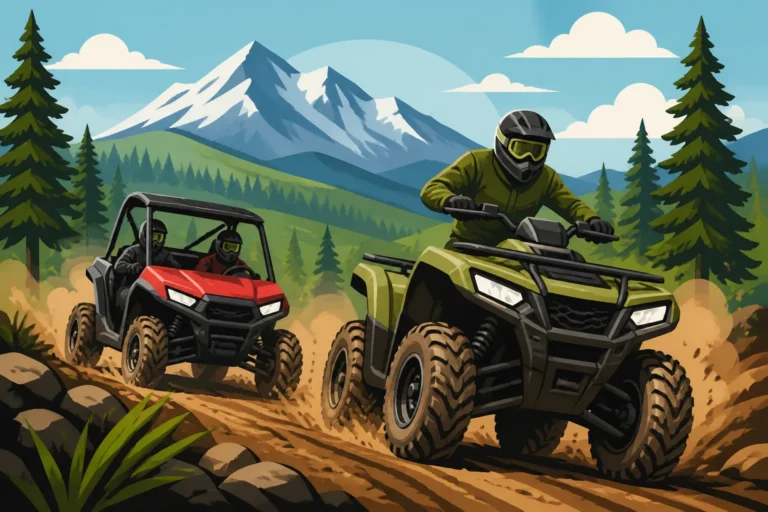
On soft ground, smooth and steady control is usually more useful than sudden acceleration. Look ahead for firmer ground, avoid sharp turns on slippery slopes, and leave room to stop. Do not charge into a puddle just because another machine made it through; the water may conceal a deeper rut, a rock, or a soft edge.
Stay on the designated route. Going around a muddy section can widen the trail, damage vegetation, or create a new path that encourages other riders to do the same. If a section is too soft to cross without spinning or digging in, turn around or use another open route rather than cutting a bypass. Muddy conditions are not permission to ride around a gate, into a closed area, or off the mapped trail.
Spacing matters too. If several machines climb the same soft section close together, the surface can break up quickly. Let the first rider clear the area before the next one enters, and stop if the route begins to deteriorate. [Capitol Forest After a Week of Rain] can help set expectations for how wet weather may affect a forest ride, but your own observations and posted restrictions should guide decisions on the ground.
Clean your machine and check it afterward
When you return, remove mud from tires, fenders, radiator areas, and other places where packed clay can hold moisture or block airflow. Use care around electrical connections, bearings, seals, and other vulnerable components; aggressive pressure washing too close to these areas can cause problems. Follow the machine manufacturer’s cleaning guidance and allow it to dry before storing it.
Check for damage that may be hidden under mud: loose fasteners, torn CV boots, damaged hoses, bent guards, or cuts in the tires. If the machine struggled through deep water, inspect it carefully and follow the manufacturer’s guidance before riding again. Pay attention to unusual sounds, warning lights, or changes in handling rather than assuming a machine is fine because it made it back to the trailer.
Clean the machine before moving to another riding area, too. Mud and plant material can carry seeds or other unwanted debris between forests. A thorough wash, especially around tires and underbody areas, helps reduce the chance of transporting invasive weeds. Also pack out food wrappers, broken gear, and anything else brought to the staging area.
Know when a different day is the better ride
Mud season can be enjoyable when the route is open, conditions match your ability, and the group is prepared to turn around. But a muddy ride should not become a contest to see who can push through the deepest rut. If the ground is breaking apart, visibility is poor, or recovery would be difficult, postpone the outing or pick a more suitable route.
A thoughtful plan is simple: check official access information, bring a reliable map, start conservatively, and keep reassessing conditions. Apps such as onX Offroad can help with route orientation, but closure notices and posted restrictions take priority. With that approach, you can make a more informed call about whether the Black Hills are ready for your machine—and enjoy the ride without leaving a damaged trail behind.
Disclaimer
This article is for general informational purposes only and does not constitute professional advice. Laws, prices and regulations vary by location and change over time. Consult a qualified professional for guidance on your specific situation.