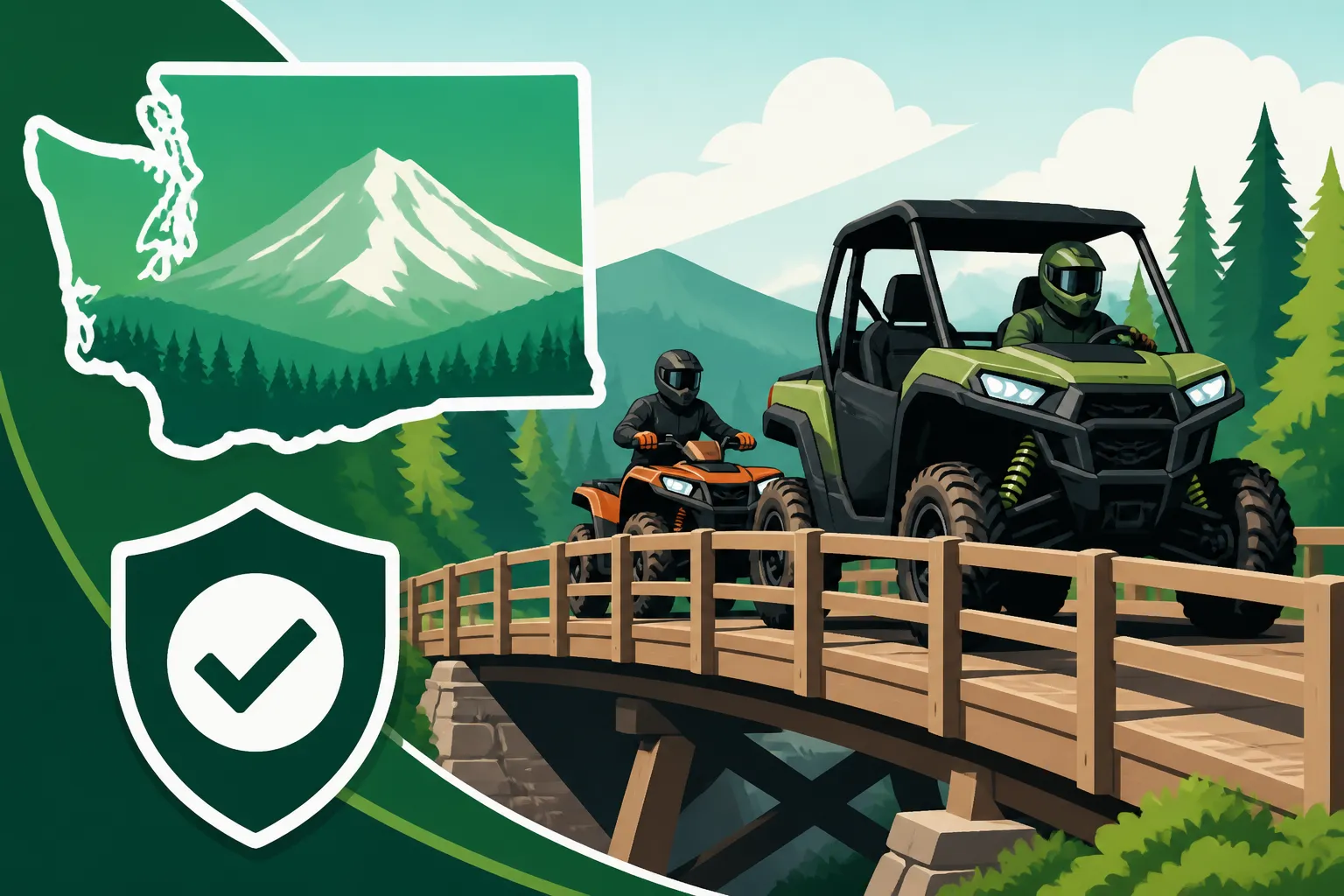
Washington Rules for Riding a Bridge
Navigating Washington's diverse landscape on your ATV or UTV is an incredible experience, but knowing exactly where you can and can't ride can feel like solving a complex puzzle – especially when bridges enter the picture. Many riders wonder if a bridge, even if it's technically part of a road, has its own unique rules. This comprehensive guide will clear up the confusion surrounding bridge riding in Washington, helping you understand the legalities and practicalities so you can ride confidently and legally.
The General Challenge of Riding Bridges in Washington
It's easy to look at a bridge as just another part of the road, a simple structure to get you from one side to the other. But when you're on an ATV or UTV in Washington, bridges can be surprisingly complex. They aren't always just "roads" in the eyes of the law, and their permissibility for your machine hinges entirely on the specific regulations governing the land or thoroughfare they connect. This often leads to riders making assumptions that can result in an unwelcome chat with a local law enforcement officer.
Why Bridges Aren't Always Just "Roads"
While bridges are undeniably on roads, their legal designation can be far more complex than a simple stretch of pavement. A bridge might span different jurisdictions, connect varying types of land, or even be managed by a completely different agency than the road leading up to it. This isn't just about the physical structure; it's about the intricate legal framework it's built upon, and ignoring this distinction can put you in a bind.
Emphasize that a bridge itself doesn't inherently grant or deny access. Its status for WATV riders is intrinsically linked to the road it's a part of. If the road isn't open to WATVs, neither is the bridge, regardless of how short, convenient, or tempting it seems to cross. Riders often get caught out thinking a short bridge is a quick hop to an open area, only to find themselves inadvertently on a closed segment or, worse, a section of highway where ORVs are strictly prohibited. It’s a common frustration, but it’s crucial to remember that the bridge’s status is merely a reflection of its surrounding environment.
Consider a scenario: you're enjoying a ride on a designated ORV trail within [Capitol State Forest Near Olympia, Washington], and it crosses a small, rustic wooden bridge over a creek. This bridge is clearly part of the established trail system, fully permissible for your machine, and probably a fun little feature. Now imagine a large, multi-lane concrete bridge spanning a major river, part of a state highway. The physical structure is just a bridge, but the legal context for an ATV or UTV is worlds apart. The former is a green light, the latter almost certainly a hard stop.
The Importance of Underlying Road Status
The golden rule for any bridge crossing in Washington on your WATV is to meticulously determine the legal status of the road leading to and from the bridge. A bridge is, in essence, merely an extension of the road or trail it serves. If you're on a county road that has been explicitly opened for WATV use by local ordinance, then crossing a bridge that is part of that specific road is generally permissible, assuming you meet all other [Washington WATV Road Requirements]. It's all about the context.
This means you can't just glance at a map or rely on intuition. You absolutely need to verify if the road the bridge is part of is indeed open to WATVs. For county roads, this involves checking specific county ordinances and their approved road lists. For state highways, the rules are even more stringent and generally prohibit WATV access except for very specific, brief perpendicular crossings. Without this due diligence, you’re riding on hope, and hope isn’t a legal defense if a ranger pulls you over.
Picture this: you're riding in rural Washington, perhaps in a county known for its extensive network of open ORV roads. You come to a beautiful old steel bridge that spans a scenic gorge, connecting two segments of what you think is an open county road. Before you cross, you need to be absolutely sure that the road on both sides of that bridge is officially designated for WATV use. If the road on the far side abruptly changes to a state highway, a closed county segment, or even private land without permission, that bridge instantly transforms from a passage to an impassable barrier for legal riding.
Understanding Washington's WATV Road Access Laws
Washington's laws for operating WATVs on public roads are designed to balance recreational access with public safety. These laws have very specific limitations, and understanding them is crucial before you attempt to ride any bridge that isn't explicitly part of a designated off-road trail system. The biggest hurdle for many riders is navigating the speed limit rule and the maze of local ordinances that dictate where you can and cannot go.
The 35 mph Rule and Its Bridge Implications
Washington's law for WATV use on public roads has a critical speed limit stipulation: WATVs can generally only operate on roads with a posted speed limit of 35 mph or less. This fundamental [Washington's 35 mph Road Rule] applies just as strictly to bridges as it does to any other segment of pavement. If a bridge carries a road with a posted speed limit of 40 mph, 45 mph, or higher, it is unequivocally off-limits for WATV travel, no matter how short or tempting it may be.
This often leads to frustrating situations where a seemingly innocuous, short bridge might connect two 35 mph roads, but if the bridge itself is part of a brief, higher-speed zone (perhaps where the road widens slightly for an intersection), it creates an uncrossable break in your ride. It’s not about how fast you’re going, but about the posted limit for that specific section of road and bridge. Ignoring this can quickly turn a fun ride into a costly lesson.
Consider a bridge over the Skagit River, perhaps on a secondary road in a rural area. The surrounding county might have opened many of its local roads to WATV use, creating some fantastic riding loops. However, if this particular bridge is part of a primary county arterial where the posted speed limit is 45 mph, your ATV or UTV cannot legally cross it. Even if you diligently ride at 25 mph, the posted speed limit of the road segment – including the bridge – is the deciding factor, not your actual speed. You'd have to find an alternative route.
County and City Ordinances: Your Local Bridge Map
The authority to open most local roads, and by extension, the bridges on them, rests firmly with individual counties and cities in Washington. This means that [Washington Rules for Riding a County Road] or [Washington Rules for Riding a City Street] can vary dramatically from one jurisdiction to the next. What might be perfectly allowed on a short bridge in Lewis County could be strictly prohibited on a similar bridge just a few miles away in Pierce County. There's no statewide blanket permission, which can be a real headache for riders.
Before planning any route that involves bridges, especially those on county or city streets, it's absolutely essential to consult the specific ordinances and approved road lists for that particular area. Many counties publish these lists online, often on their public works or sheriff's department websites, and knowing how to [Finding a County's Approved Road List] can save you from a costly citation or, worse, an accident. Without this critical research, you're essentially riding blind and taking unnecessary risks.
Imagine you're exploring the outskirts of Colville and spot a quaint, old bridge crossing a small river that looks like a perfect connection for your UTV. However, until you check the City of Colville's or Stevens County's specific ordinances and maps, you cannot assume that bridge is open. Some cities, like Republic, have taken proactive steps to open certain streets and their accompanying bridges, while others might remain completely closed to WATVs. This patchwork of local rules makes hyper-local research absolutely paramount for a legal and worry-free ride.
Specific Scenarios and Practical Advice for Bridge Crossings
Understanding the general rules is one thing, but applying them to real-world scenarios on your Washington rides is where the rubber meets the road (or the bridge, in this case). From crossing major state highways to navigating bridges deep within forest lands, each situation presents its own set of legal considerations and practical challenges for ATV and UTV riders.
Crossing State Highways and WSDOT Bridges
Riding an ATV or UTV on a state highway (like an SR or US Route) in Washington is generally prohibited. This prohibition unequivocally extends to bridges that are part of state highway systems. However, there are very specific, limited exceptions for crossing a state highway, and these rules also apply to any bridges that are part of that state highway. You might need to utilize [Washington Rules for Getting Across a Road] or [Washington Rules for Crossing a State Highway] in a perpendicular fashion, rather than traveling along the length of the bridge itself.
The law typically allows a WATV to cross a state highway, including bridges, at approximately a 90-degree angle if the highway's posted speed limit is 60 mph or less, and it's safe to do so. This is intended to be a quick traversal from one side to the other, not an extended ride down the roadway. For example, if your open county road is cut in half by State Route 20, and there's a bridge on SR 20 spanning a ravine, you might be able to cross the bridge quickly at a designated intersection, but you absolutely cannot ride along the bridge on SR 20 to gain distance.
Think of a common scenario where two open county roads are separated by a major state highway, with a large bridge carrying that state highway over a river or another road. You cannot ride your WATV on that state highway bridge to get from one side of the highway to the other. Instead, you'd have to find a legal, designated intersection where you could perform a quick, perpendicular crossing of the state highway (and its associated bridge, if it's within the crossing zone) to reach the next open segment. If there isn't a safe, legal intersection, that bridge effectively blocks your route and you'll need to find a different path.
When a Bridge Connects Two Open Road Segments
The most straightforward and enjoyable bridge riding occurs when the bridge is an integral part of an already approved WATV route. If a county has explicitly opened a specific road to WATVs, and a bridge is simply a section of that same road, then riding across that bridge is typically allowed, provided all other conditions (like the 35 mph speed limit) are continuously met throughout that section. These are the bridges that feel seamless to ride and pose the least legal ambiguity.
This situation is often the case in rural areas where counties or the Department of Natural Resources (DNR) have designated entire networks of forest roads and other routes for ORV use. Riders exploring trails in [Washington's Ahtanum State Forest] or [Green Mountain and Tahuya State Forest] might frequently encounter bridges that are simply part of the cohesive forest road system. As long as those forest roads are clearly marked as open and fall within legal parameters for WATVs, the bridges on them are generally considered fair game, allowing for continuous enjoyment of your ride.
For instance, if you're riding on an approved [Washington Rules for Riding a Forest Road], and that forest road includes a well-maintained bridge over a stream or a small ravine, you would typically be able to continue your ride over that bridge without issue. These bridges are correctly understood as part of the continuous trail or road system you're already legally on. When planning your route, consulting detailed forest service or DNR maps can provide peace of mind by confirming the status of these connecting bridges and ensuring your ride remains uninterrupted.
Bridges Over Rivers or Canyons in ORV Areas
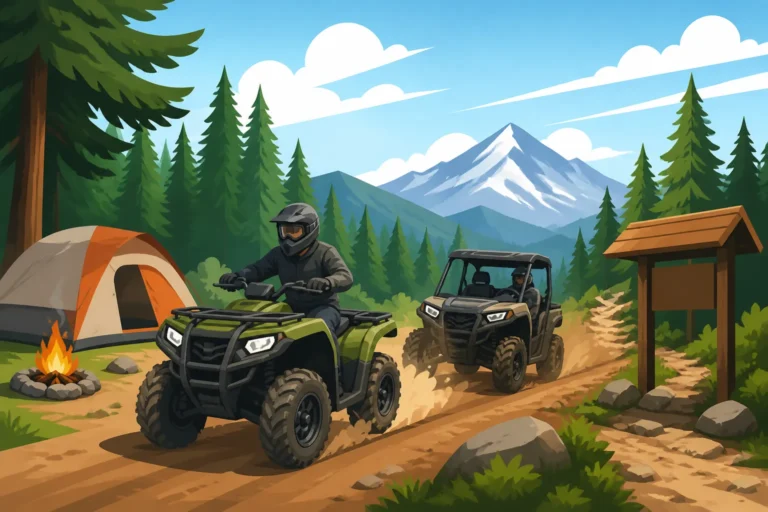
Within designated ORV recreation areas, bridges are typically purpose-built or maintained specifically to facilitate motorized access and are clearly established as part of the trail system. These are common features in fantastic riding destinations like [Walker Valley ORV in Washington's Skagit County] or [Reiter Foothills State Forest]. Here, the bridges are designed with the very machines you're riding in mind, meaning no complex road status checks are usually necessary, as long as you're operating safely within the defined boundaries of the open riding area.
These bridges within dedicated trail systems are an essential part of the recreational experience, allowing riders to cross natural obstacles safely and continue their adventure. Whether it's a sturdy wooden bridge over a small creek or a more substantial steel structure spanning a gorge, they are considered direct extensions of the trails themselves. When tackling these areas, ensure your machine is well-equipped with suitable upgrades, perhaps from SuperATV, known for its durable suspension components and protective accessories that can handle the varied terrain leading to and from these trail bridges.
Imagine riding through the deep woods of the Olympic National Forest (on an authorized ORV trail, of course) and encountering a series of well-engineered bridges that guide you over flowing streams and through rocky terrain. These are designed for continuous trail flow and are not subject to the same road-use rules as public highways. The key here is that you're already on a designated ORV trail or in an approved ORV park. The bridge is simply another feature of that trail, not a separate road segment that requires its own set of stringent local or state checks.
Equipment and Safety for Bridge Riding
Safety should always be your top priority, especially when traversing bridges, which often present unique challenges like limited space, other traffic, and potentially slippery surfaces. Beyond legal compliance, ensuring your machine is properly equipped and that you maintain peak awareness are crucial steps for a safe and enjoyable ride across any bridge in Washington.
Essential Gear for Road-Legal Bridge Crossings
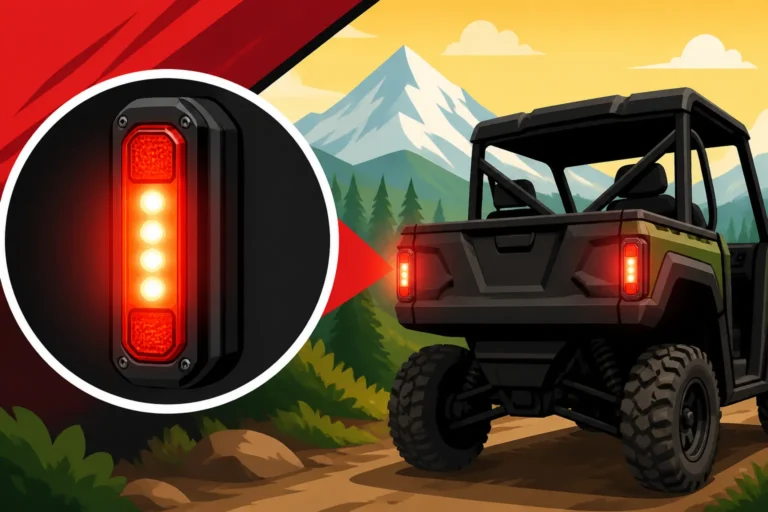
If you plan to ride your WATV on any public road or bridge segment in Washington, even for a brief, legal crossing, your machine absolutely must be equipped to meet state requirements for on-road use. This includes having working headlights, tail lights, brake lights, a functional horn, and at least one rearview mirror. [Washington Lighting Requirements for WATVs] are non-negotiable for road-legal operation, ensuring you're visible and can signal your intentions to other road users.
Furthermore, turn signals are also a mandatory requirement for road-legal WATVs in Washington. Many aftermarket companies, like SuperATV, offer universal turn signal kits that can be added to your ATV or UTV to meet these specifications. These kits are often straightforward to install and make a huge difference in your safety and legality. Without proper signaling capabilities, you could face fines even if you are on an otherwise open road or bridge, because you're not fully compliant with the equipment law.
Remember, these aren't just arbitrary regulations; they are safety items designed to make you visible and predictable to other road users, whether you're on a country road bridge or just quickly crossing a state highway. Ensuring your machine has all the necessary [Mirrors and a Horn for Washington Road Use] before you even leave your staging area is absolutely crucial. A quick pre-ride check of all these components can prevent a lot of headaches on the trail and on the pavement.
Maintaining Awareness and Visibility
Regardless of whether a bridge is part of a designated ORV trail or an open county road, maintaining heightened awareness is paramount. Bridges can often be narrower than the roads leading to them, have limited or no shoulders, and may have slippery surfaces, especially when wet, icy, or covered in mud from previous riders. Always slow down, be prepared for unexpected obstacles like debris or potholes, and stay vigilant for other users, whether they are vehicles, pedestrians, or cyclists.
Visibility is another critical factor. Ensure your headlights are on, even during the day, if you're on any public road segment, including bridges. This makes you much more noticeable to oncoming traffic and vehicles behind you. If riding with a group, maintain safe distances and ensure each rider is aware of the others' positions. Other vehicles, whether cars, trucks, or even bicycles, may not expect to encounter an ATV or UTV on a bridge, even if it's a legally open section, so proactive visibility is your best defense.
A simple bridge crossing, though short, can be a high-risk area. Poor sightlines due to bridge railings, blind curves on approach, or unexpected hazards like debris or loose gravel can make it tricky. Approach every bridge as if it's an unknown, taking precautions, reducing speed, and being ready to react. This diligence not only ensures your personal safety and the integrity of your machine but also demonstrates responsible riding, helping to preserve access for all WATV enthusiasts in Washington.
Here's a quick overview of common bridge riding scenarios:
| Bridge Location / Type | Underlying Road Status | WATV Access | Key Considerations |
|---|---|---|---|
| Within Designated ORV Area | Part of an approved trail system | Generally permitted | Check area-specific rules; often designed for ORVs. |
| On Approved County/City Road | Road segment explicitly opened for WATVs | Permitted if road speed limit is 35 mph or less | Must meet all WATV road requirements (tabs, insurance, equipment), e.g., [Turn Signals on a Washington Road Machine]. |
| Crossing a State Highway | Part of state highway (SR, US Route) | Permitted only for perpendicular crossing (brief, 90-degree traverse) | Highway speed limit must be 60 mph or less for crossing; no riding along. |
| On Unopened County/City Road | Road segment not opened for WATVs | Prohibited | Do not attempt to cross or ride; check local ordinances before you go. |
| Private Road/Timberland Bridge | Private land, often with specific access rules | Permitted only with explicit landowner permission | Trespassing laws apply; a permit might be required. |
Disclaimer
This article is for general informational purposes only and does not constitute professional advice. Laws, prices and regulations vary by location and change over time. Consult a qualified professional for guidance on your specific situation.