Washington Rules for Riding a Shoulder
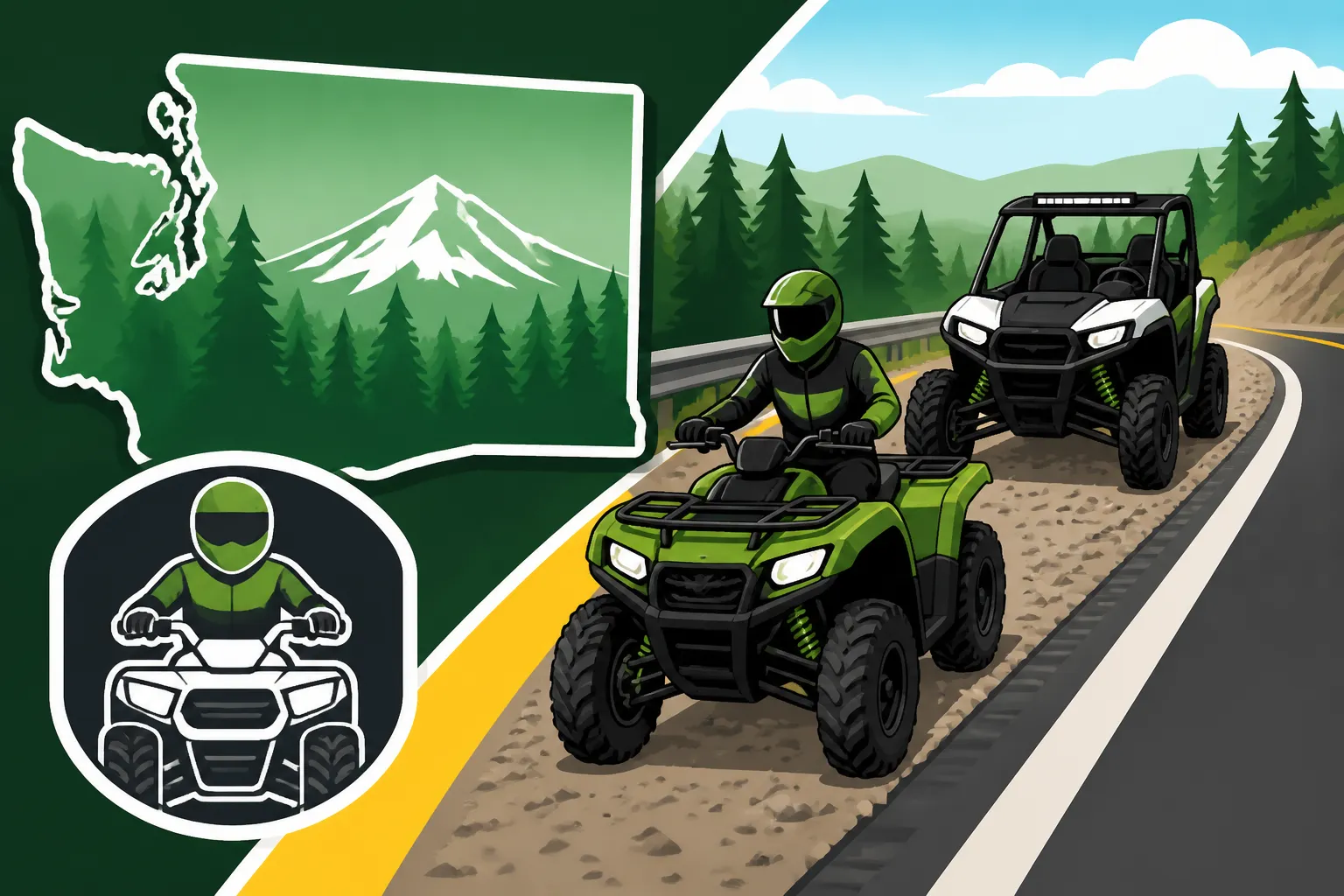
It’s a pretty common scenario: you’re out on your WATV, cruising along a county road that you know is open for off-road vehicle use, and you see a nice, wide shoulder stretching out beside you. Maybe the pavement in the main lane is a little rough, or you just feel like there’s more space over there. A nagging question pops into your head: can I ride my quad or side-by-side on the shoulder in Washington? This guide will dive deep into the specific rules, safety considerations, and legal implications of whether that tempting strip of gravel or asphalt next to the main road is fair game for your machine.
The General Rule: Shoulders Are Off-Limits for WATVs
Let's cut right to the chase: in most cases, riding your wheeled all-terrain vehicle (WATV) on the shoulder of a public road in Washington is a definite no-go. While many counties and cities have opened specific roads to WATV use, the permission typically applies to the designated travel lanes, not the shoulders. This distinction is crucial for both your safety and staying on the right side of the law.
Why the Road is Different from the Shoulder
When Washington state laws, and subsequently county or city ordinances, talk about allowing WATVs on "public roads" or "streets," they are almost exclusively referring to the main part of the roadway designed for vehicular traffic. The shoulder, by its very definition and design, serves different purposes. It's often there for emergency pull-offs, vehicle breakdowns, or as a space for pedestrians and bicyclists, not as an auxiliary travel lane for motorized vehicles, especially not for off-road machines.
Think about it this way: a shoulder might look like an extension of the road, but legally and functionally, it's a separate entity. It might be unpaved, consist of loose gravel, or have a significantly different surface from the main road. The regulations that govern the [Washington Rules for Riding a County Road] or [Washington Rules for Riding a City Street] are carefully crafted to integrate WATVs into the existing flow of traffic in a way that minimizes risk to all road users. Riding on the shoulder often bypasses these considerations, putting you in an unpredictable and potentially dangerous position. It's not just about what feels like a good place to ride, but what the law specifically designates.
Safety Concerns and Vulnerability
Riding on the shoulder presents a host of significant safety hazards that are often overlooked. For starters, there’s a huge speed differential between a WATV on the shoulder and a car traveling at full speed on the main roadway. While you might be chugging along at 20-30 mph, a car could easily be doing 50 mph just a few feet away. This difference in speed makes you incredibly vulnerable, especially if either vehicle needs to make a sudden maneuver. Drivers often don’t expect a slow-moving ORV on the shoulder and may not be looking for you there.
Furthermore, shoulders are notorious for collecting debris. From broken glass and nails to discarded trash and large rocks, shoulders are like the gutters of the road, gathering anything that gets swept off the main lanes. This material can easily cause a flat tire, damage your suspension, or even lead to a loss of control. You might also encounter sudden drop-offs, soft ground, or uneven surfaces that are perfectly safe for a pedestrian but could easily upset a WATV, particularly a narrower quad or a side-by-side with a higher center of gravity. Being prepared with the right safety gear, like ensuring you're wearing a helmet as outlined in the [Washington Helmet Law for WATV Riders], is paramount, but avoiding dangerous areas is even better. It’s simply not a place engineered for continuous motorized travel.
What the Law Says About Driving Off the Main Traveled Way
Washington state law, specifically RCW 46.09.455, defines a "highway" as the entire width between the boundary lines of every way publicly maintained when any part thereof is open to the use of the public for purposes of vehicular travel. However, when it comes to WATVs, the permission to use highways comes with specific conditions and interpretations that distinguish between the main lanes and other areas.
Defining the "Roadway" for ORV Use
When a county or city "opens" its roads for WATV use, it's typically granting permission to operate these vehicles on the "roadway" or "street" itself, which is generally understood to be the part of the highway designed for regular motor vehicle traffic. The intent of the law is to allow WATVs to share the same travel lanes as cars and trucks, albeit with specific rules about speed, equipment, and licensing. This is why you need things like [Turn Signals on a Washington Road Machine] and [Mirrors and a Horn for Washington Road Use] – so you can operate safely within those main lanes.
The shoulder, on the other hand, is generally considered distinct from the primary roadway for the purpose of vehicular travel. It's a non-traffic area that often serves as a buffer or emergency zone. If you are operating your WATV on a road that has been designated as open, the expectation is that you will operate within the traffic lanes, adhering to the same rules of the road as other vehicles, where applicable. Moving off into the shoulder, unless explicitly permitted or in an emergency, is essentially moving off the legally designated travel path for your machine. This distinction is critical and is part of the comprehensive [Washington WATV Road Requirements].
Exceptions and When "Off-Road" Isn't Quite "Off-Limits"
Are there any scenarios where a WATV might briefly find itself on a shoulder without violating the rules? Generally, yes, but these are almost always temporary, necessity-driven situations, not sustained travel. For instance, if you're making a right-hand turn onto a side road or entering a driveway, you might briefly use a portion of the shoulder to widen your turning radius or to safely pull off the main flow of traffic before making your turn. Similarly, if you encounter an unexpected obstruction in your lane that poses an immediate safety risk, you might momentarily veer onto the shoulder to avoid a collision.
Another scenario could be if you need to pull over for an emergency vehicle, or if your machine experiences a sudden mechanical failure. In these cases, moving to the shoulder is a safety measure, not a mode of travel. The key here is "briefly" and "necessity-driven." You are not riding the shoulder as a travel path, but rather using it as a temporary safe haven or a staging area for a specific maneuver. For instance, when you're navigating [Washington Rules for Getting Across a Road], you might briefly use a very small section of the shoulder to prepare for the crossing, but the intent is to cross, not to travel along it. These limited exceptions underscore the general rule: shoulders are not intended for continuous WATV use.
Table: Shoulder vs. Main Roadway for WATV Use in Washington
| Feature | Main Roadway (Open to WATVs) | Shoulder (Generally Closed to WATVs) |
|---|---|---|
| Legality | Permitted if county/city ordinance allows | Generally prohibited for continuous travel |
| Primary Function | Vehicular traffic lanes | Emergency pull-off, pedestrian/bicycle path, buffer zone |
| Typical Surface | Paved asphalt, concrete, well-maintained gravel | Unpaved, loose gravel, dirt, sometimes uneven |
| Debris Risk | Lower, regular sweeping/maintenance | Higher, accumulates rocks, glass, other hazards |
| Visibility | Expectation of vehicle traffic from all angles | Unexpected, high speed differential risks |
| Equipment Req. | Full road-legal equipment (lights, mirrors, horn, etc.) | N/A, as not a travel lane |
| Use Exceptions | Standard driving practices | Emergency pull-over, brief maneuvering for turns/hazards |
Practical Implications and What to Do Instead
Understanding the rules and the reasons behind them is key to responsible riding. Ignoring these distinctions can lead to citations, fines, and even dangerous situations on the road.
Fines and Penalties for Illegal Shoulder Use
If you're caught riding your WATV on a road shoulder that isn't explicitly designated for such use (which is almost all of them), you could be facing a citation. Operating a motor vehicle, including a WATV, outside of its legally permitted areas on a public right-of-way can lead to fines. These penalties can vary depending on the specific local ordinance and the discretion of the enforcing officer, but they are certainly an expense and a headache you'll want to avoid. You can find more details on potential consequences in resources like [Washington Fines for Illegal WATV Road Use].
Beyond the immediate financial penalty, there are other potential repercussions. If you were involved in an accident while illegally riding on a shoulder, your insurance coverage could be jeopardized. Most insurance policies are predicated on you operating your vehicle lawfully. If you're found to be in violation of traffic or ORV laws at the time of an incident, your claim might be denied or your coverage significantly impacted. It's a risk that far outweighs any perceived convenience of using the shoulder. Always prioritize legal and safe operation to protect yourself and your investment.
Staying on Designated Open Roads and Trails
The best way to avoid these issues is to simply stick to the established rules. Always verify which roads are open for WATV use in any given county or city. Many jurisdictions publish maps or lists of approved roads, which can often be found by searching for [Finding a County's Approved Road List]. These resources are invaluable for planning your routes and ensuring you stay within legal boundaries. If a road is open, commit to riding in the main travel lanes, just as any other vehicle would.
Equipping your machine appropriately for road use is also essential. This means having proper lighting, mirrors, and turn signals. While we're talking about staying on the main road, having robust accessories can make a real difference in safety and visibility. Companies like SuperATV offer a range of durable and high-quality accessories, from full windshields to heavy-duty mirrors and lighting kits, that can enhance your rig's capabilities and safety for road-legal operation. Even when riding in the main lane, you want to be seen and be able to see clearly around you. Respecting these regulations and investing in the right gear ensures that WATV enthusiasts can continue to enjoy the privilege of riding on open roads in Washington, and it helps maintain a good relationship with local communities and law enforcement.
Disclaimer
This article is for general informational purposes only and does not constitute professional advice. Laws, prices and regulations vary by location and change over time. Consult a qualified professional for guidance on your specific situation.