Washington Minimum Age to Ride a Road
Navigating the rules for riding a Washington All-Terrain Vehicle (WATV) on public roads can feel like deciphering ancient scrolls, especially when you're trying to figure out who can legally be behind the handlebars. There's a lot of misinformation out there, and the last thing anyone wants is to unknowingly break the law or, worse, put a young rider in a dangerous situation. This guide will cut through the confusion, explaining Washington's specific age requirements for operating a WATV on approved roads and what you need to know to stay compliant.
The Basics: Who Can Legally Ride a WATV on Washington Roads?
It's easy to assume that if you've got an off-road vehicle (ORV) with all the right tabs and a metal tag, anyone can hop on and ride down the street. However, Washington State law has very clear and specific stipulations, especially when it comes to the age and licensing of the operator, which are critical for safe and legal road use. This isn't just about keeping young riders safe, though that's paramount; it's also about preventing accidents and ensuring that those operating powerful machines on shared roadways possess the necessary experience and judgment.
The Driver's License Requirement
Perhaps the most significant rule to grasp immediately is that any person operating a WATV on a public road or street in Washington State must possess a valid driver's license. This isn't a suggestion; it's a hard and fast legal requirement. This means that if you're an adult with a full, unrestricted driver's license, you're generally good to go from an age perspective, provided your machine is properly equipped and registered for road use. However, if you have a learner's permit, an intermediate license, or no license at all, you cannot legally drive a WATV on public roads.
This rule exists for a very good reason: operating a vehicle on a public road requires a fundamental understanding of traffic laws, road etiquette, and the ability to react predictably to other drivers, pedestrians, and cyclists. A driver's license signifies that the holder has passed tests demonstrating this knowledge and capability. Without it, you're not just breaking the law; you're creating a potential hazard for yourself and everyone else sharing the road. This also extends to visitors; while Washington has some [Washington ORV Reciprocity With Other States] for off-road trails, that typically does not extend to road use unless your home state's licensing requirements are considered equivalent.
Why Age Matters Beyond Just Having a License
While the driver's license requirement sets a de facto minimum age (typically 16 in Washington for a full license, or younger for an intermediate permit with restrictions), there's a broader context to consider. For many years, the perception of ATVs was purely as recreational trail machines, often ridden by younger individuals in controlled environments. The shift to allowing WATVs on certain public roads introduces a new level of responsibility and risk. Even if someone obtains an intermediate driver's license at 16, their experience might be limited to passenger cars, not the unique handling characteristics of an off-road machine on pavement.
The law acknowledges this by linking road access directly to a standard driver's license, effectively setting the minimum age for road operation in line with standard vehicle operation. It ensures that the person operating the WATV has been through the same licensing process as someone driving a car or truck, implying a baseline level of maturity and driving skill. This helps prevent situations where, for example, a much younger rider with only a temporary off-road permit attempts to navigate complex road conditions.
The Difference Between Off-Road and On-Road Age Rules
It's crucial to understand that the age rules change drastically depending on where you're riding. For off-road use on designated trails, Washington has different regulations concerning minimum age and supervision. For instance, a person 16 years of age or older may operate an ORV on nonhighway roads and trails. Younger riders, aged 12 to 15, can often operate an ORV on public lands if they have a valid ORV safety education certificate and are under the direct supervision of a licensed adult. Kids under 12 may have even further restrictions or need to be on machines specifically designed for their age group and size, always under supervision.
However, when you move from the dirt trail to the paved public road, those rules immediately shift. The moment a tire touches an approved county or city road segment, the operator must meet the full driver's license requirement. There are no exceptions for age or supervision that would allow an unlicensed rider, regardless of how experienced they are off-road, to operate a WATV on these paved surfaces. This means that the rules for [Washington Rules for Riders Under 16] on trails are distinct from the stricter requirements for riding on roads. It's a fundamental distinction that every WATV owner and rider in Washington needs to be crystal clear on.
Understanding Supervision for Younger Riders on Public Roads
The concept of supervision is a big one in the off-road world, often allowing younger riders to gain experience in a safer environment. However, when it comes to riding a WATV on public roads in Washington, the rules around supervision are much more rigid and specific, ultimately reinforcing the core requirement of a valid driver's license for the operator. Many parents or guardians might naturally assume that if they are riding alongside their child on a separate machine, or if their child has a learner's permit for a car, that might translate to road-legal WATV use. Unfortunately, this is a common trap of misunderstanding.
What "Direct Supervision" Really Means
For off-road riding, "direct supervision" typically means that a licensed adult is physically present and capable of intervening if necessary, often riding with the younger operator. This allows a certain degree of freedom while still maintaining oversight. However, for a WATV operating on an actual public road or street, the concept of "direct supervision" as it applies to unlicensed or underage drivers essentially evaporates for the operator of the WATV.
The law is clear: the person in control of the WATV on the road must possess a valid driver's license. This means there's no provision for an unlicensed 15-year-old, no matter how skilled, to drive a WATV on a county road, even if a licensed parent is following directly behind in a separate vehicle or on another WATV. The licensed adult would have to be the one operating the WATV, not merely supervising an unlicensed minor. This is a critical distinction that often catches people off guard, as the off-road rules are much more lenient regarding supervision and age.
The Role of the Licensed Adult
In the context of road-legal WATV use, the licensed adult's role isn't to supervise an unlicensed minor operating the WATV, but rather to be the operator if they are driving it. If a minor is riding as a passenger in a multi-passenger utility vehicle (like a side-by-side), then the licensed adult must be the driver, and [Washington Passenger Rules on a WATV] would apply, including seatbelt usage. The adult's primary responsibility on the road is to adhere to all traffic laws, ensure the WATV is road-legal, and operate it safely.
If a younger, licensed driver (e.g., a 16-year-old with an intermediate driver's license) is operating a WATV on the road, then the same restrictions that apply to their intermediate license for cars would apply. For example, intermediate licenses often have passenger restrictions or nighttime driving curfews, which would transfer to their operation of a WATV on the road. The adult's role, in this scenario, would be similar to supervising a new teenage driver in a car—offering guidance, but not substituting for the driver's own legal responsibility. This underlines that the "licensed adult" must be the one legally qualified to operate the vehicle in that specific environment.
When a Young Rider Can Drive Solo on Roads
A young rider can only drive a WATV solo on Washington public roads when they meet the full requirements of a licensed driver. This generally means they must be at least 16 years old and possess a valid, unrestricted driver's license. While an intermediate license might permit driving a car under certain conditions, the specifics of [Washington Driver License Rules for WATVs] usually align with the full licensure requirements for any motor vehicle on public roads.
This means that a 15-year-old with an ORV safety certificate, or even a 16-year-old with just an off-road tab and no driver's license, cannot legally take a WATV onto an open county road, even for a short distance. The rules are designed to ensure that anyone operating a vehicle on the road has demonstrated a minimum level of competence and understanding of road laws through the standard driver licensing process. It's not about prohibiting young people from riding; it's about channeling that riding to appropriate and safe environments, like designated off-road trails, until they meet the legal requirements for road operation.
Equipment and Safety Considerations for All Ages
Beyond the age and licensing requirements, riding a WATV on Washington roads demands specific equipment and safety protocols. It's not enough to simply have the right driver and the right tabs; the machine itself must be properly outfitted to be considered road-legal. Ignoring these equipment mandates can lead to citations, fines, and—most importantly—compromise the safety of the rider and others on the road. Many riders think a couple of mirrors and a horn will suffice, but the reality is often more extensive.
Mandatory Gear Regardless of Age
For any WATV to be legally operated on an authorized public road in Washington, it must meet specific equipment requirements, regardless of the operator's age. These requirements are in place to make the WATV visible, controllable, and comparable to other motor vehicles on the road. Key items include:
- Headlights and Taillights: These must be operational and used during hours of darkness or limited visibility.
- Brake Lights: Essential for signaling when the rider is slowing down or stopping.
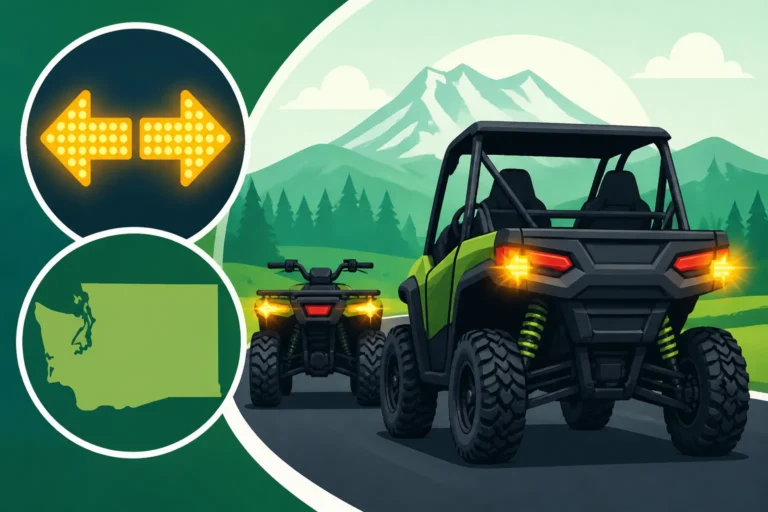
- Turn Signals: Required for signaling turns and lane changes, just like any car. Many ATVs and UTVs don't come stock with these, so aftermarket solutions, often available from brands like SuperATV, are common for achieving compliance.
- Mirrors: At least one mirror, affixed to the left or right handlebar or vehicle, providing a view of the highway for at least 200 feet to the rear. Often, two mirrors are preferred for better visibility.
- Horn: A working horn is necessary to alert others to your presence.
- Spark Arrester: A U.S. Forest Service approved spark arrester is always required for both on-road and off-road use to prevent wildfires.
- Muffler: The WATV must have an adequate muffler system to keep noise levels within legal limits.
- Windshield or Eye Protection: The operator (and passengers) must have a windshield or wear adequate eye protection.
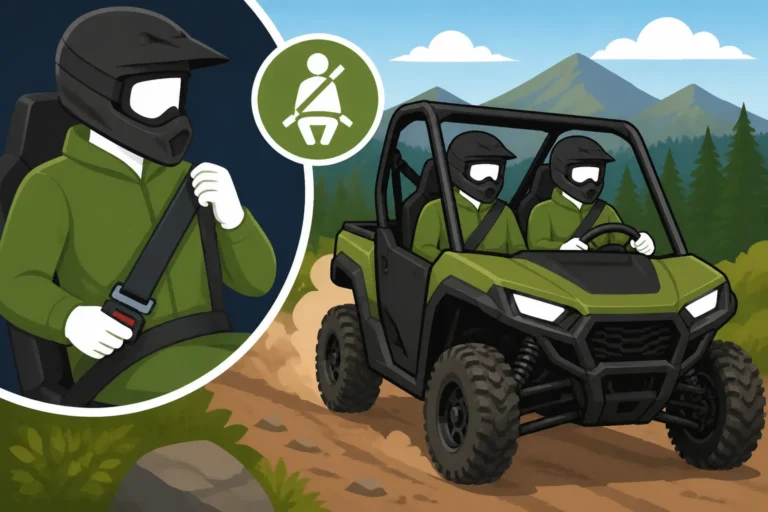
- Seat Belts: If the WATV is equipped with seat belts, they must be worn by the operator and all passengers.
- Helmets: All riders, regardless of age, must wear a DOT-compliant helmet when operating a WATV on public roads. This is a crucial safety measure that often surprises adult riders who are used to off-road riding where helmet laws can sometimes be less strict for adults depending on the state. [Washington Helmet Law for WATV Riders] is clear on this.
It’s important to remember that these aren't optional upgrades; they are legal necessities. Before you even think about putting a tire on pavement, perform a thorough check of your machine against the full list of [Washington WATV Road Requirements].
The Importance of Machine Type and Fit
The type of WATV also plays a role in road-legal operation, though less directly tied to age. Side-by-sides (UTVs) are often easier to equip for road use due to their car-like controls, seating, and existing provisions for lights, mirrors, and seat belts. Many SuperATV kits are designed specifically to add the necessary turn signals, horns, and other safety equipment to popular UTV models. Traditional ATVs, while sometimes adaptable, can be more challenging to fit with all the required road-legal equipment while maintaining safe operation characteristics.
Beyond the machine type, ensuring the WATV "fits" the rider is paramount, particularly for younger, licensed drivers. Can they comfortably reach all controls? Is their vision unobstructed? Can they manage the weight and handling characteristics of the machine at road speeds? While there aren't specific "road legal" size limitations beyond the typical 50-inch width for some trails, common sense and safety dictate that a rider should be in full control of their machine at all times, especially when sharing the road with other vehicles.
Road-Legal Modifications
Making your WATV road-legal often involves several modifications, especially if it was purchased primarily for off-road use. This is where companies like SuperATV come in, offering a wide array of aftermarket parts designed to help riders comply with state laws. From universal turn signal kits and DOT-approved windshields to street-legal mirror sets and robust horn systems, these modifications are more than just accessories; they are essential components for lawful road use.
When considering modifications, always prioritize quality and compliance. Don't just slap on the cheapest parts; ensure they are durable, properly installed, and meet Washington's specific regulations. For example, simply having lights isn't enough; they must be bright enough, correctly aimed, and functional. Investing in good quality [Turn Signals on a Washington Road Machine] and [Mirrors and a Horn for Washington Road Use] will not only help you avoid a ticket but will also significantly enhance your safety and visibility to other drivers, which is critical when you're on a machine that's smaller and often less visible than standard vehicles.
Common Misconceptions and Risky Assumptions
When it comes to WATV road use in Washington, a lot of myths and misunderstandings circulate, often leading riders into trouble. These assumptions, while sometimes well-intentioned, can result in significant fines, machine impoundment, or, worst of all, serious accidents. It’s vital to distinguish between what you think might be true and what the law actually states, especially concerning age and road access.
"If It's Tabbed, It's Legal for Anyone"
This is perhaps one of the most dangerous misconceptions. Many WATV owners diligently pay for and display both the [Washington's Off-Road Tab Explained] and the [Washington's On-Road Tab Explained], assuming that once the machine is properly tabbed, anyone can ride it on approved roads. This is absolutely false. As discussed, the tabs make the machine legal for road use, but they do not automatically make the operator legal.
The operator still requires a valid driver's license. So, while your side-by-side might have a current on-road tab, if your unlicensed teenager (no matter how good they are off-road) is driving it on a paved county road, they are breaking the law. The tabs are a prerequisite for the machine, but the driver's license is a prerequisite for the person. Ignoring this distinction can lead to a citation for operating without a license, which carries much more severe penalties than a simple equipment violation. Always remember that both the machine and the rider must meet all legal requirements.
The Danger of Out-of-State Rules
Another common pitfall is assuming that rules from other states apply in Washington. Some states have different age requirements, licensing standards, or even allow younger, supervised riders on certain road types. However, Washington State law governs WATV operation within its borders. What's legal in Oregon, Idaho, or British Columbia may not be legal in Washington. Even if you have an out-of-state ORV registration that might be recognized for off-road trail use, that reciprocity rarely extends to road use where driver licensing is a primary concern.
Always verify Washington's specific laws, especially regarding driver licensing and age, before venturing onto public roads. A visitor from a state with more lenient rules might inadvertently find themselves in violation of Washington law, simply because they weren't aware of the local requirements. The rules for [Washington Rules for Riding a County Road] or [Washington Rules for Riding a City Street] are specific to Washington and apply to everyone, resident or visitor, young or old.
Consequences of Non-Compliance
The repercussions of ignoring Washington's age and licensing rules for WATV road use can be severe.
- Traffic Citations and Fines: Operating a WATV on a public road without a valid driver's license is a serious traffic infraction. Fines can be substantial, and the infraction may even lead to charges similar to driving an unregistered or uninsured vehicle.
- Machine Impoundment: In some cases, law enforcement may impound the WATV if it's being operated illegally, adding significant impound and storage fees to your woes.
- Insurance Issues: If an accident occurs while an unlicensed or underage person is operating a WATV on a public road, your insurance company may deny coverage, leaving you personally liable for damages, injuries, and legal costs. This is particularly crucial as [Washington WATV Insurance Requirements] are in place for road use.
- Safety Risks: Beyond legal and financial penalties, the most significant consequence is the increased risk of accident and injury. An unlicensed or inexperienced rider operating a powerful machine on a public road shared with cars and trucks is at a much higher risk of collisions, which can have tragic outcomes.
- Suspension of Driving Privileges: For a licensed minor, receiving a citation for illegal WATV road use could result in points on their driving record, and potentially even the suspension of their intermediate or full driver's license.
Understanding and adhering to Washington's specific rules, including [Washington Fines for Illegal WATV Road Use], is not just about avoiding trouble; it's about promoting safety and responsible recreation for everyone.
| Requirement Area | Off-Road Trails (e.g., DNR Forests) | On-Road (Approved County/City Roads) |
|---|---|---|
| Operator Age | 16+ (or 12-15 with Safety Cert. & Supervision) | Must possess valid driver's license (typically 16+ for full license) |
| Driver's License | Not required (for off-road use only) | Mandatory |
| Supervision | Required for riders 12-15 years old | N/A for operator (operator must be licensed; supervision only applies to passengers/intermediate license conditions) |
| WATV Tabs | Off-road tab required | Off-road and on-road tabs required |
| Helmets | Required for all riders | Required for all riders |
| Equipment | Spark arrester, muffler, lights (often) | Full road-legal package (turn signals, mirrors, horn, etc.) |
Disclaimer
This article is for general informational purposes only and does not constitute professional advice. Laws, prices and regulations vary by location and change over time. Consult a qualified professional for guidance on your specific situation.