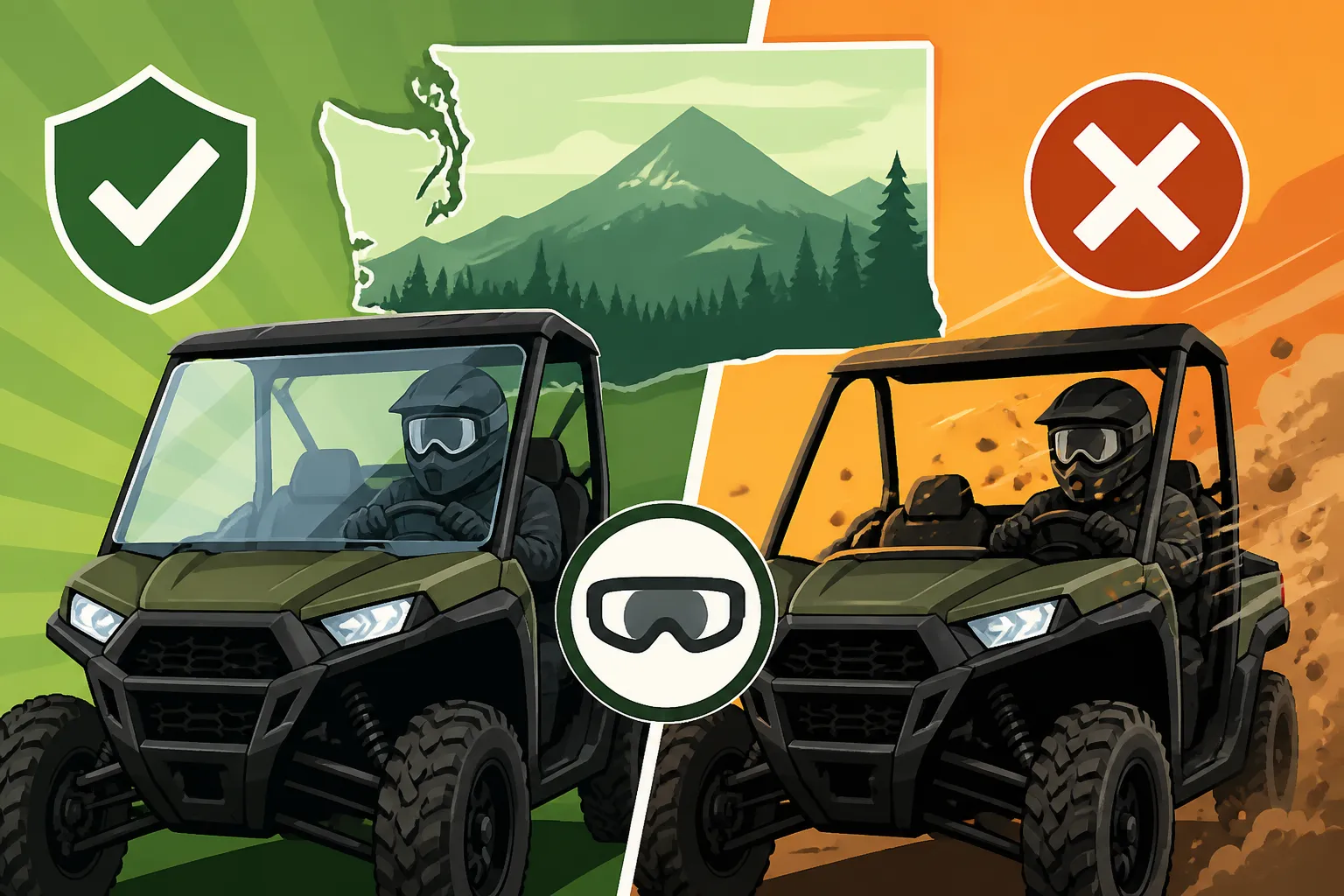
A Windshield or Eye Protection in Washington
One of the biggest head-scratchers for Washington residents looking to take their beloved WATV onto the open road is the seemingly simple question of how to protect your eyes. It’s not just about comfort; the law has specific requirements, and getting it wrong can lead to a roadside chat with a trooper that nobody wants. This guide is here to clear up the confusion, explaining exactly what Washington expects when it comes to windshields or eye protection for your street-legal quad or side-by-side.
The Core Rule: Windshield or Eye Protection for On-Road Use?
Washington's intent for road-registered WATVs is clear: ensure the operator and any passengers have adequate protection from road hazards. This isn't just about flying rocks or bugs; it's about maintaining clear vision, which is absolutely paramount for safety on public roads. The law aims to prevent situations where a sudden impact to the face or eyes could cause a rider to lose control or become disoriented.
The rule offers a choice, which can sometimes be the source of confusion. Do you need a physical windshield on your machine, or is proper eye protection for each person good enough? Understanding this distinction is the first step toward legal compliance and, more importantly, a safe ride. Many riders initially think their standard off-road goggles are automatically sufficient, but there are nuances to consider, especially when transitioning from trail to pavement speeds and environments.
What the Law Actually Says
When it comes to hitting the pavement with your WATV in Washington, the Revised Code of Washington (RCW) has specific provisions that outline what's expected for eye protection. The law essentially states that if your wheeled all-terrain vehicle (WATV) isn't equipped with a windshield, then the operator and any passengers must wear eye protection. This isn't just a suggestion; it's a hard rule that's designed to protect everyone on board from debris, wind, and anything else that could impair vision or cause injury.
The key takeaway here is the "or" — it's an either/or situation. You either have a windshield that meets certain criteria, or you and your passengers are wearing appropriate eye protection. This distinction is crucial for riders, particularly those who might be used to riding solely off-road where the rules can be a bit more relaxed regarding specific equipment. The moment those tires hit a county or city street, the game changes, and your equipment needs to adapt to those new, often faster, conditions.
This provision isn't just about ticking a box for legal compliance; it's fundamentally about rider safety. Imagine hitting a patch of highway at 35 mph, the maximum speed for WATVs on approved roads, and a stone from an oncoming truck or a large insect slams into your unprotected eye. The immediate pain and loss of vision could lead to a catastrophic accident. The law anticipates these real-world hazards and provides a simple, direct solution to mitigate them.
Who Needs What: Rider vs. Passenger
The Washington law regarding windshields or eye protection applies equally to everyone on the WATV. This means both the operator (driver) and all passengers, regardless of their position on the machine, must comply with the requirement. If your side-by-side has seating for three, all three individuals need to be either behind a compliant windshield or wearing approved eye protection. There’s no exemption for passengers who might be sitting further back or in a more enclosed cabin.
This blanket requirement is straightforward but often overlooked, especially by families or groups riding together. It’s easy for the driver to remember their own gear, but ensuring everyone else has suitable eye protection can sometimes be an afterthought. This is where planning ahead becomes vital; before you even pull out of the driveway, a quick check of everyone’s gear can save a lot of trouble and ensure everyone’s safety on the road.
Consider the practical implications: on an ATV, which typically has no windshield, every rider will need dedicated eye protection. For a UTV, if it has a factory or aftermarket windshield, that might cover everyone. However, if the windshield is a half-windshield or doesn't fully protect all occupants from forward-moving debris, then individual eye protection would still be necessary for those not fully shielded. It's always best to err on the side of caution; if there's any doubt about the windshield's coverage, ensure everyone has their own protective eyewear.
Understanding Eye Protection Standards
When the law talks about "eye protection," it's not just any old pair of sunglasses. There's an expectation that the eyewear will actually protect your eyes from impacts, wind, and debris. This means flimsy fashion glasses probably won't cut it, and a Washington trooper would likely agree. The whole point of the rule is proactive safety, not just having something on your face. You're moving at speeds on pavement that you might not always reach on the trail, and the types of hazards can be different, often involving smaller, faster-moving projectiles.
Many riders already own eye protection for off-road riding, but it's important to evaluate if that gear is truly up to snuff for street use. Factors like peripheral vision, anti-fog capabilities, and scratch resistance become even more critical when you're sharing the road with cars and trucks. Clarity and durability are key characteristics of any suitable eye protection, ensuring that your vision remains unobstructed and your eyes are safeguarded from the unexpected.
Types of Approved Eye Protection
For those opting out of a full windshield on their WATV for road use, understanding what constitutes "approved" eye protection is paramount. Generally, this includes goggles, face shields integrated into a helmet, or specific types of safety glasses. The underlying principle is that the eyewear must be shatter-resistant, provide adequate coverage for the eyes and surrounding area, and stay securely in place during your ride. Many off-road specific goggles, often worn with open-face helmets, fit this bill perfectly, offering broad coverage and a snug fit.
When selecting eye protection, look for standards like ANSI Z87.1, which indicates industrial-grade impact resistance for safety glasses. For helmet visors, DOT (Department of Transportation) approval is a good indicator of their protective qualities, as it means the entire helmet system, including the visor, meets federal safety standards for motorcycling. These certifications provide a layer of assurance that the eyewear can withstand significant impacts, which is exactly what you need when facing road debris at speed. Always check that your chosen eyewear offers clear, distortion-free vision, and consider anti-fog coatings if you frequently ride in humid or cold conditions.
It's not just about the quality of the lens; the fit and design matter too. Goggles that seal against your face prevent wind and dust from getting in, which is a major advantage over open-sided safety glasses, especially for sustained road riding. A secure strap on goggles or a firmly attached face shield ensures your protection won't fly off or shift, obstructing your vision at a critical moment. While [Washington Helmet Law for WATV Riders] mandates helmets for all riders on public roads, pairing a good helmet with proper eye protection ensures a comprehensive safety approach, covering all bases from head injuries to eye trauma.
When Goggles Just Aren't Enough
While quality goggles or a helmet visor are usually sufficient for eye protection, there are specific situations or preferences where they might not feel like enough, or where a windshield simply offers a superior experience. For instance, in heavy rain, even the best goggles can fog up or get waterlogged, severely impairing visibility. A windshield, especially one with a wiper system (if available for your WATV model), can offer a much clearer view and a drier ride. This becomes particularly noticeable on longer stretches of pavement or during inclement weather.
Another consideration is protection from larger debris or prolonged wind exposure. While goggles protect your eyes, a windshield offers a barrier for your entire face and upper body. This can be a huge comfort factor, reducing rider fatigue from constant wind buffeting and shielding against insects or larger airborne particles that goggles might not deflect entirely. If you're consistently riding on roads, especially at the higher end of the allowed speed limit, the added comfort and protection of a windshield can significantly enhance your experience.
Finally, while not strictly a legal requirement, many UTV owners prefer a windshield for a more "enclosed" or car-like feel, especially for passengers. This can make the ride more enjoyable and less exposed, particularly for younger riders or those not accustomed to direct wind and elements. Even with robust goggles, some riders find the sensation of direct wind on their face tiring over time. For these reasons, while goggles are legally compliant, a windshield, perhaps a durable polycarbonate option from a brand like SuperATV, often becomes a preferred upgrade for those who frequently use their WATV on public roads.
Windshields for Your WATV
For many WATV owners, particularly those with side-by-sides, a windshield isn't just about meeting a legal requirement; it's about transforming the riding experience. While goggles offer direct eye protection, a windshield elevates the level of comfort and utility, making your machine feel more versatile and capable on various terrains, including public roads. The decision to add a windshield often comes down to balancing regulatory compliance with practical benefits and personal riding preferences.
Adding a windshield can significantly change the dynamic of your ride, especially when transitioning between off-road trails and paved county roads. It introduces an element of enclosure that can make the journey smoother and more pleasant. However, it also brings its own set of considerations, from material choice to installation, all of which contribute to the overall effectiveness and enjoyment of the accessory.
Advantages of a Windshield for On-Road Use
Beyond merely satisfying Washington's eye protection requirement, a windshield offers a host of practical advantages for WATV riders venturing onto public roads. The most immediate benefit is enhanced comfort. Riding at 35 mph, even on a sunny day, can subject you to relentless wind blast, which can be fatiguing over extended periods. A windshield deflects this wind, significantly reducing rider and passenger fatigue, making longer road sections far more enjoyable. This can be especially appreciated when you're linking trails together or simply using your machine for errands on approved county roads.
Protection from the elements is another major plus. Picture riding down a gravel road that connects to a paved section, and suddenly it starts to rain. Without a windshield, you're immediately exposed to the full force of the weather, impacting visibility and comfort. A windshield provides a crucial barrier against rain, sleet, snow, and even intense sun, keeping you drier and warmer (or cooler, depending on the conditions). This added protection helps maintain clear vision, which is non-negotiable for safe road use.
Furthermore, a windshield offers superior protection from physical hazards. While goggles protect your eyes, a windshield shields your entire face and often a good portion of your body from flying debris – think kicked-up rocks, bugs, or even small branches encountered on shoulder areas. This comprehensive protection creates a safer riding environment, reducing the risk of injury from unexpected impacts. For riders looking to maximize safety and comfort on public roads, a well-chosen windshield is often considered an indispensable upgrade.
Different Types of Windshields Available
The market for WATV windshields is incredibly diverse, offering a range of options to suit different riding styles, climates, and budgets. Full windshields, which cover the entire front opening of the cab, are the most common choice for road use. They provide maximum protection from wind, weather, and debris, effectively transforming your UTV into a more enclosed vehicle. These are typically made from durable polycarbonate or acrylic, with polycarbonate being preferred for its superior impact resistance and clarity, especially from reputable brands like SuperATV.
Half windshields, as the name suggests, cover only the lower portion of the front opening. These are popular with riders who want some wind deflection but still desire an open-air feel and maximum airflow. While they offer good protection from kicked-up dust and small debris, they generally don't fulfill the "windshield" requirement for comprehensive eye protection without additional goggles, as your upper face would still be exposed. Flipping or folding windshields offer the best of both worlds, allowing riders to easily switch between full protection and open-air riding, which is incredibly versatile for mixed-terrain adventures where you might transition from a dusty trail to a paved road.
Beyond the basic types, you'll also find windshields with specific features like hard-coat treatments for enhanced scratch resistance, tinting to reduce glare, or even integrated vents to control airflow and prevent fogging. When choosing, consider the kind of riding you do most, the weather conditions you often encounter, and whether you prioritize maximum protection, airflow, or versatility. Many manufacturers, including leading aftermarket providers, also offer quick-attach or tool-less installation systems, making it easier to adapt your machine for different purposes throughout the year.
Installation and Maintenance Considerations
Installing a windshield on your WATV can range from a straightforward DIY project to something that might benefit from professional assistance, depending on the model and your comfort level with tools. Most aftermarket windshields come with detailed instructions and mounting hardware designed for specific WATV models, making the process relatively easy. The key is to ensure a secure, rattle-free fit that doesn't obstruct your view or interfere with other accessories. Taking your time during installation will prevent gaps that could allow wind or water to seep in, compromising the windshield's effectiveness.
Once installed, proper maintenance is crucial for maintaining optical clarity and extending the life of your windshield. Polycarbonate and acrylic windshields, while durable, are susceptible to scratching if not cleaned correctly. Always use a soft cloth or microfiber towel and a cleaning solution specifically designed for plastics, or simply mild soap and water. Avoid harsh chemicals, abrasive cleaners, or dry wiping, which can create micro-scratches that degrade clarity over time. Regular cleaning is especially important in Washington, where dust from forest roads and mud from wet trails can quickly obscure your view.
Visibility is paramount for safety, particularly when riding on roads where you need to be constantly aware of your surroundings. A dirty, scratched, or fogged-up windshield can be just as dangerous as having no eye protection at all. If your windshield becomes too scratched or hazy, it might be time for a replacement. While it's an investment, the ability to see clearly is priceless when you're sharing the road with other vehicles. Ensuring your windshield is always in top condition is an important part of responsible [Washington WATV Road Requirements].
Integrating Eye Protection with Other Gear
Riding a WATV on public roads in Washington involves more than just a windshield or goggles; it's about a holistic approach to safety gear. Your eye protection choice, whether it's a dedicated windshield or personal eyewear, needs to work in harmony with your helmet and other protective equipment. Thinking about how these elements fit together isn't just about comfort; it's about maximizing your protection and ensuring compliance with all aspects of Washington's road-use laws.
A well-integrated gear system means less hassle, greater comfort, and ultimately, a safer riding experience. When pieces of your gear conflict or don't perform optimally together, it can lead to distractions, discomfort, or even reduced effectiveness of the protective elements. This is why considering your full ensemble of safety gear, rather than just individual components, is such a critical step before hitting the road.
Helmets and Visors: A Complete Solution
Washington state law mandates that all operators and passengers of WATVs wear a safety helmet when riding on public roads. This is a critical piece of legislation designed to prevent head injuries, and it directly relates to the discussion of eye protection. For many riders, especially those with full-face helmets, the integrated visor acts as the primary form of eye protection, naturally fulfilling the legal requirement without needing additional goggles.
A full-face helmet with a DOT-approved visor provides comprehensive protection for the entire face, including the eyes. The visor is typically designed to be impact-resistant and optically clear, providing an excellent field of vision while shielding against wind, rain, and debris. This integrated solution is often the most convenient, as it eliminates the need to carry separate goggles and ensures that your eye protection is always secured to your head whenever you wear your helmet. It's a "set it and forget it" solution for many riders who frequently use roads.
However, if you prefer an open-face helmet, or your full-face helmet has a removable visor, you must then ensure you're wearing appropriate goggles or safety glasses. Some riders choose to combine an open-face helmet with a good pair of off-road goggles for maximum airflow while still meeting both the helmet and eye protection requirements. Regardless of your helmet style, the key is to ensure that your choice provides continuous, secure, and clear eye protection for the entire duration of your road ride, in full compliance with [Washington Helmet Law for Passengers] and operators alike.
Weather, Visibility, and Adaptability
The diverse weather conditions found across Washington state, from the damp, misty forests of the Olympic Peninsula to the dry, dusty plains of Eastern Washington, mean that your choice of eye protection or windshield needs to be adaptable. What works perfectly on a sunny, dry day might become a hindrance in a sudden downpour or thick fog. This is where the ability to adapt your gear becomes a significant advantage for safe road riding.
For riders using goggles or helmet visors, anti-fog coatings or inserts are invaluable, especially during cooler, humid conditions or when transitioning from a warm, strenuous ride to a cooler, open road. Tinted visors or interchangeable goggle lenses (clear, amber, smoke) allow you to optimize visibility for different light conditions, reducing glare on bright days and enhancing contrast in low light. Carrying a variety of lenses or a spare pair of clear goggles is a smart move for riders venturing out for extended periods.
If you opt for a windshield, consider features that enhance visibility in varying weather. Some UTV windshields offer vents that can be opened or closed to help manage airflow and reduce internal fogging. While full wiper systems are less common on WATVs than on cars, some aftermarket options exist or can be improvised. Ultimately, the goal is to ensure that your vision is never compromised by weather, dirt, or fog. Being prepared for Washington's unpredictable conditions means you can ride safely and comfortably, whether the sun is shining or the clouds open up on [Washington Rules for Riding a County Road].
Legal Nuances and Enforcement
Understanding the letter of the law is one thing, but knowing how it's applied and enforced on Washington's roads is another. Troopers and local law enforcement officers aren't just looking for a sticker; they're ensuring that the spirit of the law, which is primarily rider safety, is being upheld. This means your eye protection or windshield needs to be functional and effective, not just present. The specific equipment requirements for on-road use are an important aspect of ensuring everyone's safety, and compliance is taken seriously.
It's common for riders to feel a bit apprehensive about roadside stops, especially when venturing onto new roads or unfamiliar jurisdictions. However, by being prepared and knowledgeable about the regulations, you can approach these interactions with confidence. Knowing what an officer is likely to check for can help you ensure your machine and your gear are always in compliance, making for a smoother experience.
What a Washington Trooper Checks Roadside
When a Washington State Trooper pulls over a WATV on a public road, they're typically conducting a quick safety check, and proper eye protection or a functional windshield is definitely on their list. They want to see that you're in compliance with the state's equipment requirements, ensuring your safety and the safety of others on the road. This usually involves a visual inspection of your machine and your gear, and sometimes a brief conversation about your setup.
First, they’ll look for a windshield. If your WATV has one, they'll quickly assess if it's intact and providing reasonable protection. They're not going to measure its height, but they will check for large cracks or damage that might impair vision. If there's no windshield, their attention will immediately turn to the rider and passengers: are you all wearing appropriate eye protection? They'll be looking for actual protective eyewear, not just sunglasses, and will likely want to see that it's securely worn. They're checking for things like proper goggles, a helmet visor, or adequate safety glasses.
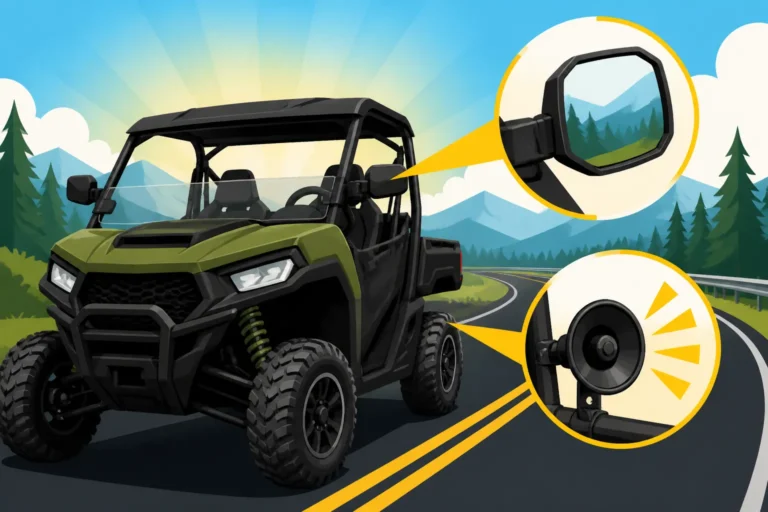
Beyond eye protection, a trooper will also verify other critical items for on-road use, such as proper registration and tabs ([Washington's On-Road Tab Explained]), a valid driver's license ([Washington Driver License Rules for WATVs]), and the presence of required equipment like mirrors, turn signals, and a horn. The goal of these checks is to confirm that the WATV is street-legal and that the operator is prepared for the demands of road riding. Being polite, cooperative, and having all your paperwork and gear in order can make any roadside interaction quick and pleasant.
Potential Fines for Non-Compliance
Operating a WATV on a public road in Washington without the legally required eye protection or a compliant windshield can lead to a citation. While specific monetary figures can change, the general principle is that violations of traffic laws, including equipment requirements, carry fines. These penalties are designed to encourage compliance and reinforce the importance of safety regulations, serving as a deterrent against unsafe practices.
Beyond the immediate financial penalty, there are other potential consequences. Repeated violations could potentially lead to more significant legal issues, though this is less common for a single equipment infraction. More importantly, riding without proper eye protection significantly increases your risk of injury. A minor stone or a large insect hitting your eye at speed can cause severe pain, temporary blindness, and potentially a permanent injury, leading to medical costs far exceeding any fine.
It's crucial to remember that these laws are in place for your protection. The small inconvenience or cost of purchasing proper eye protection or a windshield pales in comparison to the risks involved in riding without it. Ensuring compliance with all [Washington WATV Road Requirements] is not just about avoiding a ticket; it's about safeguarding your health and ensuring a safe and enjoyable riding experience for yourself and your passengers.
Making the Best Choice for Your Ride
Navigating the various options for eye protection and windshields can feel overwhelming, but making an informed decision is crucial for both legal compliance and your personal safety and comfort. It's not a one-size-fits-all situation; what works best for one rider might not be ideal for another, depending on their machine, their typical riding environment, and their individual preferences. The key is to assess your unique needs and find the solution that provides the best balance of protection, usability, and adherence to Washington's specific rules.
Thinking through how you actually use your WATV, and where you plan to ride it on the road, will guide you toward the most appropriate choice. This isn't just about what you can do, but what makes the most sense for you and your passengers.
Assessing Your Riding Habits and Needs
Before you decide between goggles, a helmet visor, or a full windshield, take a moment to honestly assess your primary riding habits and anticipated needs for road use. Do you mainly use your WATV for quick hops down a paved county road to link up with a trail, or do you envision longer stretches of road riding, perhaps for commuting or exploring rural routes? Your typical speed, the duration of your road segments, and whether you frequently carry passengers will all influence the best choice for eye protection.
If your road use is minimal and primarily consists of slow-speed transitions between trailheads, high-quality goggles or a full-face helmet visor might be perfectly adequate and even preferred for their simplicity and cost-effectiveness. However, if you plan to spend significant time on pavement, especially at the maximum allowed speeds, the comfort and comprehensive protection offered by a full windshield on a UTV become far more appealing. Consider the weather conditions you most often encounter; a windshield is a game-changer in rain or cold, whereas goggles might be more versatile for hot, dusty days.
Also, think about your passengers. On an ATV, every passenger will need their own eye protection. In a side-by-side, while a full windshield might protect front occupants, those in the back might still need additional eyewear depending on the windshield's design and their position. Taking these factors into account will lead you to a solution that not only meets legal requirements but also genuinely enhances your riding experience.
Balancing Comfort, Safety, and Legal Requirements
Ultimately, the goal is to find a solution that seamlessly balances comfort, maximum safety, and strict adherence to Washington’s legal requirements. While the law gives you a choice between a windshield or eye protection, the best choice for you will often involve considering all three aspects simultaneously. Don’t compromise on safety just for convenience, and don't assume that minimal compliance is always the best solution.
For many WATV owners, especially those with side-by-sides, a full windshield offers superior comfort and protection on the road, reducing wind fatigue and shielding from a broader range of debris and weather. Combining this with a quality helmet (which is legally required) means you have a comprehensive safety setup. If you're an ATV rider, or prefer an open-cab UTV, investing in top-tier goggles or a full-face helmet with a robust visor is critical. Look for features like anti-fogging, scratch resistance, and a secure fit to ensure clear, uninterrupted vision.
Remember, the regulations are there for a reason: to keep you safe. Choosing high-quality gear from reputable brands, like the durable windshields offered by SuperATV, ensures that your investment provides genuine protection. By proactively assessing your needs and selecting appropriate gear, you not only comply with the law but also significantly enhance the enjoyment and safety of every ride on Washington's diverse roads and trails.
Eye Protection and Windshield Options for WATVs
Here's a quick comparison to help you weigh your options for eye protection and windshields for your WATV when riding on Washington roads:
| Feature | Goggles/Helmet Visor | Half Windshield | Full Windshield |
|---|---|---|---|
| Legal Status | Legally compliant if worn by all occupants. | May require additional eye protection for occupants depending on coverage. | Legally compliant; covers all occupants behind it. |
| Primary Use | Off-road riding, occasional road use, hot weather. | Mixed use, some wind protection, more airflow. | Frequent road use, all-weather protection. |
| Protection | Direct eye protection from impacts, wind, dust. | Protects lower face/chest from dust/debris; limited eye protection. | Full frontal protection from wind, weather, debris, impacts. |
| Comfort | Excellent airflow, can fog up. | Good airflow, reduces some wind buffeting. | Reduces wind fatigue, offers enclosed feel; can restrict airflow. |
| Visibility | Clear when clean, can fog. Variety of tints/lenses. | Clear lower vision, open upper field. | Excellent clarity if well-maintained; can fog without vents. |
| Cost | Generally lower (goggles, visor replacement). | Moderate. | Higher initial cost. |
| Maintenance | Clean lenses, replace when scratched/damaged. | Clean, occasional polish. | Clean, anti-scratch treatments, possible wiper systems. |
| Adaptability | Easy to swap lenses for conditions. | Fixed protection; versatile for varied terrain. | Some types fold/flip for versatility, others are fixed. |
| Best For | Riders prioritizing airflow, aggressive off-road riding, budget-conscious. | Riders wanting some protection but max airflow, short road segments. | Riders doing long road stretches, all-weather comfort, maximum protection. |
Disclaimer
This article is for general informational purposes only and does not constitute professional advice. Laws, prices and regulations vary by location and change over time. Consult a qualified professional for guidance on your specific situation.