Bringing a Machine From British Columbia
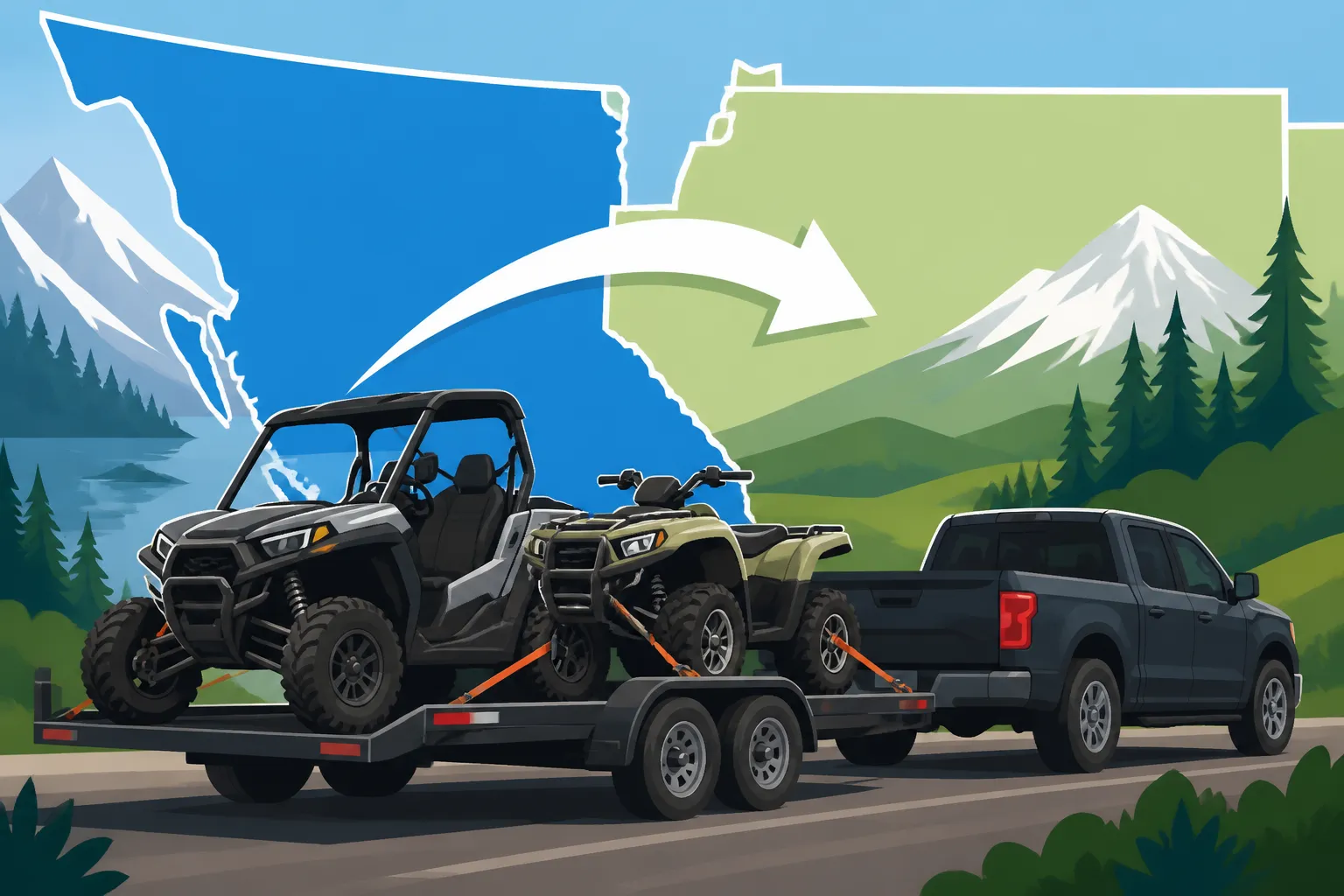
Alright, so you've found that perfect quad or side-by-side north of the border in beautiful British Columbia, and you're dreaming of bringing it home to tear up the trails here in Washington State. It’s an exciting prospect, truly! But let me tell you, bringing a machine across an international border isn't quite as straightforward as driving across the Columbia River into Oregon. There are a few more hoops to jump through, and if you're not prepared, that dream machine can quickly become a bureaucratic headache. This guide is here to walk you through the specifics of what you'll encounter when you bring a WATV from British Columbia into Washington, ensuring you're ready for everything from customs declarations to Washington's unique registration process.
Clearing the Canadian-U.S. Border: More Than Just a Drive
It’s easy to think of the border as just another toll booth, but when you're importing a vehicle – even an off-road one – there’s a whole layer of federal regulations that come into play before Washington State even gets a say. This isn’t about just showing your passport; it’s about formally bringing an item of value into the country, and that involves both Customs and environmental/safety agencies. Don't let this intimidate you, but definitely approach it with a checklist mentality.
Understanding U.S. Customs and Border Protection Declarations
When you roll up to the border with your new-to-you Canadian machine, the U.S. Customs and Border Protection (CBP) officers are primarily concerned with two things: what you're bringing in, and whether you owe any duties or taxes on it. You'll need to declare the vehicle. This isn't just a verbal "I bought a quad"; you'll be filling out forms. The key document here is likely CBP Form 7501, the Entry Summary, or potentially a simpler informal entry if the value is below a certain threshold and it's for personal use. It’s essential to have a solid bill of sale (even if it's handwritten, make sure it’s comprehensive, and you can even find templates on sites like LawDepot for private sales if the seller doesn't provide a formal one) and proof of ownership from British Columbia.
They’ll ask about the purchase price, and depending on the origin and specific type of vehicle, you might be subject to import duties. The good news is that for many vehicles manufactured in North America, duties might be waived under trade agreements, but it’s not a guarantee. Always be honest and have all your financial transaction paperwork ready. Hiding the true value to avoid a small duty now can lead to much bigger problems later if discovered. Remember, they’ve seen it all, and they have ways of assessing fair market value.
Meeting EPA and DOT Standards for Importation
Here's where many people hit their first real snag: environmental and safety standards. Both the U.S. Environmental Protection Agency (EPA) and the Department of Transportation (DOT) have regulations that imported vehicles must meet. For off-road vehicles, the EPA is usually the bigger concern. Most modern ATVs and UTVs sold in Canada are likely to meet U.S. EPA emission standards, especially if they’re from major manufacturers that sell the same models in both countries. However, you need to verify this. Look for a label on the machine itself – usually near the engine or on the frame – that explicitly states it conforms to U.S. EPA emission standards. Without this, you might have to go through a costly modification and certification process, or even find that the machine is inadmissible.
DOT standards focus on safety, and while off-road vehicles aren't held to the same stringent requirements as passenger cars, there are still elements like lighting, braking, and overall construction that come into play. Again, a label indicating compliance is your best friend. If your machine is older or a model not typically sold in the U.S., you'll need to do some homework beforehand. It's often easier to buy a machine already compliant than to try and bring an non-compliant one up to snuff.
Washington State Requirements for Your Newly Imported Machine
Once you’ve successfully navigated the federal customs hurdles and brought your machine into Washington, it’s time to deal with the state-level registration and titling. Washington’s Department of Licensing (DOL) has a very specific process for all off-road vehicles, or "WATVs" as they call them, and an imported machine often adds a few extra layers to that process. The core requirements for any WATV still apply, but proving ownership and value can be a bit different with an international purchase.
Proving Ownership: The Title Quandary
This is arguably the most critical step once you're on Washington soil. In Washington, you generally need a title for your WATV before you can register it. We've talked about [Why Washington Wants a Title First] in detail before, and it's no different for an imported machine. The challenge with a BC machine is that Canada doesn't always issue a "Certificate of Title" in the same format or with the same legal weight as a U.S. state. In British Columbia, you might receive a bill of sale and perhaps a registration document, but not necessarily a traditional title.
So, what do you bring to the Washington DOL? You'll need the original bill of sale from British Columbia, ensuring it clearly identifies the buyer (you), the seller, the date of sale, the purchase price, and the full Vehicle Identification Number (VIN) of the machine. If the BC seller provided any other official ownership documents, bring those too. The DOL will likely review these documents to establish a chain of ownership and then issue you a Washington title. It's a good idea to ensure your bill of sale is comprehensive; consider using a template from a service like LawDepot for a robust agreement, even if just to supplement what the BC seller provides. Without clear proof of ownership, you’ll be stuck.
The Washington WATV Safety Inspection
Every WATV that gets titled and registered in Washington for the first time generally needs a safety inspection, and an imported machine is no exception. In fact, it's even more critical for an out-of-country machine to ensure it meets basic safety requirements for operation here. This inspection isn't about deep mechanical checks, but rather ensuring the machine has essential safety equipment like brakes, headlights, taillights, a muffler with a spark arrester, and working steering.
You can get this inspection done by an authorized inspector, often a powersports dealership or a mechanic shop that is licensed by the state. There's usually a cap on how much they can charge for this service; we've covered the [Washington WATV Safety Inspection Cost] in previous posts. Make sure the inspector fills out the Washington State Patrol inspection form completely and correctly. Without a signed inspection, the DOL won't process your title and registration. Finding [Where to Get a Washington WATV Inspection] is fairly easy, but you might want to call ahead to ensure they are familiar with inspecting imported machines and the specific forms required.
Paying Your Washington Sales/Use Tax
Even if you paid sales tax when you purchased your WATV in British Columbia, Washington State will likely still want its share in the form of use tax. Washington charges sales tax on items purchased within the state, and use tax on items purchased outside the state but brought in for use here. This applies regardless of whether you bought it from a dealer or a private party. We’ve covered [Washington ATV Use Tax on a Private Sale] and how it applies to private sales.
When you go to register your machine at the DOL, they will calculate the use tax based on the purchase price you declared on your bill of sale, or on the fair market value if they believe the declared price is significantly lower. Be prepared to pay this at the time of registration. It’s not an optional fee; it’s a required step to legally own and operate your machine in Washington. Keep a copy of your BC purchase receipt handy, but understand that Washington’s tax laws apply once the machine is here.
Navigating the DOL and Special Considerations
With an imported machine, the process can sometimes feel like a puzzle with missing pieces, especially if the documentation from the selling country doesn't perfectly align with Washington's expectations. Being prepared and knowing where to go for help can make all the difference in avoiding frustration.
The Department of Licensing Process for Imported Machines
Once you have your clear proof of ownership (bill of sale, potentially a BC registration document), the signed safety inspection form, and you’re ready to pay the use tax, you can head to your local vehicle licensing office. You’ll need to fill out the Washington State WATV registration application. This form typically asks for details about the machine, your personal information, and declarations regarding its use. We've outlined [Washington WATV Registration Paperwork] in other articles, and the core forms are the same.
Ensure all your documents are originals or certified copies, especially for ownership. The VIN on all documents must match exactly. Any discrepancies can cause significant delays. They’ll also collect the fees for the title, the annual registration tabs ([Washington WATV Registration Cost]), and any applicable local fees. If you plan to ride on certain public roads, you might also be looking at adding the [Washington On-Road Tab Cost] on top of the standard off-road tab. The process involves multiple steps, but each clerk at the DOL is there to guide you through it, so don't be afraid to ask questions.
Temporary Permits for Immediate Use (and Their Limitations)
Let's say you've just brought your machine over the border, and you're itching to hit the trails before you've had a chance to complete the full title and registration process. Washington does offer a [Washington's $15.75 Temporary ORV Permit]. This permit allows you to legally ride your machine off-road for a limited time, usually sixty days, without full registration. It's a great option for visitors or for those waiting for permanent plates.
However, there are critical limitations, especially for an imported machine. First, these temporary permits are for off-road use only. As we detail in [Why a Temporary Permit Is Trail Only], you absolutely cannot ride on public roads with just a temporary permit. Second, even with a temporary permit, you still need to be working towards full title and registration. It's not a long-term solution. For an imported machine, you might still need some proof of ownership to get the temporary permit, so having your BC bill of sale handy is still essential. It's best to think of it as a bridge, not a destination.
When to Seek Professional Help
Given the complexities of international vehicle imports, sometimes it’s worth seeking professional assistance. If your machine is particularly old, rare, or has unusual documentation, or if you simply don’t have the time to navigate the various agencies yourself, consider consulting a customs broker. These professionals specialize in import regulations and can help ensure all federal paperwork (EPA, DOT, CBP) is correctly filed. They can save you a lot of potential headaches and costly mistakes at the border.
For the Washington State specific parts, while the DOL staff are helpful, if you're dealing with very unusual ownership documents from BC, you might even consider a private licensing agent who has more time to delve into unique situations compared to the busy DOL counters. Websites like LawDepot can assist with generating official-looking documents like a comprehensive bill of sale, which might smooth the process for proving ownership, but they don't replace official government forms or a customs broker.
The journey from a BC backyard to a Washington trail can be a rewarding one, but it definitely requires diligence. By understanding the federal import rules, gathering all your ownership documents, and preparing for Washington's specific titling, inspection, and tax requirements, you can make that cross-border ATV dream a reality.
Here's a quick comparison of key documents you'll need at different stages:
| Document Type | For Border Crossing (CBP/EPA/DOT) | For Washington DOL (Title & Registration) |
|---|---|---|
| Proof of Ownership | Original Bill of Sale (from BC seller), BC Registration Document | Original Bill of Sale, BC Registration Document, WA Title Application |
| Identification | Passport, Driver's License | WA Driver's License/State ID |
| Vehicle Info | VIN (must be clearly visible), Make, Model, Year, Odometer | VIN (must match all documents), Make, Model, Year, Odometer |
| Compliance | EPA/DOT Compliance Labels (on machine), Confirmation from Manufacturer (if needed) | WA Safety Inspection Certificate |
| Taxation | Purchase Receipt (for duties) | Use Tax Payment |
| Other | Importer Declaration Forms (CBP 7501, etc.) | WATV Registration Application, Fees for Tabs/Title |
Disclaimer
This article is for general informational purposes only and does not constitute professional advice. Laws, prices and regulations vary by location and change over time. Consult a qualified professional for guidance on your specific situation.