Buying a Quad at a Washington Auction
It's incredibly tempting to browse those auction listings, isn't it? The thought of snagging a fantastic deal on a quad or side-by-side in Washington, maybe even something you've been dreaming about, can be really exciting. But the auction world is a bit different from buying from a private seller or a dealer, and there are some unique twists and turns you need to be aware of, especially when it comes to getting that machine legally registered here in the Evergreen State. This guide is here to walk you through the ins and outs of buying an off-road vehicle at auction, from pre-bid homework to post-purchase paperwork, so you can avoid headaches and get out on the trails faster.
The Allure and Risks of Auction Quads in Washington
Auctions can feel like a treasure hunt, full of potential bargains and hidden gems. Whether it's a municipal surplus auction, an impound lot sale, an estate auction, or a police seizure, the variety of machines can be impressive. However, this unique environment also comes with its own set of challenges and risks that traditional buying channels might not have.
Why Auctions Are Both Tempting and Tricky
The primary draw of an auction is, of course, the potential for a lower price. You might see machines go for significantly less than their retail value, especially if they have some cosmetic damage or aren't running perfectly. For those who are handy with repairs or looking for a project, an auction can be an ideal place to find a diamond in the rough. The competitive atmosphere can also be exhilarating, adding to the thrill of the chase.
However, the "as-is, where-is" nature of most auctions is the biggest hurdle. You typically don't get the same warranties or guarantees you might from a dealer. Often, you're looking at machines that haven't been meticulously maintained, or whose history is murky. You might find a quad that looks good on the surface but has hidden mechanical issues, or one that's missing critical paperwork that could complicate your ownership journey in Washington. It's a high-reward, but also high-risk, environment.
Types of Auctions Where Quads Show Up
You'll encounter various types of auctions where Washington ATVs, UTVs, and dirt bikes might be available. Government surplus auctions, often run by counties or state agencies, might sell off machines that were retired from their fleets. These might be well-maintained but have high hours. Impound lot auctions, on the other hand, frequently feature machines that were seized or abandoned. Their condition can vary wildly, and the paperwork might be a mess, making it harder to get a clean title.
Estate auctions, sometimes held by families or through auction houses, can present opportunities for machines that belonged to enthusiasts. These can be fantastic finds, but again, the documentation might depend on how organized the previous owner was. Online auctions have also become popular, offering a wider selection but making physical inspection before bidding much more challenging. Each type of auction has its own quirks regarding disclosures, inspection periods, and payment methods, so understanding the specific rules for the auction you're attending is paramount.
Before You Bid: Essential Due Diligence for Washington Auctions
Stepping into an auction without doing your homework is like going on a long trail ride without checking your fuel or tires – you’re setting yourself up for trouble. For Washington residents eyeing a quad at auction, thorough due diligence before the hammer drops is not just recommended, it's absolutely critical to avoid major headaches down the road.
Inspecting the Machine on-site
This is perhaps the most important step. Many auctions offer a preview period where you can physically inspect the vehicles. Even if the machine doesn't run, there's a lot you can glean. Start with a visual inspection: look for obvious damage to the frame, suspension components, and plastics. Major cracks or bends in the frame could indicate a serious accident, turning your bargain into a money pit. Check the tires for excessive wear or dry rot. Pull the dipstick to check the oil – does it look milky (water intrusion)? Is there metal flake? These are red flags.
Try to turn the handlebars, push on the suspension, and check for play in the wheels. Look at the brakes, chain or drive shaft, and CV boots. If the machine starts, listen for unusual noises from the engine or transmission. Don't be shy about getting dirty; crawl underneath if you can safely. A thorough inspection can reveal a lot about a machine's history and potential future repair costs. Remember, once you buy it, it's yours, flaws and all.
Verifying the VIN and Its History
Before you even think about bidding, locate the Vehicle Identification Number (VIN) on the machine. It's usually stamped on the frame or a permanent part of the engine casing. Once you have it, run a VIN check. This isn't just about spotting a stolen machine, though that's a crucial part of it. A VIN check can reveal if the machine has been reported stolen, if it has a salvage title, or if there are any liens against it. Imagine buying a quad, only to find out later that it's still technically owned by a bank because the previous owner defaulted on their loan. That's a nightmare scenario you definitely want to avoid.
Sometimes, auction houses might not provide detailed VIN information upfront, or they might even disclaim any responsibility for its accuracy. In such cases, you need to weigh the risk. If you can't verify the VIN, you're essentially buying blind. Always prioritize machines where the VIN is clear, legible, and verifiable. This due diligence can save you from legal battles and ensure you can actually [Titling a WATV in Washington] once you get it home. Be aware that some auctions, especially impound sales, might have vehicles with "parts only" titles or no title at all, making registration impossible for road or even off-road use in Washington. You'll definitely want to understand the implications of [Buying a Machine With No Title].
Understanding the Paperwork (or Lack Thereof)
This is where auction purchases get particularly tricky for Washington residents. For any WATV (Wheeled All-Terrain Vehicle) you buy, you'll need a title to legally register it. Washington requires a title to prove ownership before you can obtain your [Registering a WATV in Washington] tabs. Many auction quads, especially from impound or police sales, might come with minimal paperwork. You might get a bill of sale from the auction house, but this isn't always enough to transfer ownership and obtain a title directly.
Sometimes, you might receive a "lien sale" document or a specific auction-generated title transfer form. It's crucial to understand what documents the auction will provide and what steps you'll need to take afterward. If there's no title, you might have to go through a lengthy and potentially expensive process with the Washington State Department of Licensing (DOL) to apply for a bonded title or a three-year registration without a title (which has limitations). Always ask the auction house exactly what paperwork will accompany the sale. If they can't provide a clean, transferable title or the necessary forms to get one, proceed with extreme caution. This step alone dictates whether your auction find will be a fun new toy or a very expensive lawn ornament.
The Bidding Process and Post-Auction Steps
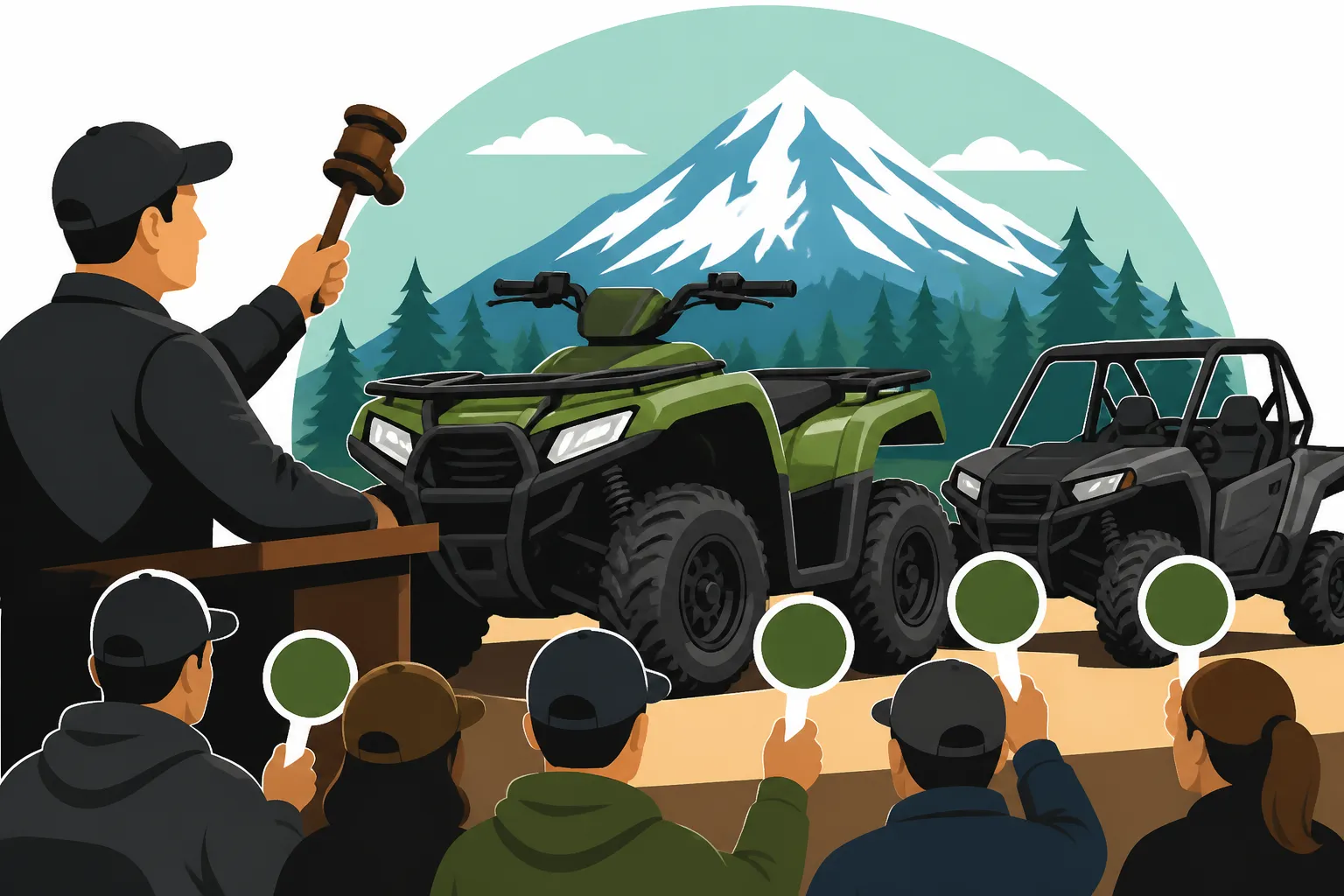
You’ve done your homework, inspected the machine, and checked the VIN. Now comes the exciting part: the auction itself! But remember, the adrenaline of bidding can sometimes lead to hasty decisions. Once the hammer falls and you're the winning bidder, there are crucial steps to take to ensure a smooth transition from auction lot to your garage.
Setting a Budget and Sticking to It
Before the auction starts, decide on your absolute maximum bid for each machine you're interested in. Research similar models and their market value for [Buying a Used ATV in Washington]. Factor in potential repair costs you identified during your inspection, as well as the non-negotiable fees: the auction buyer's premium (a percentage added to the winning bid), sales tax (which applies to auction purchases in Washington), and any other administrative fees. These can quickly add hundreds, or even thousands, to your final cost.
It’s easy to get caught up in the competitive spirit and bid more than you intended. This is where a firm budget comes into play. If the bidding goes beyond your pre-determined maximum, be disciplined enough to walk away. There will always be other opportunities. Overpaying at auction often means you've instantly lost any potential savings, and you’ll still have the costs of [Washington ATV Sales Tax Rate] and registration ahead.
Payment and Collection Procedures
Congratulations, you won the bid! Now, you'll need to settle up quickly. Most auctions require immediate payment or payment within a very short window, often 24-72 hours. Payment methods can vary, but typically include cash, cashier's check, or wire transfer. Personal checks are rarely accepted unless you have a pre-approved relationship with the auction house. Make sure you understand their accepted payment methods and have your funds ready.
Once paid, you'll need to arrange for collection. Quads and UTVs are not small items, and you usually have a limited time to pick them up before storage fees start accruing. Bring a suitable trailer and tie-downs. If the machine isn't running, be prepared to winch it onto your trailer. Some auction houses might offer loading assistance, but don't count on it; always assume you'll need to handle it yourself. Carefully review the auction's terms and conditions regarding payment deadlines and pickup windows to avoid unexpected fees.
Securing Your Bill of Sale and Other Paperwork
This is the moment of truth for your future ownership. When you pay, the auction house should provide you with a bill of sale. This document is essential as proof of purchase and will be needed for title and registration. Inspect it carefully to ensure it includes all relevant details: your name, the auction house's information, the machine's make, model, year, and crucially, its full VIN.
Depending on the auction type, they might also provide the original title, a lien release, or specific forms for title transfer. If any of these are missing, ask for them immediately. If the auction house is unable to provide a title, ensure the bill of sale clearly states this, and understand what alternative documents they can provide that might help you later. While an auction bill of sale is typically sufficient proof of purchase, sometimes you might want a more detailed document. Resources like LawDepot offer customizable bill of sale templates that you can use for private sales, which might be a useful reference if you're ever selling your machine, or if an auction's paperwork seems sparse. Remember, without proper documentation, you will face significant hurdles when you try to [Washington WATV Registration Paperwork] or register your new ride.
Navigating Registration and Titling for Your Auction Find
Bringing an auction-purchased quad home in Washington is only half the battle. The final, and arguably most critical, step is successfully titling and registering it with the Department of Licensing (DOL). This process can be straightforward if you have all your ducks in a row, but if documentation is incomplete, it can become a bureaucratic maze.
The Critical Role of a Clean Title
For any WATV, dirt bike, or side-by-side you plan to ride, Washington requires a clear and valid title in your name. This title is the ultimate proof of ownership. Without it, you cannot legally [Registering a WATV in Washington] and obtain your annual tabs. If the auction provided you with a transferable title, your first step is to apply for a title transfer at any Washington vehicle licensing office. You'll need the original title, your proof of identification, and potentially a signed [Washington Bill of Sale for a WATV] from the auction if the title assignment section wasn't fully completed by the auction or previous owner.
If the machine came with a lien sale document or an equivalent from the auction house but no actual title, you're in for a more involved process. You'll likely need to work with the DOL to obtain a bonded title. This usually involves submitting an application, posting a bond (which is essentially an insurance policy protecting previous owners or lienholders), and potentially a waiting period. This is often the case with abandoned or seized vehicles where the original owner's whereabouts are unknown or they never had a title themselves. Understanding [Why Washington Wants a Title First] will underscore the importance of securing this document.
Calculating and Paying Use Tax
When you purchase a quad at auction in Washington, you're typically subject to state and local sales tax, often referred to as "use tax" when bought from a non-dealer. This tax is usually collected at the time of titling and registration. The amount will be based on the auction's selling price, plus any buyer's premium, at your local combined sales tax rate. It's a percentage of the purchase price, and it's not a small sum, so make sure to factor it into your budget.
If the auction company itself is collecting sales tax at the time of the sale, ensure you get a receipt clearly showing the tax paid, as this will prevent you from paying it again at the DOL. However, many smaller or specialized auctions might not collect this, leaving it up to you to declare and pay it when you apply for your title. The DOL will likely use the reported purchase price on your bill of sale, but if they suspect the value is artificially low, they might refer to fair market values, especially for machines purchased without clear documentation. You can learn more about this by researching [Washington ATV Use Tax on a Private Sale].
When You Might Need an Inspection
While many WATVs in Washington don't require a formal safety inspection for initial registration, there are specific circumstances where your auction find might. If the machine has a branded title (like "salvage" or "rebuilt") or if there are any discrepancies in the VIN or ownership documents, the DOL might require a vehicle inspection by an authorized Washington State Patrol officer. This inspection confirms the VIN, verifies ownership, and ensures the machine is not stolen or rebuilt with stolen parts.
Another scenario could involve custom-built machines or those that have been heavily modified, though this is less common for standard quads at auction. The goal of such an inspection is to ensure the identity and legality of the machine before it can be entered into the state's titling system. While it's not a common step for every auction purchase, it's something to be prepared for, especially if your machine's history seems a bit hazy or its condition is poor.
| Step in Buying an Auction Quad | Action Item | Why It's Important | Potential Hurdle |
|---|---|---|---|
| Pre-Auction Research | Set max budget; understand auction rules | Avoid overpaying; know payment/pickup terms | Emotional bidding; unclear rules |
| Machine Inspection | Physical check; start if possible | Identify hidden damage/issues | "As-is" nature; limited access/time |
| VIN Verification | Run VIN check (online services) | Detect stolen, salvage, or lien issues | Unreadable VIN; no VIN provided |
| Paperwork Confirmation | Ask about title, bill of sale, lien release | Ensure ability to title & register | Missing title; incomplete documents |
| Winning the Bid | Stick to your budget | Avoid buyer's remorse | Excitement can lead to overbidding |
| Payment & Pickup | Pay promptly; arrange transport | Meet deadlines; avoid storage fees | Limited payment options; difficult pickup |
| Post-Auction Documentation | Secure official bill of sale | Proof of purchase for DOL | Sparse or generic auction forms |
| Titling & Registration | Visit DOL with all paperwork | Legal ownership and road/trail use | Missing title requires bonded title process |
| Paying Use Tax | Declare purchase price to DOL | Comply with state tax laws | Under-reporting leads to audit/penalties |
Disclaimer
This article is for general informational purposes only and does not constitute professional advice. Laws, prices and regulations vary by location and change over time. Consult a qualified professional for guidance on your specific situation.