Buying a WATV the Seller Never Titled
You've just found what you think is the perfect deal on a used WATV – maybe a quad, a side-by-side, or even a dirt bike – and you're ready to hit Washington's amazing trails. But then you realize a crucial piece of the puzzle is missing: the seller never actually put the title in their name after they bought it. This situation can throw a massive wrench into your plans for legal ownership and registration, leaving you feeling frustrated and wondering if you've made a terrible mistake. This guide is here to walk you through the complexities of buying a WATV in Washington where the seller never officially titled it themselves, helping you understand why it's a problem, what steps you need to take, and how to navigate the Department of Licensing (DOL) to hopefully get that machine legally yours.
The Initial Headache: Why a Missing Title Creates Big Problems
Imagine you've shelled out your hard-earned cash for a shiny (or not-so-shiny) new-to-you WATV. You shake hands, you get a bill of sale, and you're buzzing with excitement. Then you look at the title, and it's not in the seller's name. It's still in the name of the person they bought it from, or perhaps even further back. This isn't just a minor oversight; it's a significant hurdle that can prevent you from legally owning and registering your machine in Washington state.
The Washington DOL's "Chain of Ownership" Requirement
The Washington Department of Licensing (DOL) operates on a very strict principle: they need a clear, unbroken chain of ownership. Think of it like a family tree for your WATV. Every owner must be accounted for, and every transfer of ownership must be documented with a properly assigned title. If there's a missing link – meaning someone in the middle never actually put the title in their own name – the DOL will essentially stop the process right there. They can't transfer ownership to you if the person selling it to you doesn't legally own it in their eyes. This often comes as a shock to buyers, who assume a bill of sale from the person handing over the keys is enough. Unfortunately, for titling purposes, it rarely is. This is also why understanding [Why Washington Wants a Title First] is so crucial before you commit to a purchase.
Why You Can't Just Bypass the Seller's Missing Title
You might think, "Well, I have the original title, even if it's signed over to the person who sold it to me, so I can just sign it over again, right?" Not so fast. The DOL looks for direct assignments. If the title is signed from "Owner A" to "Owner B," and "Owner B" then signs it over to "You," but "Owner B" never actually registered it in their name, the DOL will flag it. They will require "Owner B" to first title the machine in their name before they can legally assign it to you. This can be incredibly frustrating, especially if "Owner B" – your seller – is now difficult to reach, uncooperative, or even unreachable. This is a common pitfall when [Buying a Used ATV in Washington] privately.
The Risks of Riding an Untitled Machine
Beyond the registration headache, riding a WATV without a clear title and proper registration carries significant risks. First and foremost, you're operating a machine that, in the eyes of the law, isn't legally yours. If the machine is ever stolen, proving ownership for insurance or law enforcement purposes becomes a nightmare without a title in your name. You also won't be able to get [Washington ORV Tabs] for it, meaning you could face [Washington Fines for an Unregistered WATV] if you're caught riding it on public lands or roads where registration is required. It's a lose-lose situation that you absolutely want to avoid.
Tracing the Chain: Steps When the Seller Never Titled
So, you're in this sticky situation. The seller you bought from never titled the WATV in their name. What do you do? Your primary goal is to try and establish that missing link in the chain of ownership. This often means working backward and gathering as much documentation as possible.
Step 1: Contacting the Seller (Again, and Politely)
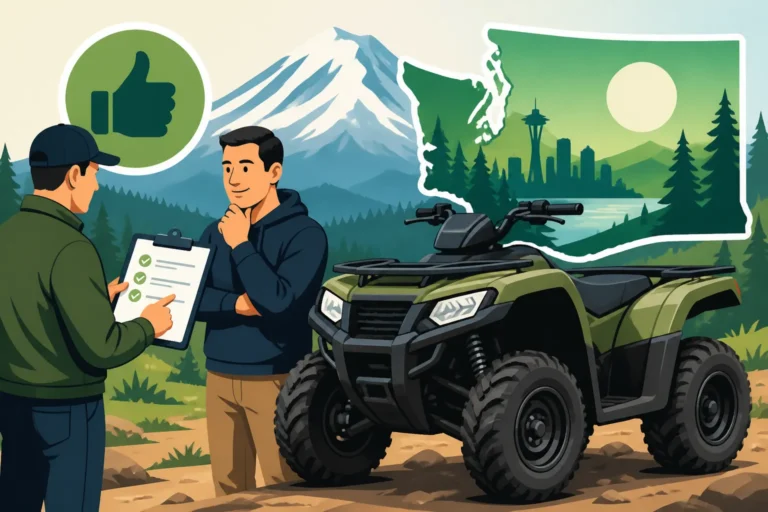
Your first and most important step is to contact the person who sold you the WATV. Explain the situation calmly and clearly. Many private sellers are unaware of the strict titling rules and might not realize they've created a problem. Politely inform them that the Washington DOL requires them to title the machine in their name before they can legally transfer it to you. This is the ideal scenario, as it allows them to complete their end of the paperwork, after which they can assign the title to you. Be prepared for some resistance or confusion, but persistent and polite communication is key. You'll want to review [Washington WATV Title Requirements] with them.
Here's what you'll need from them:
- The original title: This should be signed over to them by the previous owner.
- Proof of their purchase: This could be their bill of sale from the previous owner.
- Their cooperation: They need to be willing to visit the DOL or a licensing subagent to title the machine in their name.
Remember, they'll likely incur some fees to title the machine, including sales tax (or use tax if they bought it privately and didn't pay tax at the time) and title fees. This can sometimes be a sticking point, as they might not want to pay for a machine they've already sold. If you anticipated this issue and perhaps held back a small portion of the sale price to cover this eventuality, you might have more leverage.
Step 2: Gathering All Available Documentation
While you're working with the seller, or if they're unresponsive, gather every piece of paper you have related to the WATV. This includes:
- Your bill of sale from the seller: Make sure it clearly identifies the WATV (VIN, make, model), the sale price, the date, and the names and signatures of both you and the seller. A comprehensive bill of sale, perhaps generated through a service like LawDepot, can be incredibly helpful here, as it provides a clear record of your transaction.
- The original title: Even if it's not in your seller's name, having the physical title document is paramount. This document holds the key to the official ownership chain.
- Any old registration cards or license plates: These can help verify previous owners and the vehicle's history, even if they aren't directly useful for transferring title.
- A copy of the seller's ID (if you have it): This can help confirm their identity, especially if you need to create an affidavit of facts later.
- Any communication records: Keep emails, texts, or notes from phone calls with the seller.
The more documentation you have, the stronger your case will be when you approach the DOL. You're trying to piece together a puzzle where a piece is missing, and every other piece helps.
Step 3: Performing a VIN Check and Ownership Lookup
Before you go much further, it's a good idea to perform a thorough check of the WATV's Vehicle Identification Number (VIN). The VIN is the unique identifier for your machine, and it's essential for ensuring you're not dealing with a stolen vehicle. You can use services that perform VIN checks, which might reveal past owners or any liens on the vehicle. While the DOL has limitations on providing private owner information, they can confirm if the VIN shows up as stolen. Knowing the status of the VIN is critical. You can also contact the DOL and ask about the last registered owner or if there's any record associated with the VIN, though privacy laws limit what they can disclose without proper forms. However, a [Washington ORV Registration Lookup] can sometimes help you understand the history a bit better.
Navigating the DOL: Essential Documents and Your Options
Once you've done your best to connect with the seller and gather documents, it's time to approach the Washington Department of Licensing. Be prepared for a potentially complicated process, but going in with all your ducks in a row will make it much smoother.
Option 1: The Ideal Scenario – Seller Titles, Then Transfers
This is the cleanest path. The seller, armed with the original title (assigned to them by the previous owner) and their bill of sale (if applicable), goes to the DOL. They pay the necessary fees and taxes to title the WATV in their name. Once they receive the new title in their name, they can then properly assign it to you. You then take that newly assigned title, along with your bill of sale from them, to the DOL to title and register the WATV in your name. This requires the seller's full cooperation, but it's the most straightforward legal route.
Option 2: Affidavit of Facts in Lieu of Title
If the seller is truly unreachable, uncooperative, or refuses to title the machine in their name, you might be able to use an "Affidavit of Facts" process. This is not a guaranteed solution and is generally considered a last resort when a clean title transfer isn't possible. Essentially, you're asking the DOL to accept a sworn statement about the circumstances of the purchase, rather than a perfectly executed title.
To pursue this, you'll typically need to provide:
- Your detailed affidavit: This is a sworn statement, often notarized, explaining how you acquired the WATV, why the title isn't in your seller's name, and what efforts you've made to contact previous owners. You'll need to include all known information about the previous owners and the WATV itself. LawDepot or similar services can sometimes help you draft such affidavits or general legal documents.
- Your bill of sale: This proves your transaction with the seller.
- The original title (if you have it): Even if it's improperly assigned, having the physical document is better than not having it.
- Proof of previous owner searches: Document any attempts you made to contact the seller or the previous titled owner.
- A VIN inspection: The DOL may require a VIN inspection by law enforcement or a licensed inspector to confirm the WATV's identity and ensure it's not stolen.
The DOL will review your affidavit and all supporting documentation. They may require additional information or steps. There's no guarantee they will accept an Affidavit of Facts in every situation, especially if there are significant gaps or red flags in the ownership history. This process can be lengthy and requires patience.
Option 3: Bonded Title
In some extreme cases, if all other avenues fail and the WATV meets specific criteria (e.g., a certain value), you might be able to apply for a bonded title. This involves purchasing a surety bond for a certain percentage of the vehicle's value. The bond protects previous owners or lienholders who might come forward later claiming ownership. If no one comes forward within a set period (usually three years), the bond is released, and you receive a clear title. This is a complex process with its own set of requirements and costs, and it's not applicable to all situations or all types of vehicles. It's a path you'd only consider after consulting directly with the DOL.
Here's a quick overview of what generally makes these paths different:
| Scenario | Best Path Forward | Key Challenges | Required Documents (General) |
|---|---|---|---|
| Seller willing to title in their name | Seller titles, then transfers to you | Seller's willingness, cost for seller to title, time for seller | Your Bill of Sale, Original Title (assigned to seller) |
| Seller unwilling/unreachable, but you have old title and strong bill of sale | Affidavit of Facts in Lieu of Title (DOL review) | DOL discretion, comprehensive documentation, VIN inspection, time-consuming | Your Bill of Sale, Original Title, Your Affidavit, Proof of Attempts to Contact Seller |
| No title at all, unknown history, machine under specific value | May require Bonded Title (specific DOL rules apply) | Complex process, cost of bond, strict eligibility, lengthy waiting period | Your Bill of Sale, VIN Inspection, Application for Bonded Title, Surety Bond |
Note: This table provides a general overview. Specific requirements and eligibility for each option are determined by the Washington Department of Licensing and can change.
When All Else Fails: Alternative Paths to Ownership and Use
Sometimes, despite your best efforts, you might hit a wall. The seller is unreachable, the DOL won't accept your affidavit, and a bonded title isn't an option. What then? While it's disheartening, you do have some final considerations, though they come with their own limitations.
Selling for Parts or Off-Road-Only Use on Private Land
If you simply cannot get a legal title in your name, you effectively own a machine that cannot be legally registered for public land use in Washington. At this point, your options become limited. You could consider selling the WATV for parts, recouping some of your investment, especially if it's a popular model.
Alternatively, if you own private property or have explicit, documented permission to ride on private timberland or ranch land, you might be able to use the machine there without registration. However, it's absolutely crucial to understand that "private land" means truly private, not a friend's backyard if it's accessible to the public, and certainly not any public trails or roads. Riding an unregistered WATV on public land, even if you believe it's private, can lead to serious legal repercussions. Ensure you understand [Washington Rules for Riding Private Timberland] and [Washington Trespass Rules for Riders].
Seeking Legal Counsel
If the WATV represents a significant financial investment and you're at a complete impasse, it might be worth consulting with an attorney who specializes in vehicle or property law. They may be able to advise on further legal avenues, such as small claims court, to either compel the seller to complete the title transfer or seek compensation for your losses. This is typically a costly and time-consuming process, so it's a decision to make carefully based on the value of the WATV and your resources.
Why This Reinforces the Importance of Due Diligence
This entire frustrating experience really highlights the critical importance of due diligence before you hand over any money for a used WATV. Always, always verify the title information. Ask to see the physical title. Confirm that the seller's name matches the name on the title and their identification. If the title is signed over to the seller but not yet titled in their name, be wary. At the very least, understand the steps they need to take and consider asking for a price adjustment or holding a portion of the payment until the title is properly transferred. Don't be afraid to walk away from a deal if the title situation is murky, because as you've seen, it can lead to a world of headaches later on. Knowing [Do You Need a Title for a WATV in Washington?] and [Why a Title Must Be in Your Name First] can save you a lot of grief.
Securing a clear title for your WATV is fundamental to legal ownership and enjoying Washington's incredible riding opportunities. While dealing with a seller who never titled the machine can be a bureaucratic nightmare, by understanding the DOL's requirements, being persistent, and gathering all your documentation, you stand the best chance of resolving the issue and getting your machine ready for adventure.
Disclaimer
This article is for general informational purposes only and does not constitute professional advice. Laws, prices and regulations vary by location and change over time. Consult a qualified professional for guidance on your specific situation.