Which Paperwork You Must Carry While Riding
Let's face it, getting out on the trails or exploring some of Washington's scenic backcountry roads on your ATV or UTV is all about freedom and adventure. But that feeling of liberation can quickly turn to anxiety if you're ever stopped by law enforcement and aren't sure exactly which documents you need to present. It’s a common worry, and nobody wants a ruined ride or, worse, a citation just because a piece of paper was misplaced or forgotten. This guide will cut through the confusion and clearly outline exactly which paperwork you absolutely must carry with you while riding your off-road machine in Washington state, ensuring you’re always prepared and compliant.
The Essential Paperwork for Every Ride
Whether you’re just hitting the local trails or traversing approved county roads, there are a few core documents that are non-negotiable in Washington state. These are your foundational proofs that your machine is legal and registered.
Your Current Washington Registration Card
This is perhaps the most crucial piece of paper you need to carry. Every WATV (Wheeled All-Terrain Vehicle) in Washington that's used on public land or approved roads must be registered. When you complete this process, you receive a registration card. This isn't just a formality; it's tangible proof that you've paid your dues and your machine is recognized by the state. This card will show your machine's VIN, your name as the registered owner, and the expiration date of your current registration. Think of it like your car's registration, but for your off-road pride and joy.
This registration card is tied to the tabs you display on your machine. In Washington, we have a two-tab system for off-road vehicles. You'll typically have an [Washington's Off-Road Tab Explained] that covers your access to designated trails and non-highway roads. If you've opted to make your machine street legal, you'll also have the [Washington's On-Road Tab Explained], which allows you to ride on certain county and city streets. Regardless of which tabs you have, the registration card is the master document confirming their validity. Forgetting this at home can be a real headache, as a trooper or sheriff's deputy has no immediate way of verifying your compliance without it.
Proof of Ownership: Not the Title Itself
While having proof of ownership is absolutely essential for registering your WATV in the first place, carrying the actual title document with you while you ride is generally not recommended. Your vehicle's title is a vital legal document, much like the deed to your house. It formally establishes who the legal owner of the machine is. If that title were to get lost, stolen, or damaged out on the trail, replacing it can be a lengthy and frustrating process. That’s why the Department of Licensing really focuses on [Why Washington Wants a Title First] when you initially register, but they don't expect you to carry the original around.
Instead, your registration card serves as sufficient proof that the machine is legally owned and registered to you. It contains key identifying information about your WATV, including the Vehicle Identification Number (VIN), which links back to the title record held by the state. If you ever need to quickly reference ownership details for any reason, like in the event of an accident or theft, having the registration card is usually enough for initial reporting. Keep your actual title in a safe, secure place at home, like a fireproof safe or safety deposit box.
Additional Paperwork for Road Riding in Washington
If your adventures take you beyond the dirt and gravel trails and onto approved county or city streets, Washington state requires a few extra documents to ensure your WATV is operating legally on shared roadways.
A Valid Driver License
This might seem obvious for road use, but it's a detail that some off-road enthusiasts overlook when transitioning their WATV from purely trail-focused use to street-legal status. If you plan to operate your WATV on any public road, whether it's a small county lane or a designated city street, you must possess a valid driver license. This isn't just about having the right to drive a car; it's about demonstrating you have the legal privilege to operate a motor vehicle on public thoroughfares. Without a valid license, you're not only subject to a citation for operating an unregistered (or improperly operated) vehicle, but also for driving without a license, which is a much more serious offense.
The requirements for [Washington Driver License Rules for WATVs] are clear: the person in control of the machine on a road needs to be a licensed driver. This applies even if you're just crossing a short segment of pavement to get to another trail. If you're riding with younger family members who may not have a driver's license, remember they are restricted from operating on public roads, even if their machine is technically street-legal. Always make sure the operator of the WATV on pavement has their current, unexpired license with them.
Proof of Washington WATV Insurance
While liability insurance isn't mandated for off-road-only use on designated trails in Washington, it becomes a non-negotiable requirement the moment your WATV touches an authorized public road. Just like with any other motor vehicle, you are legally obligated to carry proof of financial responsibility. This typically comes in the form of an insurance card or a declaration page from your insurance provider. This document will show your policy number, the effective dates of your coverage, and often a brief summary of the coverage limits.
The state's interest here is ensuring that if you're involved in an accident on a public road, there's a mechanism to cover potential damages or injuries to others. This requirement is a critical component of [Washington WATV Insurance Requirements]. If you've gone through the steps to register your WATV for road use, ensuring you have this proof readily available is just as important as having your driver's license and registration. A simple traffic stop can quickly escalate if you're unable to provide proof of insurance, potentially leading to fines and even impoundment in some cases. Don't let that happen!
Practical Tips for Managing Your Paperwork on the Trail
The trail environment is notoriously tough on paper. Dust, mud, rain, and the vibrations of riding can quickly turn crisp documents into unreadable messes. Taking a few proactive steps can save you a lot of grief.
Protecting Your Documents in Harsh Conditions
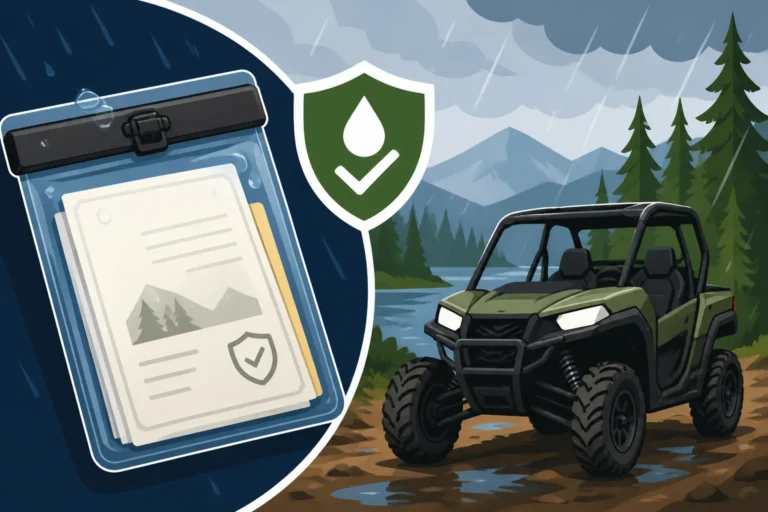
Leaving your important papers exposed to the elements is a recipe for disaster. Imagine trying to explain yourself to a ranger with a soggy, illegible registration card. Not fun! The best defense is a good offense when it comes to [Keeping Paperwork Dry in the Rain] and clean on dusty trails. A simple, yet highly effective solution, is a waterproof document holder or a heavy-duty, Ziploc-style bag. These are inexpensive and can make all the difference. Some riders go a step further and laminate their registration card (though be careful not to obscure any holographic elements if present, as this can sometimes invalidate it).
Beyond physical protection, consider carrying digital copies. While these might not always be accepted as primary proof by every officer, having photos of your registration, license, and insurance card on your phone can serve as a backup and provide immediate information if needed. Just remember to keep your phone charged! For important documents like a bill of sale, if you're not carrying the original (which, again, isn't usually recommended), having a digital copy can be handy for reference or if you need to quickly look up a VIN or date for a maintenance record later. Services like LawDepot can help you generate clean, professional documents like bills of sale digitally, which makes keeping a digital record much simpler than trying to photograph a crinkled paper version.
What to Do If Stopped While Riding
So, you're out enjoying your ride, and you see flashing lights behind you. It happens to the best of us! The key is to remain calm, respectful, and prepared. When a Washington trooper or other law enforcement officer performs a [What a Washington Trooper Checks Roadside], they are primarily looking for your compliance with registration, licensing, and safety regulations.
Here's a quick rundown:
- Pull Over Safely: Find a safe spot off the trail or road as quickly and safely as possible. Turn off your engine.
- Keep Hands Visible: Keep your hands on the handlebars or in a visible location.
- Be Courteous: Greet the officer respectfully.
- Present Documents: When asked, present your driver license (if on a road), current WATV registration card, and proof of insurance (if on a road). Have these documents easily accessible, perhaps in a designated waterproof pouch in your jacket pocket or a storage compartment on your machine. Fumbling through a backpack for five minutes doesn't make a great impression.
- Answer Questions Honestly: Answer any questions clearly and concisely. If you don't understand something, politely ask for clarification.
Having your paperwork organized and ready not only speeds up the interaction but also demonstrates that you're a responsible rider who understands and respects the rules.
What You Don't Usually Need to Carry (But Are Good to Have at Home)
While the focus is on what you must carry, it’s equally helpful to understand what documents are generally kept off the trail but are still vital for ownership and legal processes.
Bill of Sale and Other Purchase Records
When you first purchase your WATV, whether new from a dealership or used from a private seller, you’ll receive a bill of sale. This document is incredibly important for establishing the initial transfer of ownership, recording the purchase price, and often detailing the VIN and other specifics of the machine. It’s absolutely critical for [A Washington Bill of Sale for a WATV] and for paying any applicable sales or use tax when you register the machine. However, once you've successfully titled and registered your WATV, the bill of sale typically doesn't need to be carried with you during every ride.
Its primary purpose is fulfilled during the titling and registration process. You’ll want to keep the original in your secure home file, alongside your title. If you ever decide to sell the machine down the road, you might refer back to it, or a buyer might ask for a copy for their own records, especially if they are trying to establish the machine's history. For generating a proper, legally sound bill of sale when buying or selling, resources like LawDepot can be very helpful to ensure all the necessary details are included and the document is valid.
Safety Course Certificates
This is a common point of confusion for many riders, especially those new to Washington or coming from states with different regulations. While rider safety is paramount and taking an ATV safety course is always a fantastic idea for skill development and accident prevention, Washington state does not currently require riders of any age to carry a safety course certificate while operating an ORV. That's right, [Why Washington Issues No ORV Safety Certificate] is because the state's statutes don't mandate one for general use on public lands or roads.
This differs significantly from some other states where a safety certificate is a legal requirement for riders, especially minors. So, while you're highly encouraged to take a course for your own safety and the safety of others, you won't be asked to produce a certificate by law enforcement here. Focus instead on carrying your registration, license, and insurance if needed, and always prioritize safe riding practices on the trail.
| Document Type | Required for Off-Road Only | Required for On-Road Use | Recommended Location While Riding | Where to Keep Original |
|---|---|---|---|---|
| WATV Registration Card | Yes | Yes | Waterproof pouch on person/machine | N/A (this is the physical proof) |
| Driver License | No | Yes | On person | On person |
| Proof of Insurance | No | Yes | Waterproof pouch on person/machine | Secure home file |
| WATV Title | No | No | N/A (digital copy optional) | Secure home file |
| Bill of Sale | No | No | N/A (digital copy optional) | Secure home file |
| Safety Course Certificate | No | No | N/A | N/A (optional) |
This table should help you quickly glance and confirm what you need for your next Washington adventure!
Disclaimer
This article is for general informational purposes only and does not constitute professional advice. Laws, prices and regulations vary by location and change over time. Consult a qualified professional for guidance on your specific situation.