Riding Pavement With Only the Off-Road Tab
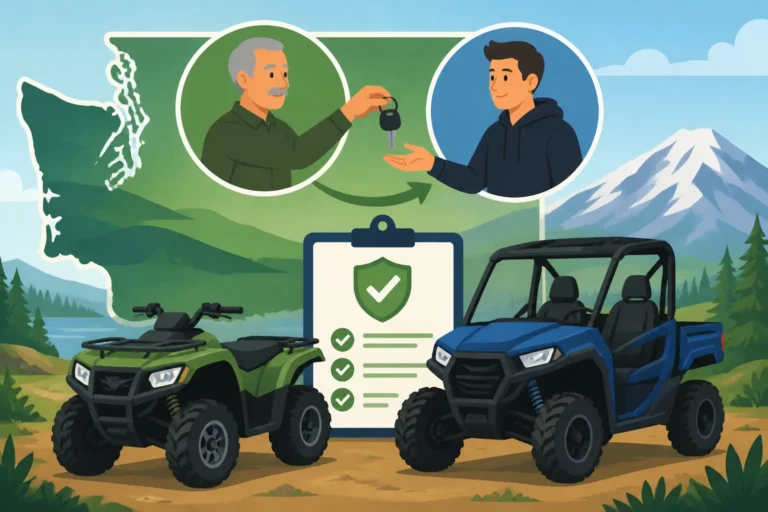
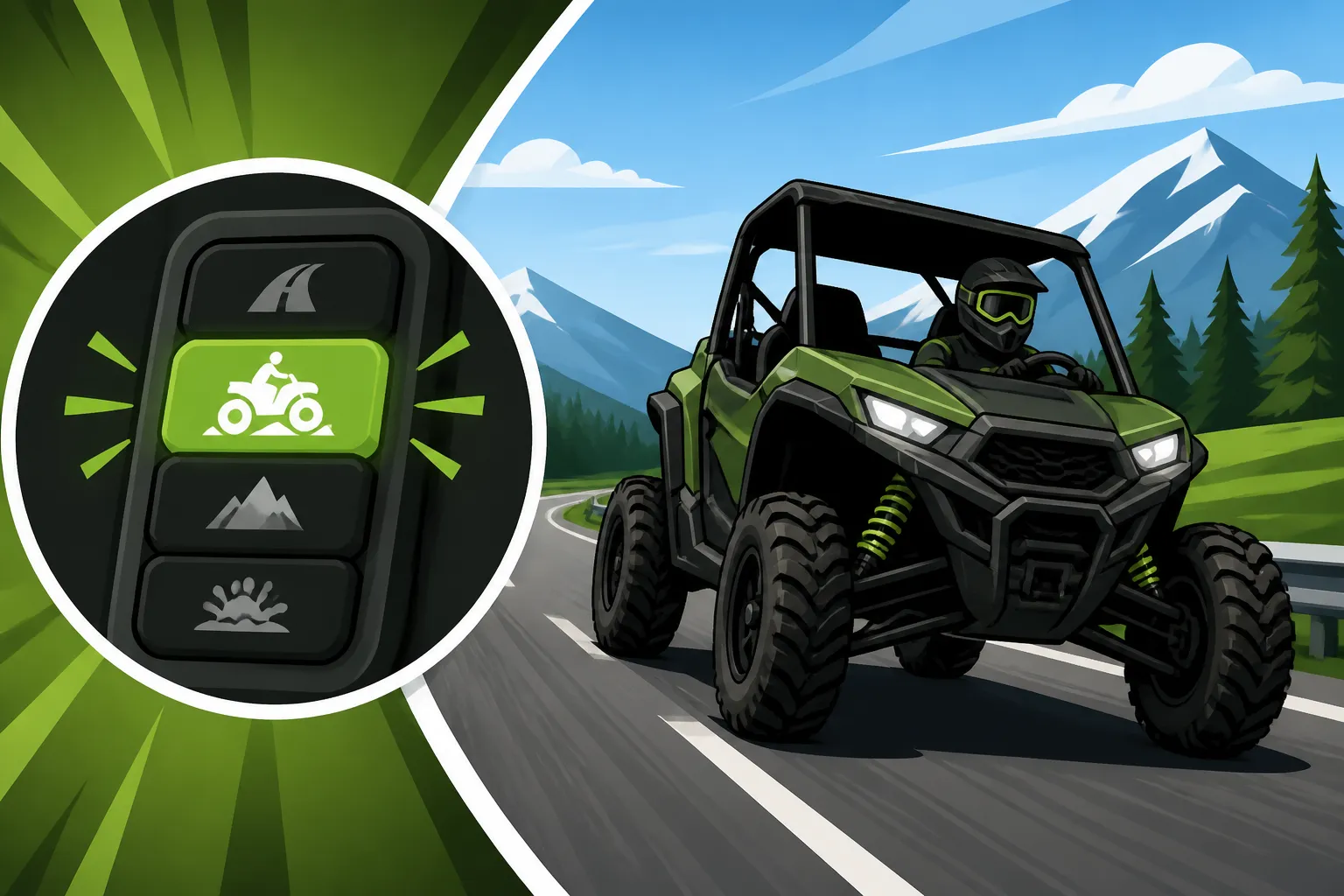
It’s a common scenario for many Washington ATV and UTV riders: you’re out enjoying the trails, maybe exploring some forest roads, and suddenly you realize the next section of your route involves a stretch of pavement. Perhaps it’s a short hop between trailheads, a quick run into town for gas, or just an innocent-looking county road. But if you only have the standard green off-road tab on your machine, hitting that pavement can quickly turn a fun day into a costly legal headache. This guide is here to untangle the confusion, explain the strict rules, and help you understand when (and if) your off-road machine can legally touch public roads in Washington State.
The Strict Reality: Your Washington Off-Road Tab and Pavement Don't Mix (Usually)
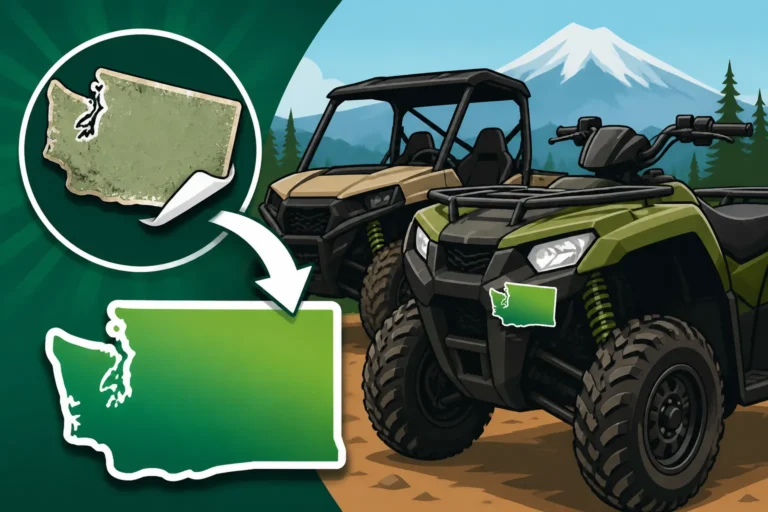
Let's get straight to it: your standard Washington off-road vehicle (ORV) tab, often recognized by its vibrant green color, is specifically designed for off-highway use. It’s for dirt, gravel, designated trails, and private lands where permission has been granted. It's not a free pass to cruise down the street, no matter how short the distance seems or how empty the road looks. Many riders, especially those new to the state or new to the sport, mistakenly believe that if a road isn't a major highway, it must be fair game for their ATV or UTV with just an off-road tab. Unfortunately, that assumption can lead to some pretty uncomfortable roadside conversations with law enforcement.
The frustration is understandable. You’ve invested in your machine, paid your registration fees, and you just want to get from Point A to Point B. Why should a small strip of asphalt be such a big deal? The simple answer lies in the deeply ingrained legal distinctions Washington State makes between vehicles intended for off-highway recreation and those designed and equipped for public road use. This distinction is about safety, liability, and maintaining the integrity of our public road system.
What the Green Off-Road Tab Actually Authorizes
Your green [Washington's Off-Road Tab Explained] is essentially your permit to play in designated off-highway areas. Think of it as a membership card for our incredible network of trails, state forests, and other ORV-specific riding zones. This tab signifies that you've paid your part into the system that funds trail maintenance, land acquisition, and educational programs for off-road enthusiasts. It’s a vital piece of the puzzle for responsible off-road recreation.
However, what it doesn’t authorize is operating your vehicle on roads maintained for conventional highway use, even rural backroads. The off-road tab signals to park rangers and DNR officials that you’re compliant for trail riding. It tells them you’re contributing to the nonhighway vehicle accounts that keep those trails open and safe. It says nothing, however, about whether your machine meets the entirely different set of equipment and safety standards required for operating on paved public roads. When you attach that green tab, you’re acknowledging that your primary use is off the pavement.
The Fundamental Legal Divide Between Tabs
Washington State, like many others, draws a very clear line in the sand (or, in this case, on the pavement) between off-road vehicles and street-legal ones. This distinction is codified in law and enforced by various agencies, from local sheriff’s departments to state troopers. When you register your machine for purely off-road use, you’re opting into a different regulatory framework than someone registering a car or even a motorcycle.
The other side of the coin is the [Washington's On-Road Tab Explained], which allows you to operate on approved public roads. This tab, typically a separate sticker, signifies that your machine has met a series of additional criteria. These criteria aren't just about paying an extra fee; they encompass a full range of safety equipment like turn signals, mirrors, horns, proper lighting, and often a safety inspection. The off-road tab doesn't require any of this. The two tabs represent distinct legal categories and permissions, and trying to use one for the purpose of the other is a legal shortcut that can quickly backfire.
Navigating the Gray Areas: Limited Pavement Use for Off-Road Machines
While the general rule is "no pavement with just an off-road tab," there are a few very specific, highly regulated exceptions. These aren't loopholes for joyriding; they are carefully carved-out allowances designed to facilitate access to legal riding areas or to allow for very brief, specific maneuvers. It’s absolutely critical to understand these distinctions, as they are often misunderstood, leading to citations.
Think of these exceptions as very narrow bridges you can cross, not a highway you can drive down. The moment you deviate from the precise conditions of these exceptions, you’re back in illegal territory, and ignorance of the law is rarely a successful defense when that blue and red light flashes behind you.
Crossing Roads: A Necessary Evil, With Rules
One of the most common and often permitted instances of an off-road machine touching pavement is when you need to [Washington Rules for Getting Across a Road]. This isn't about riding down a road; it's about getting over it to access a trail on the other side. This scenario is incredibly common when navigating complex trail systems that might be bisected by minor county roads or forest service roads.
The key here is "crossing." This means perpendicular, direct, and immediate. You pull up to the edge, stop, look both ways, and proceed straight across to the trail entrance. You generally cannot ride along the shoulder for a quarter-mile to find a better crossing point, nor can you turn and ride with traffic for any significant distance. The goal is to minimize your time on the paved surface, treating it as a brief obstacle rather than part of your route. Always check local ordinances, as some counties or cities might have specific prohibitions even on crossings, though this is less common than outright road bans.
Designated Local Roads: The Rare Exception, Not the Norm
Here’s where it gets a little more complex. Some Washington counties and cities have passed ordinances that do allow properly registered WATVs (even those without the full on-road tab) on certain designated public roads. This is not a blanket permission, and it's highly localized. You absolutely cannot assume that because one county has an open-road policy, its neighbor does too. Each local jurisdiction makes its own decisions.
For example, a county might designate specific low-volume, low-speed [Washington Counties That Allow WATVs on Roads] to connect trail systems or allow access to services in a very rural community. Similarly, a small town might open some of its [Washington Cities That Allow WATVs on Streets] for WATV use, often with strict speed limits like [Washington's 35 mph Road Rule]. The crucial element here is "designated." These roads are explicitly listed and signed, not just assumed.
Before you ever consider riding on a paved road with only your off-road tab, you must do your homework. Check the county and city websites, look for official ordinances, and search for maps of approved WATV routes. If you can't find clear, definitive information, assume the road is closed to your machine. Relying on "I saw someone else doing it" or "it looks like a quiet road" is a recipe for a ticket. These exceptions are still relatively rare compared to the vast network of roads in Washington, making proper on-road registration the most reliable way to gain pavement access.
Why State Highways Are Universally Off-Limits for Off-Road Machines
While some local roads might offer limited exceptions, there is virtually no scenario where you can legally operate an ORV with only an off-road tab on a state highway in Washington. State highways, even the quieter ones traversing rural areas, fall under a different jurisdiction and have much stricter regulations regarding vehicle types and safety equipment.
These roads are designed for higher speeds, heavier traffic, and vehicles that meet rigorous safety standards far beyond what an off-road machine typically offers. The risks associated with an ATV or UTV operating on a state highway – both to the ORV rider and to other motorists – are simply too high. This includes multi-lane highways, primary state routes, and often even secondary state routes, regardless of their posted speed limit. When it comes to state highways, the answer for an off-road-only machine is a firm and unambiguous "no."
The Steep Consequences of Riding Pavement Illegally
So, what happens if you decide to take a chance and ride that paved road with just your off-road tab? The consequences can range from a stern warning to significant financial penalties and even potential legal troubles in the event of an accident. It's a risk that most experienced riders would advise you to avoid at all costs. The desire for a quick shortcut is rarely worth the headache it can create.
Law enforcement officers, from local sheriff's deputies to Washington State Patrol troopers, are increasingly aware of ORV regulations. They understand the difference between an off-road tab and an on-road tab, and they know the designated areas and restrictions. What might seem like an innocent few miles to you can be a clear violation of state law to an officer.
Tickets, Fines, and Enforcement Encounters
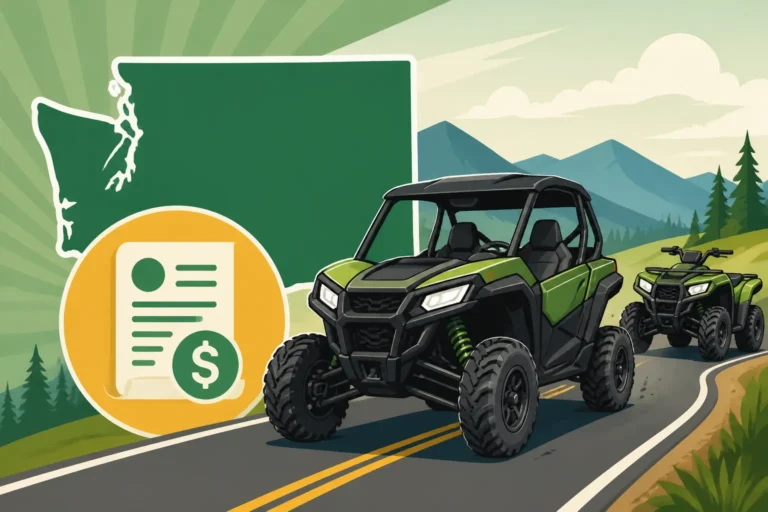
The most immediate consequence of riding pavement illegally is a citation. You could be pulled over and issued a ticket for operating an unregistered vehicle on a public roadway, or for operating a non-street-legal vehicle on a public road, among other potential infractions. The specific fines can vary, but they are generally not trivial. A single citation could easily cost you hundreds of dollars. For example, [Washington Fines for an Unregistered WATV] can be quite substantial, and riding a machine that's registered but not street-legal often falls into a similar category of offense.
Beyond the financial hit, there's the inconvenience and stress of dealing with law enforcement. This can involve an unexpected stop, a check of your identification, and potentially a mandatory court appearance. It can certainly put a damper on your riding day, not to mention your wallet. Officers routinely check things like [What a Washington Trooper Checks Roadside], and if you don't have the proper tabs or equipment for the road you're on, you're in for a long discussion.
Insurance Nightmares and Liability Risks
Perhaps even more concerning than a fine are the potential insurance implications. Most standard ATV/UTV insurance policies are designed to cover off-road incidents. They might have very specific exclusions for accidents that occur on public roadways, especially if the vehicle was not legally permitted to be there. If you're involved in an accident on pavement while operating with only an off-road tab, you could find yourself in a very difficult position.
Imagine a scenario where you're riding illegally on a paved road, and you have an accident involving another vehicle or even just property damage. Your insurance company might deny coverage, arguing that you were operating outside the terms of your policy. This would leave you personally liable for damages, medical bills, and any legal fees, which could easily amount to tens or even hundreds of thousands of dollars. It's a financial catastrophe that far outweighs the convenience of taking a paved shortcut. Ensuring you have proper documentation, like a bill of sale or other proof of ownership (which a resource like LawDepot can help with for other transactions), is always critical, but it won't help if your insurance denies coverage due to illegal road use.
Why It's Never Worth the Risk
Ultimately, the small amount of time or convenience you might save by riding pavement illegally with only an off-road tab is simply not worth the significant risks. The fines are real, the enforcement is increasing, and the potential for life-altering financial liability in an accident is too great to ignore. Our machines are powerful, fun, and exciting, but they also demand a high degree of responsibility from their operators.
Respecting the laws and understanding the distinctions between off-road and on-road use protects not only you but also the future of our sport. A rash of illegal pavement riding could lead to stricter regulations, reduced access, and a more negative public perception of ORV enthusiasts. Do yourself, and the entire riding community, a favor: stick to the trails with your off-road tab, or get the proper on-road registration if you plan to hit the pavement.
Making Your Washington WATV Truly Pavement-Legal
If you find yourself constantly needing to traverse paved roads to connect trails, access services, or simply explore your local area, then seriously consider making your Washington WATV street-legal. While the core query for this article is about only the off-road tab, it's important to know the alternative. It’s a process, but for many riders, the peace of mind and expanded riding opportunities are well worth the effort.
Making your machine street legal means meeting a different set of requirements and obtaining the second, crucial tab. It transforms your machine from a trail-only vehicle into a true dual-sport capable of navigating both the wilds and the byways (where permitted).
The Path to On-Road Registration
The first step to making your WATV pavement-legal in Washington is to ensure you have a valid title in your name. Once that's settled, you'll need to obtain a [The Washington Road Use Declaration] and typically pass a safety inspection. This inspection ensures your machine has all the necessary [Washington WATV Road Requirements] like mirrors, a horn, turn signals, proper lighting, and other safety equipment. Remember, these requirements are in place to make your machine visible and safe for sharing roads with cars and trucks.
After a successful inspection, you can apply for the on-road tab. This process involves the Department of Licensing (DOL) and often a local vehicle licensing office. You'll pay an additional fee on top of your existing off-road tab fee. For a comprehensive breakdown of the costs involved, you might want to review articles like [Washington ORV Registration and Use Tax] or [Washington WATV Registration Cost]. Many riders opt for [Adding the $12 On-Road Tab on Top] as it opens up so many possibilities.
Beyond the Tabs: Additional Equipment and Driver Requirements
Simply having both tabs isn't the end of the story for legal pavement riding. Your machine also needs to be equipped according to state law. This means having things like:
- Headlights and taillights (often required for off-road use, but must be street-legal brightness/configuration for pavement)
- Brake lights
- Turn signals
- At least one rear-view mirror
- A horn
- A windshield or proper eye protection
- A seat belt if your machine has one
- A spark arrester (required for off-road use, too)
Beyond the machine, the operator also has responsibilities. You must possess a valid driver's license. Washington law also has specific [Washington Rules for Riders Under 16] when operating on public roads, and generally requires helmets for all riders and passengers.
By taking the time to understand and comply with these regulations, you can transform your off-road machine into a versatile vehicle capable of much more, safely and legally. Always consult the official Washington State Department of Licensing resources or your local vehicle licensing office for the most current and accurate information.
Disclaimer
This article is for general informational purposes only and does not constitute professional advice. Laws, prices and regulations vary by location and change over time. Consult a qualified professional for guidance on your specific situation.