Washington ORV Registration After a Move
Moving to a new state is exciting, but let's be real – it also comes with a mountain of logistical hurdles, and figuring out what to do with your off-road toys can easily get lost in the shuffle. You've got enough on your plate with packing, unpacking, and finding the best local coffee shop. The last thing you want is to be surprised by Washington's specific rules for registering your ATV or UTV once you've settled in. This guide is here to walk you through exactly what you need to do to get your beloved machine legally registered in Washington State after your big move.
Understanding Washington's ORV Registration for New Residents
The thrill of a new riding season in a new state often comes with the practical reality that your old state's rules no longer apply. While it might seem like a minor detail amidst all the other moving parts, getting your off-road vehicle (ORV) – what Washington often calls a wheeled all-terrain vehicle, or WATV – properly registered here is a critical step before you hit any of our incredible trails or designated roadways.
Why Your Out-of-State Registration Won't Cut It Forever
It’s easy to assume that because your ATV or UTV was perfectly legal in your previous state, it should be fine here for a while. Unfortunately, that's not entirely the case, especially once you establish residency. Washington State has its own set of distinct regulations and a unique registration system that differs significantly from many other states. While Washington does offer some reciprocity for out-of-state ORV registrations, this is generally for visitors, not for new residents who plan to make Washington their permanent home and ride here regularly. You'll quickly find that after you become a resident, you're expected to comply with Washington's full registration process. Trying to ride on expired out-of-state tabs or indefinitely on visitor status could lead to unnecessary fines and a spoiled day out on the trails. You can learn more about the initial process for [Registering an Out-of-State Machine in Washington].
The Importance of Establishing Residency First
Before you can even begin the process of registering your ORV in Washington, you need to firmly establish your residency here. The Washington State Department of Licensing (DOL) considers you a resident if you live in the state for more than 60 days, register to vote, receive state benefits, or obtain a Washington driver's license. Typically, changing your driver's license and registering your primary vehicle are clear indicators of residency. Once you've taken these steps, you're officially a Washingtonian, and your ORV falls under the state's registration requirements. It’s not just about getting a new address; it's about being recognized by the state for all the legal purposes that come with living here, including your off-road adventures. The sooner you get your driver's license and other primary documents updated, the smoother the ORV registration process will be, as these documents serve as proof of your Washington residency to the DOL. Understanding how [The Department of Licensing and Washington ORVs] operates is key.
The Step-by-Step Process for Registering Your ORV After Moving to Washington
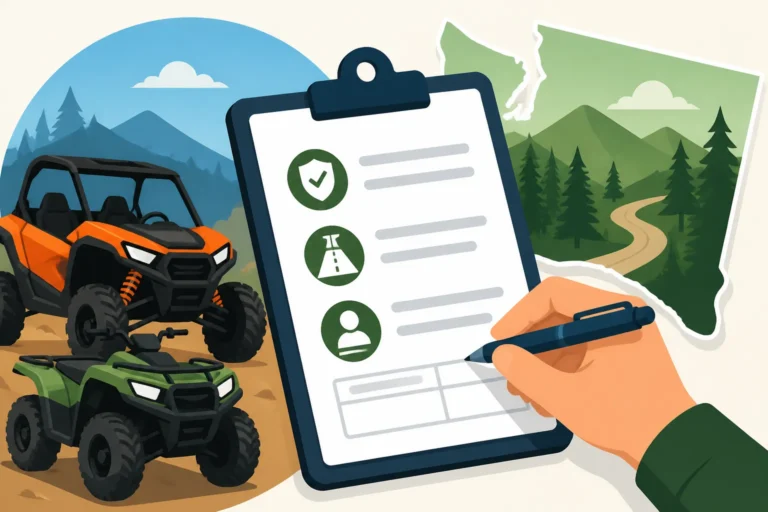
Navigating bureaucracy in a new state can feel like a maze, but breaking down the ORV registration process into manageable steps makes it a lot less intimidating. Think of it as a checklist to ensure you're ready for those amazing Washington trails.
Gathering Your Essential Documents
The first, and arguably most crucial, step is collecting all the paperwork you'll need. Just like any vehicle registration, the Washington DOL requires specific documentation to prove ownership and ensure your machine is legitimate. You'll definitely need your out-of-state title. This document is the bedrock of establishing your ownership. If you have a lien on your machine (meaning you still owe money to a lender), your bank or credit union might hold the physical title. In that case, you'll need to contact them to arrange for the title to be sent to the Washington DOL or to you, or they may issue a lien release once the Washington title is processed.
Beyond the title, you'll need proof of your Washington residency, which often includes your new Washington driver's license or state ID card, and potentially utility bills or a lease agreement. The vehicle identification number (VIN) from your ORV is also paramount. Make sure you have it readily accessible from your machine – usually stamped on the frame – and double-check it against your title paperwork. It’s amazing how often a simple typo can cause a significant delay. If, for some reason, your title is missing, you'll need to apply for a duplicate title from your previous state or provide alternative proof of ownership like a notarized bill of sale, often supplemented by an affidavit explaining the loss. Having your [Washington WATV Registration Paperwork] in order is vital. For situations where a bill of sale is needed, especially if your original title is lost or was never issued, a reliable template can be invaluable. This is where services like LawDepot come in handy, offering customizable legal documents to ensure you have all your bases covered. Always remember that [Washington WATV Title Requirements] are strict.
Completing the Necessary Paperwork
Once you have your supporting documents, it's time to tackle the application forms. The primary form you'll need is the Vehicle/Vessel Bill of Sale, even if you’re transferring from out of state; this is often combined with an application for title. You’ll also fill out the specific ORV registration application. These forms are typically available at your local vehicle licensing office or can sometimes be downloaded from the Washington DOL website. It's important to fill them out completely and accurately. Any blank fields or incorrect information can lead to your application being rejected, which means more waiting and potentially another trip to the DOL.
If you find yourself without an original bill of sale for any reason, particularly if you bought your machine years ago, you might need to create one. Resources like LawDepot provide templates for a Washington bill of sale that can help you document the sale transaction properly, even if it's retrospective or needed to supplement other ownership proofs. You might also need an Affidavit of Loss if your original title is truly gone. Be sure to specifically reference your machine’s VIN on all documents to avoid confusion. Carefully review forms like [A Washington Bill of Sale for a WATV] to ensure you meet all requirements.
The All-Important Safety Inspection (If Applicable)
Now, here's a point that often catches new residents off guard: the safety inspection. This isn't universally required for all ORVs in Washington, but it's a non-negotiable step if you intend to add the "on-road" tab to your registration, allowing you to ride on designated public roads where permitted. If you only plan to ride on trails and off-road areas, you won't need this inspection. However, many riders appreciate the flexibility of being able to legally connect trails via open county roads, so the on-road tab is a popular choice.
The inspection ensures your WATV meets Washington's specific safety standards for road use, including requirements for headlights, taillights, turn signals, mirrors, a horn, and other equipment. It's not just a quick visual check; it’s a thorough examination to confirm your machine is safe for shared roadways. The cost of a Washington WATV safety inspection can vary, but there is a cap on how much shops can charge for this service, which is a relief. You’ll need to take your ORV to an authorized inspection station, which can be a licensed vehicle dealer or repair shop. They will issue a certificate once your machine passes. Don't skip this if you want the on-road option, as you won't get your tabs without it. Information on [Washington WATV Safety Inspection Cost] and [Where to Get a Washington WATV Inspection] is readily available through the DOL.
Submitting Your Application and Paying the Fees
With all your documents meticulously gathered, forms filled out, and inspection (if needed) completed, you're ready for the final step: submission. You'll typically visit a local vehicle licensing office (often referred to as a subagent) or a larger Department of Licensing service center. These offices handle all motor vehicle and ORV registrations. Be prepared for potentially longer wait times, especially during peak hours, so plan your visit accordingly.
When you submit your application, you’ll also pay the applicable fees. This generally includes the annual ORV registration fee (which funds trail maintenance and access), a metal tag fee (a one-time purchase that lasts seven years, unless lost or damaged), and possibly a separate fee if you opt for the on-road tab. There will also be a processing fee from the subagent. The total [Washington WATV Registration Cost] can vary depending on whether you choose one or both tabs, and any additional services like a duplicate title if you needed one. Ensure you have your payment method ready, as most offices accept cash, checks, and major credit cards. Once everything is processed, you'll receive your temporary registration and decals, and your permanent metal tag will usually be mailed to you. You can find out more about [Where to Register a WATV in Washington] on the DOL website.
What to Do If Your Situation Isn't Straightforward
Life, and moving, rarely goes exactly according to plan. Sometimes, you encounter unique situations with your ORV registration that require a bit more legwork. Don't worry, there are usually solutions.
Bringing a Machine From a Non-Titling State
Some states, particularly for older or smaller off-road vehicles, might not issue traditional titles. This can throw a wrench into the Washington registration process, which heavily relies on a clear chain of title. If your ORV comes from a non-titling state, you'll need to provide alternative proof of ownership. This typically involves a combination of a robust bill of sale, the previous state's registration card, and potentially an affidavit confirming that your previous state does not issue titles for your type of machine.
A meticulously prepared bill of sale becomes incredibly important in these situations. It needs to clearly identify the buyer and seller, the ORV's make, model, year, and crucially, its VIN. Using a professional template from a service like LawDepot can help ensure your bill of sale includes all the necessary legal language and details that Washington’s DOL will look for. You may also need to fill out an affidavit of ownership in Washington to swear under penalty of perjury that you are the rightful owner. It's a bit more paperwork, but it's definitely doable. Washington wants to make sure the machine isn't stolen and that you legitimately own it. Understanding [Do You Need a Title for a WATV in Washington?] is important here.
Dealing with a Lien on Your Out-of-State ORV
If you're still making payments on your ORV, your financial institution (the lienholder) will likely hold the physical title. When you move to Washington, you'll need to inform your lienholder that you are relocating and need to transfer the registration to Washington State. They will usually cooperate by sending the title directly to the Washington DOL, or to you with instructions, once you initiate the title and registration process here.
It’s a good idea to communicate with both your lienholder and the Washington DOL about the best way to handle this transfer. Some lienholders have specific procedures for interstate title transfers. Be proactive; delays here can hold up your entire registration. You’ll want to ensure that once the Washington title is issued, the lien is correctly recorded on the new Washington title, just as it was on your old state's title. This protects both you and your lender. Learn more about [Washington ORV Registration With a Lien].
What About a Temporary Permit While You Get Organized?
Life moves fast, and sometimes you just want to hit the trails before all the paperwork is done. Washington does offer a temporary ORV use permit, which can be a lifesaver for new residents who are still getting their permanent registration sorted out. This permit allows you to legally operate your ORV on designated non-highway ORV trails and areas for a limited time.
However, there are important limitations to understand. This temporary permit is strictly for off-road use only; it does not grant you permission to ride on public roadways, even those open to registered WATVs. It’s also important to remember that [Why a Temporary Permit Is Trail Only] is a key restriction. Think of it as a stop-gap measure to get you riding while you complete the full registration process. You still need to carry proof of ownership (like your bill of sale) with you when using the temporary permit. While it can get you on the dirt sooner, it's not a substitute for full Washington registration, especially if you plan on year-round riding or want the flexibility of street-legal access. For more details, check out [Washington's Temporary ORV Use Permit].
Keeping Your Washington ORV Registration Current
Once you've successfully navigated the initial registration process after your move, the good news is that keeping your ORV legal in Washington is relatively straightforward. It largely involves annual renewals and updating information if you move again within the state.
Annual Renewal Process
Unlike some other states where ORV registrations might last for multiple years, Washington State requires annual renewal for your ORV tabs. This process is designed to be as convenient as possible. You'll typically receive a renewal notice in the mail a few weeks before your current registration expires. This notice will detail the fees due and provide instructions on how to renew.
You can usually renew online through the Washington DOL website, by mail, or in person at a local vehicle licensing office. Online renewal is often the quickest and easiest option, allowing you to pay with a credit card and have your new decals mailed directly to you. It’s important to renew promptly to avoid any lapse in registration, which could result in fines if you're caught riding with expired tabs. The fees collected from these annual renewals are critical; they directly fund the maintenance and improvement of Washington's vast network of ORV trails and riding areas, so your contribution helps keep our favorite spots open and enjoyable. You can read more about [Renewing a Washington ORV Registration Yearly].
Updating Your Address if You Move Within Washington
Even if you’ve only moved across town or to another Washington county, it’s crucial to update your address with the Department of Licensing for all your registered vehicles, including your ORV. This ensures that you continue to receive important notices, like your annual renewal reminders, and that your official records are accurate.
Updating your address is a simple process that can often be done online through the Washington DOL website, by mail, or in person. You'll need your ORV's license plate or VIN, along with your new address details. There's usually no fee associated with an address change itself, though you might pay a small processing fee if you do it in person at a subagent office. Neglecting to update your address can lead to missed renewal notices, which could then lead to inadvertently riding with expired tabs – a headache you definitely want to avoid! Staying on top of an [Washington ORV Registration Address Change] is a small task that pays off big in peace of mind.
Summary of ORV Registration for New Washington Residents
| Step | Key Action | Required Documents (Examples) | Notes |
|---|---|---|---|
| 1. Establish Residency | Obtain WA driver's license/ID. | WA Driver's License/ID, utility bill, lease agreement. | Must be a Washington resident to register your ORV here. |
| 2. Gather Documents | Collect proof of ownership & ID. | Out-of-state title, proof of WA residency, VIN. Bill of sale (if no title, use LawDepot for template). | Contact lienholder if title is held by a bank. A well-prepared bill of sale is critical if you're missing a title or coming from a non-titling state. |
| 3. Complete Paperwork | Fill out Washington DOL forms. | Vehicle/Vessel Bill of Sale, ORV registration application, Affidavit of Loss (if applicable). | Forms available at DOL offices or online. Ensure all fields are accurately completed. |
| 4. Safety Inspection | Get ORV inspected (if seeking on-road tab). | Inspection certificate from authorized station. | Only required if you want to ride on designated public roads. Ensures compliance with WA safety standards for road use. |
| 5. Submit & Pay | Present documents, forms, and fees. | All gathered documents, completed forms, payment for fees (registration, metal tag, on-road tab, processing). | Visit a local vehicle licensing office. Be prepared for potential wait times. Fees fund trail maintenance. |
| 6. Annual Renewal | Renew registration yearly. | Renewal notice. | Can often be done online, by mail, or in person. Crucial for continued legal riding and funding trail systems. |
| 7. Address Change (In-state) | Update address with DOL if you move within WA. | ORV VIN/plate number, new address. | Essential to receive renewal notices and maintain accurate records. Can be done online. |
Disclaimer
This article is for general informational purposes only and does not constitute professional advice. Laws, prices and regulations vary by location and change over time. Consult a qualified professional for guidance on your specific situation.